

What Happened To The Lesser-Known Halves Of Music's Most Famous Duos
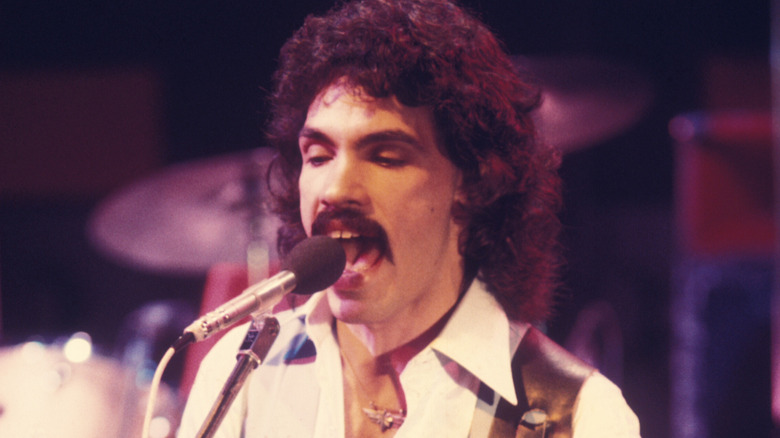
For many if not most of the best known and most popular duos in music history, the story ends when the clear breakout star of the act goes on to become a rousing success as a solo performer. In splitting up their small but potent rock and pop bands, the superstar-in-the-making leaves behind their less famous partner. Even in the longest running rock duos of all time, one person goes on to greatness, and the other fades into obscurity or moves into a non-musical line of work. The whole world is then left wondering: Whatever happened to that other person from that musical duo that everyone loved?
To be fair, every also-ran, or less celebrated member of a no longer intact duo, had the resources and opportunity to pursue most any whim. And pursue they did, finding solace and creative outlets in their choices. But rarely does that bring with it fortune and celebrity. Here's what ultimately became of the secondary members of Simon & Garfunkel, Wham!, Hall & Oates, the Carpenters, and Sonny and Cher.
Art Garfunkel
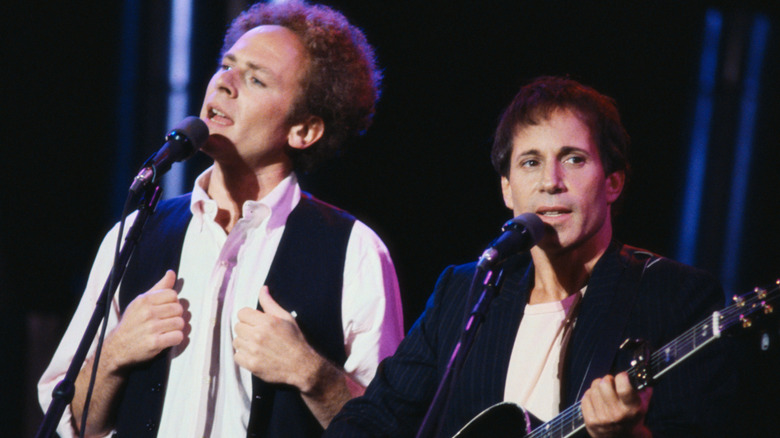
After dominating the '60s folk-rock sound, Simon & Garfunkel went epic with "Bridge Over Troubled Water," one of the biggest No. 1 hits of 1970 that showcases the tremendous vocal talents and range of Art Garfunkel. Paul Simon was the duo's primary songwriter, and while he became one of the most admired names in American music, Garfunkel tried on several passions when Simon & Garfunkel split apart for the first half of the 1970s. First, he gave acting a shot, with major roles in movies like "Catch-22," "Carnal Knowledge," and "Acts of Love and Other Comedies."
Discovering that he actually sought a lifestyle more humble and far away from the self-aggrandizing world of entertainment, Garfunkel joined the faculty at Litchfield Preparatory School in Connecticut in the fall of 1971, where he taught algebra and geometry and presided over a homeroom. He left the position after a year, shortly before the entire school shut down.
And so, Garfunkel returned to making music. Between 1973 and 1981, he released five studio albums of primarily soft rock. Six of his singles hit the Top 40, including a cover of "(What A) Wonderful World" (with guests James Taylor and Paul Simon), and the original "All I Know."
Andrew Ridgeley
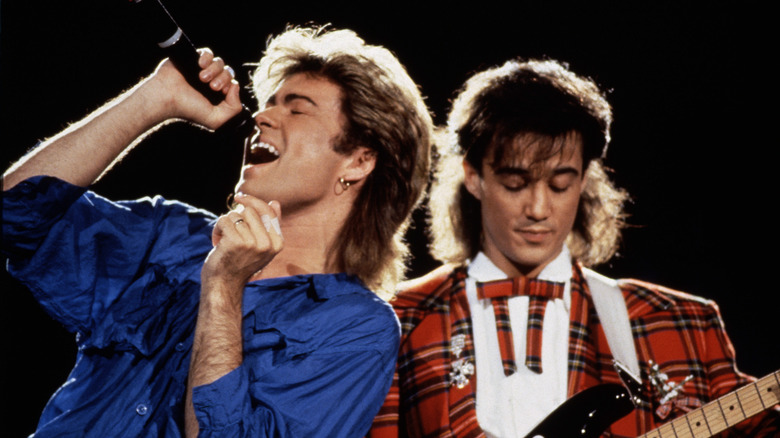
Following a triumphant 1986 Wembley Stadium concert that served as the last stand of Wham!, George Michael went out on his own and became one of the biggest pop stars of the late '80s and early '90s. Michael's now former partner in music, Andrew Ridgeley, briefly became a driver on the Formula 3 auto racing circuit. He eventually returned to England and delivered exactly one album. "Son of Albert," full of guitars, drums, and early rock 'n' roll vibes, didn't sound much like Wham! — it didn't sell well in the U.S. or in the U.K. The single "Shake," however, was a Top 20 hit in Australia.
Ridgeley has since lived a quiet life out of the public eye, occasionally making Wham!-related appearances in documentaries and films, including a cameo in a 2019 movie named after one of their songs, "Last Christmas." In 2023, Ridgeley inducted the deceased Michael into the Rock & Roll Hall of Fame.
John Oates
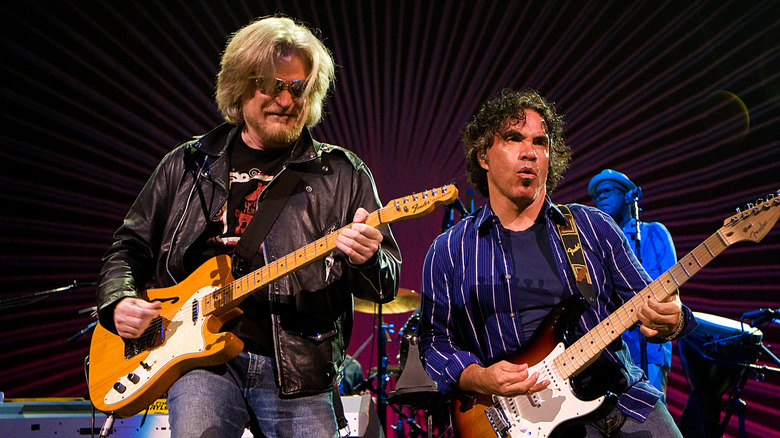
While they finally and contentiously broke off their partnership in 2023, Daryl Hall and John Oates' complicated relationship necessitated long personal and professional breaks. After racking up a string of huge, soul-laced pop-rock hits in the 1970s and 1980s like "Rich Girl," "Private Eyes," and "Say It Isn't So," Hall & Oates spent most of the 1990s apart. Hall stepped up his solo career, while Oates focused on producing and contributing guest spots on other artists' material, working with the likes of Icehouse and Taj Mahal. He also got out of the studio and off the stage, indulging in his avid mountain biking hobby. In the summer of 1990, Oates joined the Grateful Dead's Bob Weir for a 200-mile journey.
In 2002, following another stint as half of "Daryl Hall and John Oates," the guitarist unveiled his first ever solo album, "Phunk Shui," which he repeatedly released with extra material and under different titles. Oates went on to record multiple EPs and more full-length affairs, including the blues-centered "Arkansas" in 2018.
Richard Carpenter
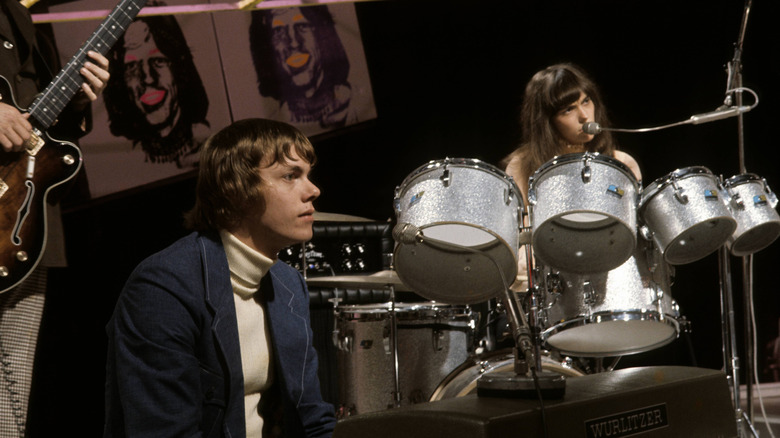
While their white-hot career as innovators and popularizers of soft rock was starting to wind down, 1983's tragic death of Karen Carpenter put an end to the Carpenters. Between 1970 and 1981, the sibling duo placed 20 singles in the Top 40, all of them featuring drummer Karen Carpenter using her otherworldly and emotionally stunning voice to enliven the compositions and arrangements of her sibling, keyboard player, producer, and support singer Richard Carpenter.
Following the sad and sudden loss of his sister, musical partner, and band, Richard Carpenter became a Carpenters archivist. He oversaw the release of compilations of unheard material, including "An Old-Fashioned Christmas" and "Lovelines." and produced a 1989 album for teen actor and would-be pop star Scott Grimes. Carpenter has only very occasionally released works under his own name. In 1987, Carpenter's "Time" featured him playing alongside guest singers, including Dusty Springfield, featured on the No. 12 on adult contemporary hit "Something In Your Eyes." 11 years later came the all-instrumental "Pianist, Arranger, Composer, Conductor."
Sonny Bono
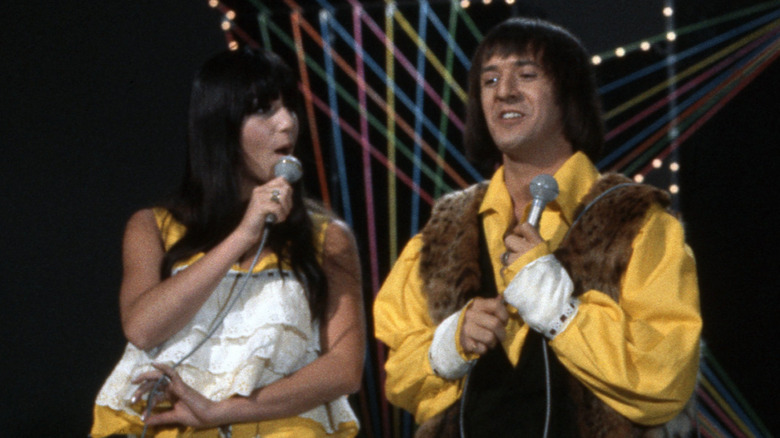
Sonny Bono's split from wife Cher led to the end of Sonny and Cher in every way. "The Sonny & Cher Comedy Hour" concluded in 1974, and while Cher continued to be a superstar, Bono hosted "The Sonny Comedy Revue." ABC canceled it after 13 episodes, and then "The Sonny and Cher Show" popped up for a single year. Unlike Cher, Bono never recorded again — his sole solo studio album, 1967's "Inner Views," had flopped. There remained a place on TV for Bono, and he frequently guested on shows like "Fantasy Island," "The Love Boat," and "CHiPs," and he co-starred in made-for-TV movies including "Murder on Flight 502" and "Top of the Hill." In the '80s, he played in theatrical works like "Airplane II: The Sequel," "Troll," and "Hairspray."
Bono attempted to place a larger sign on his Palm Springs, California, restaurant but was frustrated by so much red tape that he decided to run for town mayor, and he won, holding the office from 1988 to 1992. Unsuccessfully attempting to secure the Republican nomination for U.S. Senator in 1992, he was elected to the U.S. House of Representatives in 1994. Bono's fourth spouse, Mary, took over the seat when the former musician died from injuries sustained in a 1998 skiing accident.