

Strange Stories Behind Popular Bands
When we become fans of a band, we aren't always content with enjoying its work on its own merits. Many of us want to curl up with the artists' thoughts and experiences as we would with a good book. We want to explore the chapters, paragraphs, and footnotes that underlie the group's existence as we know it. Perhaps most of all, we want to steep ourselves in the weird and wild moments they've witnessed and instigated on their journey to stardom and beyond.
Part of our fascination is rooted not in the band itself, but in the intriguing (if treacherous) nature of fame. Being a celebrity isn't simply being well-known — it means living in a world where success and excess often go hand in hand and laws almost seem optional. Combine that with the mental risk-taking of being creative for a living and the madcap randomness of life in general, and you get some ridiculous and outlandish incidents.
All in all, it's just another pig on the farm
Pink Floyd famously tore down a brick wall, but its members were brilliant builders. Per the Rock & Roll Hall of Fame, they were the "architects of two major music movements — psychedelic rock and progressive rock." The band's otherworldly albums explored the dark side of the moon and the dark side of mankind. And its 1977 album "Animals" showed humanity in a scathing light. Described by Guitar World as a "bitter masterpiece," "Animals" was a musical skewering of British society that used pigs, dogs, and sheep to represent detested political figures, insidious businessmen, and the ill-fated complacency of the masses, respectively. In addition to being an iconic work, it led to an epic sequence in which a floating pig sowed havoc across London's skies.
Bassist and singer-songwriter Roger Waters, the album's main architect, had the idea to photograph an inflatable pig hovering between the smokestacks of London's Battersea Power Station for the album cover. When it came time to photograph the animal — a 40-foot-long behemoth dubbed Algie — all pork broke loose. As album cover designer Aubrey Powell recalled to artist Lucy Sparrow, the chain tethering Algie snapped, and the pig floated about 20,000 feet into the air. Airport flights were grounded, the Royal Air Force searched for Algie, and a pilot who reported seeing a flying pig was purportedly forced to take a breathalyzer test. Fittingly, the pig flew to a farm, where its brief brush with freedom ended.
The voodoo child got kidnapped after Woodstock
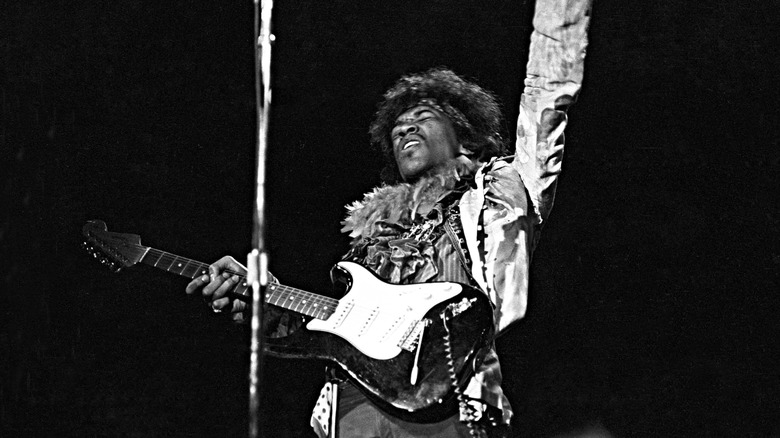
The legendary Jimi Hendrix set the world and his guitar on fire as frontman of the Jimi Hendrix Experience, but the avant-garde guitarist gave his greatest live performance while part of Gypsy Sun and Rainbows. Formed shortly after the Experience split in 1969, Gypsy Sun and Rainbows appeared at Woodstock (the infamous festival where lots of messed-up things happened). There, Hendrix played a breathtaking rendition of "The Star-Spangled Banner" that some have called "the defining moment of the 1960s," per "The Essential Jimi Hendrix." The following month, Hendrix was abducted for roughly two days, and inexplicably, nobody told the police.
In "American Desperado," Mafia point man and infamous cocaine trafficker Jon Roberts, who was accused of assisting in the kidnapping, claimed the Mafia nabbed Hendrix over a recording deal dispute. However, Roberts insisted that he helped rescue the guitarist from two "wiseguy wannabes." Supposedly, these "morons" — as Roberts called them — lured and abducted Hendrix after spotting him at a Mafia-run club trying to score drugs. They demanded an unspecified ransom from Hendrix's manager but released the musician after being threatened by genuine gangsters.
Some who knew Hendrix said he suspected his manager, Michael Jeffery, staged the abduction as a threat or power play amid disagreements over the musician's career path. According to "The Essential Jimi Hendrix," Buddy Miles, who performed in Hendrix's trio, Band of Gypsys, accused Jeffery of drugging Hendrix with LSD in a scheme to ruin the group and "bring about the return of the Experience lineup."
LA women's room
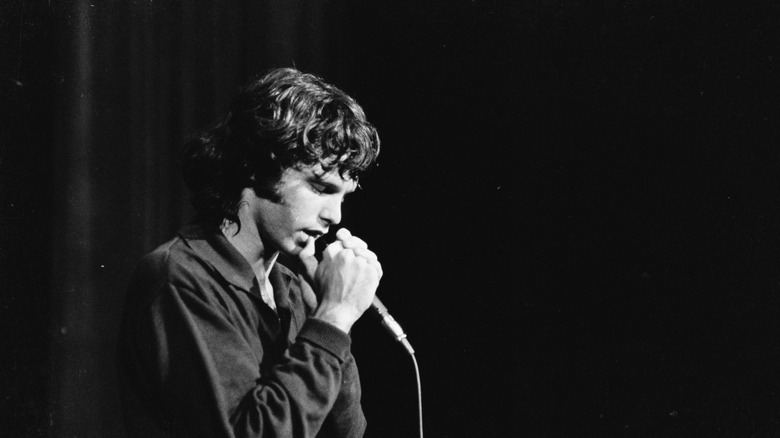
Enigmatic Doors frontman Jim Morrison would no doubt be remembered as a legend no matter how he died. But the suspicious circumstances surrounding the rock star's death added an extra layer of mystery to his mystique. Morrison's lifeless body was discovered in a bathtub on July 3, 1971, but his untimely demise went unconfirmed for nearly a week, and no autopsy was conducted. Afterward conspiracy theories swirled about Morrison faking his death, the CIA covering it up, and Morrison accidentally overdosing on drugs. But there's also an eerie component to the singer's death, specifically with regard to his last Doors album, "L.A. Woman."
In a weird bit of foreshadowing, Morrison recorded the vocals for "L.A. Woman" in a bathroom. As Rolling Stone described, the Doors declined making the album in a high-end studio, opting instead to record it in the group's "cramped" and cluttered Santa Monica Boulevard "workshop," where it often rehearsed. Morrison tore the door off the bathroom and recorded his bits in there. The last lines the singer ever recorded for the Doors appeared in the song "Riders on the Storm." The song, with lyrics that were partly informed by Morrison's screenplay about real-life spree killer Billy Cook, entered the Billboard charts on the exact same day that Morrison died.
Man-beater
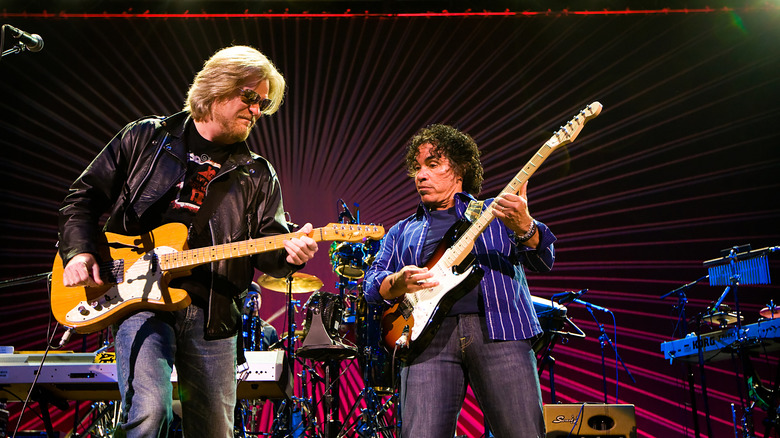
Hall & Oates sound like part of a complete breakfast — so much so that Early Bird Foods & Co. actually named a breakfast cereal "Haulin' Oats," prompting the musicians to sue. But long before that tasty-sounding trademark battle, Daryl Hall and John Oates produced tons of scrumptious music. Since releasing their debut album — the also cereal-sounding "Whole Oats" — they've crafted numerous classics, including the head-boppingly sweet "You Make My Dreams" and their dire warning about romantic cannibals, "Maneater." Their soulful brand of pop rock was so popular that in 1984, the Recording Industry Association of America dubbed them the most successful duo in rock history.
When Hall and Oates first met in 1967, they couldn't concern themselves with cereal puns because they were busy getting away from knife-wielding high schoolers. As Hall recalled to the Independent, he was "17 or 18 years old [and] had a doo-wop street-corner group called the Temptones." Meanwhile, Oates belonged to an R&B band called the Masters. Both groups were slated to perform at a Philadelphia venue when Hall said "a fight broke out between rival high school fraternities — which really were just gangs with Greek letters." The frats attacked each other with chains and knives, and Hall also heard gunshots. He and Oates headed for the exit and met in the process.
From counterfeit Cobain to bona fide psycho
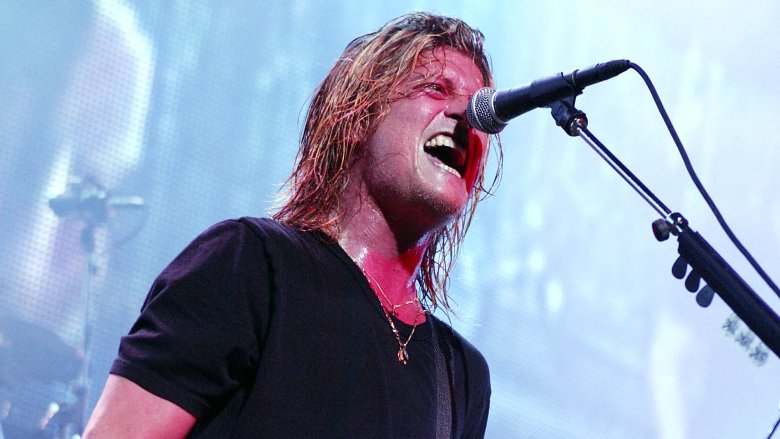
When it comes to post-grunge, it doesn't get much grunge-ier than Puddle of Mudd. Not only is the band named after wet dirt, but frontman Wes Scantlin has also been compared to grunge icon Kurt Cobain. That's not as positive as it sounds. Critics bristled at Scantlin's Cobain-isms, like when Variety chided him for mimicking the Nirvana singer's "vocal style and mannerisms" on stage. Puddle of Mudd's hugely popular single "She Hates Me" has been described as "Nirvana-esque." And then there's "Psycho," which has a music video that features people wearing varsity jackets — well-known symbols of teen spirit — and lyrics that reference "a loaded gun."
As time went on, Scantlin became less reminiscent of Kurt Cobain and began to genuinely resemble the kind of psycho he sang about. One of the most glaring examples of his unhinged conduct was his buzz saw attack on a neighbor's patio. That neighbor was electro-pop musician Sasha Gradiva, who claimed Scantlin's borderline chainsaw murderer behavior stemmed from a long-running feud. Speaking to The Hollywood Reporter, she alleged that he envied the view from her patio and lashed out in "creative" ways, including blocking her view with gigantic flags and a tent. Scantlin's outrageous behavior affected multiple neighbors in 2016 when he rigged his car to look like an improvised bomb. He wanted to scare away would-be thieves but ended up attracting the bomb squad, which forced nearby residents to evacuate.
Why brown M&Ms made Van Halen see red
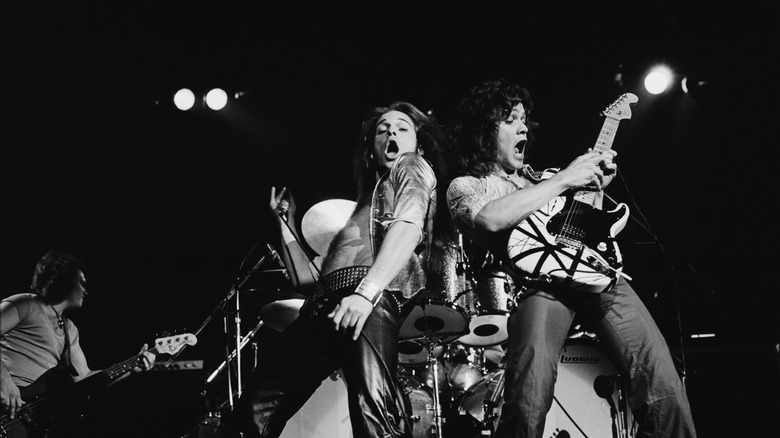
Before Van Halen was hot for teacher, its members were the hottest teachers in music. Trained pianist and self-taught guitarist Eddie Van Halen reinvented the electric guitar, making the instrument mimic animal sounds and wailing away so fast you'd swear he was playing a stringed machine gun. Meanwhile, on-again, off-again vocalist David Lee Roth was the ultimate showman — AllMusic said singers mimicked his "irony-drenched antics," not realizing that he wasn't being serious. Their unmatched tandem of excellence and success could go to anyone's head. And that's precisely what it seemed like when Van Halen demanded that concert promoters provide bowls of M&Ms with "absolutely no brown ones," as The Smoking Gun reported.
But this wasn't a hollow request. Per Business Insider, Van Halen stipulated that promoters "would forfeit the entire show at full price" if the band found brown M&Ms backstage. To show they meant business, David Lee Roth even trashed dressing rooms. It sounds like the height of oddball tyranny and celebrity egotism, and you can almost hear Van Halen singing, "Jump!" before a promoter meekly asks, "How high?" But as Roth explained, the outlandish demand was a precautionary measure. Van Halen's shows incorporated sophisticated lighting and stage setups that could be dangerous or disastrous if not handled meticulously. Finding brown M&Ms was a telltale sign that promoters didn't read the technical specifications in the contract rider.
Songs in the key of pee
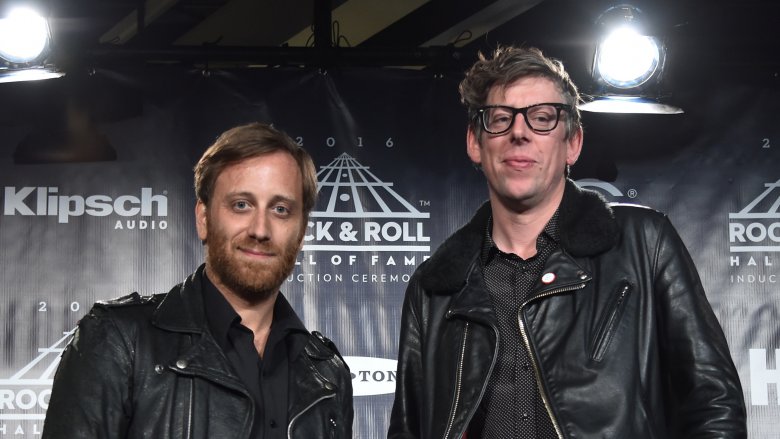
Blues rock duo The Black Keys is guitarist and vocalist Dan Auerbach and drummer Patrick Carney, and they have some very impressive feathers in their musical caps. This simple yet sensational pairing racked up 15 Grammy nominations and five wins as of this writing, and The Black Keys' 2019 hit "Lo/Hi" made Billboard history as the first song to top all four rock airplay charts at once. Along with success, they've had some surreal experiences. One of those experiences occurred on the literal road to prosperity.
As the duo recounted to NPR, they used to travel to concerts in a pee-scented minivan because of Santa Claus (don't worry, we'll explain). After a gig in Seattle, they were paid $500, which was valuable gas money for their ongoing tour. Carney guarded the money in the minivan and went to sleep while Auerbach went to a party. Eventually, Carney was rudely awakened by his loaded bladder but didn't dare exit the minivan after peering through the window and seeing "like, 30 guys in Santa Claus outfits." Terrified, he relieved himself in a cup, and that cup relieved itself in the vehicle. A weird experience also inspired The Black Keys' name. The duo's dads knew a remarkable artist named Alfred McMoore. McMoore had schizophrenia and left up to 30 voicemails daily, wherein he sometimes called people "a black key."
I now pronounce you sis or wife
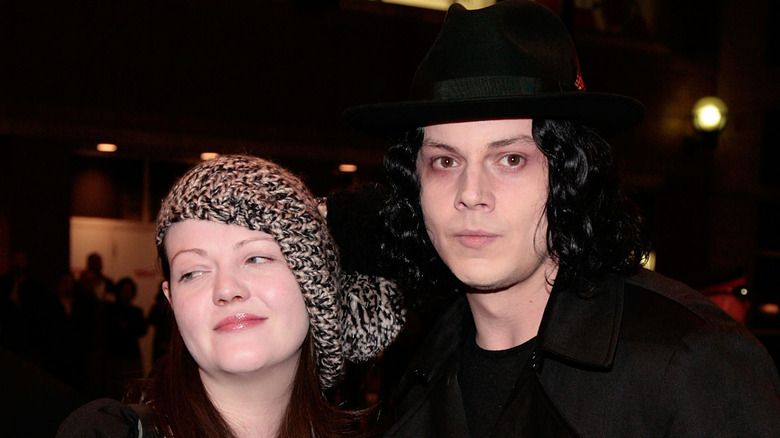
Nowadays people know Jack White as the solo blues rock musician who got into a war of words with the Black Keys and allegedly wanted to beat the group's drummer black and blue. But before becoming a one-man army, White played "Seven Nation Army" alongside drummer Meg White, his other half in The White Stripes. Jack and Meg were a one-two punch of talent that gained Grammys and international acclaim. Formed in 1997, The White Stripes' members sported jet-black hair, wore matching attire, and were vampire-pale. In 2001, Rolling Stone declared The White Stripes one of 2001's 'Next Big Things," and by that time, Jack and Meg were presenting themselves to the press as brother and sister. And that's where the story falls down a rabbit hole.
While The White Stripes' music was the real deal, the band's backstory was anything but. Far from brother and sister, Jack and Meg became man and wife in 1996 and divorced in 2000. They were basically the opposite of Jaime and Cersei — lovers who insisted they were siblings instead of siblings who insisted they weren't lovers. But why in the sister-kissing hell did they do it? In 2005, Jack told Rolling Stone that people would "care more about the music" than the relationship when presented with a brother-sister act. With spouses, Jack suggested people might assume "they're trying to save their relationship by being in a band."
The evolution of devolution
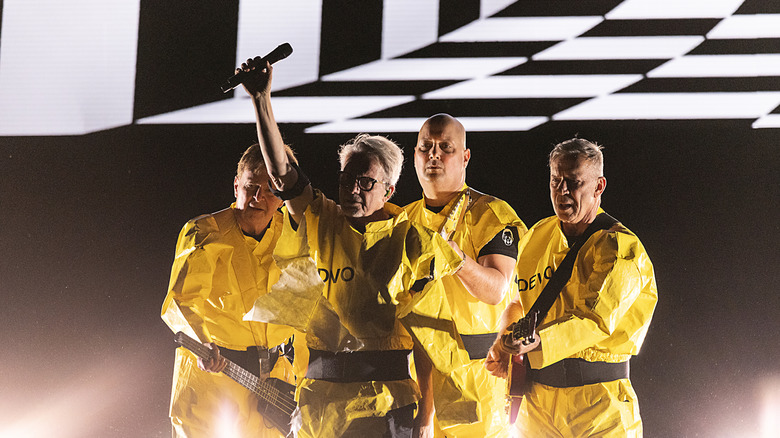
A creative mind can find artistic inspiration in the darnedest places. Marcel Duchamp's revolutionary work of anti-art, "Fountain," was just a porcelain urinal rotated 90 degrees. And composer Frank Zappa found musicality in running a violin bow across a bicycle wheel and wrote instrumentally complex songs about dental floss and yellow snow. And the band Devo, known for whipping it good and wearing energy dome hats, formed in response to the Kent State shooting.
The shooting lasted just 13 seconds. Students at Kent State University in Ohio had been waging antiwar protests for days after President Richard Nixon — who had largely won his White House bid with a dishonest promise to dial down U.S. involvement in the Vietnam War — revealed that he unlawfully expanded the conflict into Cambodia. On May 4, 1970, Ohio National Guardsmen deployed to the Kent State campus opened fire, killing four students. Among them were Allison Krause and Jeffrey Miller, both of whom were friends of Devo co-founder Gerald Casale.
At the time, Casale was an art student who had a rather bleak perception of society. He had already jokingly coined the term "devolution" and its abbreviated form "devo" to describe what he considered America's backward path. However, the Kent State shooting created a sense of urgency. So Casale and four other people formed Devo, which adopted Dadaist absurdity and other Interwar art movements to create bizarre, subversive depictions of society.
Splash into me
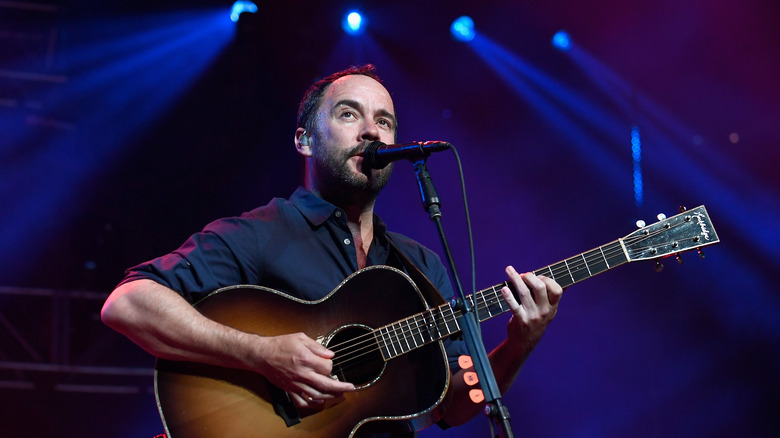
The Dave Matthews Band has had its share of hits, including its Grammy Award-winning "So Much To Say" (not to be confused with "What Would You Say"). The group's smash single "Crash Into Me" would actually make the perfect theme song for this tale, which involves a collision of sorts. It all happened in 2004. That February, Dave Matthews won a Grammy for his solo hit "Gravedigger," but that summer, his luck went up a fecal creek. Technically, it was a river: the Chicago River.
While flying to the Windy City for a tour stop, the band's eponymous frontman learned that a tour bus "dumped 800 pounds of human waste into the Chicago River" and onto a tour boat carrying more than 100 sightseers, NBC 5 Chicago reported. Matthews said he laughed at the news, completely unaware that the bus belonged to his band. As reported by The Smoking Gun, court records revealed that the bus was en route to picking up a band member when the driver stopped at a bridge and unloaded the liquid icky. It landed on the deck of the boat, making it a literal poop deck and splashing horrified passengers. The Chicago Tribune reported that the illegal dumper was "a longtime driver for the band's fiddle player Boyd Tinsley." As a mea culpa, the band paid $100,000 to Chicago-based organizations and agreed to pay $200,000 to an environmental fund as part of an out-of-court settlement.
I wanna drug your dog
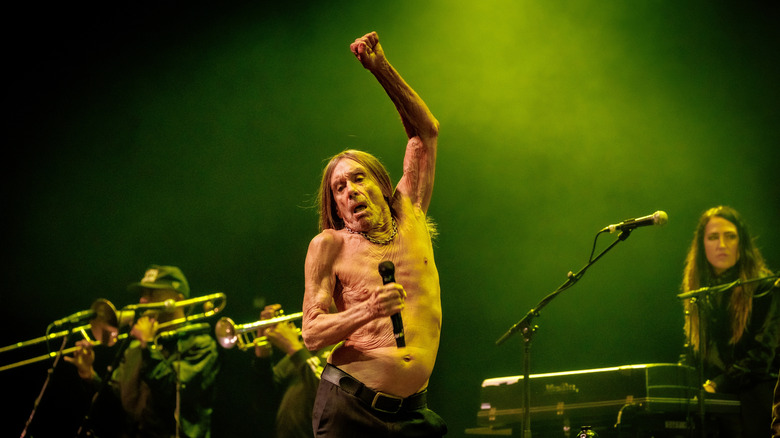
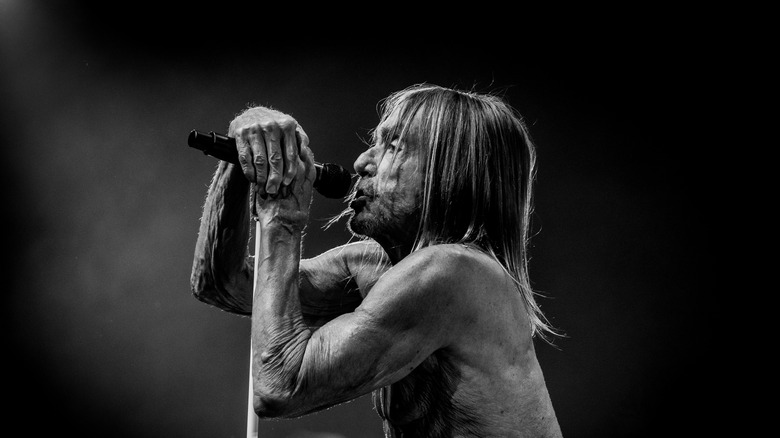
Led by the legendary Iggy Pop, The Stooges was a band that pioneered punk and became a patron saint of drug-fueled decadence during its original run in the 1960s and '70s. As Pitchfork described, Iggy "stomped and writhed onstage like he'd just swallowed a live snake." His bare "chest got smeared with peanut butter" and punctured by glass shards. Even something as mundane as liking dogs became turned into a crazy idea. He wore dog collars, and The Stooges had a 1969 single called "I Wanna Be Your Dog." Clearly not understanding that dogs shouldn't wanna be him, the drug-obsessed Iggy gave Valium to his girlfriend's dogs, Puppet and Furburger, in 1973. Thankfully, the canines recovered, but not before being rushed to a human hospital and turned away. Afterward, Pop insisted that he loved dogs and "[knew] a lot about animals," The Guardian reported.
Evidently, his animal expertise didn't extend to rock stars disguised as wild apes. In 1973, Elton John pranked the Stooges by storming the stage in a gorilla costume. As usual, Pop was higher than a kite, so he couldn't tell if he was hallucinating or seeing a real gorilla. In "Please Kill Me: The Uncensored Oral History of Punk," he recalled, "I was like, 'Oh my God! What can I do?' I couldn't fight him. I could barely stand." Guitarist James Williamson, who was also unprepared for the hairy surprise, told The Sydney Morning Herald that John came "very close to getting a guitar smashed against him." Luckily, the singer revealed his identity.
Men at Work became men in court because of a quiz show
Formed in Melbourne in 1978, Men at Work was the highest-paid unsigned band in Australia before landing its first record deal in 1981. In 1982, the group made such huge waves in America that The New York Times wondered if it would usher in a period of Aussie dominance that echoed the Beatles' British Invasion. No, but Men at Work's former-British-penal-colony invasion netted them a Grammy, and their international chart-topper "Down Under" became what The Sydney Morning Herald described as "an unofficial Australian anthem."
In 2007, a joke question on the music quiz show "Spicks and Specks" turned the Men at Work megahit into a black eye. Contestants were asked what Australian children's song was featured in "Down Under," and they had trouble naming it. Apparently, "Down Under" contained substantial portions of the 1934 song "Kookaburra Sits in the Old Gum Tree." To be clear, the kookaburra song only has four bars, and "Down Under" contains two of them. Nonetheless, after the question aired, the company that owned the rights to the children's song sued for royalties and won. After the lawsuit, things took a heartbreaking turn for Men at Work flutist Greg Ham — he had to sell his home and allegedly began drinking and taking heroin. Ham died in 2012.
The not-so-feel-good hit of the summer
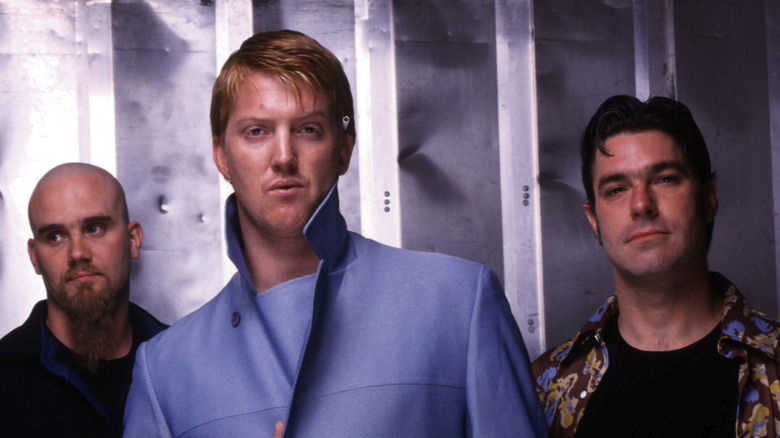
By 2007, Queens of the Stone Age was one of the biggest bands in hard rock. So it was a real treat when the residents of a California drug rehabilitation treatment center learned they'd get to enjoy a special, private concert from the group led by frontman Josh Homme. The show didn't last very long, unfortunately, because Queens of the Stone Age decided to get cute and call out the proverbial elephant in the room rather than err on the side of caution and be on its best behavior.
The band didn't even get through one song before rehab center staff literally pulled the plug, cutting power to the band's loud, electric instruments just barely after it had started playing. That's because Queens of the Stone Age opened its intimate engagement with the song that also kicks off its 2000 album, "Rated R": "Feel Good Hit of the Summer." The lyrics celebrate the kind of drugs that many of those residents were in treatment to deal with. In fact, the song is just a list of the names of drugs, repeated: "Nicotine, Valium, Vicodin, marijuana, ecstasy and alcohol / c-c-c-c-c-cocaine!" Security guards immediately removed Queens of the Stone Age from the building.
In the long run, the members of the Eagles hated each other
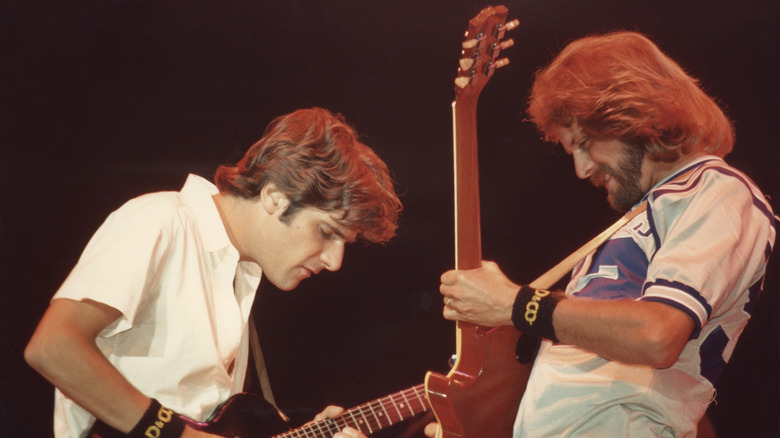
Behind the scenes, the Eagles, the group behind hits like "Take It Easy" and "Peaceful Easy Feeling," was so beset with tension that it led to a nasty breakup in 1980 following a disastrous concert that nearly ended in fisticuffs. In July 1980, the Eagles played a benefit concert for the re-election campaign of Sen. Alan Cranston. After Cranston gave a speech thanking the crowd and the various musicians present, guitarist Don Felder sarcastically replied (per Far Out), "You're welcome, Senator ... I guess." Felder's remarks angered and annoyed fellow Eagle Glenn Frey, who confronted him about the remark. "He found me in the dressing room and started yelling at me for what I'd said," Felder wrote in "Heaven and Hell: My Life in the Eagles (1974-2001)." "I don't know if it was the alcohol, the other drugs, or the fact that we'd been on tour for so long, but he just blew up."
More irate words were exchanged during the performance. "He came over while we were playing 'The Best of My Love' and said, 'F*** you. I'm gonna kick your a** when we get off the stage," Felder wrote. The sound crew had to turn down Frey's microphone so the audience wouldn't hear his threats, which he delivered after most every song. Just after the show, Felder smashed his guitar against the outside wall of the venue. Frey snipped at Felder once again, but they didn't come to blows.
Ladies and gentlemen, The ZZombies
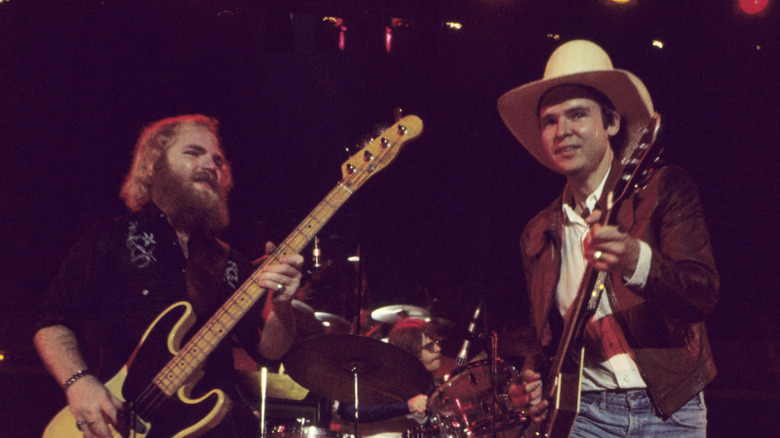
British Invasion band The Zombies experienced a wild popularity trajectory in the U.S. Its first singles, "She's Not There" and "Tell Her No," went Top 10 in 1964 and 1965, respectively, and then subsequent releases flopped. That lack of sustained success led The Zombies to break up in 1967, only for the defunct band to hit No. 3 in 1969 with the older single "Time of the Season." An enterprising company called Delta Promotions wanted to make some money off of the sudden second life of The Zombies. Seeing as how most Americans didn't know what the musicians in the band looked like, Delta didn't even need to recruit the real members — it sent out two groups of hired musicians, which both toured under the "Zombies" name. Delta Promotions told the fakers that the original Zombies had been an anonymous studio-only band and that it owned the rights to the songs. Neither of those things was true.
One of the reconstituted and fraudulent Zombies was built and based out of Texas. Among its members were Frank Beard and Dusty Hill, utilizing stage names. Those two musicians would go on to become two-thirds of the popular blues-rock band ZZ Top, and the pair's sound as The Zombies sounded much more like ZZ Top than it did a British pop band.
Wilco's seedy origin story
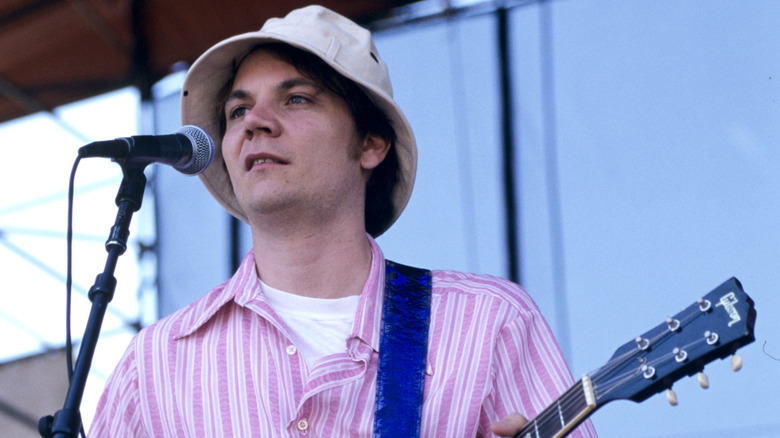
Uncle Tupelo released its first album in 1990, "No Depression," credited for launching the genre of alt-country. For a while, that entire style of music was also called "No Depression," as was an indie magazine that reported on the activities of bands like Uncle Tupelo and those it influenced. Uncle Tupelo wasn't the first band formed by childhood friends Jay Farrar (on guitar) and Jeff Tweedy (the bassist), but it was most definitely the last one. The group split up in 1994 after deep professional and personal disagreements between the two.
Both musicians went on to front new groups with varying degrees of success: Farrar formed the alt-country cult favorite Son Volt, while Tweedy created the beloved and acclaimed rock band Wilco. In his 2013 memoir, "Falling Cars and Junkyard Dogs," Farrar couldn't even bring himself to write his former friend and bandmate's name, referring to Tweedy only as "the bass player." He revealed that he'd actually left Uncle Tupelo twice, once for personal reasons and, after a brief return, for wanting to make different music than Tweedy. The initial exit is definitely the more audacious story. "The first time was when the bass player woke up my girlfriend, who was sleeping on the back equipment van bench, to profess his love for her while I was in charge of driving up front," Farrar wrote in his book.
Ween knows where the cheese went
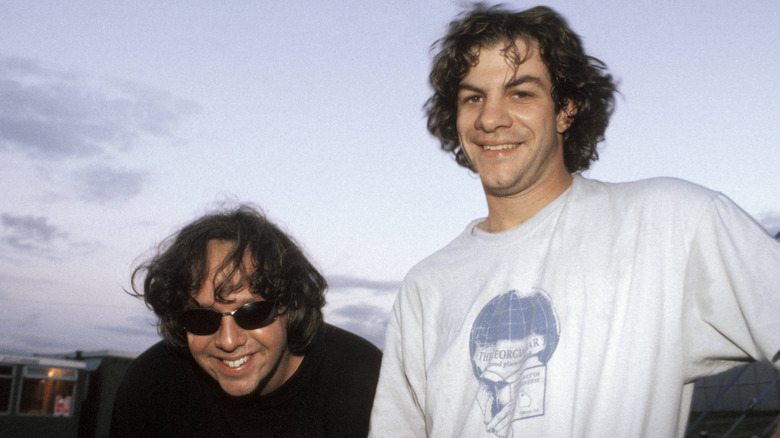
Maybe it was because of its invitingly childlike, homemade sound on many of Ween's songs. Or perhaps it was because the group recorded a classic album with the food-referencing title "Chocolate and Cheese." Whatever the reason, in 2002, Pizza Hut's advertising agency approached the band — best known for technically proficient but weird and experimental rock music riddled with silly jokes and profane lyrics — to record a jingle to promote its stuffed crust pizza.
The duo — consisting of Dean and Gene Ween (Mickey Melchiondo and Aaron Freeman, respectively) — dutifully went to work, but they found Pizza Hut to be a very difficult client to please. It was just a little bit of funny-sounding, synth-driven music with pitch-shifted vocals in the Ween style, but the ad reps didn't like it and kept demanding retakes. After Pizza Hut rejected a seventh version of the song, "Where'd the Cheese Go?", Ween recorded an eighth version with new lyrics that were almost the same as on the previous attempt — with lots and lots of curse words. Unsurprisingly, Pizza Hut didn't use any of Ween's recordings, and the band posted them for free on its website.
Jane says it's done
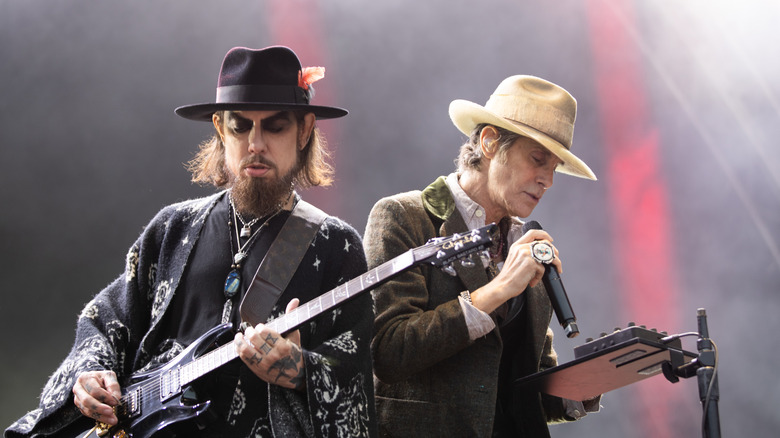
Guitarist Dave Navarro and singer Perry Farrell are the main creative forces behind Jane's Addiction, but they historically don't get along. The band initially split up in 1991 after headlining the first Lollapalooza tour, which Navarro and Farrell kicked off with a fight on stage. The group's set ended early after an angry Navarro threw some guitars into the crowd. Jane's Addiction reunited here and there over the next three decades, but never for long, and it might be a while until another reformulation after what transpired during the Boston stop on its 2024 tour.
Farrell, reportedly coping with tinnitus and throat pain after a long string of shows, became upset over struggling to sing over his louder bandmates. When some concertgoers near the stage yelled that they couldn't hear the vocals during "Ocean Size," Farrell went after the source of his frustration: Navarro. He pushed the guitarist and tried to get in a punch but was stopped by bassist Eric Avery, who restrained the singer and delivered a few blows to the stomach. Navarro took the moment to leave the stage. That summarily ended all Jane's Addiction activities, including 15 scheduled shows. "Due to a continuing pattern of behavior and the mental health difficulties of our singer Perry Farrell, we have come to the conclusion that we have no choice but to discontinue the current US tour," the rest of the band said in a statement on Instagram.
When GWAR landed on daytime TV
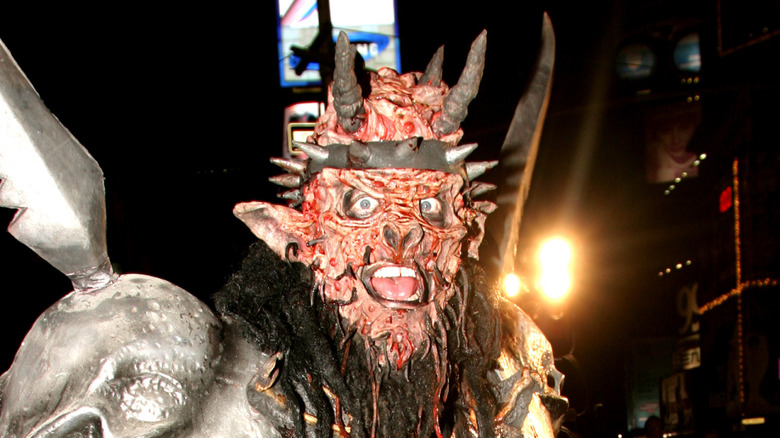
Combining arch theatricality with purposely offensive shock rock and sci-fi lore, GWAR is in a realm of its own. Purporting to be comprised of alien warriors who came to Earth to kill and enslave humanity, GWAR, whose members perform in character, covers its concert attendees in fake blood while it assaults their ears with metal tunes like "Slaughterama" and "Saddam a Go-Go." But when a band's entire identity is to be as extreme as possible, how can it top itself? It ventures into the philosophically beige confines of daytime TV.
Remaining entirely in elaborate costume and deep in character, members Oderus Urungus and Beefcake the Mighty visited "The Joan Rivers Show" in 1990. "Let's give her a hand," Oderus quipped before giving Rivers a severed (fake) appendage (via Louder Sound). A puzzled Rivers inquired about the band's mission. "Basically we view the human race as scum, we are indeed from another planet, you know, and we see human beings as food, dogs to be destroyed on stage," the frontman explained before talking about ripping off Barry Manilow and extending dinosaur guts across the Grand Canyon.
If you or anyone you know needs help with addiction issues, help is available. Visit the Substance Abuse and Mental Health Services Administration website or contact SAMHSA's National Helpline at 1-800-662-HELP (4357).
If you or someone you know needs help with mental health, please contact the Crisis Text Line by texting HOME to 741741, call the National Alliance on Mental Illness helpline at 1-800-950-NAMI (6264), or visit the National Institute of Mental Health website.