

TV Deaths That Happened Because The Actor Really Died
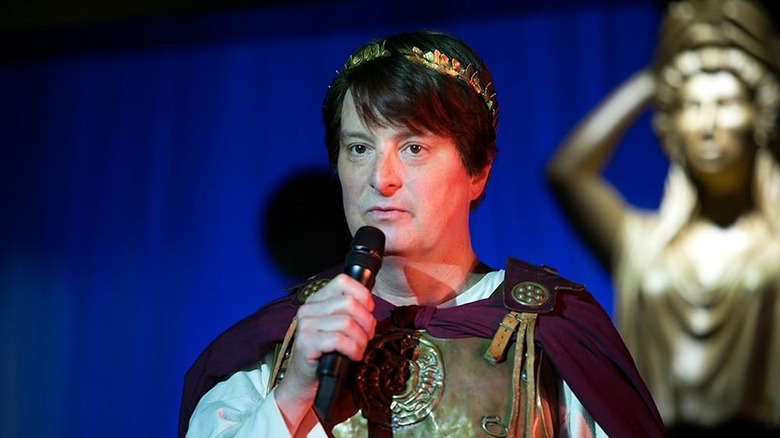
Spoiler alert: Everybody dies. It's an unfortunate fact of life. Sorry if we're blowing some minds here, but it's just the way things are. And sometimes, when people die, they're in the middle of filming a hit TV series. What are you going to do? The show must go on. But how?
There was a time when the answer was generally "recast and keep going, we've got ad time to fill." In recent years, though, many shows have adopted the approach of dealing with a cast member's death directly: By killing off the character that they were portraying. It can be a source of catharsis for the crew, and the audience gets a much-needed chance to say goodbye to those people they never met but felt compelled to invite into their homes every week. What follows is a list of characters who were killed off after the actors playing them died. Spoilers ahead. Also, bring tissue.
Mr. Hooper, Sesame Street
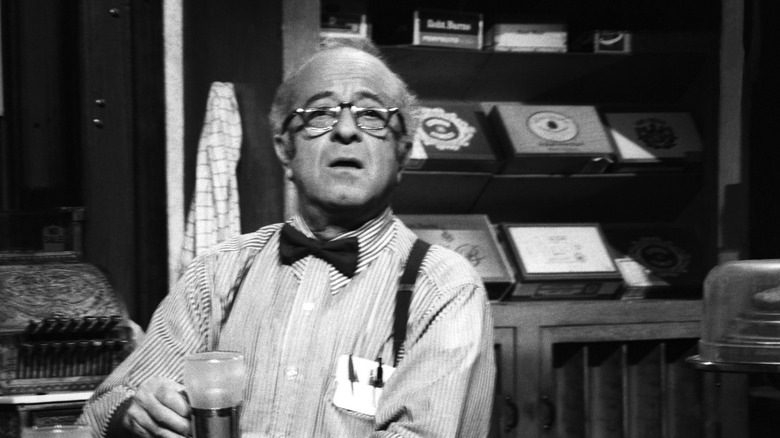
If you grew up in the '70s, there's a decent argument to be made that the quality of your childhood was directly proportionate to your familiarity with Mr. Hooper. For the uninitiated, Mr. Hooper was the proprietor of Hooper's Store, the preferred corner store and eatery of the denizens of "Sesame Street." Here, monsters and humans alike congregated, shared meals, and discussed — in flagrant disregard of PBS's non-commercial policies — which letters and numbers the show was being brought to you by.
Will Lee, the actor who played Mr. Hooper, died of a heart attack in 1982. The producers considered writing Hooper out, sending the character off to Florida to retire. But in a maneuver some might call the "Reverse Furious 7," they acknowledged that their audience was mature enough to accept death and made a whole episode about his passing. It was a bold move by a children's show, and "Sesame Street" won a Peabody for that season.
Ernie 'Coach' Pantusso, Cheers
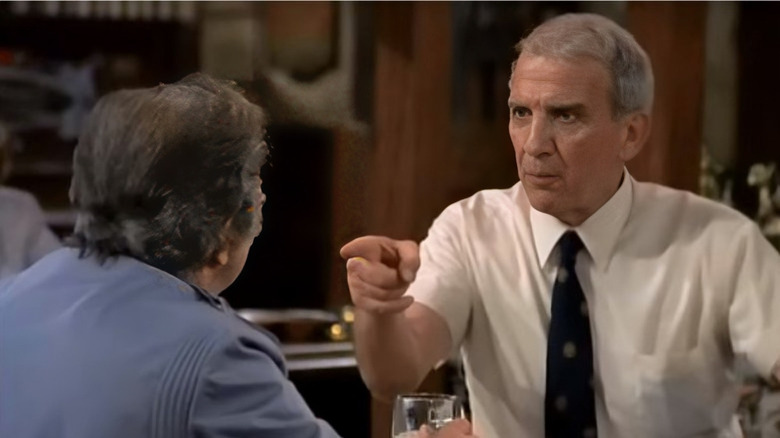
Ernie "Coach" Pantusso was a constant presence on "Cheers" from the beginning of the series. As Sam's old baseball coach, he could have easily fallen into the role of father figure for the show's protagonist. Instead, he was written as an almost childlike character. He was warm and universally beloved, and the part garnered actor Nicholas Colasanto three Emmy nominations.
Unfortunately, Colasanto died of a heart attack at age 61 before "Cheers" started filming its 4th season. The producers had no intention of recasting the role, but they needed another character to fill in the gap the actor had left. The show explained that Coach had died, but it didn't provide a lot of details. He was replaced by Woody Harrelson's character Woody, Coach's old "pen pal," with whom he used to exchange pens in the mail. If you're looking for extra feels, check out the portrait of Geronimo that Sam straightens in the "Cheers" series finale. It belonged to Colasanto and used to hang in his dressing room.
Bill McNeal, NewsRadio
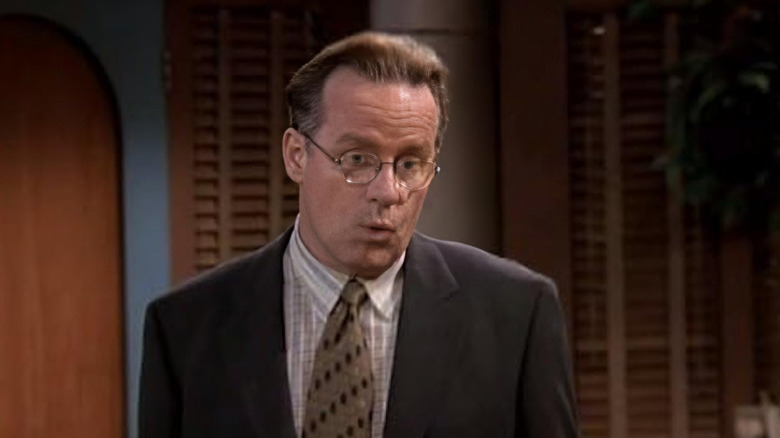
Phil Hartman was an American treasure on the same scale as Yosemite, even if he was technically born in Canada. Over a career spanning decades, Hartman played dozens of roles: Troy McClure on "The Simpsons," Ranger John "Vicky" Johnson in "So I Married An Axe Murderer," and countless characters on "SNL," to name just a few. During the last few years of his life, Hartman played Bill McNeal on "NewsRadio," the egotistical co-anchor of the show's WNYX newscast. Then, in 1998, Hartman was shot to death by his wife, who then killed herself.
Phil Hartman's tragic death was addressed by "NewsRadio" in a beautifully balanced manner. His character was killed offscreen, dying of a heart attack, and the show managed to keep a sense of humor about his loss without being cruel. The next week, Bill McNeal's role was filled in by Max Louis, played by Hartman's fellow "SNL" alum Jon Lovitz.
Jack Tripper, 8 Simple Rules for Dating My Teenage Daughter
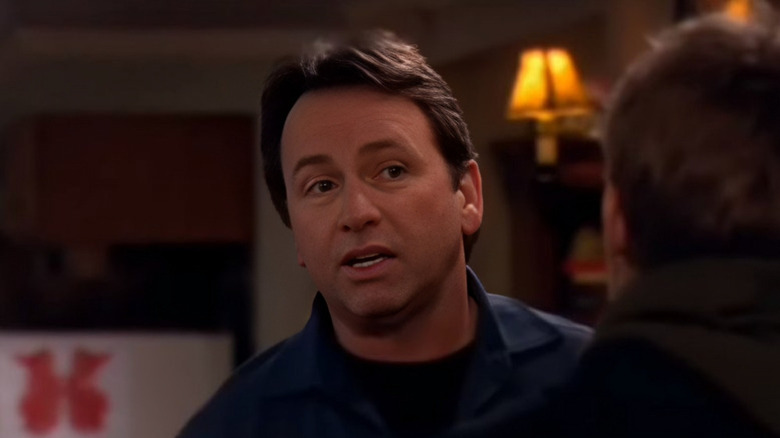
John Ritter was a beloved television icon by the time he was 29 thanks to his role as Jack Tripper on the classic TV sitcom "Three's Company." Small film parts and television appearances followed, but his real return to the spotlight came in 2002 with the premiere of his hit show "8 Simple Rules for Dating My Teenage Daughter." Based on the book of the same name, the show focused on Ritter's character, Paul Hennessy, and his attempts to maintain control over his daughters' dating lives.
The world was shocked by the sudden death of John Ritter in 2003. He died of aortic dissection, a rare condition in which blood forces the layers of the aorta apart. Ritter had already finished shooting three episodes of the show's 2nd season. The series went on a brief hiatus following his death, and when it returned, Hennessy's death was addressed, and the program was retitled as just "8 Simple Rules." The paternal void left by Ritter was filled by James Garner, who came on board as the maternal grandfather of the teenagers.
Leo McGarry, The West Wing
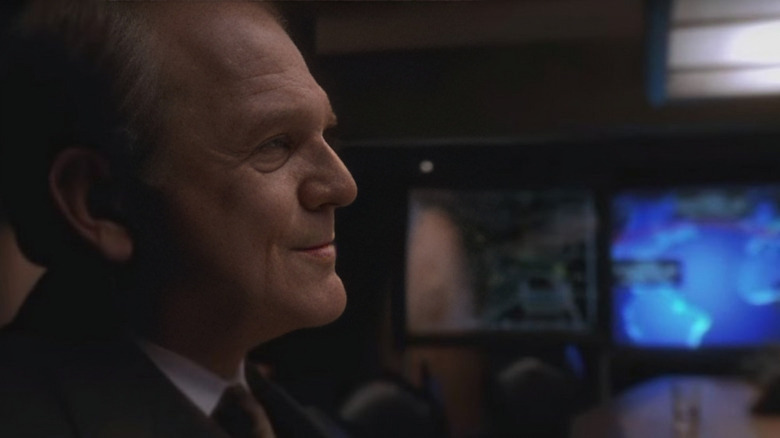
Depending on whom you ask, the entire ending of "The West Wing" was changed by the death of John Spencer. For six seasons, Spencer played Leo McGarry, chief of staff and later counselor to the president for the Bartlett administration. He was a patient, loyal, and often beleaguered boss and father figure to the younger staff members, as well as a confidant and friend to the president. Speaking to PBS, Spencer said his character was so well received, Clinton-era Chief of Staff Leon Panetta once told him that "any government would be lucky with Leo as chief of staff."
In Season 7, McGarry ran for vice president alongside Congressman Matt Santos, played by Jimmy Smits. Sadly, amid filming, John Spencer died of a heart attack on December 16, 2005, and the series' creators were forced to figure out a way to resolve his story. Here's where the show's history gets a little tricky. According to executive producer Lawrence O'Donnell, the writers had planned for Santos and McGarry to lose the election but felt that writing in the death of a beloved character alongside the loss of the White House was too much for the viewers to take. Instead, they rewrote the ending with McGarry dying on election night and Santos becoming president. "West Wing" showrunner John Wells has contradicted O'Donnell's claims, but one thing they agree on is this: They couldn't keep doing the show without Spencer.
Andrew Campbell, Mad Men
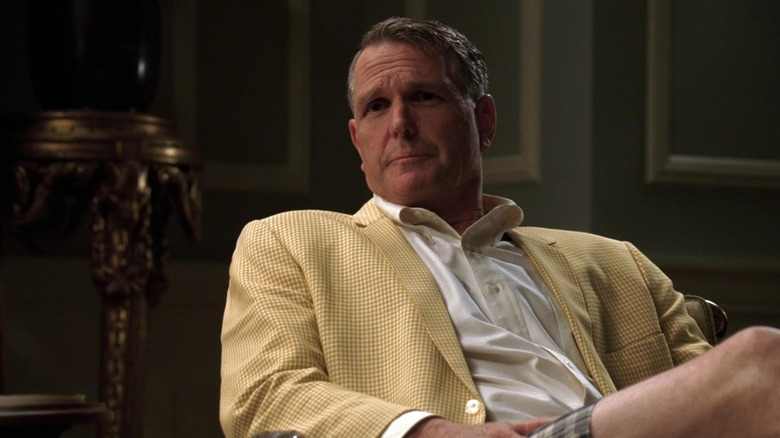
Christopher Allport wasn't a household name, but he was an actor who worked consistently throughout his life, scoring nearly 100 screen roles over four decades. One of his final performances was as Andrew Campbell, father of Pete, on "Mad Men." During the 1st season of "Mad Men," Pete Campbell was hounded by the disapproval of his father. Though Andrew Campbell only appeared in one episode of the show, his presence was certainly felt. He was a cold and unhappy man whose contempt for the advertising world and his own son pushed Pete to make some unfortunate decisions.
In January 2008, Christopher Allport died tragically in an avalanche while skiing in the San Gabriel Mountains in California. The writers on "Mad Men" offed his character in Season 2, where they revealed that he had died in the American Flight 1 plane crash, a real-life 1962 airline accident that took the lives of everyone on board.
Edna Krabappel, The Simpsons
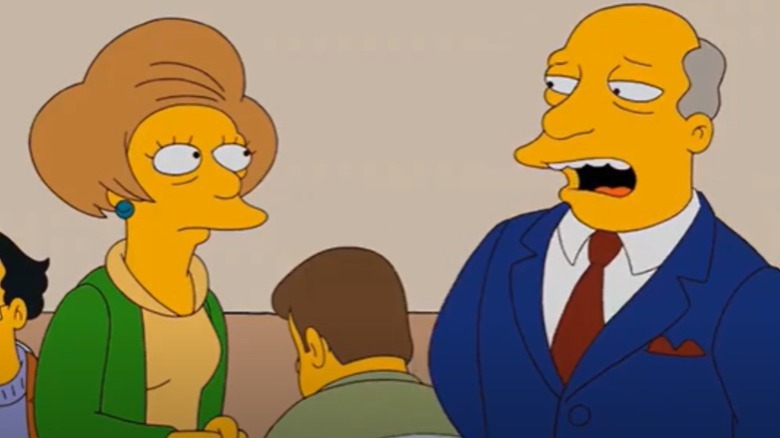
Marcia Wallace had a remarkable career. She played Carol the receptionist on 140 episodes of "The Bob Newhart Show" and appeared on dozens of game shows before taking on perhaps her most iconic role as Edna Krabappel on "The Simpsons," a character that she would continue to play for over 20 years. Outside of acting, she found success as a corporate speaker, discussing her struggle with breast cancer and the importance of humor.
Wallace died of pneumonia in 2013 at age 70. The nature of voice acting means it would have been easy to find a replacement who could pull off Wallace's voice, but the producers decided to retire the character out of respect for the actress. They paid tribute to their lost colleague with a touching opening sequence shortly after her passing. Then, the next year, Edna's death was referenced in the Season 25 "Simpsons" episode "The Man Who Grew Too Much."
Owen Granger, NCIS: Los Angeles
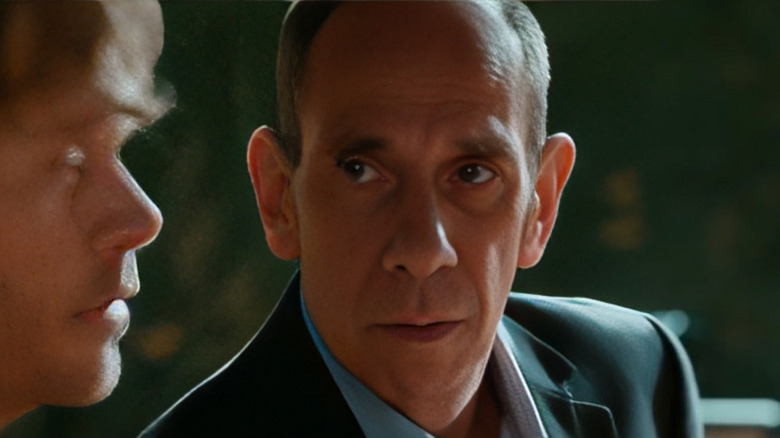
Miguel Ferrer had a long career, starting out as a TV actor before breaking into the public eye with his role as the OCP's ill-fated vice president in 1987's "RoboCop." He found success both in front of the camera — as shown by his six-year run on "Crossing Jordan" — and as a voice actor, playing everything from Aquaman in the '90s "Superman" cartoon to Death on "Adventure Time."
Ferrer had been playing Assistant Director Owen Granger on "NCIS: Los Angeles" for five years when he died of throat cancer in 2017. Within the show, it had already been revealed that his character was dying, potentially as a result of exposure to Agent Orange. Initially, his character was written out as having left the country to deal with unfinished business. However, later in the series, viewers were told that Granger had passed away, having died peacefully under a tree after leaving to try to atone for missteps he made while raising his daughter.
Finn Hudson, Glee
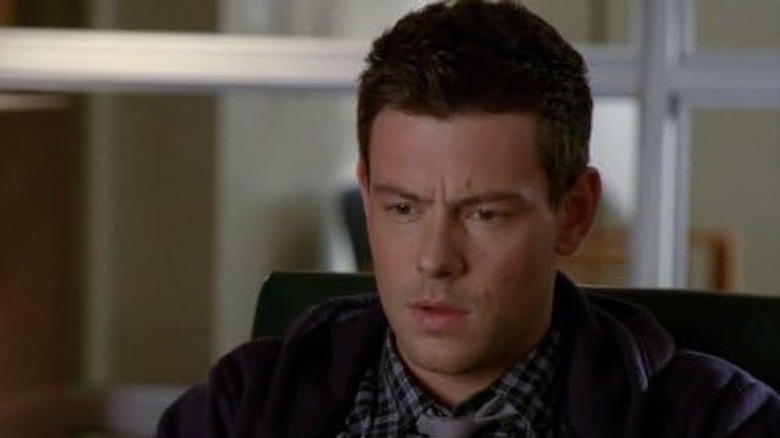
Cory Monteith's brief but astonishing career as an actor saw him starring in movies and TV shows, with appearances on "Stargate," "Supernatural," and "Smallville," among others, before really hitting it big when he joined the cast of "Glee." There, he played Finn Hudson, the star athlete who joined the choir program and did a whole heap of singing.
Monteith's life was both short and difficult. He had already checked into rehab by the time he was 19, and his substance use issues were documented well before that. Then, in July 2013, Monteith was found dead in a Vancouver hotel room. An autopsy later revealed that the 31-year-old actor had passed away after overdosing on alcohol and heroin. After Monteith's passing, Finn Hudson was memorialized in the Season 5 episode "The Quarterback," which paid tribute to the character without ever spelling out the circumstances surrounding his death. There was, one must assume, a whole heap of singing.
Debbie Wolowitz, The Big Bang Theory
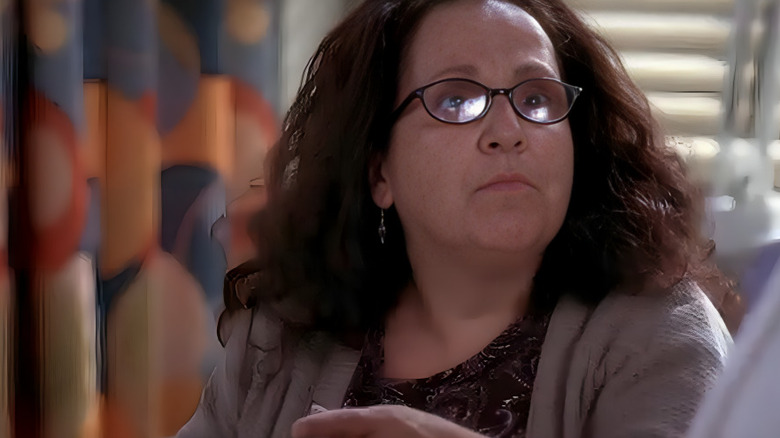
Fans of CBS's "The Big Bang Theory" might not have been familiar with Carol Ann Susi's face, but they definitely knew her voice: She played Debbie Wolowitz, the unseen but oft-heard mother of Howard. While this was probably Susi's most prolific role, she had a long, fascinating career as a television and movie actress, starting with a recurring role on "Kolchak: The Night Stalker" all the way back in 1974. If you haven't watched "Kolchak," you've gotta watch "Kolchak." It's some weird business.
Sadly, in November 2014, Carol Ann Susi died of cancer at age 62. Mrs. Wolowitz was killed in her sleep during the "Big Bang Theory" episode "The Comic Book Store Regeneration," and two other episodes were written around the character's death. Across these episodes, a funeral is held (though it's off-screen), her urn is lost in airline luggage, and the gang has one more of her enormous meals thanks to a freezer full of leftovers. Not bad for a character whose face we never saw. Not once.
Dr. Charles Kroger, Monk
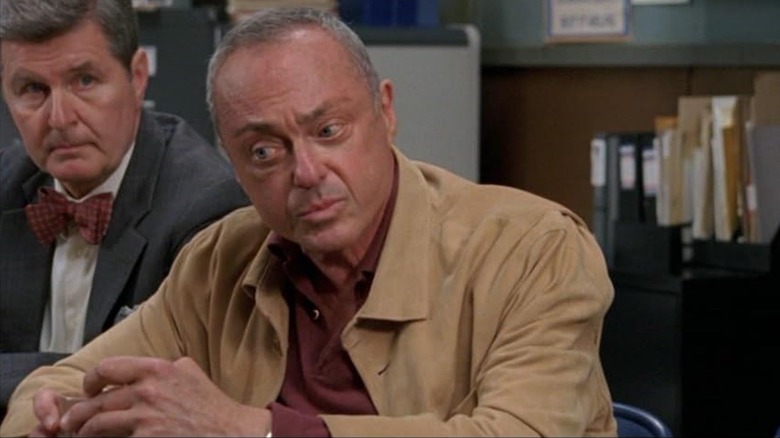
Our more nerd-inclined readers might know Stanley Kamel (above right) from his appearance on "Star Trek: The Next Generation." He also had pretty decent runs on "General Hospital" and "L.A. Law" over the course of his career. Fans of the show "Monk," however, will undoubtedly remember Kamel as Adrian Monk's longtime therapist, Dr. Charles Kroger. For six full seasons, he served as Monk's friend, doctor, and confidant, often unwittingly helping the former detective piece together the case he was working on.
Then, at the start of Season 7, both the character Monk and the show's viewers were shocked to learn Dr. Kroger had passed away from a heart attack. This was due to the untimely death of Stanley Kamel, who experienced a real heart attack in April 2008. While Kroger was replaced by a new therapist (Héctor Elizondo's Dr. Neven Bell), his loss was felt deeply. In response, the cast and crew put together a public service announcement on the subject of cardiac health.
Judge Dennis 'Happy' Boyle, Ally McBeal
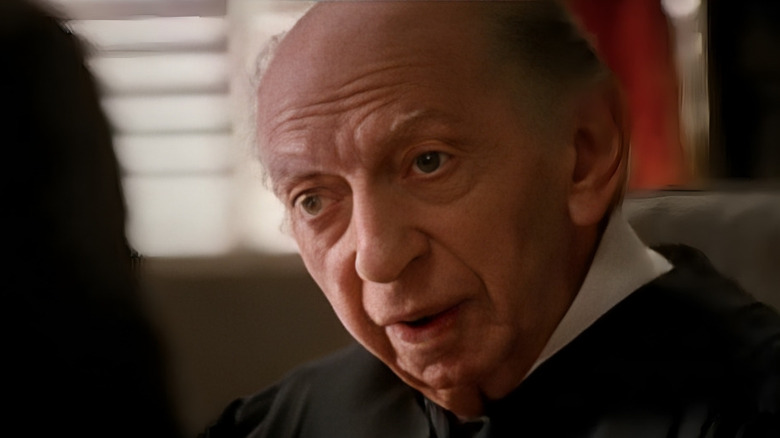
There's a good chance you don't know Phil Leeds, but he was a fascinating dude. A native New Yorker and ex-peanut vendor at Yankee Stadium, he turned to stand-up comedy and later to character acting, despite having no professional theatrical training. He was blacklisted during the era of McCarthyism but managed to bounce back later in his career. Most notably, he landed parts in "Ghost," "Barney Miller," and "History of the World: Part I," among many others.
When he died in 1998 at 82, he was playing a recurring character, Judge Dennis "Happy" Boyle, on the hit series "Ally McBeal." Utilizing clever editing techniques, the production team at the show put together what co-executive producer Jonathan Pontell described as a "patchwork scene" with unused footage in which his character fell asleep in court, per the Pittsburgh Post-Gazette. (Of course, in the patchwork scene, they said he died.) As death sequences go, it was pretty funny — and a cool tribute to an old Catskills comedian.
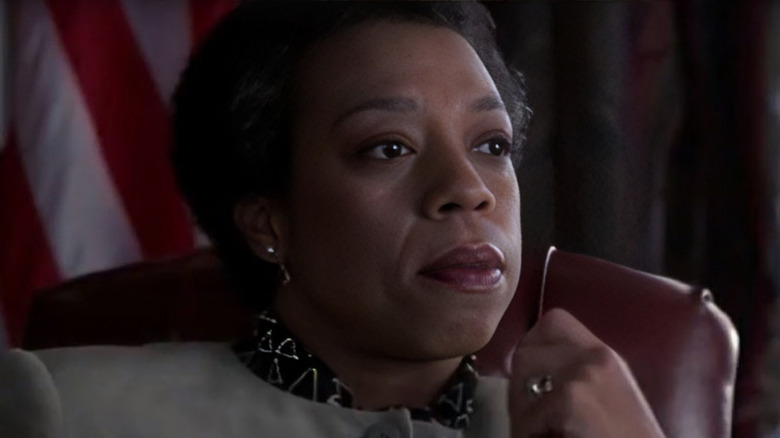
Lynne Thigpen as Ella Mae Farmer, The District
It's a question that's plagued detectives for years. It's destroyed marriages and torn apart careers and caused hypertension and acid reflux in officers of the law. But one day, we will know the answer to the riddle that continues to perplex the forces of justice: Where in the world is Carmen Sandiego?
Maybe Lynne Thigpen's most memorable role, at least for the millennials in the crowd, was the Chief on "Where In The World Is Carmen Sandiego?" If you close your eyes and hold an Acme phone to your ear, legend has it that you can still hear her barking the word "gumshoes" at you from across the decades. By the early 2000s, though, she had picked up a starring role on the crime procedural "The District" alongside Craig T. Nelson and Sean Patrick Thomas. When she died suddenly of a cerebral hemorrhage in 2003 at age 54, the show's writers made her character, Ella Mae Farmer, die the same way.
Barry Frost, Rizzoli & Isles
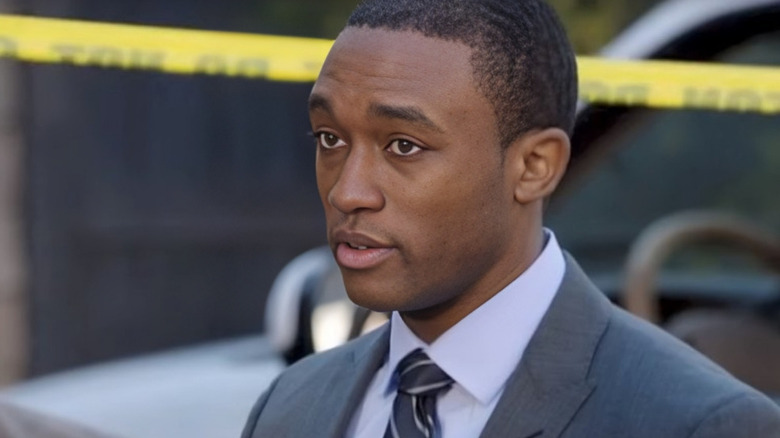
Lee Thompson Young did a lot with the short amount of time that he had. Children of the '90s knew him as the titular character from "The Famous Jett Jackson," and "Smallville" fans will remember him as the first live-action version of "Justice League" mainstay Cyborg. On the big screen, he had meaty roles in films that ran the gamut in quality, from "Akeelah and the Bee" to "The Hills Have Eyes II."
Offscreen, however, Young's life was a difficult one. He experienced depression and bipolar disorder, and in 2013, after he failed to show up on set, police were sent on a wellness check. There, they found he had died by suicide. He was 29.
At the time of his death, Young had been playing Barry Frost on TNT's "Rizzoli & Isles" for four seasons. The show was put on hiatus following the shocking loss and returned the next season with a story about his character's death in a car accident.
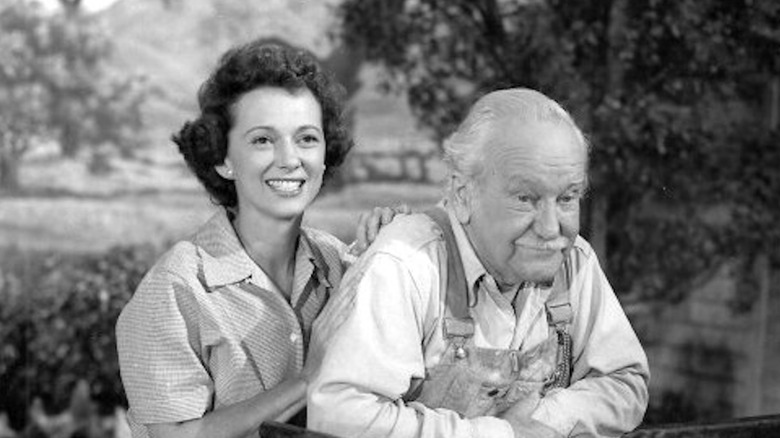
George 'Gramps' Miller, Lassie
There's a lot you can count on your grandpa to do. He'll teach you about baseball. He'll permanently engrain the smell of musk-scented Speed Stick into your memory. And then, one day, he'll die. It doesn't just happen to our grandfathers — it happens to the grandfathers of iconic television characters, too.
George Cleveland was part of a generation of actors who got their start in vaudeville and lived long enough to make it to television. When he suffered a fatal heart attack in 1957, he'd been playing Gramps on TV's "Lassie" for over 100 episodes. The makers of the show were at a loss. No family show in history had depicted the death of a main character on screen before, but they decided to give it a shot. They consulted child psychologists and fought the network and the sponsors to have Gramps die within the show, even being told at one point that they couldn't use the words "death" or "die" to refer to what had happened. They persevered, and the sad saga was broadcast.
Brigadier Lethbridge-Stewart, Doctor Who
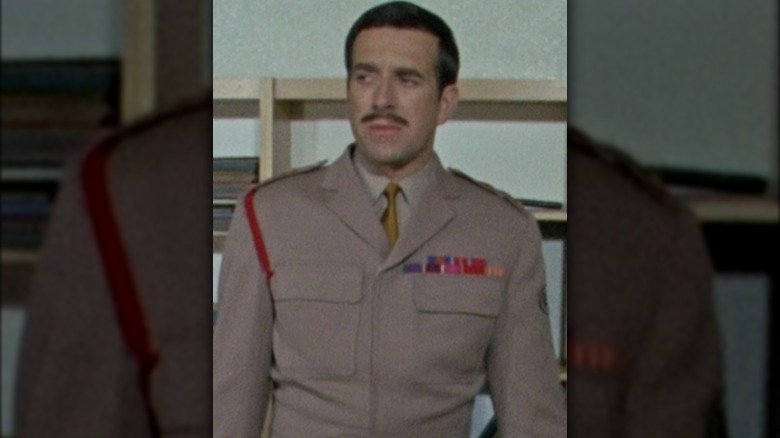
Even if you haven't been following the show that historians hate for the last few decades, if you've ever watched "Doctor Who," you've probably heard of the Brigadier. Played by British actor Nicholas Courtney, the character of Brigadier Alistair Gordon Lethbridge-Stewart appeared in more than 100 episodes of the series, also showing up in its various spin-offs, radio dramas, and comic books.
Sadly, Courtney died in 2011 after a long illness at the age of 81. His last appearance as the Brigadier had been three years before on the spin-off show "The Sarah Jane Adventures," but the character's presence had always been felt on "Doctor Who." So how does a show about a guy who can travel anywhere in time deal with death? With a surprising amount of pragmatism. During the sixth series' finale, the Doctor calls the nursing home where Lethbridge-Stewart had been living. A nurse informs him that the Brigadier has died. He was given a final goodbye two seasons later, and his character's daughter, Kate, later became a recurring character.
Sam Noonan, Gunsmoke
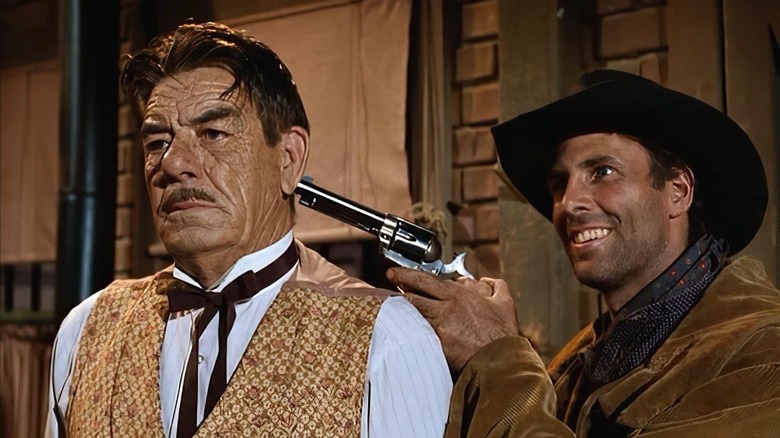
Glenn Strange (above left) was pretty prolific. An accomplished singer, songwriter, and character actor out of Hollywood's golden age, he worked in B-movies and television for decades. But he was perhaps best known for playing Frankenstein's monster in three different films for Universal: "House of Frankenstein," "House of Dracula," and "Abbott and Costello Meet Frankenstein." In fact, his portrayal of the character became so iconic that, due to an editing error, his face was printed next to Boris Karloff's obituary in newspapers across the country.
Never out of work for long, Strange found a home during his last 12 years playing Sam Noonan, the bartender on "Gunsmoke," a show that ran for an astonishing 20 seasons. Then, in 1973, he died of cancer at 74 years old. He'd been on over 200 episodes of "Gunsmoke" when he passed, and the character of Sam died with him. Happy trails, Sam.
The Master (the first one), Doctor Who
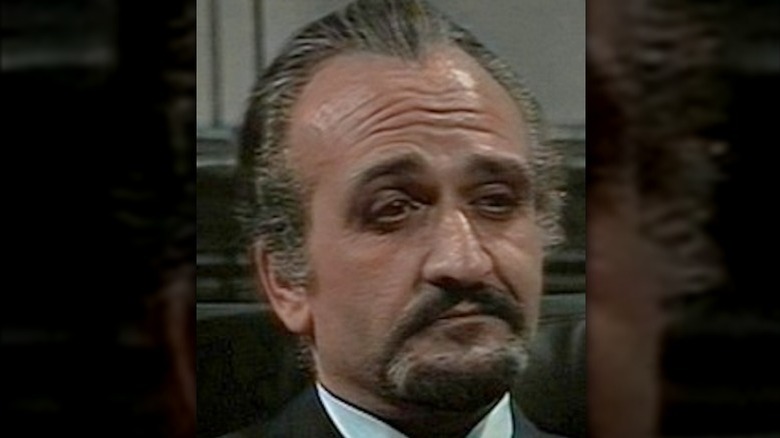
From the moment he walked out of a horse box in the Season 8 premiere of "Doctor Who," Roger Delgado made a splash as the villainous Master. He was sinister. He was conniving. He had an insatiable appetite for scenery and a hell of a goatee. In short, he was good at being bad.
Delgado's Master didn't take long to become a staple of the "Doctor Who" rogues gallery. He would show up in dozens of episodes, plotting to end the world with everything from nerve gas to killer inflatable chairs. Unfortunately, in 1973, the actor was shooting a picture in Turkey when he died in a car crash. He was 55. On "Doctor Who," the Master ultimately died and regenerated into a new body — another staple of the show.
Richard Gilmore, Gilmore Girls: A Year In The Life
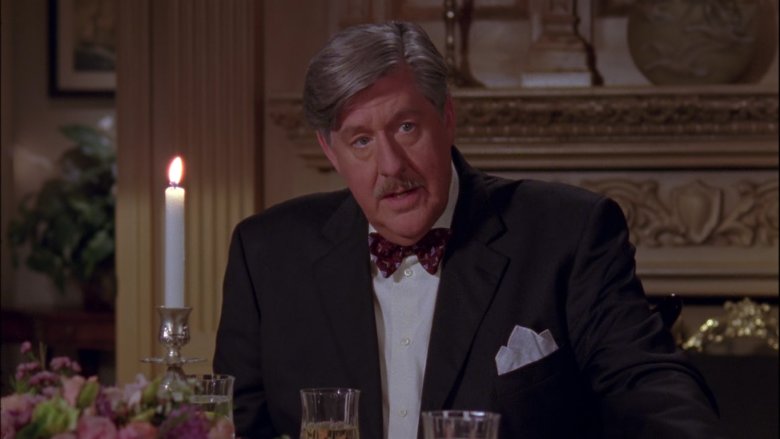
It's been a staple of popular culture for the last few years: Much-beloved shows are brought back for a victory lap, catching their fans up on the lives of their favorite characters after a long hiatus. But time keeps moving forward, and inevitably, it catches up to all of us. For seven years and over 150 episodes, Edward Herrmann played Gilmore family patriarch Richard on "Gilmore Girls." Sadly, in 2014, Herrmann had passed away at the age of 71 as a result of brain cancer.
A fan-favorite character, Richard's absence was reportedly felt on and off screen when shooting commenced on the follow-up series "Gilmore Girls: A Year In The Life," according to a piece in Vanity Fair. The makers of the 2016 revival wrote Richard out of the series with a fatal off-screen heart attack, calling back to the cardiac problems he experienced in the original series. Richard's death became a major plot point, especially in the sequel series' opening episode.
Fred Andrews, Riverdale
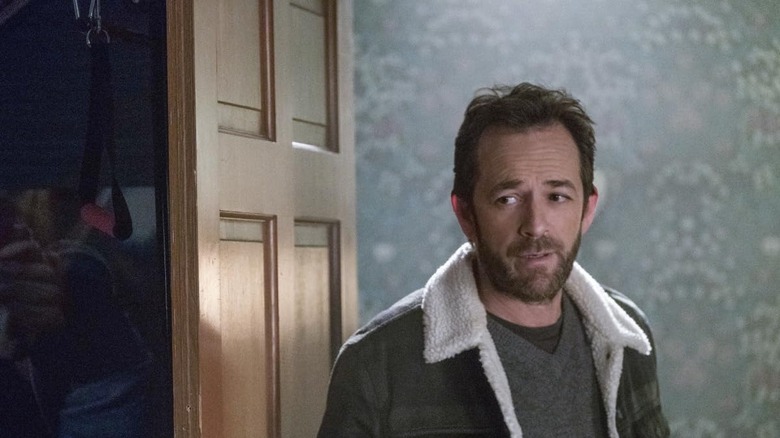
If you were mentally cataloging a list of TV shows that might deal with the untimely loss of an actor with dignity and grace, you wouldn't necessarily put "Riverdale" at the top. After all, at its heart, it's a show sensationalizing a children's comic about milkshakes and old-timey Americana hijinks with sex, murder, and a deathly serious reimagining of "Josie and the Pussycats." So it was genuinely heartwarming when the 4th season premiere, "In Memoriam," took the emotional bull by the horns and addressed the passing of actor Luke Perry with some level of grace and reverence.
Perry had experienced heavy levels of celebrity in the '90s playing Dylan McKay on "Beverly Hills, 90210," and he had been a regular member of the "Riverdale" cast since the show's pilot episode. But in February of 2019, the 52-year-old performer suffered a massive stroke, dying a few days later on March 4. The show wrote his character, Fred, out of the latter part of the 3rd season, which was still in production at the time, explaining his absence by saying that he was on a business trip. When the show returned from summer break, the entire premiere episode dealt with the fallout of his character's death in a hit-and-run.
Thelma Griffin, Angela, Mayor Adam West, Family Guy
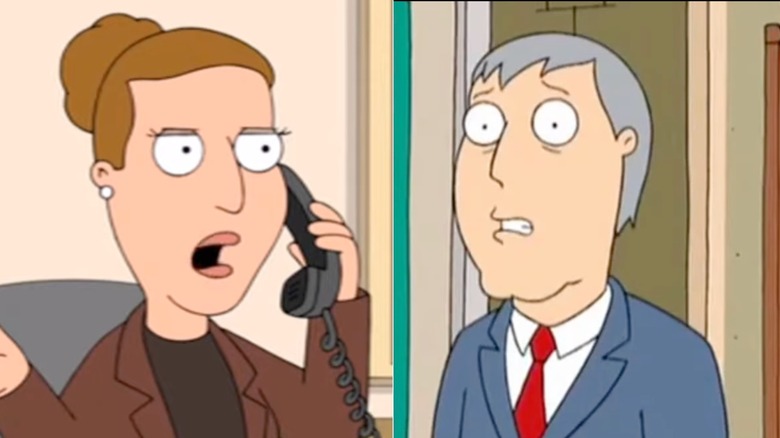
Characters routinely die on "Family Guy," but typically, nobody stays dead for long — violent deaths often occur in a fantasy sequence or act as the punchline to a joke. But when a member of the voice cast dies, the show pays its respects by retiring their character. In other words, they die, too. In 2012, comedian Phyllis Diller died at the age of 95. Known for her live act and many TV appearances, one of the last roles she played was Thelma, the dispassionate mother of "Family Guy" main character Peter Griffin. The 2014 episode "Mom's the Word" established that Thelma died of a stroke.
Iconic for her work as Princess Leia across the "Star Wars" universe, Carrie Fisher also had a recurring role on "Family Guy" as Peter's nightmarish boss, Angela. In 2016, Fisher had a heart attack and shortly thereafter died at the age of 60. "Family Guy" paid tribute in the 2018 episode "Pawtucket Pete," in which Peter clearly eulogizes Fisher, not Angela, calling her "fearless, spontaneous, honest about herself just as much as she was about the world around her."
Adam West, who so archly interpreted "Batman" on TV in the 1960s, took a similar approach to playing Quahog's mayor Adam West on "Family Guy." In 2017, he died at 88 after a bout of leukemia. Two years later, "Family Guy" presented a whole episode in which the town dedicates Adam West High School in memory of West and his character.
Chico, Chico and the Man
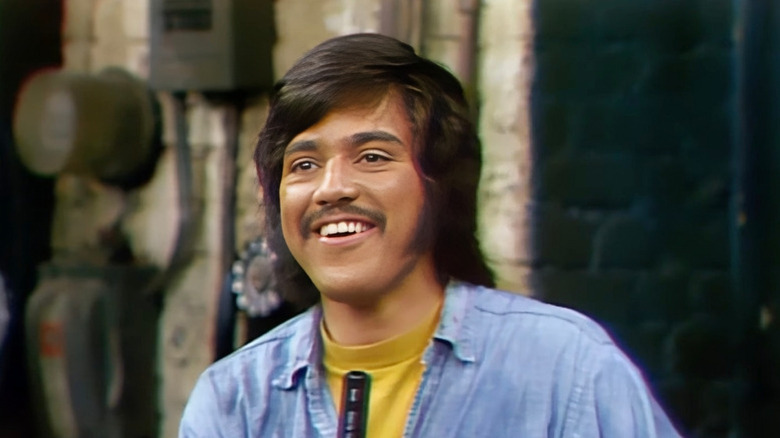
In 1973, when he was just 19 years old, stand-up comedian Freddie Prinze brought his electric act about his experiences as a Latin American man raised in New York City to "The Tonight Show." That star-making appearance led to writer James Komack and NBC building a sitcom around Prinze called "Chico and the Man." A reluctant-buddy comedy, "Chico and the Man" featured Prinze as Chico, a character not unlike the comic's stage persona, and Jack Albertson as Ed, his boss at a mechanic's garage in Los Angeles. Prinze's popularity fueled the show's tremendous popularity, as "Chico and the Man" was the third-most-watched TV show during its debut season of 1974-75.
In January 1977, Prinze, experiencing mental health issues, attempted to die by suicide. Declared brain dead by doctors at UCLA Medical Center, Prinze died at age 22. "Chico and the Man" was in the middle of production on its 3rd season, which finished out the year with characters mentioning that Chico had traveled to Mexico to see his father. When "Chico and the Man" returned from its summer hiatus in the fall of 1977, Chico was still absent, but he was replaced by Raul (portrayed by Gabriel Melgar), a new character similar to Chico. Many episodes later, Raul finds some things Chico left behind, and Ed tells him, and viewers, that the character had died.
Selma and Flo, Night Court
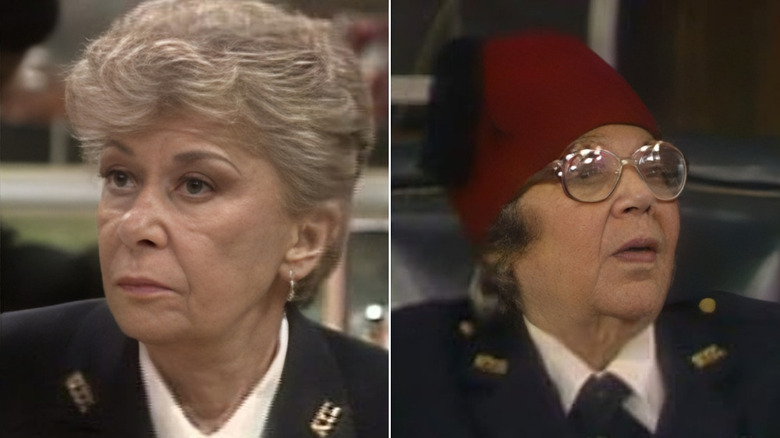
A gritty and at times dark sitcom about a New York City courtroom that stays open all night to process ne'er-do-wells accused of street crimes, "Night Court" debuted on NBC in January 1984. Among the standouts in the acting ensemble was veteran actor Selma Diamond as Selma Hacker, an elderly and pointedly acerbic courtroom bailiff. She only appeared in the first two seasons of "Night Court" and earned an Emmy Award nomination for outstanding supporting actress in a comedy in 1985, which was a posthumous honor. Diamond had died in May 1985 at the age of 64 from the effects of lung cancer.
"Night Court" resumed production soon thereafter, and the 3rd season's first episode depicted the hiring process for a new bailiff to replace Selma, who had died off screen. The show then introduced a new character, bailiff Florence "Flo" Kleiner, as portrayed by Florence Halop. That actor only co-starred on "Night Court" for one season. While seeking medical treatment for a stroke in June 1986, Halop was diagnosed with cancer. She died the following month. The 4th season of "Night Court" began airing that fall, and the show explained that Flo had died some time before, with Marsha Warfield joining the cast as replacement bailiff Roz Russell.
Peter Gregory, Silicon Valley
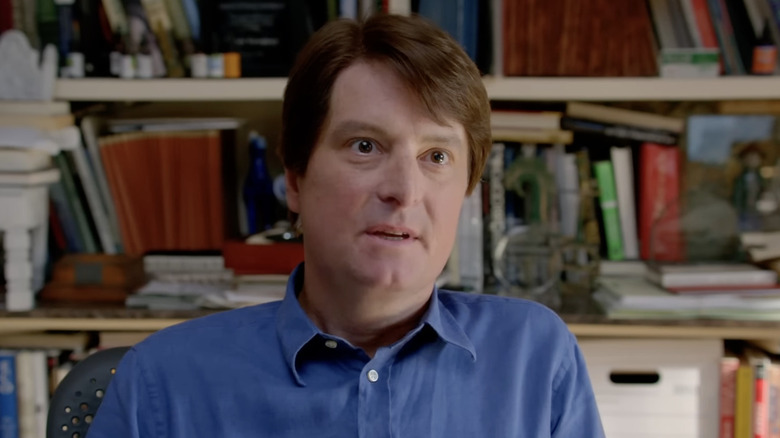
The 1st season of "Silicon Valley," HBO's satire of Northern California's lucrative technology sector, concerned a group of programmers trying to launch an app with the assistance of inscrutable and often adversarial executives and investors. One such money man was the enigmatic and unpredictable Peter Gregory. Christopher Evan Welch brought layers and subtlety to the role, skills honed over a long career that included dozens of appearances in movies and TV shows, including "Law & Order," "Lincoln," and "The Master."
In December 2013, Welch died at a hospital in Los Angeles, many years after receiving a lung cancer diagnosis. Welch's death came four months before his episodes of "Silicon Valley" first aired in 2014. His character, Peter Gregory, is absent from the 1st season of the show after five episodes, and the show addressed his whereabouts during the first installment of the 2nd season in 2015. Main character Richard (Thomas Middleditch) views a news clip announcing the unexpected death of the idiosyncratic investor. Later in the episode, Gregory's work associate, Monica (Amanda Crew), discloses that the character died on safari just after trying to outrun a hippo that entered his tent.
Livia Soprano, The Sopranos
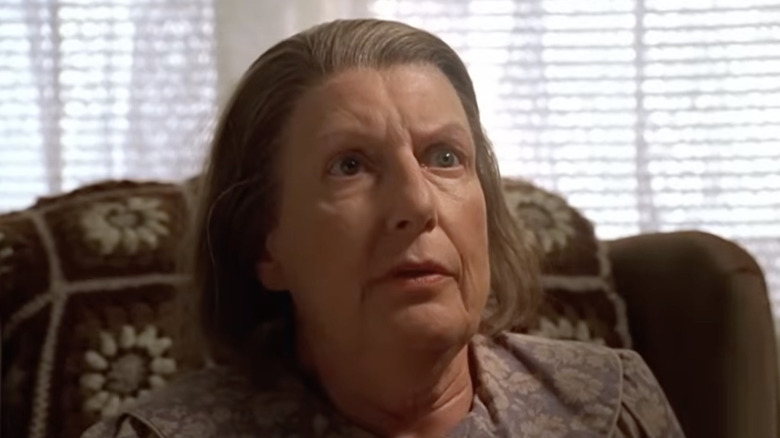
Before "The Sopranos" made stars out of its main cast and became one of the greatest TV series ever made, the most famous person on the riveting mob drama was Nancy Marchand. A prolific and legendary Broadway star, Marchand also made a lot of television, and she won four Primetime Emmys for outstanding supporting actress in a drama series for the newspaper-set "Lou Grant." She'd earn even more acclaim for "The Sopranos" for her chilling work as Livia Soprano, the cutthroat, self-interested mother of mob boss Tony Soprano, presented as the likely reason why the crime kingpin needs to see a therapist.
In June 2000, and after coping with serious medical problems like chronic pulmonary disease and cancer for many years, Marchand died at her Connecticut home at age 71. "The Sopranos" returned to HBO with its 3rd season in March 2001, and the second episode, "Proshai, Livushka," dealt with the death of Livia Soprano and its aftermath. The character died quietly of a stroke in her sleep.
Woodhouse, Archer
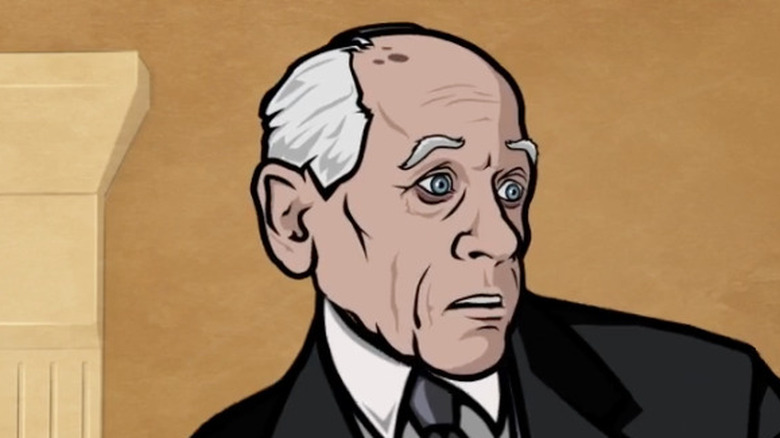
Sterling Archer is the obnoxious and cruel super-spy playboy at the heart of FX's animated comedy "Archer." He channeled much of his resentment of the world at large, his mother and boss, and his co-workers into physical, emotional, and verbal abuse directed at his long-suffering personal valet, Woodhouse. The teetering and very old Woodhouse dealt with Archer's darkly humorous treatment with his own good humor — and a persistent heroin issue. He barely spoke above a gravelly whispered "Yes, sir," or something like it, but when he did, that was the voice of actor George Coe. A Broadway actor and Academy Award-nominated filmmaker in the 1960s, Coe concentrated on screen work in the 1970s and beyond, most notably as an unbilled cast member in the 1st season of what would become "Saturday Night Live."
Coe died in July 2015 at a Southern California medical facility at the age of 86. Before his death, he had endured a series of medical issues for years, including lymphoma. "Archer" reentered production, and the first episode of the series' 8th season starts with a funeral for Woodhouse, who died off-screen of undisclosed causes.
Arman Morales, The Cleaning Lady
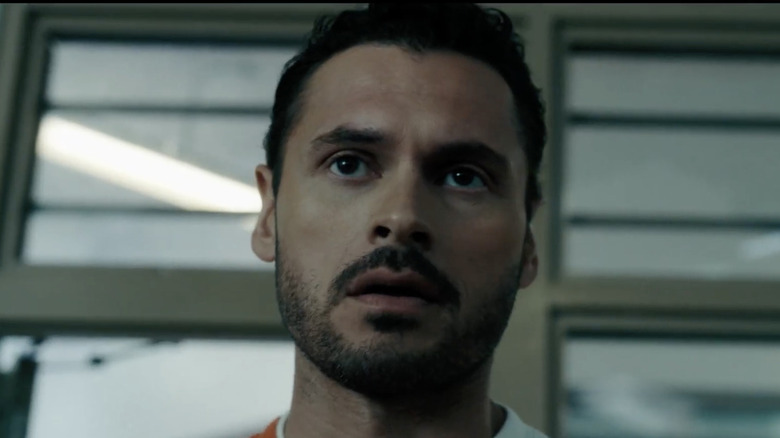
A breakout star of the political action drama "Designated Survivor," Adan Canto landed one of the lead roles on Fox's "The Cleaning Lady." He portrayed the complicated Arman Morales, a ruthless Las Vegas organized crime figure who harbors and hires as a fixer a surgeon from the Philippines with an expired visa seeking medical help for her son. Canto was featured in the first two seasons of "The Cleaning Lady" that aired in 2022 before his death at the age of 42 in January 2024. It hadn't been publicly disclosed that doctors had diagnosed Canto with cancer of the appendix a short time before his death.
"The Cleaning Lady" returned to airwaves in March 2024 after a hiatus of more than a year. In the Season 3 premiere, "Arman," Canto's character is involved in a gun battle following a botched drug sale, and his associates, Thony and Nadia, hastily escape with their lives. The remainder of the episode features the search for Arman, whose fate is made known five episodes later. With the aid of special effects and filming techniques, viewers see Arman die in a car crash as he intercepts a bullet fired by one of his captors.
Ducky Mallard, NCIS
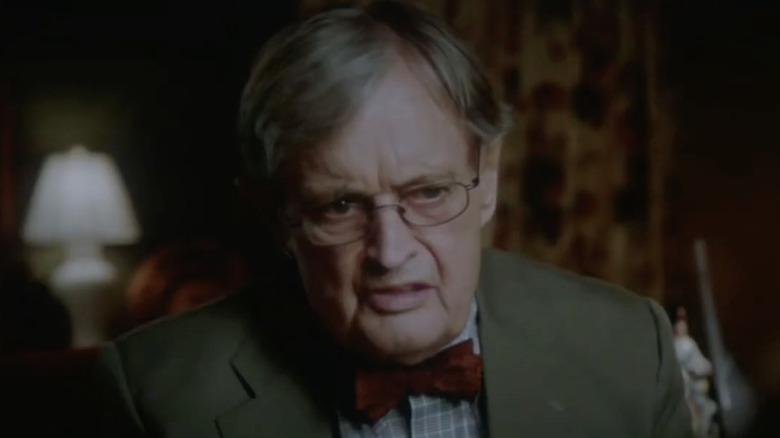
From the start of its perpetual run in 2003, the large and ever-changing cast of CBS's "NCIS" included an anchor in David McCallum. He portrayed medical examiner Donald "Ducky" Mallard, the goofy and most senior member of the naval crime-solving team. McCallum's participation was an Easter egg of TV history. In the 1960s, he'd starred as Illya Kuryakin, a charming Russian spy on another show about crime and intrigue, the Cold War drama series "The Man From U.N.C.L.E." By the early 2020s, McCallum's appearances on "NCIS" grew more infrequent, and his last episodes in 2023 were filmed away from the set to accommodate the actor, but neither he nor Ducky stepped away from the series.
McCallum died in September 2023 at the age of 90. That occurred just before "NCIS" began its 21st season. A mid-season installment that aired in February 2024 finally explained why Ducky — the series' last remaining original character — hadn't been around. His mentee, Jimmy Palmer (Brian Dietzen), found him at his home, having died sometime in the night in bed. Flashbacks with old footage and McCallum's co-stars barely staying in character as they eulogized one of their own rounded out the episode.
Pops, The Goldbergs
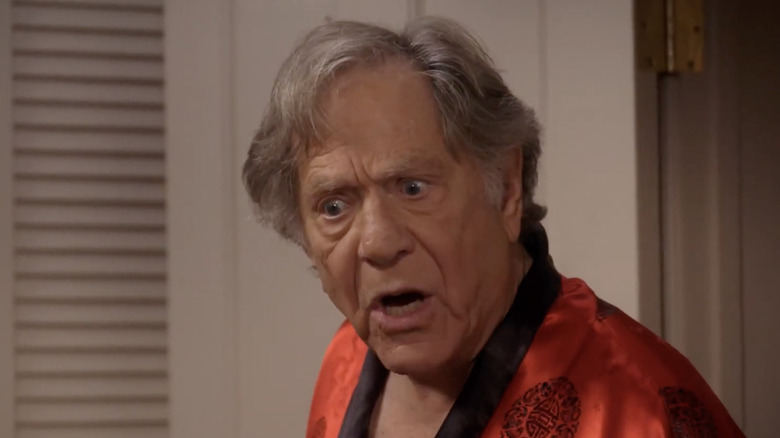
ABC's "The Goldbergs" was all about nostalgia — a sitcom in which a contemporary adult fondly looks back on all of his pop culture-laden experiences growing up in the 1980s. Young Adam Goldberg's frequent partner in shenanigans is his grandfather, Pops, a retired gadabout played by the highly recognizable and acclaimed actor George Segal. Familiar to multiple generations of viewers, he turned out an Oscar-nominated performance in "Who's Afraid of Virginia Woolf?" in the 1960s and played magazine publisher Jack Gallo on "Just Shoot Me!" in the 1990s and early 2000s.
In 2021, Segal underwent bypass surgery. Sometime afterward, he suffered complications during his recovery, and in March 2021, the actor died at the age of 87. Segal had wrapped work on Season 8 of "The Goldbergs," so when the show returned in the fall, it immediately confronted the death of one of its cast members and main characters. In the bittersweet episode, Pops is said to have died in his sleep, and every member of the Goldberg family deals with their palpable grief. His adult daughter proclaims herself an orphan, teenagers Barry and Erica turn their anger and frustration outward, and Adam can't let go of a doll he plans to use in place of his grandfather in an unfinished film they'd planned to make together.
Andre Anderson, Gen V
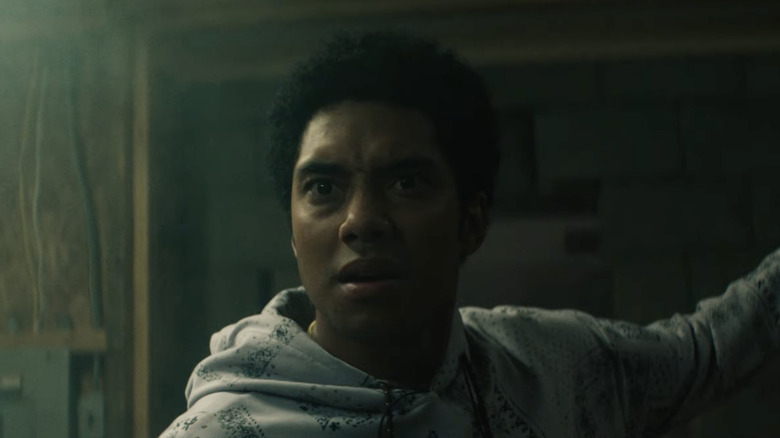
Prime Video's "The Boys" imagines a world in which superheroes are real and terrible people that are corrupted by their own special powers. It was such a smash hit that a spinoff was in order: "Gen V." The show arrived on the service in 2023, set at Godolkin University, a facility designed to train and contain prickly teenage super-figures. Chance Perdomo co-starred on "Gen V" as Andre Anderson, one of the most powerful "Supes" at Godolkin. Among his gifts are the ability to manipulate magnetic fields, heightened hearing, and ultra strength. The actor was fresh off of his scene-stealing work as warlock Ambrose Spellman on another dark streaming series about dangerously gifted young people, Netflix's "Chilling Adventures of Sabrina."
Just before filming on "Gen V" Season 2 was scheduled to start, Perdomo died in a single-vehicle motorcycle accident in March 2024. The actor was 27 years old. Filming was postponed to allow for cast and crew to grieve and for "Gen V" writers to determine how to move forward. They ultimately decided against recasting the role of Andre and instead killed the character. During Season 2 episodes, it's explained that an imprisoned Andre had attempted to tunnel his way to freedom but encountered a steel door that he attempted to open with his powers. Apparently, every time he'd used those abilities, it created tiny neural abrasions, and the encounter with the door caused fatal ruptures.
If you or someone you know needs help with mental health, please contact the Crisis Text Line by texting HOME to 741741, call the National Alliance on Mental Illness helpline at 1-800-950-NAMI (6264), or visit the National Institute of Mental Health website.
If you or anyone you know needs help with addiction issues, help is available. Visit the Substance Abuse and Mental Health Services Administration website or contact SAMHSA's National Helpline at 1-800-662-HELP (4357).
If you or someone you know is struggling or in crisis, help is available. Call or text 988 or chat 988lifeline.org.