

5 Songs From 1972 That Define Rock History
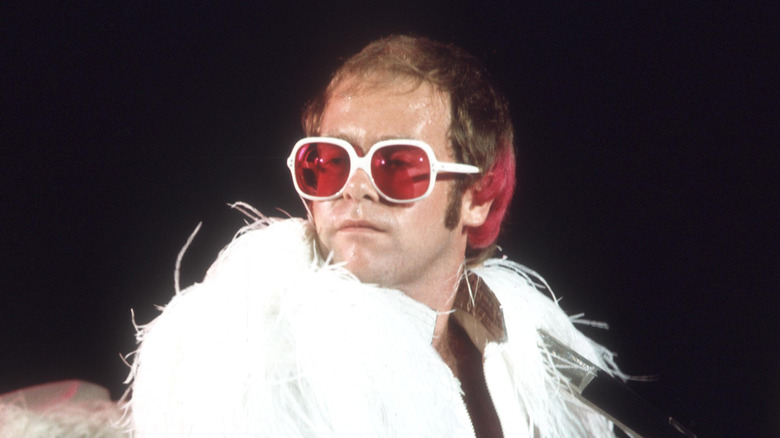
It's not hyperbole to describe 1972 as a monumental year for rock music. The roster of still-classic releases to be unveiled within that single 12-month period is as impressive as it is eclectic, including the Rolling Stones' "Exile on Main Street," Deep Purple's "Machine Head," Mott the Hoople's "All the Young Dudes," the Eagles' self-titled debut, Steely Dan's "Can't Buy a Thrill," Neil Young's "Harvest," Elton John's "Honky Château," Joni Mitchell's "For the Roses," and many others.
Truth be told, that year was rocked by some major changes as an ongoing evolutionary journey fundamentally altered the musical landscape, transforming what had been, just a few years earlier, a somewhat homogenous world of pop music into an ever-shifting musical gumbo. In fact, 1972 found rock splitting off into an array of subgenres, ranging from glam rock to prog rock, to hard rock, to soft rock, funk rock, and even a slick, jazz-inflected sound that would eventually come to be known as yacht rock (even though the term itself wouldn't be coined until decades later).
In 1972, artists made some bold moves, taking big swings with often sublime results. To dig even deeper, read further to explore five songs from 1972 that define rock history.
David Bowie – Moonage Daydream
David Jones had been kicking around the London music scene for years, eventually changing his name to David Bowie and scoring his first major hit with 1969's "Space Oddity." His subsequent albums (1970's "The Man Who Sold the World," and 1971's "Hunky Dory") demonstrated Bowie's musical evolution, but did not deliver on the promise of "Space Oddity" — at least not commercially.
It all came together with his 1972 release, "The Rise and Fall of Ziggy Stardust and the Spiders from Mars." For that album, Bowie reinvented both his sound and his look, trading his long, hippie locks for a spiky mullet, dyed bright orange, even shaving his eyebrows to present himself as the album's titular extraterrestrial rock star. The concept album is bursting with classics, including "Suffragette City," "Starman," and "Rock 'n' Roll Suicide," but for sheer audacity, it's tough to beat "Moonage Daydream." Bowie explodes right out of the gate, accompanied by a mighty Mick Ronson guitar riff. "I'm an alligator, I'm a mama-papa coming for you," Bowie growls in the opening lyrics, a declaration of the androgyny that would come to characterize glam.
While T. Rex's Marc Bolan is generally credited as the godfather of glam rock, "Ziggy" took the genre to staggering new levels of popularity while catapulting Bowie to rock stardom. And while the real story behind Bowie's "Moonage Daydream" is a fascinating one, in hindsight, the song can be seen as Bowie's glam-rock mission statement that a glittery new day had dawned.
Lou Reed – Walk on the Wild Side
It's fair to say that David Bowie and his Spiders from Mars guitarist Mick Ronson had their hands full during 1972, yet they also found time to co-produce another 1972 album that went on to become a bona fide classic: "Transformer," from singer-songwriter Lou Reed. Since going solo after the demise of The Velvet Underground, Reed had cemented himself as a cult favorite until "Transformer" broke him through in the mainstream, riding on Bowie's glittering glam coattail.
Arguably Reed's most accessible album, it was the first to crack the Top 40 — courtesy of the single "Walk on the Wild Side." While Bowie took fans on a fantastical journey to outer space, "Walk on the Wild Side" featured Reed's feet planted firmly on the grimy ground of New York City's gritty underground.
Driven by a slow-grooving bassline, Reed took listeners on a taboo-filled journey with several of Andy Warhol's so-called superstars, including Joe Dallesandro (a.k.a. Little Joe), Candy Darling, Holly Woodlawn, Jackie Curtis, and the Sugarplum Fairy (a character played in a Warhol film by Joe Campbell), the stars in an edgy hit that referenced transgenderism, sex acts and drug use. While the subject matter was certainly shocking for its day, Reed never thought of his song in that light. "I thought it would be fun to introduce people you see at parties but don't dare approach," he once told Rolling Stone.
Stevie Wonder – Superstition
Former child prodigy Stevie Wonder was incredibly prolific during 1972, releasing two albums during that year: "Music of My Mind" and "Talking Book." The latter remains at the peak of Wonder's impressive body of work, made when he was in his early 20s and containing such enduring favorites as "You Are the Sunshine of My Life." However, it was the single "Superstitious" that really broke out, hitting No. 1 on the Billboard Hot 100 while demonstrating that Wonder could rock out with the best of them.
Interestingly, Wonder had originally written "Superstition" for someone else: British guitarist Jeff Beck, who'd lent his guitar virtuosity to the "Talking Book" track "Lookin' For Another Pure Love." When Wonder's label correctly ascertained the song would be a hit, Wonder was persuaded to record it himself and include it on the album. Beck, however, had previously recorded his own version of "Superstition," which had originally been scheduled to come out first. When that record was delayed, by the time Beck's version was released, Wonder's single had already become an international hit.
What makes the song so groundbreaking is the Clavinet, an electric keyboard that Wonder had recently begun experimenting with. "When you hear that Clavinet intro to 'Superstition,' what you're hearing is someone who is interacting with an instrument and figuring out how to make it sound like him," music critic Tom Moon told NPR's "All Things Considered." "No one else plays the Clavinet like Stevie Wonder does. He made it speak."
Elton John – Rocket Man
When examining the true stories behind Elton John songs, the fascinating origin of "Rocket Man" cannot be ignored. According to "His Song: The Musical Journey of Elton John," lyricist Bernie Taupin was struck by inspiration when he gazed up into the heavens and saw what was either a shooting star or a jet airliner. Whatever it was, he began thinking about what it must be like to be an astronaut, looking down from space at Planet Earth, and the lyrics popped into his head.
The standout track from John's "Honky Château" album, "Rocket Man," has become John's signature song, even inspiring the title of the Hollywood biopic about his life, "Rocketman." "It was a pretty easy song to write a melody to," John shared in a 2023 video featuring him and Taupin, which he'd posted to Instagram. "It's a song about space, so it's a spacious song."
More than a half-century after its release, "Rocket Man" remains a fan favorite that continues to receive regular radio play — as well as a staple during John's live shows. The song's enduring popularity was clear when a 2025 Ipsos poll surveying the British public found "Rocket Man" was John's most popular song. "I never take for granted that our songs have stood the test of time," Taupin told The Associated Press. "I'm completely complimented by that. And I never take it for granted."
Steely Dan – Do It Again
Founded by guitarist Walter Becker and keyboardist Donald Fagen, Steely Dan released its first studio album in 1972, "Can't Catch a Thrill." The first single from the album, "Do It Again," was an out-of-box hit, peaking at No. 6 on Billboard's Hot 100.
Driven by a lazy-yet-propulsive percussion groove, the jazz-influenced song's complex and cynical lyrics touch on infidelity and addiction while examining repetitive, self-destructive behavior — on display in the catchy chorus of "You go back, Jack, do it again / Wheel turning 'round and 'round." The song also boasts one of rock's most suavely distinctive guitar solos, with guitarist Denny Dias deftly mimicking a sitar. Interviewed by Rick Beato, Dias revealed that now-iconic solo was played on a less-than-ideal instrument. "It was a rental. It was a piece of crap," he said. "It was basically a Danelectro guitar with a special bridge that made it buzz and sound like a sitar."
Steely Dan would take jazz-rock in distinctive new directions, and "Do It Again" laid the groundwork in 1972 for what was to come. Interestingly, while hearing the song's instantly identifiable opening is enough to land a smile on any fan's face, Fagan hasn't always thought of the group's early output with fondness. "Well, yeah, you know I don't listen to our old records, but if I happen to hear one on the radio, my general feeling is humiliation," Fagen told Musician Magazine back in 1981 (via The Steely Dan Reader). "I don't really understand some of our earlier stuff."