

5 Songs From The '80s That Nail The Meaning Of Life
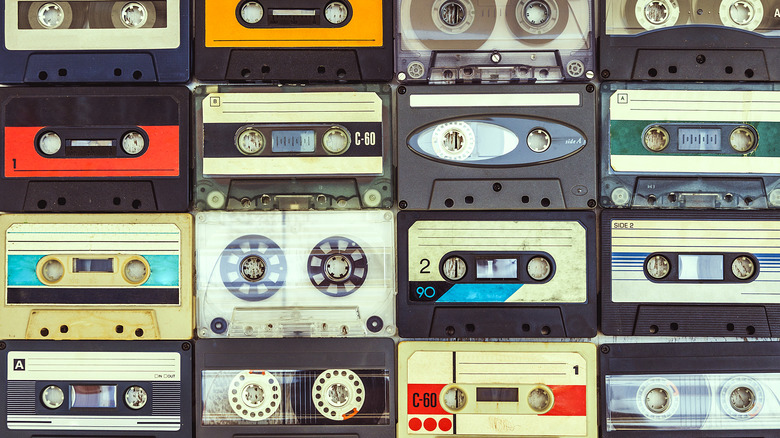
For some, popular music from the 1980s is filled with frivolity bordering on the ridiculous. While hits like Wham's "Wake Me Up Before You Go-Go" or Falco's "Rock Me Amadeus" certainly don't delve into any profound issues of life, there were some artists who dug much deeper during that decade. Musicians like U2, Prince, Bruce Springsteen, Sinead O'Connor, and Tears For Fears could definitely rock when they wanted to, but they also explored emotionally complex themes in their work. They even touched on that eternal question — what is the meaning of life? — in one aspect or another.
This subject is as personal and unique as a fingerprint, yet humanity has long returned to that same core question — just as these artists did. U2 faced it head-on with its 1987 hit "I Still Haven't Found What I'm Looking For," which deals with the search for a deeper meaning in life. From Prince's 1984 hit "Let's Go Crazy," which celebrates joy and purpose as defenses against despair, to Tears for Fears' 1983 single "Mad World," which voices our shared existential dread, these 1980s songs nailed the many aspects of what it means to be alive.
U2 - I Still Haven't Found What I'm Looking For
In 1987, the Irish rock band U2's "Joshua Tree" came out and quickly rose to No. 1. This seminal album explored various aspects of America, from the historical to the spiritual, and made U2 the biggest band in the world. Bono, the lead singer and main songwriter, called the single "I Still Haven't Found What I'm Looking For" "a gospel song with a restless spirit" (via Jimmy Kimmel Live). With The Edge's chiming, spacious guitar and Bono's voice and lyrics, the song conveys a sense of restlessness and yearning for meaning in life, epitomized by the repeated refrain "I still haven't found what I'm looking for."
A spiritual element courses through the song with lines like "I believe in the Kingdom Come/When all the colors will bleed into one/Bleed into one/But yes, I'm still running." Bono told Rolling Stone the song is "an anthem of doubt more than faith," which is a feeling many of us have experienced. This may reflect on why it was so successful. The song was a No. 1 single and still resonates nearly 40 years later, often compared to a modern hymn.
Prince - Let's Go Crazy
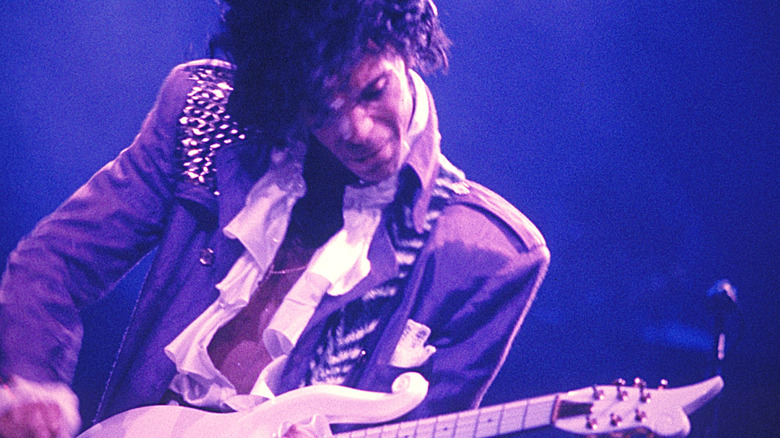
In 1984, Prince was unstoppable with his hit album "Purple Rain" and the blockbuster film of the same name. The album showcased his genre-bending mix of rock, funk, soul, and pop and proved Prince was a one-of-a-kind musician. He also controversially entwined themes of sex and spirituality. The album's first track, "Let's Go Crazy," which was also a hit single, is focused on the latter theme. It opens with what has been compared to a sermon spoken over a swirling organ before exhorting listeners to "go crazy" — that is, seek happiness and fulfillment in the face of a cruel world.
The song can seem cryptic with lyrics like "And if de-elevator tries to bring you down/Go crazy (Punch a higher floor)." But as Prince later explained, he's singing about God and the devil. "The de-elevator was Satan in that song," he told Chris Rock in a 1997 MTV interview (via Tik Tok). "And 'Let's Go Crazy,' was God to me, was ... stay happy, stay focused, and you can beat the de-elevator." Prince changed the words since, to his mind, religion was "taboo in pop music," as he explained to Musician magazine that same year. The song combines the spiritual with the funky, making for an imminently danceable track that delves into the existential as only Prince can do.
Bruce Springsteen - The River
In 1980, Bruce Springsteen, whose lyrics have often dealt with the struggle for a better life, mined the theme of the loss of youthful dreams in the face of a harsh reality in "The River," a single from the album of the same name. It's a bleak, if realistic, journey in song of a young working-class couple's changing relationship. A river that the couple often visits becomes the central metaphor, initially representing all the possibilities of life. But, as the song continues, the male narrator returns to the river that's now dried up with the haunting lyrics, "Is a dream a lie if it don't come true?/Or is it something worse?"
Even sadder, the impetus for "The River" comes from the real life experience of Springsteen's sister and brother-in-law during the early part of their relationship. While "The River" paints a desolate picture of how hard truths can kill hopes and dreams, Springsteen gives us a glimmer of hope. The river may be dry, but the couple continues to go there together and may yet find the lost dreams they once shared. "The River," a double album that helped cement Springsteen's reputation as a mature artist, gave him his first No.1 album on the Billboard chart. Thanks to the album's success, the title song resonated with a much larger audience, and Springsteen's songwriting prowess gave this song a universality that connected with people of diverse backgrounds.
Sinead O'Connor - Just Like U Said It Would B
Throughout her life, the Irish singer Sinead O'Connor explored spirituality. This was true in her music — as embodied by the song "Just Like U Said It Would B" from her 1987 debut album "The Lion and the Cobra" — and in her personal life. In the late 1990s, she became an ordained priest in the independent Irish Orthodox Catholic and Apostolic Church. O'Connor later explored Rastafarianism, and in 2018, just five years before her untimely death in July 2023, at 56, she converted to Islam.
O'Connor was just 20 when she put out "The Lion and the Cobra," but it's imbued with spirituality, with a number of references to the biblical Psalm 91. The psalm begins "Whoever dwells in the shelter of the Most High will rest in the shadow of the Almighty." From the album title to the inclusion of Enya reciting the psalm in Irish Gaelic on "Never Get Old," O'Connor continued to return to this sacred biblical poem. "Just Like U Said It Would B" is the most directly influenced by Psalm 91. With lyrics like "When I've walked in the garden/When I'm walking off stage/When everything's quiet/Will you stay?" the song conveys the search for solace within a chaotic world. "That was about a lesson I'd been having from a certain minister on the art and outcomes of praying Psalm 91, which is where my album's title is taken from," O'Connor recalled in her 2021 memoir "Rememberings."
Tears For Fear - Mad World
Like Bruce Springsteen's somewhat bleak vision in "The River," Tears for Fears' song "Mad World," from the band's 1983 debut album "The Hurting," hits on the darker aspects of contemporary life. Written by Roland Orzabal and sung by his bandmate Curt Smith, the song is told from the point of view of someone looking out a window at the world and feeling a sense of alienation. The song begins "All around me are familiar faces/Worn-out places, worn-out faces/Bright and early for their daily races/Going nowhere, going nowhere."
Orzabal's childhood traumas permeate the lyrics and give the song a sense of existential dread. But what sounds like the most despairing lyric in the song — "The dreams in which I'm dying/ Are the best I've ever had" — is in reality positive. It relates to the work of the influential psychotherapist Arthur Janov, who came up with primal therapy in the late 1960s. Janov believed many neuroses and other issues stemmed from unresolved childhood trauma. Similarly, he believed that frightening dreams, like ones about dying, could release tension. The band's name is also a reference to his teachings, as is the band's later hit "Shout." While "Mad World" doesn't give any easy answers to the dilemma of modern life, the song may provide listeners solace knowing they are not alone.
Methodology
Ten years of music is an extensive pool from which to pick five songs that deal with different aspects of the meaning of life, itself a very extensive and personal subject. It's a theme that humans have been contemplating for eons. We used several different criteria to come up with this collection of songs from the 1980s that we feel nail the meaning of life.
Although not all these songs were massive hits when they came out (except in the case of U2's "I Still Haven't Found What I'm Looking For" and Prince's "Let's Go Crazy") they were all very well known and all of them came from hit albums. The song's themes were already being discussed in the 1980s. All of the songs we chose have continued to resonate with the public with their lyrics and meanings being analyzed in various forms and forums across the internet and beyond.