

5 Love Songs That Will Have Every Gen Xer Crying Into Their Coffee
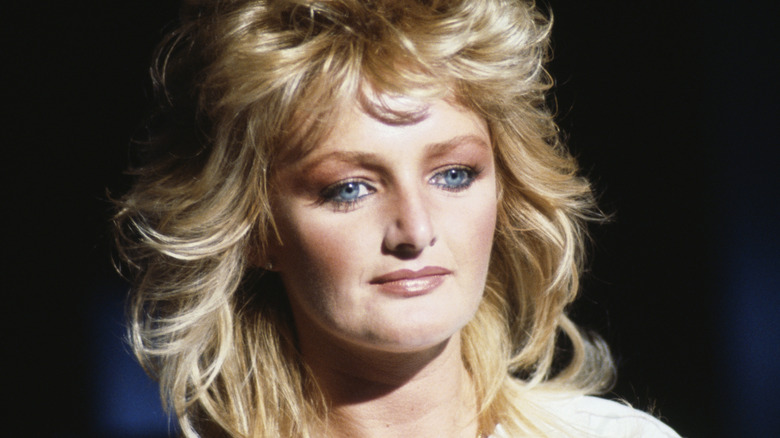
Born from 1965 to 1980, Generation X grew up on a steady diet of animated sitcoms, "darker" comic books, and MTV. But while the likes of Nirvana and Pearl Jam dominated the popular music trends that helped define this generation, it's an entirely different story when it comes to the moving romantic melodies of their era. Indeed, ask any Gen Xer to list down the love songs that tug at their heartstrings and get their tear ducts flowing; there's a good chance they'll mention examples written or performed by artists from the previous generation.
Coming up with this list wasn't a cakewalk. We factored commercial success into the equation, but also put emphasis on lyrical impact, thematic diversity (there are different kinds of love, after all), and the time period in which these songs hit the airwaves (meaning realistically, these were the songs that Gen Xers would have heard on TV or radios during their formative years). Of course, every Gen Xer's cry-into-coffee songlist would understandably be different. Still, we felt that this list presents a nicely balanced selection of hopeful harmonies, mournful melodies, and bold ballads.
Mr. Big — To Be With You
You'd be hard-pressed to find a Gen Xer who wouldn't immediately recognize (or even hum along with) the iconic guitar riffs of Mr. Big's mega-hit "To Be With You." With its infectious melody and heartfelt lyrics, "To Be With You," which debuted as a single in 1991, transcends its undeniable earworm quality: a bittersweet, nostalgic ballad about a secret love that's relatable to anyone who has ever crushed on the most popular person in the neighborhood.
Written by the hair metal band's vocalist Eric Martin when he was a teenager in the '70s, it reflected his secret feelings for a close friend who kept getting her heart broken after multiple failed relationships. He became her de facto shoulder to cry on, while he silently wanted to be her knight in shining armor. (Fun fact: The reference to waiting "on a line of greens and blues" was inspired by a mood ring she had gifted him, the alternating shades representing his feelings of joy and sadness.)
Alas, the relationship that he yearned for never came to be — and interestingly enough, the song's release nearly suffered the same fate, as their record label, Atlantic Records, felt that it wasn't a good fit for the band. Fortunately, when radio stations gave it a shot, the song's raw honesty and earnestness resonated with listeners. To the band's surprise, "To Be With You" topped the Billboard Hot 100 in 1992, as well as MTV's rankings and even global music charts.
Bonnie Tyler — Total Eclipse of the Heart
Undoubtedly one of the most timeless '80s love ballads, Bonnie Tyler's "Total Eclipse of the Heart" is the kind of melodramatic melody that effortlessly fills any Gen Xer with passion. Since its release as a single in 1983, "Total Eclipse of the Heart" has enjoyed immensely positive reception, topping music charts in the U.S. and U.K. and becoming Tyler's most successful song.
Written by the late, great Jim Steinman, the lyrics perfectly capture the perspective of someone who has been completely overwhelmed by love ("... I know there's no one in the universe/ As magical and wondrous as you") to the point of obsession ("... I know there's nothing any better/ There's nothing that I just wouldn't do"). But it's the references to light, life, love, and darkness that fully communicate the overwhelming level of emotion that the narrator feels: Their sense of self is fully eclipsed by their object of affection, and it's enough to drive any lover to tears or even madness.
More than 40 years later, "Total Eclipse of the Heart" remains popular and relevant. In 2023, its official music video hit 1 billion views on YouTube, and it has been observed that streams and searches for the song reach record highs whenever people are expecting an eclipse. It is a hit that Tyler reportedly never gets tired of singing – and, unsurprisingly, one that will never fail to make Gen Xers turn around.
Sinead O'Connor — Nothing Compares 2 U
After the legendary musician Prince wrote "Nothing Compares 2 U" – a song about a lost, irreplaceable love — in 1984, the band he formed, The Family, released it as part of its self-titled album in 1985. At the behest of her manager, Sinéad O'Connor covered the song, adjusting it to the key of F major. O'Connor's somber rendition, which channeled her grief from her mother's accidental death in 1985, was released in 1990. "Nothing Compares 2 U" quickly became the No. 1 song in the U.S., the U.K., Australia, and many other countries.
It's safe to say that it's the Irish singer's beautifully pained rendition that most people think of when this song is mentioned; for some, it's probably even the only version they've ever heard. That's not to say, of course, that The Family's version isn't a soul-touching listen; its comparatively stripped-down sound and harmonious blend of voices make it feel like the sort of song you'd hear at a speakeasy as you unwind with a drink in hand, equal parts sorrowful and soothing. But it's undeniable that O'Connor's version carries and embraces grief in a way that just feels so genuine and relatable.
If, for whatever reason, O'Connor's heart-wrenching performance of Prince's longing lyrics still leaves your eyes dry, we dare you to watch the music video. At the point where two tears roll down O'Connor's cheeks, we guarantee you'll be looking around for those darned ninjas in your room cutting onions.
Restless Heart — When She Cries
Released in 1992, "When She Cries" was the first single from Big Iron Horses, country music band Restless Heart's fifth studio album. Combined with its catchy melody, the heartfelt message of the song — a profession of love for a partner who has remained steadfast and loyal, through thick and thin — makes it difficult to not feel emotional when you listen to it.
In some ways, you get the sense that the song tells the story of not one, but two sad souls whose only recourse lies in one another: the ever-supportive lover who weeps at night, and the POV character who has not only experienced much hardship, but also feels that he himself is lacking as a partner. It's doubly hard to keep your feelings from welling up inside as you come closer to the end of the song, especially when that swooping guitar riff hits.
If "When She Cries" makes you feel things, don't be ashamed to admit it; you're definitely not alone. In an interview with The Tennessean, Marc Beeson, who co-wrote the song with Sonny LeMaire, shared that he was once approached by someone he didn't know, telling him that "When She Cries" saved his marriage because it helped him realize that he wasn't devoting enough time and attention to his spouse. "You don't think about [...] the effect a song will have on somebody. It really hit me then, the power of music in general."
Roxette — It Must Have Been Love
Even years after the tragic death of Marie Fredriksson in 2019, "It Must Have Been Love" still stands as one of the most iconic tearjerkers from the musical heyday of Generation X. Performed by Fredriksson and Per Gessle as the pop duo Roxette, "It Must Have Been Love" was released in 1987, and was intended to be a Christmas song. While the breakup ballad reached moderate levels of success in Roxette's native Sweden, it reached a wider audience (and even topped U.S. charts) when a modified version was included in the soundtrack of the 1990 film "Pretty Woman."
Without a doubt, a major factor behind the success of "It Must Have Been Love" is the way Fredriksson sang it. As she enunciates the words calmly and softly alongside the steady beat of the drums, she sounds like a person who has accepted the end of a serious relationship. But in the final third of the song, seemingly guided by the escalating piano keys, Fredriksson hits high notes, as if she were screaming in painful denial, desperately convincing herself that the relationship is dead while having no choice but to move on.
Adding to the song's timeless appeal were the minor changes to its lyrics. Notably, the line "It's a hard Christmas day" was changed to "It's a hard winter's day" — and while the intent was to untether the song from the holiday it was made for, it also had the bittersweet side effect of turning "It Must Have Been Love" from a season-specific melody into a powerful metaphor for being left in the cold.