

The Absolute Worst Concert Performances Of The 1980s
We may receive a commission on purchases made from links.
The 1980s featured a litany of musicians operating in god mode and changing the course of the entertainment industry forever. With that being said, the decade also hosted a few notorious stinkers, especially in the live music arena. Unfortunately, when it comes to playing a concert, if it doesn't click, it doesn't click — and even the greats have bad days at the office.
The funny part is that a terrible concert isn't always an artist's fault. Sure, if they're intoxicated, tired, and/or the bandmates are at each other's throats, it's likely to fall apart on stage. Sometimes, though, external factors play critical roles too, such as if the crowd doesn't feel the vibe, or the performer gets chucked into the wrong lineup. Think of this hypothetical example: It's like asking Justin Bieber to open for Slipknot. There's only one way it's gonna end here, and it won't be pretty for anyone.
Yet, a public — sometimes, globally aired — failure isn't the be-all and end-all for musicians. In the case of all the performers on this list, they didn't let one bad day derail their musical ambitions. They didn't throw in the towel; instead, they dusted off the embarrassment and soldiered on. Maybe that's a lesson that each of us can learn from here, too.
Public Image Ltd had the Ritz in a blitz
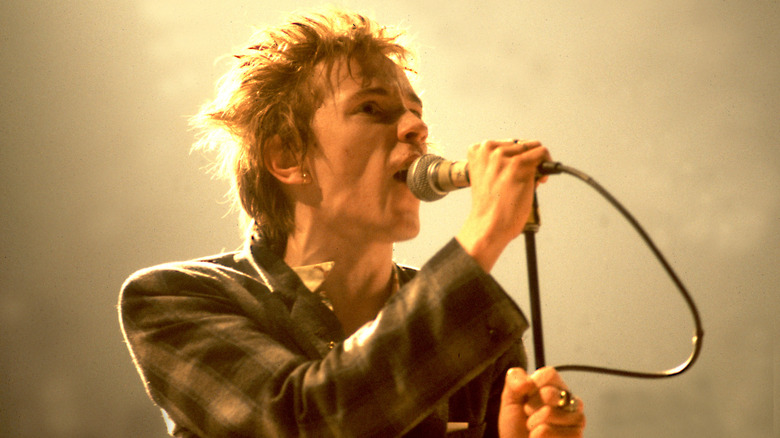
Following the breakup of the Sex Pistols, vocalist John Lydon formed Public Image Ltd (PiL). The trademark snarl and defiant attitude remained intact as his band mounted its own post-punk assault. In 1981, PiL played a show at the then-popular Ritz, but after the gig, the band should have probably changed its name to Public Enemy Ltd instead.
In those days, director Ed Caraballo hung out with PiL and filmed the group, becoming an unofficial member of the band. He was also present at the Ritz show and provided his account of what happened to Perfect Sound Forever. According to Caraballo, he came up with the idea for the band to do a performance art piece where it would play behind a large screen to the audience. However, the crowd didn't appreciate the fact that they couldn't see the group, nor did it help that Lydon seemed to be at his antagonistic peak and constantly winding up the audience.
"So the audience starts pelting the screen with beer bottles," Caraballo said. "Even in the balconies, they were throwing bottles and some of it was hitting the audience down below. The more that they threw bottles, the more that John would chide them." Caraballo added that the Ritz's manager asked him to raise the screen because of the rowdy crowd, but he refused at first. Eventually, he lifted the screen ever so slightly, but due to the chaotic audience, the Ritz pulled the plug on the show.
Black Sabbath only played two songs in Milwaukee
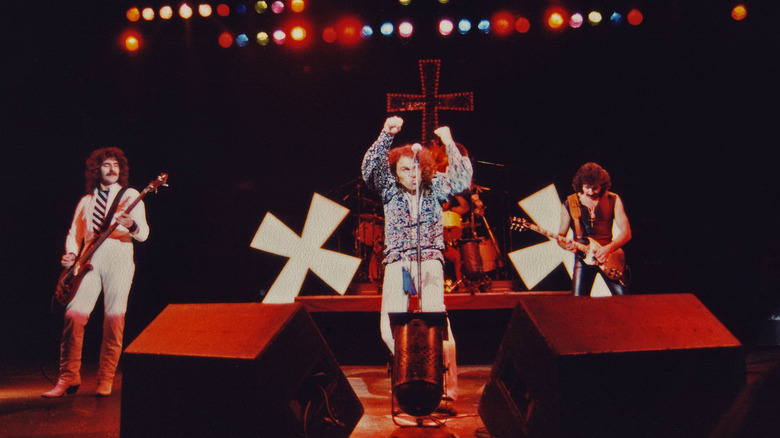
Black Sabbath is one of the '70s and '80s bands that have gone through the most lead singers. While the "Prince of Darkness," Ozzy Osbourne, may be the first person who comes to mind when one thinks of the group, the likes of Ian Gillan and Ronnie James Dio also fronted Sabbath for a time. In 1980, Sabbath — with Dio in tow — teamed up with Blue Öyster Cult for a tour across America, and one of their stops was Milwaukee.
Blue Öyster Cult played first on the night. The changeover between acts stretched to over an hour, as the crowd started to grumble about the long wait. Almost as soon as Black Sabbath took to the stage, the show ended two songs in. The reason? Someone in the crowd decided to throw a bottle, which hit bassist Geezer Butler in the head and KO'd him quicker than a right hook from Mike Tyson. "You've thrown something for the last time," Dio said (via Classic Rock). "You hit Geezer on the head. We don't appreciate that either. We wanted to give a lot for you, but not our blood."
Butler needed medical treatment and was transported to hospital, and the show ended right there. Matters went from bad to worse as Sabbath's production manager took to the stage to announce the gig's cancellation because of Butler's injury. Consequently, the event erupted into a full-blown riot that required police intervention.
Guns N' Roses shot blanks in Texas
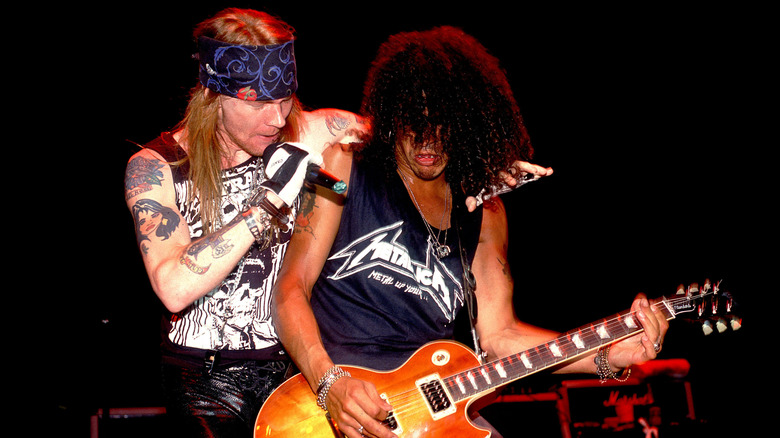
Guns N' Roses rode high after the release of 1987's generation-defining album "Appetite for Destruction." As one of the biggest rock bands in the world, the group shared the stage with all the major artists of the era. In 1988, GN'R descended on the Texas Stadium, ready to welcome the crowd to the jungle and to get everyone to rock 'n' roll all the way to Paradise City — or so the group thought.
Guitarist Slash told Ultimate Classic Rock that this show was the band's very own "Spinal Tap moment" — basically, the equivalent of a musical catastrophe where everything that can go wrong does, as demonstrated in Rob Reiner's 1984 comedic mockumentary film, "This Is Spinal Tap." Even turning it up to 11 wouldn't have helped here, as everyone — including the band members and fans in attendance — knew this wasn't it on the night.
"I still have nightmares about it," Slash said. "We just went out there and couldn't pull it together. Completely just fell apart. Couldn't hear what the other guy was doing. Everybody was just in a completely different place. It was literally just horrible. I think we went on late and left the stage early. It started raining. Just the most miserable gig." To be fair, the ever-controversial Axl Rose didn't exactly have the best reputation or track record when it came to timekeeping, so that's no different from any other GN'R show of the era, really.
The Clash's US Festival gig was a breakup in real time
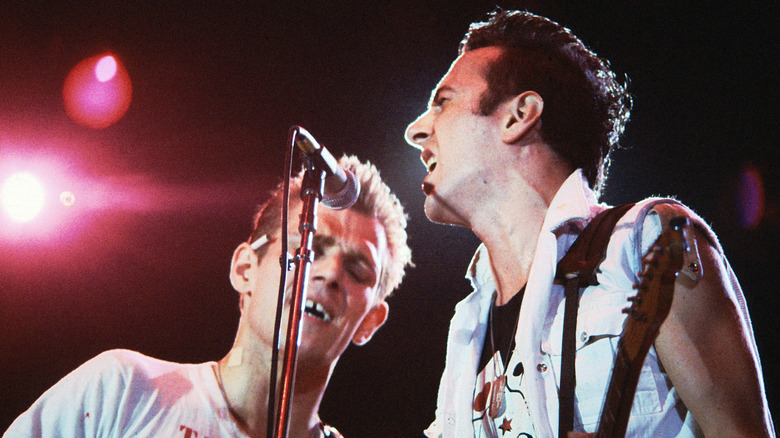
Has anyone ever witnessed a band break up in front of their very eyes? For those who attended the Clash's gig at the US Festival in 1983, they would have. Despite reaching the pinnacle of the music industry, all was not well behind the scenes with the English punk band.
The Clash was in the middle of a break when it received a $500,000 offer to play the US Festival in May 1983. The stacks of cash might have made the bandmates overlook a few of their simmering issues to hop back onstage, but the group wasn't pleased when it found out that fans would be paying more for the show than what had been previously communicated. So, the Clash insisted that the festival donate $100,000 to charity or it wouldn't play the concert.
Unfortunately, this didn't magically wave a wand over the rest of the problems and make them go away. The show itself turned into an unmitigated disaster, as the Clash borrowed Axl Rose's watch, so to speak, and hit the stage two hours late. That wasn't the worst of it, though, as it was obvious no one was on the same musical page anymore; the synergy was gone. The Clash didn't rock the crowd, but it might have rocked the venue staff's jaws, as the band engaged in fisticuffs with security afterward. Unsurprisingly, this was the beginning of the end for the group.
The Replacements had an infamous performance on Saturday Night Live
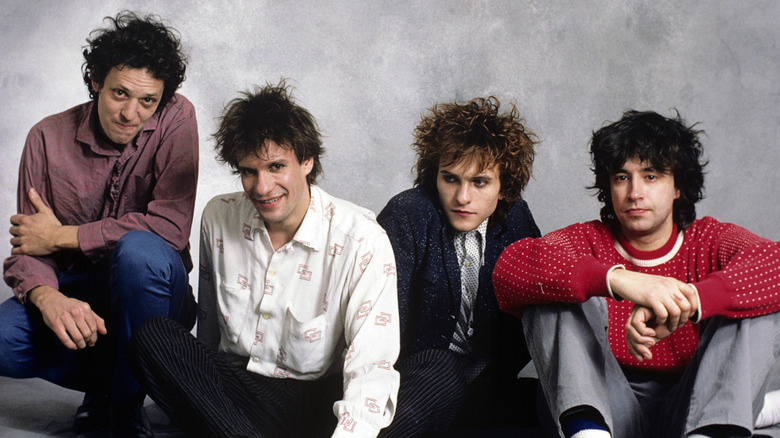
In the 1980s, the Replacements built up a reputation as a ferocious live act, as well as being difficult to control due to a tendency to party a little too heartily. After the release of the album "Tim," the label organized the band a slot on "Saturday Night Live" in 1986 to promote the material. Was it a good idea in retrospect? Unlikely, as the Replacements became one of the most controversial "SNL" musical guests of all time.
With nothing left to do until "Saturday Night Live" started, the group decided to occupy itself with alcohol, even encouraging the episode's host, Harry Dean Stanton, to drink with them. When it came time to step in front of the cameras, the band was intoxicated, and it showed in the performance. Vocalist-guitarist Paul Westerberg treated it like a live show rather than a televised performance, stepping away from the mic and therefore the camera at critical points.
Westerberg also committed the cardinal sin of dropping a curse word to his bandmate on live national TV. "It wasn't really something I planned," he said, per Bob Mehr's "Trouble Boys: The True Story of the Replacements" (via Rolling Stone). "It was more me saying to Bob, 'Let's give it to 'em with everything we got.'" To top it all off, guitarist Bob Stinson bared his buttocks on TV too. Needless to say, "Saturday Night Live" creator Lorne Michaels lost it with the Replacements after that performance.
A 1985 Ramones show proved divisive
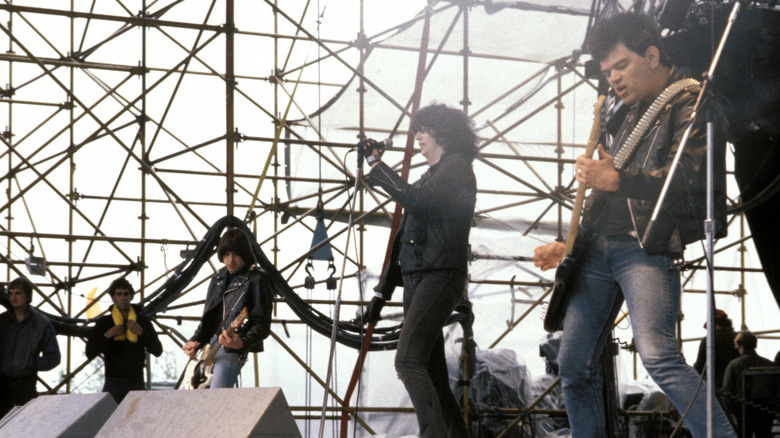
Look, the Ramones never proved to be the most technically proficient or naturally gifted act around. Take nothing away from the punk rock band's achievements and undeniable legacy, but this is a case where the vibes matter more than the musicianship ever did. Sometimes, when the group performed at a concert or festival, it was exposed as not being the tightest or best live act compared to its contemporaries.
In February 1985, the Ramones hey-ho'd into Worcester, Massachusetts, to rip up E.M. Loew's Plymouth Theatre, which would eventually turn into the Palladium years later. While the performance proved energetic and chaotic, with the band accelerating through 28 songs in an hour, there were differing perspectives about the gig that included noticeable botches. Ariel Lipner of the Evening Gazette (via Worcester Magazine) threw several penned barbs at the band, writing, "On stage, they looked like four comatose delinquents. The lead vocalist is a gangly, pear-shape aberration with the skin color of a recently buried corpse."
A concert attendee by the name of Shaun Ratcliffe remarked about the subpar sound production on the evening, aiming criticism at the sound engineer rather than the band itself. "I was on the floor, in the middle by the soundboard this time," Ratcliffe said. "I chose those tickets to get the best audio, but that was pointless because whoever was at the controls just likely put all the pots to the top with no regard for sound quality, just sheer volume."
Van Halen's US Festival performance made headlines
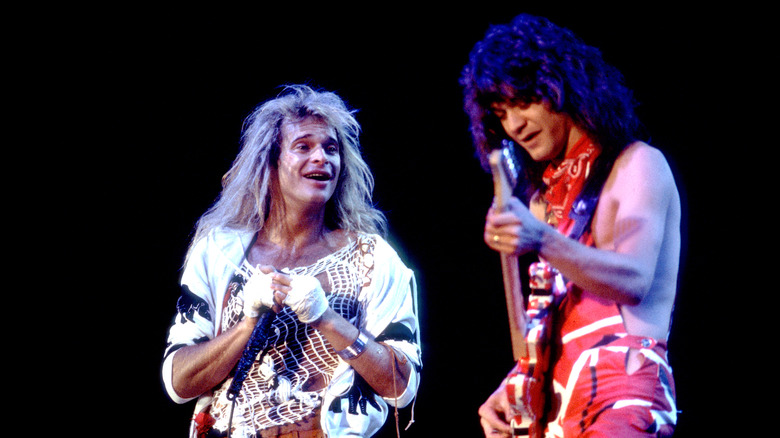
The 1983 US Festival became renowned for the Clash's threat to not perform because of a ticket price increase, though it might have had more to do with the band learning that Van Halen was paid $1 million, while the Clash received only half of that. In fact, Van Halen actually made $1.5 million for the gig. Fee envy much? Regardless, it wasn't like Van Halen painted itself in glory either, and that was thanks to vocalist David Lee Roth, who joined the list of times musicians were too wasted to perform live.
The band took to the stage late, which is never a good omen of what's to come. While everyone partied hard before the show, Roth might have overdone it. Eddie Van Halen shredded like he'd been sent down by the gods of music to save rock 'n' roll himself, but his bandmate didn't get the memo. In between all the banter and potshots at the Clash, Roth couldn't remember the words to his band's own lyrics. Instead of "Jump," this performance should have been dubbed "Slump."
The US Festival's organizer was Apple co-founder Steve Wozniak. In Wozniak's autobiography, "iWoz," the computing pioneer wrote about meeting Roth at the festival. "David Lee Roth, though he was nice and cordial when I met him, was practically falling down onstage. He was so drunk, slurring and forgetting lyrics and everything," Wozniak mused.
Bob Dylan didn't have the best performance at Live Aid
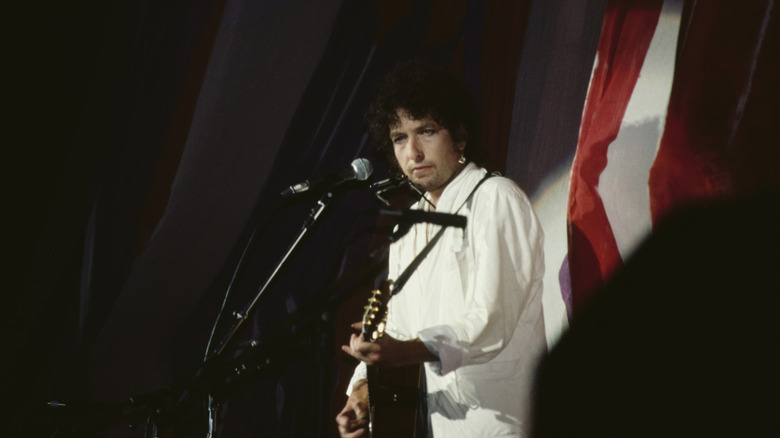
Queen's historic performance at Wembley Stadium for 1985's Live Aid has been widely lauded as the best live show of all time. The same can't be said about Bob Dylan's appearance at the Philadelphia leg of Live Aid.
While there was excitement in the air for artists such as Judas Priest and the Beach Boys to take to the stage, Dylan decided to be the guy who brought an acoustic guitar to a party. Now, there's nothing wrong with his shtick — he's a legend in his own right — but his choice of songs felt out of place among the rest of the mood at the John F. Kennedy Stadium. He was also paired with the Rolling Stones' Keith Richards and Ronnie Wood, and they didn't really add much to the experience since it sounded as though everyone's guitars were out of tune.
To further compound the misery, Dylan suffered consistent sound issues and broke a guitar string during his three-song set. It also didn't help that Dylan upset Live Aid co-founder Bob Geldof by suggesting that Live Aid use some of the money generated to pay the mortgages for the farmers in the area.
Billy Joel experienced a Moscow meltdown
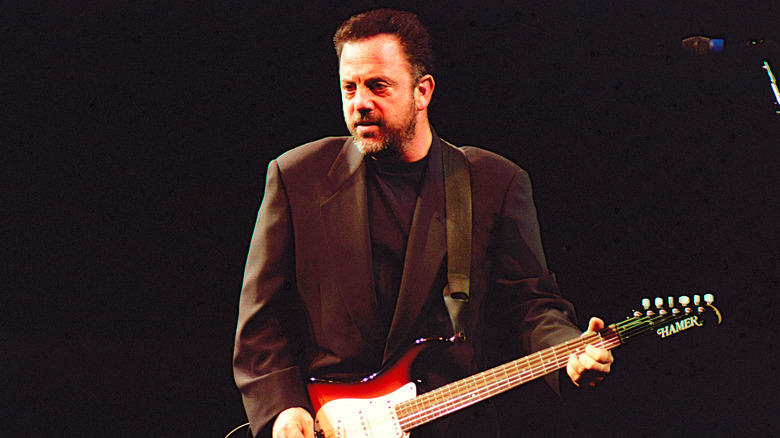
Billy Joel made history in July 1987. Not only was he one of the first mainstream American musicians to perform in the Soviet Union at the time, but his behavior would also become the stuff of music legend.
Joel was already feeling the tour blues, having been on the road for almost an entire year by the time he made it to the then-U.S.S.R. While music is certainly different from an office job, think about how someone feels when they haven't taken a vacation for nearly 12 months. At that point, the person is running on fumes — just like Joel was. Coupled with this was the fact that his voice was giving him problems.
During his first performance, Joel realized he would have to tweak his approach to get the crowd involved and singing along. By the second show, he fast-tracked the same formula; however, every time his documentary crew flashed the lights onto the crowd to get the footage, they would freeze. Joel noticed this and became visibly frustrated, telling the crew to cool it. When they didn't listen, Joel lost his temper and flipped over his piano. He also took out his anger on the poor mic stand, then used it to bash in the piano for extra measure. To Joel's credit, he continued playing and apologized for his behavior, but the crowd didn't start the fire — Joel did that fateful night.
Ozzy Osbourne turned into the Prince of Dullness
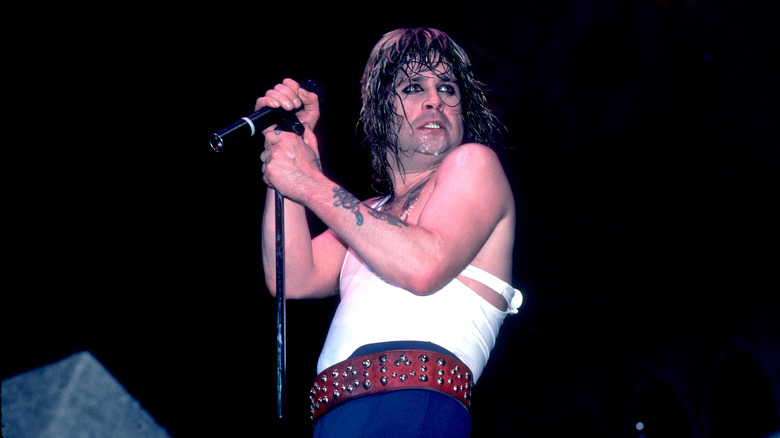
In 1979, Ozzy Osbourne received the boot from Black Sabbath. Consequently, the 1980s featured Ozzy re-establishing himself as a solo musician with a backing band. With the one-two punch of 1980's "Blizzard of Ozz" and 1981's "Diary of a Madman," he more than proved that he still had a little magic in him without Tony Iommi and the boys at his side. However, his live shows didn't exactly electrify as much as his music did, as he received a barrage of reviews ranging from mediocre to bad at the time.
In January 1982, Ozzy and his crew performed at the Rosemont Horizon in Illinois. However, a local review of the concert (via Ultimate Rhoads) suggested that Ozzy wasn't the Prince of Darkness but more like the Prince of Dullness that evening. "Ozzy's performance Sunday night made AC/DC look like masters of stage craft and musical invention," the music critic wrote. "Black Sabbath may have been generally reviled by anyone concerned about the finer points of music, but at least it had the distinction of being the heavy-metal downer band. Ozzy solo, on the other hand, adds up to just a general downer."
According to the same critic, another fan complained about the lack of excitement from the singer, too. Considering Ozzy Osbourne's reputation for crazy stunts, this concert appeared to be a much more restrained outing from him — much to the disappointment of his supporters.