

5 Classic Rockers Whose Personalities Never Landed With Fans
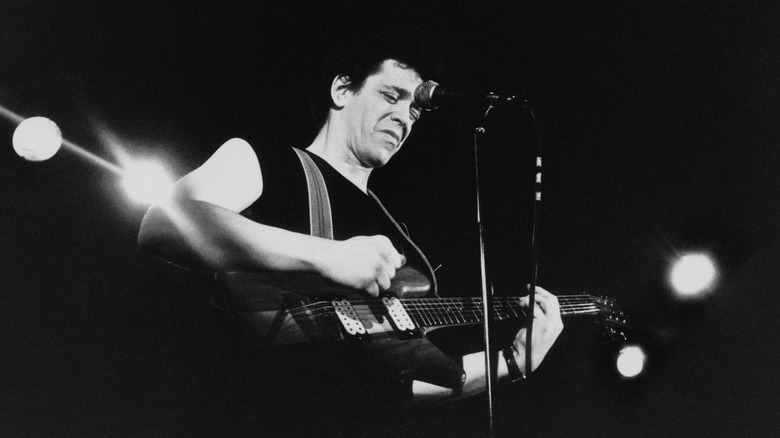
They had the drive, the songs, and the looks, but somehow these rockers didn't click with the public. We're talking talented, even innovative artists that had an Achilles heel — a personality quirk or two that kept acclaim at bay. To be fair, there are a lot of rock stars who were really weird people. For instance, David Bowie's unhealthy obsession with the occult in the 1970s had him subsisting on milk and red peppers and storing his urine in his refrigerator, while Prince famously fined guests at his Paisley Park compound for swearing,
While Bowie's and Prince's odd, extravagant personalities certainly didn't keep them from reaching audiences, some artists were too off-kilter to connect at all, or at least not for long. For our list of rockers with outré personalities, we cast a wide net. For example, artists finding fame outside rock or consolidating success on their own terms are not disqualifiers. Rock stars who shifted focus to another genre, and gifted souls who never had the temperament for fame in the first place, are also considered. Here, then, are personality-challenged artists who've made some impact, but perhaps not as much as they arguably deserve.
Van Morrison
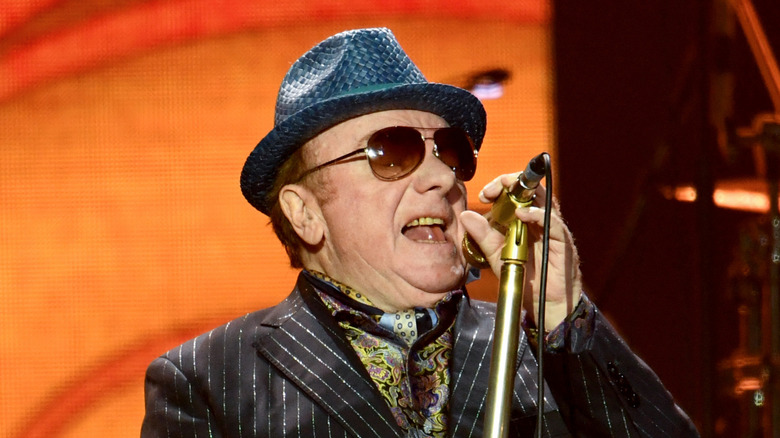
"Gloria" launched a thousand garage bands, "Moondance" entwines cocktail jazz and Celtic mysticism, and makes the cringey word "fantabulous" cool, and "Brown Eyed Girl" may be the greatest ode to joy tracked on wax. Van Morrison's songs prove he's a genius, but he's also a curmudgeon.
A look inside the life and career of Van Morrison reveals the creative and legal disputes that may have contributed to Morrison's troubled temperament, but understanding bad behavior doesn't excuse it. Morrison's bitterness has caused him to fire band members with little reason and to smash someone else's guitar onstage. Unfortunately, Morrison's cranky temperament also often penalizes his devoted fans.
At one concert, Morrison told his audience, "If you shut your mouth, you might get what you want," but in Creative Loafing Charlotte, Peter Gerstenzang recalls a 1978 Morrison concert where the audience didn't get much at all. While his band vamped, Morrison showed up late and left the stage during band members' solos. The truncated set ended with Morrison walking off without a word. Over the years, repeated instances of short, brusque, and impersonal concerts alienated fans and angered critics. Morrison sings like an angel, but often acts like a jerk.
Tom Fogerty
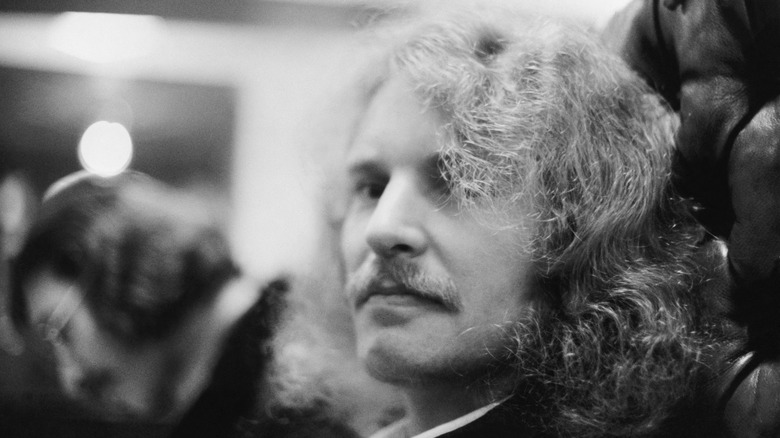
An untold truth of Creedence Clearwater Revival (CCR) is that songwriter-guitarist John Fogerty wasn't the band's original leader; that role belonged to his older brother Tom. As the brothers' band evolved from the Golliwogs to CCR, front man Tom ceded leadership to John, and it was probably for the best. Without John's punchy guitar, fine-grained vocals, and plain-spoken yet poetic lyrics, CCR's rootsy swamp rock would not have become a cultural and commercial phenomenon. Behind these shifts was the Fogertys' sibling rivalry, which arguably hinged on their different personalities.
Tom was easygoing and supportive — "I want to live up to what John expects from me," he once said, per Hank Bordowitz's "Bad Moon Rising: the Unauthorized History of Creedence Clearwater Revival" — and didn't have John's charisma or drive. "I think Tom was expecting John to say, 'OK, now we've achieved our goals, why don't you start singing a few of the songs?'" CCR drummer Doug Clifford told Uncut. When that didn't happen, Tom left for a solo career in 1971. His 1972 self-titled debut LP barely cracked the Billboard 200 album chart, and music critic Robert Christgau called it "exceptionally unoriginal."
Long-simmering tensions caused John to cut ties with Tom. In 1990, Tom died from complications from an AIDS-infected blood transfusion. His widow requested that Tom's ashes be onstage when CCR was inducted into the Rock & Roll Hall of Fame in 1993, but John refused.
Enya
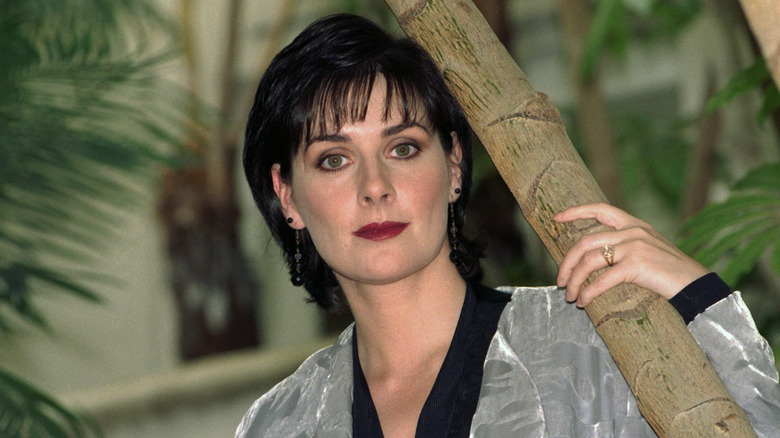
With layered keyboards and swarming ethereal vocals, Enya's spellbinding, mystical music has sold over 80 million albums worldwide, eight of which have gone platinum. The untold truth about Enya is that she's achieved artistic and commercial success without touring and seldom giving interviews. She told The Irish Times that she puts music before fame: "I'd say, 'What does this [interview] entail? Does it focus on the music? Or is it going to make me more famous?' ... when it was more focused on me, I actually would refuse." The second-best-selling Irish music act behind U2, Enya clearly connects with her fans, but she seldom sees them.
When Enya released her hit "Watermark" LP in 1988, it wasn't possible to duplicate her complex, heavily overdubbed music live — and that took the pressure off the artist. "We actually had in my contract that we would have two to three years between each album," she told the BBC in 2015. "[The record label was] worried that if I went on tour and then had three years to work on the next album, it would be too much of a gap."
Speaking to fans through her recordings, Enya lives a private life in a Victorian Castle outside Dublin that she purchased in 1997. It seems she's right to avoid the media glare: In 2005, a man broke into her home and tied up one of her staff. Enya avoided the stalker by hiding in a specially built panic room until the police arrived.
Lou Reed
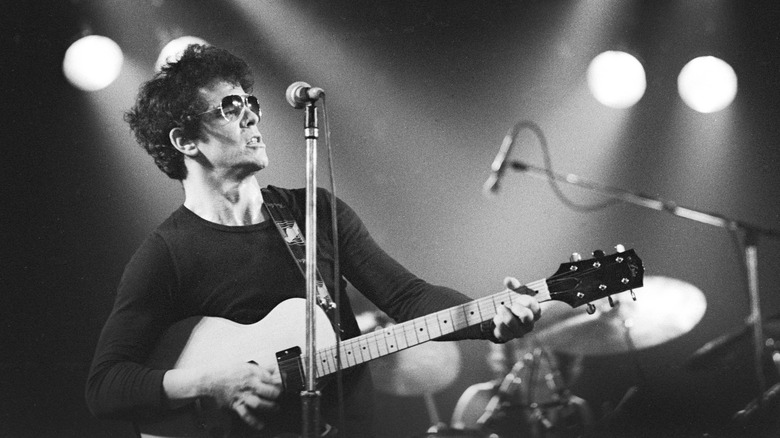
Lou Reed's groundbreaking band The Velvet Underground was a mostly forgotten cult act in the early 1970s, and his sophisticated, jazzy "Walk On The Wild Side" remains his sole top-40 U.S. hit. A large part of Reed's relegation to commercial also ran was his rude and angry personality. He ranks high among 1970s musicians you wouldn't want to meet in real life, famous for sabotaging his career by releasing deliberately difficult music, hating music journalists, dissing contemporaries' music, and propagating a feud with David Bowie that culminated in a fist fight.
Everything about "Walk On The Wild Side," including Herbie Flowers' ascending/descending twin basslines, and sympathetic lyrics about the self-styled superstars who moved among Warhol's demimonde, seems so ingrained in 1970s rock that it's easy to forget that Reed was considered a one-hit wonder. Reed tried to follow up on the tune's success, and his record company touted him for bigger things — even pairing him with red-hot co-producer Bowie on the 1972 "Transformer" album that spawned the hit single, but Reed never reached those commercial heights again.
Reed's addiction issues arguably contributed to his cantankerous temperament. After Reed got sober in the early 1980s, his work, particularly the 1989 LP "New York," regained Reed critical acclaim amid his healthier, happier lifestyle. Ironically, a well-adjusted Reed wasn't as popular as his irascible 1970s iteration. Perhaps no album was closer to the real Reed than "The Raven," his 2003 fannish love letter to Edgar Allen Poe, but it failed to chart.
If you or anyone you know needs help with addiction issues, help is available. Visit the Substance Abuse and Mental Health Services Administration website or contact SAMHSA's National Helpline at 1-800-662-HELP (4357).
Robyn Hitchcock
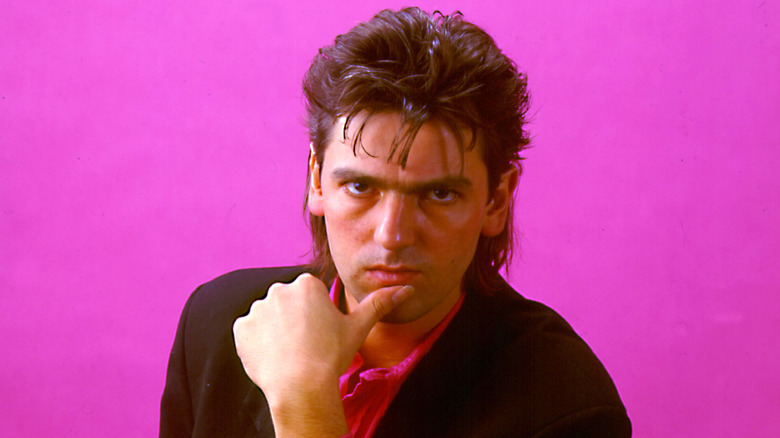
In his typically surrealist song "Uncorrected Personality Traits," Robyn Hitchcock posits that childhood quirks can become liabilities in later life. While the tune isn't autobiographical, it seems to touch on the songwriter's psyche. In his memoir "1967: How I Got There and Why I Never Left," Hitchcock says (via Premiere Guitar) he's likely on the autistic spectrum. "I think I probably am also OCD," he adds. This means Hitchcock isn't necessarily trying to be eccentric with his psychedelia-derived tunes: he's just being himself. Hitchcock being Hitchcock, however, may be barring him from broader success.
His music seems to cross Renaissance artist Giuseppe Arcimboldo, who created whimsical portraits from fruits and vegetables, with 1960s psychedelic rock show posters. With mutant biology-obsessed tunes like the raga-like "Tropical Flesh Mandala," the jaunty zydeco "Strawberry Mind," and the chiming madrigal "Madonna Of The Wasps," Hitchcock has garnered a devoted following.
While Hitchcock's songs seem strange, they're also accessible. In the wake of Hitchcock's 1988 college radio hit "Balloon Man," his record company released his would-be commercial breakthrough album, "Perspex Island," in 1991. Although it features guest appearances by Hitchcock fans Michael Stipe and Peter Buck of R.E.M, the album was considered too slick to be cult and too surreal to be mainstream. Since then, Hitchcock has continued to create engaging music that evokes John Lennon, Bob Dylan, and Syd Barrett. He's the very best at making Robyn Hitchcock music — which can be seen as an unbridled celebration of uncorrected personality traits.