

Classic Rock Burned Out With These 5 Songs
All good things must come to an end, right? Musical eras included. Case in point: There really is something magical about the period of time that produced classic rock, with its golden era often loosely defined as lasting from 1964 to 1982, or roughly Beatlemania through Ronald Reagan's early presidency. This doesn't mean that what came after was bad, as such, but look at a sample of classic rock bands: The Beatles, The Doors, The Who, Queen, Led Zeppelin, and Pink Floyd, etc. Will modern bands ever be remembered in the same way as these outfits? Eventually, though, they burned out with classic rock, and certain songs were emblematic of that demise.
But how do we choose such songs? In general, our choices reflect the rollover of musical styles from the above-mentioned golden era to the anthemic, flashy rock of the '80s, plus new wave, pop-punk, synth-rock, and so on — the kind of music that would have been inconceivable in the '60s through early to mid-'70s, like Talking Heads, The Cure, and the Police, etc. The cultural underpinnings behind this transformation remain out of scope for this article, though we might need to touch on them here and there. Overall, this transformation hinges on the co-opting of '60s counterculture by '70s mainstream culture and how music reflected that change.
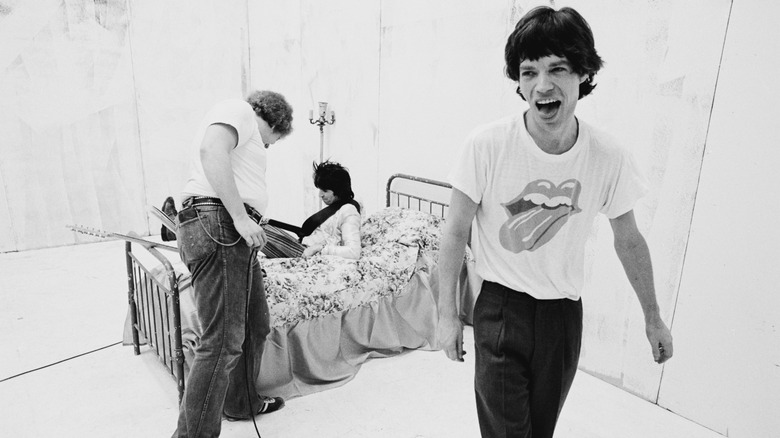
In some cases, old vanguard bands morphed with the times, and in so doing, demonstrated that the old times were gone. This is the case with The Rolling Stones and their disco bopper, "Miss You." Other legendary outfits simply vanished, like Led Zeppelin, and songs like the tepid "All My Love" foreshadowed their disappearance. Meanwhile, songs from Boston, the Clash, and the Police showed that classic rock had fully run its course.
Miss You - The Rolling Stones
Don't worry, Stones fans, "Miss You" from 1978's "Some Girls" isn't a bad song. That's exactly the thing — it's so groovy and danceable that it signaled the end of classic rock. Yes, it still sounds imminently "Stones" and retains the funkiness on display in staple tracks like 1968's "Sympathy for the Devil." But "Miss You" is The Rolling Stones soaked in the disco-laden times – including its messed-up history – following the smash 1977 movie, "Saturday Night Fever." That movie was driven by the stellar, Bee Gees-led, fifth-highest-selling album of the decade (plus John Travolta sashaying on the dance floor, of course).
As Stones guitarist Ronnie Wood once said on Top 2000 a gogo, the band would "always just adapt with what music was in the air .. We thought just about the beat, you know?" The Stones were pros at such adaptations, as it had been around and thriving since its aptly-named 1964 debut, "The Rolling Stones." That's one year after The Beatles' 1963 debut, "Please Please Me," mind you. The Stones' album covers alone tell the story of its evolution, from the very mannerly "I'm here to pick up your daughter for the school dance" early album covers to the wacky psychedelia of 1967's "Their Satanic Majesties Request."
But if the Stones had turned disco with "Miss You," and arguably survived as a result, this tells us everything about the state of classic rock at the time. The song made purists uncomfortable, but maybe that's because they loved the laid-back, killer bassline of "Miss You" and Mick Jagger's "Ooh, ooh, ooh-ooh-ooh" chorus vocals as much as anyone else. But no worries. The Stones' old stuff still exists, waiting to be heard.
All My Love - Led Zeppelin
Led Zeppelin didn't survive like The Rolling Stones, but bled out along with the tail end of classic rock's golden era. The band's final studio album, 1979's "In Through the Out Door," is widely regarded as its worst. We're not talking gutter trash, but definitely a disheartening decline in quality from its late '60s to early '70s heyday. This wasn't without reason (which we'll get to), but in the end, songs like "All My Love" from "In Through the Out Door" show that classic rock was on its way out, along with what was once the world's biggest rock band. And "All My Love" ranks amongst the best from the album.
As of early 2026, "All My Love" has about 174 million listens on Spotify. It's not a terrible song in and of itself, but compared to the crisp, inspired, and energetic verve of earlier Led Zeppelin tracks like "Immigrant Song" or the spooky mysticism of "No Quarter," "All My Love" sounds like diecast radio-friendly fare. It's even got the dull synth line to prove it. The song could be half its nearly six-minute length and still overstay its welcome.
The lackluster quality of "All My Love" and "In Through the Out Door" came through a combination of Led Zeppelin's substance misuse issues and outrageous, fame-wrought, self-destructive behavior. The year after Led Zeppelin released "In Through the Out Door," drummer John Bonham tragically died after a bout of drinking. So it was that classic rock died, too.
If you or anyone you know needs help with addiction issues, help is available. Visit the Substance Abuse and Mental Health Services Administration website or contact SAMHSA's National Helpline at 1-800-662-HELP (4357).
More Than a Feeling - Boston
This choice might confuse some people, because Boston's "More Than a Feeling" from 1976's "Boston" was a smash hit. It fueled half a million record sales in a few weeks following the album's release and over 20 million albums since then, making "Boston" one of the most successful rock debuts ever. It also arrived pre-mainstream disco and pre-new wave. But this is exactly our point, as "More Than a Feeling" was more of a bridge track to '80s arena rock than a late entry to the classic rock era.
To illustrate: Go ahead and try to listen to Boston's "More Than a Feeling" with fresh ears, divorced from the year it came out (1976), and ask yourself, "Does this sound like classic rock akin to The Beatles, Led Zeppelin, and Fleetwood Mac, or does it sound like a big, hooky '80s rock radio hit?" Yep, it's definitely the latter. "More Than a Feeling" presaged the end of classic rock because its strengths — reliance on a massive chorus, chunky power chords (plus the acoustic noodlings, yes), and a super-refined production sound — mirrored those of rock to come.
"More Than a Feeling" and the entirety of "Boston" also mirrored broader musical trends to come, because the album was made by one guy in his tricked-out basement studio, Tom Scholz. Scholz was an engineer by trade and an MIT graduate who turned his talents to music. This made Boston a progenitor of bands driven by highly architected, '80s-gear-saturated studios, and even 21st-century digital home studios. This method of writing music is a far, far cry from the romanticized vision of music flowing organically from the collective souls of dudes with long hair.
London Calling - The Clash
You could think of punk as a rawer, wilder, angrier second take on the counterculturalism of the '60s. Punk had grown out of '60s garage bands well before its boom via albums like 1977's "Never Mind the Bollocks, Here's the Sex Pistols." But by then, punk was more of a reaction to the increasingly polished state of contemporary rock, plus an in-the-trenches attitude to sociopolitical issues. Hence "London Calling" from the Clash, one of punk's biggest players, the rise of which illustrated the downfall of classic rock on the cusp of the 1980s.
We're choosing "London Calling" from the 1979 album of the same name, rather than another late-'70s punk track, because the Clash had a long-lasting presence in music and culture moving into the early '80s (it still has over 16 million monthly listeners on Spotify in early 2026). The band also bundled together a whole bunch of musical influences into its work, including those outside of rock, such as hip-hop pioneers Grandmaster Flash and the Furious Five. These influences came to a head with "London Calling," both the album and the song, which acts as a kind of zenith for the band and marked a changing of the rock guard from one era to the next. Come the late '70s, the Clash were leagues more edgy, defiant, cool, forward-thinking, and youth-oriented than any existing classic rock mainstay.
Plus, the Clash's lyrics were locked into the moment. Cold War paranoia abounds on "London Calling," as well as a memorable denunciation of "phony Beatlemania" as a false idol and distraction from real-world problems. And so, punk ushered classic rock out the door.
Don't Stand So Close To Me - The Police
The Police illustrate that the rock birthed in the mid-'60s had well and truly burned out by the late '70s and early '80s. The Police were the quintessential new wave band, which assembled various influences into a new form, particularly reggae. And while "Roxanne" from their 1978 debut, "Outlandos D'Amour," made a big-enough splash (eventually reaching No. 32 on the Billboard Hot 100), it's the 1980 album "Zenyatta Mondatta" that cemented The Police's place in musical history. With its biggest hit, "Don't Stand So Close to Me," classic rock and its golden era were all but smoke and ash.
Taken on its own, "Don't Stand So Close To Me" is a true oddity. The song's got a simmering, suppressed intro and verse with limited instrumentation that opens up into a weird, major-signature, bright, and reggae-teeming chorus, but is actually about pedophilia. It's even got a "Lolita" reference that counts amongst Sting's corniest lyrics, and with a terrible rhyme scheme, "It's no use, he sees her, he starts to shake and cough/ Just like the old man in that book by Nabokov." But despite all these strange incongruities, or maybe because of them, the song caught on and reached No. 10 on the Hot Billboard 100.
And what does any of this have to do with the kind of classic rock evoked by bands like Pink Floyd, The Who, or the Beatles? Exactly: nothing at all. The world had moved on by 1980, enough to both foster and accept a band like the Police and a song like "Don't Stand So Close To Me." New wave was in, and the old music was out.