

Rock Stars Who Abandoned Their Bands For A More Successful Solo Career
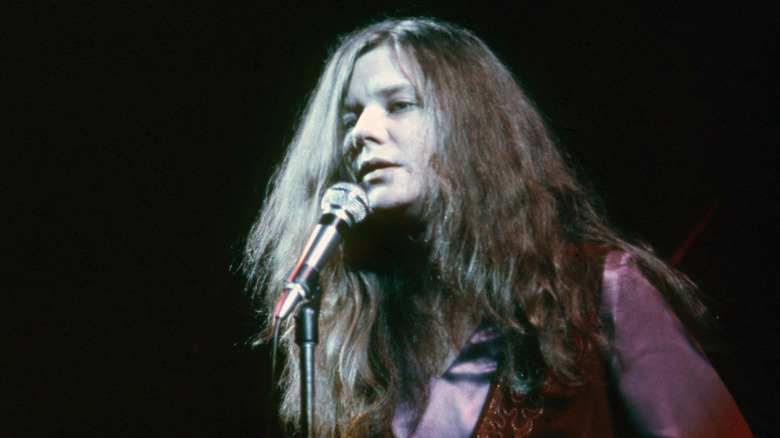
Bands break up for many reasons, whether it's artistic differences, interpersonal tensions between members, addiction issues, or the pursuit of solo careers. In the case of the latter, likely more than a few artists regretted the decision after their solo projects floundered, as was the case with Peter Tork of the Monkees. Other musicians were luckier and managed to outpace their former bands as solo artists.
When choosing our entries, there were a few caveats to consider, like whether the artist abandoned the band or was actually fired, as was the latter case with Ozzy Osbourne, who had a massive career after Black Sabbath gave him the boot due to his addiction issues. Then there's how one judges success. Is it record sales or critical acclaim? Peter Gabriel came to mind here. He left Genesis for a massive and artistically lauded solo career, but garnered less sales overall than his former band, which leaned heavily into radio-friendly pop after his departure. In the end, we gathered five rock stars who fit the parameters of having careers that blossomed both commercially and critically after leaving their old bands behind.
Neil Young was a serial quitter
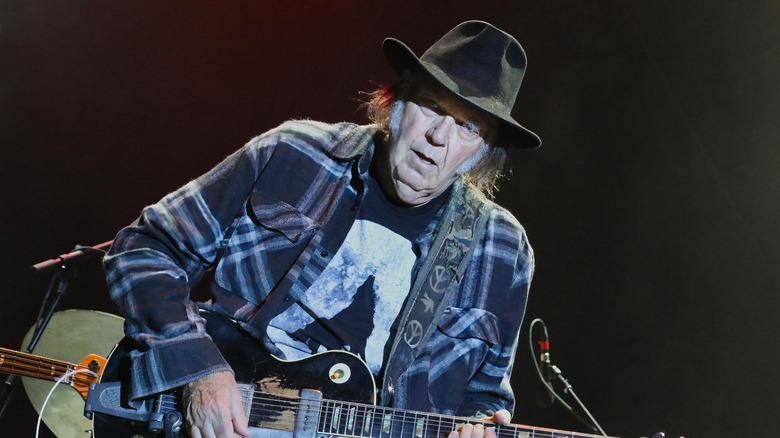
Neil Young has had a sprawling 60-year-long musical career that continues into the present. He's also been a serial quitter of bands like Buffalo Springfield and Crosby, Stills, Nash & Young. He left the groundbreaking country-rock band Buffalo Springfield in 1968 after only two years, during which Young had quit and rejoined the band numerous times before his final departure. He later denied that he left the band to pursue a solo career — instead blaming an upcoming appearance on "The Tonight Show Starring Johnny Carson" that he was against — for his abrupt move, though he began recording his self-titled debut album that same year. His sophomore effort, and first album with his long-standing backing band "Crazy Horse," "Everybody Knows This Is Nowhere," followed a year later.
Then, in 1969 he joined Crosby, Stills, and Nash, only to bail on it in 1970 after a fraught tour and two albums' worth of material, including the hit record "Déjà Vu." In both cases, Young's solo career outshone his former bands. With such classic albums as "Harvest" (his biggest seller), among a slew of others, he's sold more albums than the short-lived Buffalo Springfield or his on-off collaborations with Crosby, Stills, and Nash ever did, with or without him. With a wealth of critical acclaim and one of the most well-known names in the music industry, Neil Young is now worth a lot more than you may think.
Janis Joplin went big after Big Brother and the Holding Company
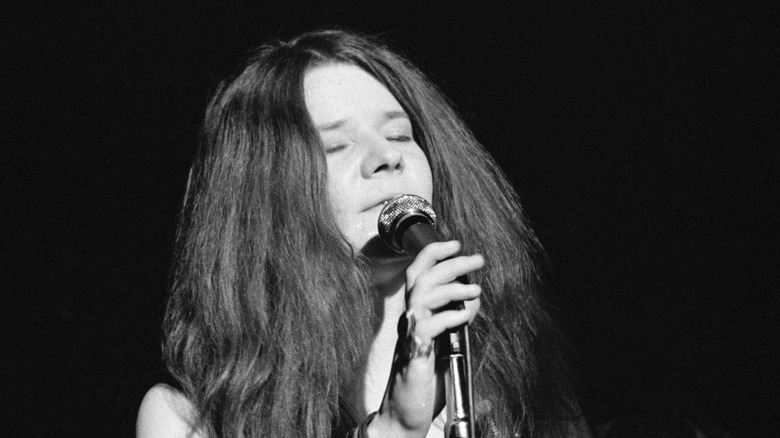
Big Brother and the Holding Company was already an established San Francisco psychedelic blues band before Texas native Janis Joplin joined in 1966, helping to reshape the group's sound. Following the band's acclaimed performance at the Monterey Pop Festival in June 1967, Bob Dylan's manager, Albert Grossman, took the band under his wing and helped secure a record deal with Columbia Records. The resulting album, "Cheap Thrills," topped the Billboard charts and pushed Joplin into the limelight. It wasn't long before Grossman convinced Joplin to ditch her band.
The band's musicians weren't known for being technically proficient, preferring a freewheeling approach to making music, while Joplin wanted something closer to a soul sound. "I love those guys more than anybody else in the world," Joplin said in an interview (via Barney Hoskyns' "Small Town Talk"). "But if I had any serious idea of myself as a musician, I had to leave." In 1969, Joplin's first album with her new backing band, the Kozmic Blues Band, went to No. 5 on the Billboard 200. Unfortunately, Joplin didn't get to enjoy much of her fame as a solo artist, since she died from an accidental heroin overdose in October 1970, three months before her biggest-selling album "Pearl" came out. Still, it became a massive success, while Big Brother and the Holding Company limped along, releasing two more albums before breaking up (it later regrouped in the 1980s).
Sting copped out of the Police
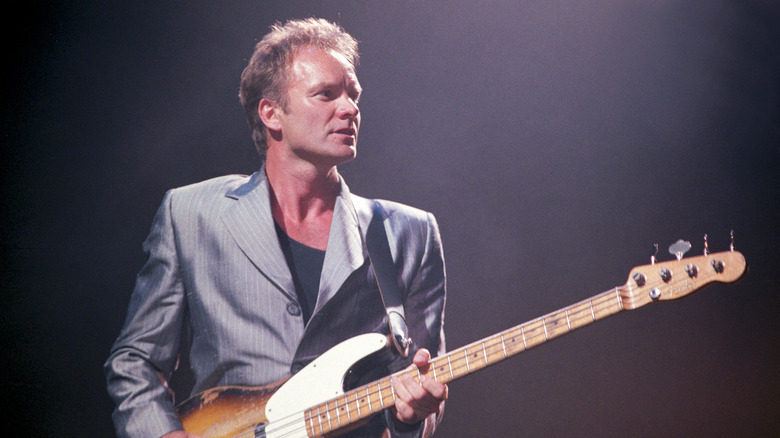
The Police — lead singer and bassist Sting, guitarist Andy Summers, and Stewart Copeland on drums — were a new wave band that managed to put out five albums, win five Grammys, and not kill each other in the process. From 1977 to 1984, the band members were famously combative with one another. Long before he left the Police, Sting, born Gordon Sumner, had begun to believe he was a better songwriter than his two bandmates, an attitude that helped him decide to go solo.
"My frustration was I would have written an album's worth of material but also had to entertain these other songs that were not as good," Sting told Mojo magazine in 2022. For their part, Summers and Copeland had a lot to say about Sting, including that Sting had become dictatorial by the time they recorded 1983's seminal "Synchronicity" album, and Copeland once half-jokingly discussed wanting to throttle Sting when they were together. When Sting broke up the band and went solo with his hugely successful jazz-oriented "The Dream of the Blue Turtles," he kicked off a decades-long solo career with record sales that roughly matched his former and relatively short-lived band. And while the Police reunited briefly over the years, his old bandmates sued him in 2025 over unpaid royalties.
Rod Stewart needed fewer faces
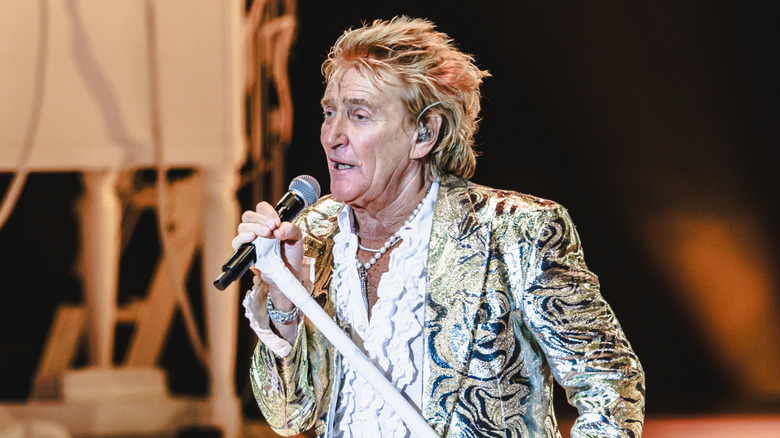
In 1969, the British rock band the Faces came together following the breakup of the Small Faces, which had disintegrated after the lead singer, Steve Marriott, quit the band to form Humble Pie. The new band was also made up of members of the Jeff Beck Group, including singer Rod Stewart. In something of a repeat of what happened with the Small Faces, Stewart would eventually help break up the Faces, just one aspect of the untold truth of Rod Stewart. And throughout his time with the band, Stewart was putting out solo albums, albeit with mixed results.
Then his third album, 1971's "Every Picture Tells a Story," became a smash hit. It reached the No. 1 spot in both the U.S. and the U.K., and made Stewart a bona fide star. By the time the Faces were working on their fourth album, "Ooh La La," in 1973, Stewart had one foot out the door, publicly disparaging the album and failing to attend several recording sessions. Bad blood ensued with the other members, who believed Stewart was keeping his best material for himself. And while it was bassist Ronnie Lane who left first, followed by guitarist Ronnie Wood, who went on hiatus to join the Rolling Stones, Stewart's push to go solo instigated the band's demise in 1975. It was a lucrative decision, earning him a fortune through multiple platinum-selling albums.
Eric Clapton let the dominos fall
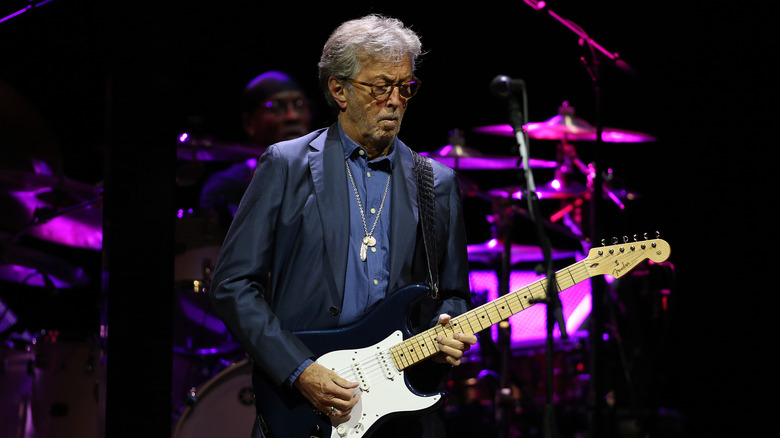
Eric Clapton has made a career out of quitting bands. It started back in 1965 when he left the Yardbirds, unhappy with the band's direction. One year later, he quit his next band, John Mayall and the Bluesbreakers, to form Cream. Yet again, Clapton ditched his bandmates: He broke up the innovative act in 1968, and did the same with his next band, Blind Faith, after just one album. But it was Derek and the Dominos that really felt the brunt of Clapton's mercurial decision-making. The band, which included guitarist Duane Allman, bassist Carl Radle, Jim Gordon on drums, and keyboardist Bobby Whitlock, only managed to record one album, "Layla and Other Assorted Love Songs."
While Clapton later claimed the band had simply "dissolved" during the making of its second album, in May 1971, Clapton simply walked out of a recording session and never returned, leading to the band's dissolution. Allman returned to the Allman Brothers Band before dying in a motorcycle accident later that year. Radle died in 1980, Gordon's career spun out amid mental health issues, and Whitlock's solo records fizzled. Meanwhile, Clapton managed to become one of the richest guitarists in the world and enjoyed a massively successful solo career.