

Music Icons Who Were Arrested While On Tour
All too often and with shocking regularity, major musical stars have been arrested in the middle of a massive national or world tour. It's something of a cliché, to the point of assumption, that musicians get pretty rowdy when they're out there on the road, traveling from city to city to entertain the masses. They fill their days and nights surrounding shows with dangerous and illicit activities. Rock stars can party way too hard or do far worse things — outwardly and objectively illegal things, for example. That, in turn, invites the attention of police, who mete out justice by arresting and booking these internationally famous musical icons.
Sometimes brilliant musical artists enjoy such a freewheeling lifestyle afforded by fame, money, and adulation that they forget they aren't above the law and could very well get thrown in jail for a night or more. Here are some renowned musical figures from rock, country, and pop who ran afoul of the law in between performing concerts on a tour.
Paul McCartney
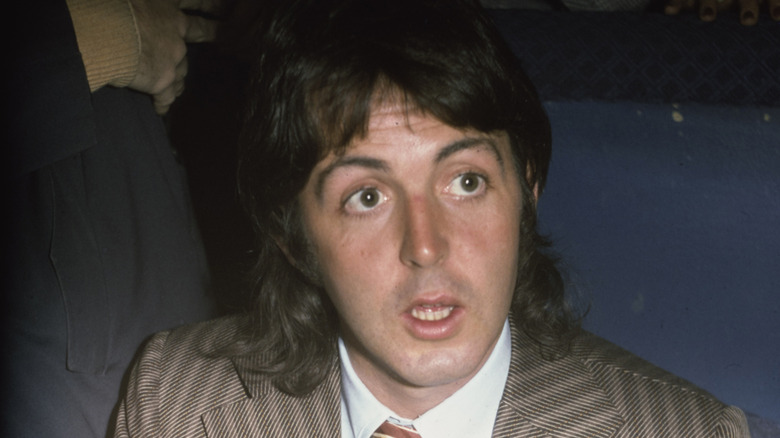
In March 1973, Paul McCartney's journey to being a celebrity you forgot spent time behind bars began when he avoided a prison sentence for a drug conviction. A police officer visited McCartney's U.K. farm when the musician wasn't at home to perform a security check and discovered marijuana plants growing in a greenhouse. Claiming that he'd been sent the seeds and cultivated them without fully knowing what they were, McCartney got off with a small fine but carried the conviction on his record. This charge, he was warned, could affect his international business dealings in the future.
Indeed, in November 1975, Paul McCartney and his band, Wings, were prevented from entering Japan for a set of concerts on account of the musician's criminal background. The ban by Japan's Minister of Justice was lifted a few years later, and McCartney and Wings planned an 11-concert mini-tour of the country for early 1980. But shortly after the musicians' plane landed in Tokyo on January 16, customs agents discovered more than 7 ounces of marijuana in McCartney's luggage. The singer-songwriter could've gone to prison for as long as seven years if convicted, but the Tokyo District Prosecutor declined to take the matter to court and simply deported McCartney, his wife and bandmate, Linda, and their children. The Wings shows were canceled while McCartney waited out his fate over 10 days of incarceration.
Ozzy Osbourne
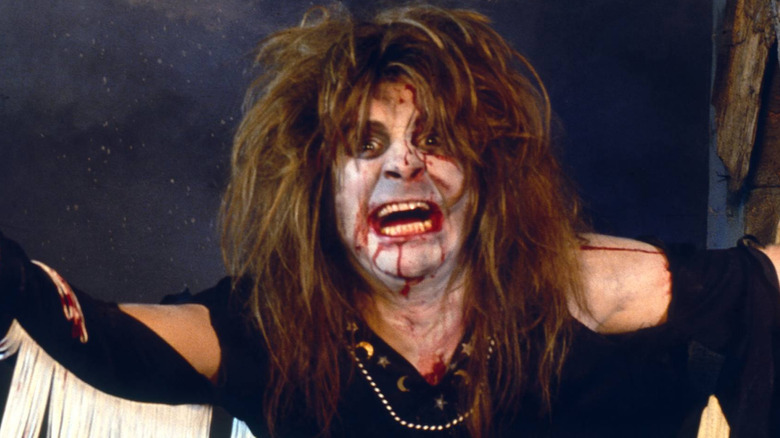
After Ozzy Osbourne left Black Sabbath in 1979, he immediately formed a new band to back him in a very successful solo career. In February 1982, his lengthy "Diary of a Madman" tour came through San Antonio for a concert at the HemisFair Arena. Killing time before an evening show, Osbourne spent the afternoon of February 19 getting very drunk before he wandered over to the Alamo, the preserved historic site that serves as a memorial to the Battle of the Alamo, fought at the former mission in 1836. Over 13 days of fighting, nearly 200 people died fighting for Texas' independence from Mexico.
Situated across from the Alamo is the Alamo Cenotaph, a 60-foot-tall structure that serves as a memorial to those who died in 1836. And Osbourne, very intoxicated and wearing one of his wife's dresses because she'd confiscated his clothes to prevent him from wandering around, approached that monument and urinated on it. San Antonio police arrested Osbourne on charges of public urination and intoxication. He was released after making a $40 bond payment and played the show that night. Had Osbourne relieved himself on the Alamo proper, the aftermath might have been more serious. "The police wouldn't have arrested him," an Alamo employee told the Boston Herald (via Blabbermouth). "They would have beaten him to within an inch of his life."
Jim Morrison
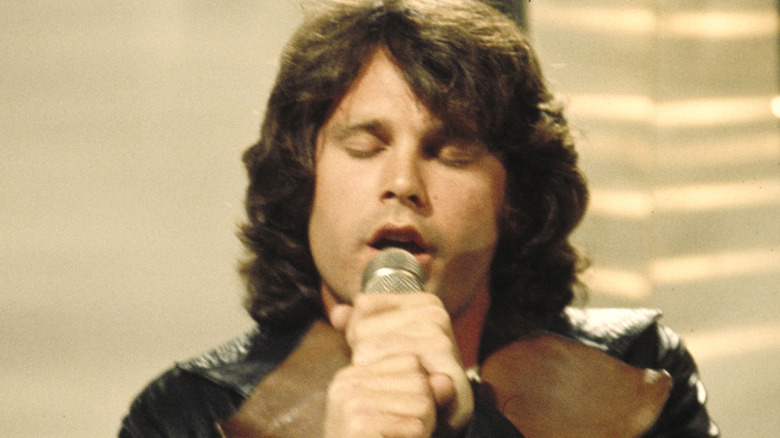
In March 1969, the Dinner Key Auditorium in Miami hosted a concert by The Doors. Frontman Jim Morrison reportedly demonstrated signs of intoxication throughout the show, abandoning singing some songs partway through and slurring when he spoke. According to Rolling Stone, about an hour in, Morrison called out from the stage: "Let's have a good time, let's have a revolution, everybody come up on stage," "Come up and touch me," and "Do you wanna see my c***?" After dozens of fans swarmed the stage, promoter Ken Collier separated Morrison from his microphone and told the fans to return to the audience. The frontman pushed some people and then allegedly made good on his offer and exposed himself, and Collier ultimately shut down the show. "Uh-oh, I think I exposed myself out there," Morrison reportedly uttered as he exited.
Local police issued six arrest warrants for Morrison covering public drunkenness, open public profanity, lewd and lascivious behavior, and indecent exposure. About a month later, the frontman turned himself in to the FBI in Los Angeles. Morrison stood trial and was convicted, ordered to pay a $500 fine and go to jail for six months, but he never reported for service. The Miami show had been the first of a concert tour planned to touch down in 20 cities, but every promoter called off their Doors show following Morrison's onstage actions.
Axl Rose
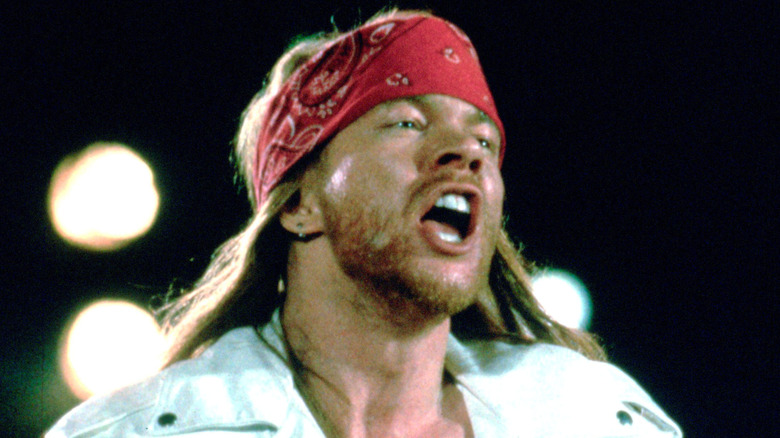
Guns N' Roses was just about the biggest hard rock band on the planet in 1991, the year it simultaneously released two blockbuster "Use Your Illusion" albums and embarked on a promotional tour that would keep it on the road for the better part of two years. That tour was only about two months old when frontman Axl Rose acted out, exacting reprisal and causing widespread injuries and property damage. During the July 2, 1991 concert at the Riverport Amphitheater outside St. Louis, Rose saw a person in the crowd with a camera, a forbidden object that slipped past security guards. The singer leaped into the audience, took the camera, and then ended the concert prematurely as he headed backstage with the rest of the band behind him. Upset over the abrupt end to the show, about 3,000 people in the crowd rioted. The melee led to 16 arrests, and police estimate that 60 people were injured and the venue suffered $200,000 in property damage.
Rose evaded immediate capture, but he was arrested on an outstanding warrant at JFK International Airport in New York in July 1992 upon reentering the U.S. after the European section of the Guns N' Roses tour. He was booked in Queens, released, and convicted in Missouri in absentia in November 1992 on charges of assault and property damage. Rose was sentenced to two years of probation and ordered to donate $50,000 to St. Louis-area charities.
Tommy Lee
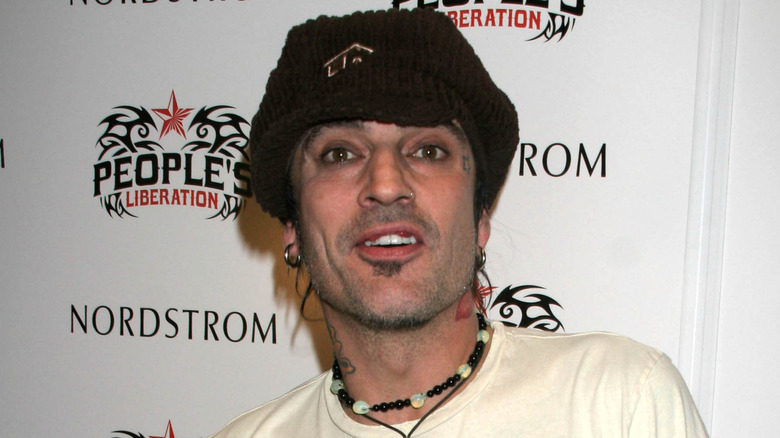
Tommy Lee has been getting arrested for violent crimes since 1983. That's the same year his band Motley Crüe broke through commercially with its second album, "Shout at the Devil," on the way to taking over the glam metal scene. After arrests and arraignments, Lee was typically sent home with probation, including a 24-month term that was issued after the musician beat up a photographer outside a West Hollywood club in 1996. In February 1998, police in Malibu, California, responded to a call at Lee's home, where his wife, Pamela Anderson Lee, alleged her spouse physically assaulted her during a disagreement and while she held their baby son. Noticing signs of harm, Lee was arrested on charges of spousal abuse, child abuse, and unlawful gun possession. Three months later, a Malibu judge upped Lee's probation to three years and added six months behind bars at Los Angeles County Jail.
While Lee was serving his time, he was convicted on a different matter in a different jurisdiction over a concert incident. In December 1997, Lee and Motley Crüe leader Nikki Sixx reportedly assaulted Kenneth Lee Chambers, a security guard working the band's show at Phoenix's America West Arena. Chambers was actively trying to prevent around 100 fans from mounting the stage during a riot allegedly incited by the musicians. Lee received a 30-day jail sentence to be served concurrently with his punishment in California.
Sebastian Bach
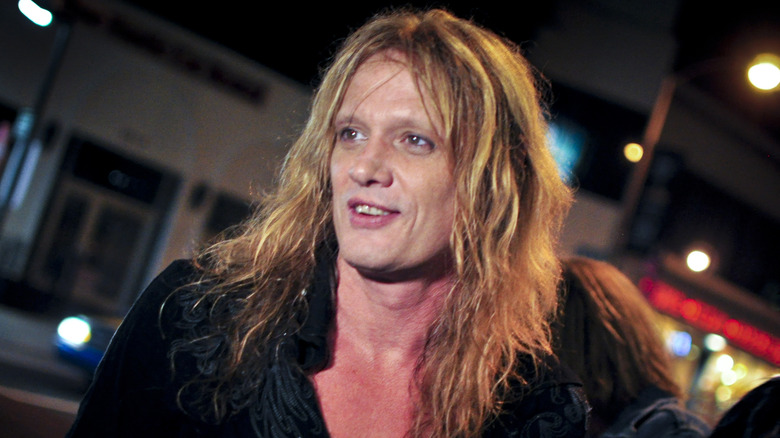
Back in 1989, Skid Row was one of the most popular rock bands around. As the hair metal act toured around the U.S., it played a show at Massachusetts' Springfield Civic Center, opening for Aerosmith. As Skid Row played, someone in the crowd allegedly whipped up some kind of drinking container at the stage, nearly striking singer Sebastian Bach in the head. Bach, rattled by the near miss of what he claimed was a bottle (but which prosecutors would later attest was a cup), became agitated and fought back, tossing another bottle into the audience. While it's unclear if Bach hit his intended target, it definitely struck a 17-year-old fan and broke her nose. The frontman then launched himself into the audience and allegedly kicked a man in the face.
Police arrested Bach that very night. He was arraigned on two charges of assault and battery and one charge of mayhem and faced a two-year prison term. Lucky for Bach, he took a plea bargain and received two years of probation and a $16,000 fine.
David Crosby
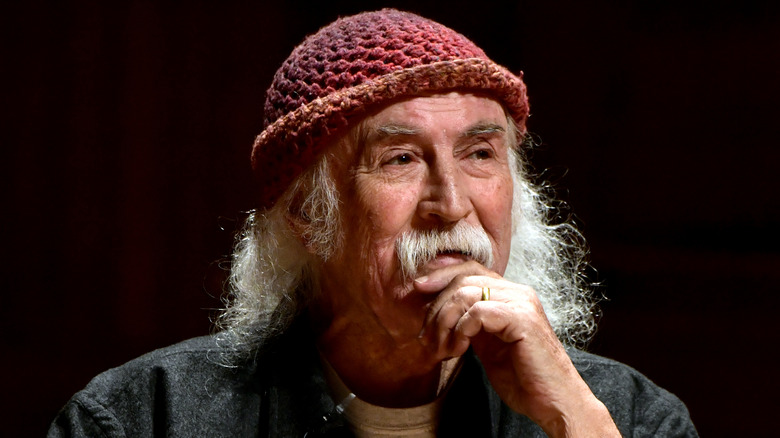
In March 1982, David Crosby of folk rock giants Crosby, Stills & Nash (and often Young) drove his vehicle into a freeway center barrier. He was on his way to play at an anti-nuclear demonstration at the San Onofre power facility in California. When Highway Patrol officers arrived on the scene, they investigated Crosby and determined that he'd been intoxicated at the time of the accident. He was arrested and charged with driving under the influence of drugs, drug possession (pipes with residue were found in the wreckage), and illegally concealing a .45-caliber automatic weapon. While Crosby was booked and released, Stills and Nash performed as a duo that day.
Crosby was convicted of reckless driving and evaded incarceration for that incident, but he'd go to prison for crimes committed just a month later. In April 1982, the guitarist booked a show at the Dallas club Cardi's, where he was arrested in his dressing room. Police discovered a loaded handgun and ¼ gram of cocaine among Crosby's personal effects. In 1983, a judge found the rock star guilty on drug and gun charges and sentenced him to five years in prison, but he was set loose after five months.
Joe Strummer
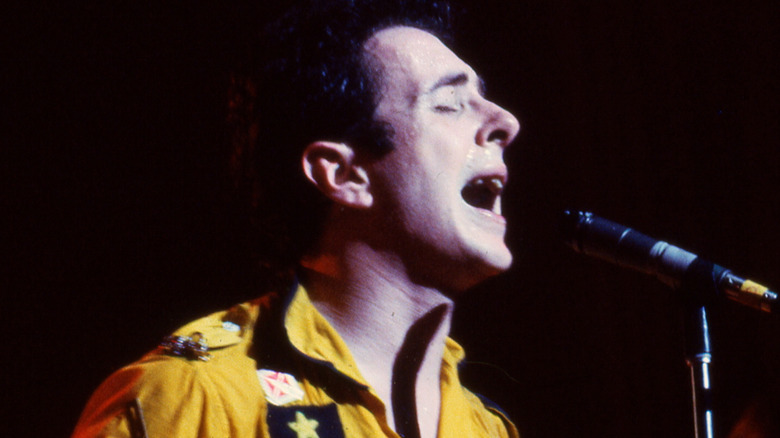
Punk shows, particularly those staged during the first wave of the aggressive and agitated form of rock in the late 1970s, were known for being rowdy and violent. One show put on by The Clash at the Apollo Theater in Glasgow, Scotland, in July 1978 got pretty out of hand. People from the crowd, members of the security team, and even the band itself got so physical that police had to get involved. The venue had a reputation for tough bouncers who routinely lashed out at concert attendees, and the kicking and striking upset bandleader Joe Strummer so much that he called for restraint and then ended the show with tears in his eyes. Still angry after leaving the venue, Strummer was confronted by fans mad that he didn't do more to stop the bouncer violence. The musician threw a glass bottle of lemonade to the ground and was immediately manhandled by police officers and whisked into a van. Bassist Paul Simonon tried to ask the police a question, and he was clubbed in the head and arrested, too.
In 1980, another Clash show, this time in Hamburg, Germany, descended into violence. Multiple fans stormed the stage, seized the microphone, and accused the Clash of being sell-outs. Strummer smashed his guitar into one fan's head and left him bloody, and he was arrested on an assault charge.
Liam Gallagher
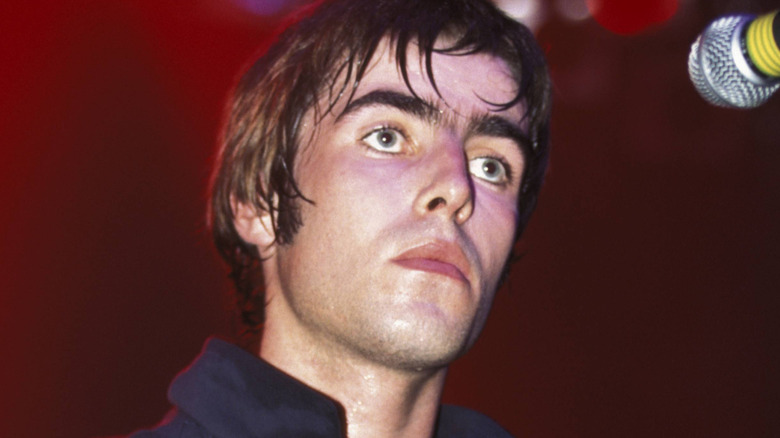
Purveyors of the fresh and choppy Britpop sound, Oasis was one of the most important rock bands of the 1990s. The group was extremely popular throughout the English-speaking world and toured extensively throughout the decade. While promoting its third album, "Be Here Now," in early 1998, the band took its show loaded with hit anthems like "Don't Look Back in Anger" and "Wonderwall" to Australia.
Oasis singer Liam Gallagher, often heard mouthing off about his brother and bandmate Noel Gallagher in the press and on stage, reserved his ire for a fan during some downtime around the band's Brisbane concert. Oasis spent the night in a high-end area, and that's where 19-year-old U.K. citizen Benjamin Jones encountered the frontman and requested a photograph. Gallagher didn't just deny the request — he allegedly slammed his head into Jones' and then punched the fan in the nose, breaking it. Brisbane police arrested Gallagher, who was charged with assault and quickly released after posting a $6,600 bail fee. Jones later dropped the charge and reportedly settled out of court for £60,000.
Willie Nelson
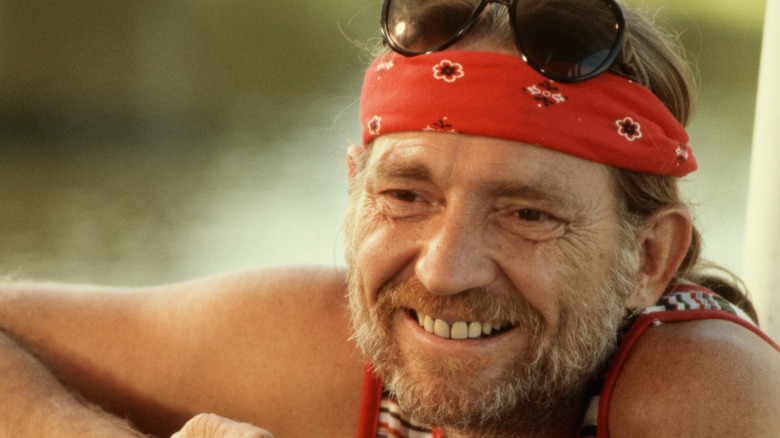
Country music legend Willie Nelson is probably as well known for his decades-long enjoyment and advocacy of marijuana as he is for "On the Road Again" and "Always On My Mind." Police briefly detained Nelson for marijuana possession in Dallas in 1974, in the Bahamas in 1977, and in May 1994. The latter incident took place just days after a concert tour sent him to Houston. Nelson was arrested in Hewitt, Texas, after police spotted the singer asleep in his Mercedes. They took him to the McLennan County jail for booking on a Class B misdemeanor charge for marijuana possession, as a search yielded just under 2 ounces of the substance. Nelson was released after a few hours in custody.
Twelve years later, Nelson's tour bus got pulled over by Louisiana State Police outside Breaux Bridge for a standard commercial vehicle check. Officers noticed marijuana smoke, and along with some hallucinogenic mushrooms, they found 1.5 pounds of marijuana. Nelson and four others in his entourage claimed the drug as their own, and because they swore that it was all for individual use — with no intent to sell or distribute such a large amount — they were each charged with a low-level possession offense. In 2010, another routine inspection of Nelson's tour bus resulted in a marijuana possession charge. Six ounces were found by authorities in Sierra Blanca, Texas, and after Nelson said the marijuana was his, he was arrested, paid a $2,500 bond, and was let go.
Marilyn Manson
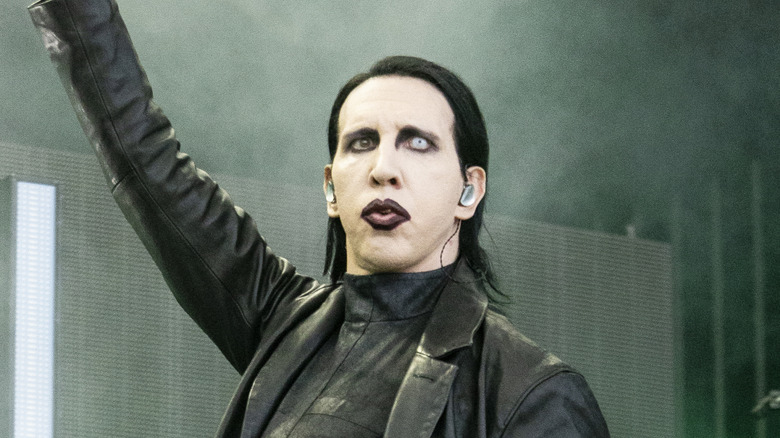
One pivotal episode in the rise and fall of Marilyn Manson — from shock-metal provocateur to facing numerous allegations of serious and shocking crimes — is that time he purportedly attacked a security guard working one of his own shows. In July 2001, Manson's tour stopped at the DTE Energy Music Theatre outside of Detroit. After stomping around the stage and screaming his way through his menacing songs about sex, violence, evil, darkness, and drugs, Manson (real name: Brian Warner) approached a security guard, Joshua Keasler. As the guard was standing sentry on the ground floor of the venue, Manson allegedly approached him from behind, spit on his head, put his legs around Keasler's neck, and simulated profane acts.
Weeks later, Manson was arraigned on a charge of sexual misconduct. The rock star ultimately agreed to a no contest plea to disorderly conduct and assault and battery charges, for which he paid a $4,000 fine. As for Keasler's lawsuit, it was dismissed after he and Manson reached a private settlement.
Michael Todd
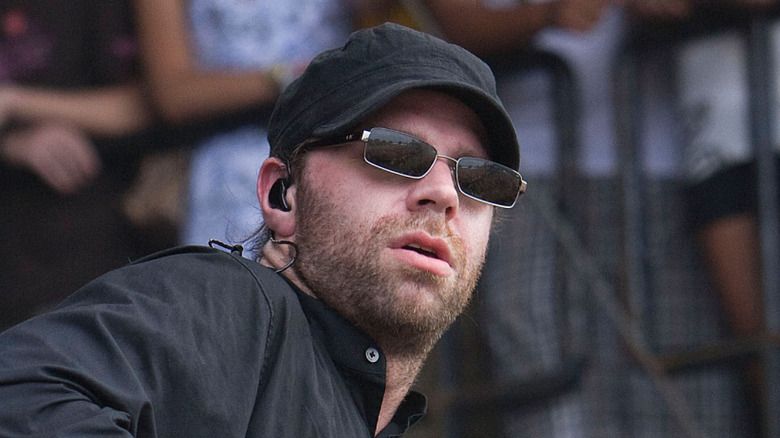
Loud, heavy, and experimental progressive metal band Coheed and Cambria built up a huge following in the 2000s. With its story songs and concept albums, the group has regularly topped Billboard's rock albums chart. For the first decade of its existence, bassist Michael Todd contributed a thundering low end to the band's distinctive sound — until he was fired in August 2011 after some legal troubles.
Coheed and Cambria was booked to perform as the opening act for the tragedy-prone Soundgarden at the Comcast Center in Mansfield, Massachusetts, on July 10, 2011. In the afternoon before the evening show, Todd went to a Walgreen's pharmacy in the nearby town of Attleboro. He allegedly flashed a phone note at the pharmacist on duty, claiming to have a bomb. That enabled Todd to walk away with six bottles of the powerful prescription painkiller OxyContin. Police tracked him down to the Comcast Center, where he was arrested on his band's tour bus prior to the concert, which proceeded as scheduled without Coheed and Cambria's regular bassist. Following a guilty plea, the unemployed Todd was sentenced to a one-year house arrest term.