

'70s Singers Whose Careers Ended Too Soon
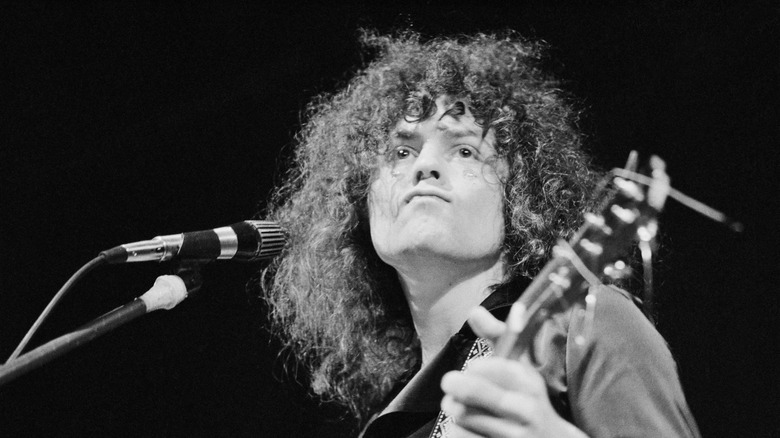
Sometimes a singer's career ends before it should due to circumstances beyond their control. It could be a drastic life change that requires a shift away from the grind of the music industry or a realization that the career isn't all that it's cracked up to be. In the saddest of scenarios, a singer's career ends too soon due to their tragic death coming just as their star is on the rise. Regardless, these talented performers left the spotlight before their time, leaving questions about how much more they could have achieved.
The songs released in these singers' short-lived careers made indelible impressions on both the music industry and the listeners who adored them. It's difficult not to wonder how much more memorable music singers like Minnie Riperton or Harry Chapin could've created if their lives hadn't been cut short. Even a one-hit wonder like Terry Jacks may have gone on to bigger success had he chosen to continue on his musical journey.
Minnie Riperton
"Lovin' You," the best-known song from '70s singer Minnie Riperton, literally set the tone for the modern pop whistle singers who aim for the highest of high notes. With its minimalist arrangement and sugar-sweet R&B melody, it was a breezy, smooth tune that lit up the charts in 1975, landing at No. 1 on the Billboard Hot 100 that year. Though Riperton had a singing career with several groups in the '60s, it was her solo album, "Perfect Angel," and its timeless lullaby-love song that established her as a substantial solo artist. Fans of "SNL" alum Maya Rudolph know Riperton as Rudolph's mother, and the actress was the inspiration behind "Lovin' You." Riperton wrote the song with her husband (and Maya's father), Richard Rudolph, and even sings her daughter's name in the outro.
Riperton was diagnosed with breast cancer in 1976, touring while undergoing treatment for the next few years. She died in 1979, leaving behind her family, a small catalog of albums, and a star on the rise. Riperton's impact was strong enough to inspire a 50th anniversary tribute at the Hollywood Bowl in 2025, with singers like Stevie Wonder recreating her album. Though she may have been a one-hit wonder you didn't know had passed away, the Minnie Riperton Legacy Fund from the Concern Foundation for Cancer Research has raised more than 1 million dollars in the singer's name.
Harry Chapin
A troubadour of rare talent, Harry Chapin gave fans of folk and adult-oriented rock great things to listen to in the '70s. Storytelling songs like "Taxi" and "Cat's in the Cradle," his only No. 1 hit, showed a tender understanding of human nature and the complexities of modern life. They also took the music world by storm, racking up millions in sales for both Chapin's singles and albums.
More than simply being a singer-songwriter of incredible skill, Chapin was also an activist who kept the social consciousness of the '60s alive into the '70s. One of the biggest promotions Chapin launched during his most successful era was called "Hungerthon," a 24-hour radio show broadcast on Thanksgiving to raise funds for hunger causes. He also led fundraising concerts featuring other big names of the era, legends like James Taylor and Gordon Lightfoot. The idea was to fund a Presidential Hunger Commission — an effort that failed, though Chapin posthumously received a Congressional Medal of Honor for his dedication.
Though he'd released multiple albums throughout the '70s, a tragic car accident in 1981 ended Chapin's life and career at just 38 years old. His legacy of humanitarian aid lives on in the form of the ASCAP Harry Chapin Humanitarian Award, which the nonprofit performance rights organization gives to musicians who make a positive difference in the world. A Chapin Awards gala is held annually by WhyHunger, a nonprofit Chapin began in 1975 to combat food insecurity.
Jim Croce
The excitement of Jim Croce's music was that you never knew what you were going to get, but you knew it would be something special. The skilled singer-songwriter genre-hopped from the old-fashioned bluesy stomp of "You Don't Mess Around with Jim" and the barroom ragtime fun of the chart-topping "Bad, Bad Leroy Brown" before stopping listeners dead in their tracks with the heart-wrenching ballad "Operator (That's Not the Way It Feels)" and the No. 1 single "Time in a Bottle."
Croce was one of the most varied and talented songwriters of the '70s, but his life came to a tragic end in September 1973 in a plane crash with five others on board. The accident happened during Croce's "Life and Times" tour on the day before his single "I Got a Name" was released. It was a shocking loss of a 30-year-old who'd finally started achieving the success he'd been working for. The songwriter's music has been kept alive by the singer's son, A.J. Croce, a performer who was not even 2 years old when he lost his father. The younger Croce has toured with his father's music, bringing the sounds of a '70s singing career cut short to new and old audiences more than 50 years later.
Terry Jacks
Terry Jacks' one and only hit of the '70s, the supremely syrupy "Seasons in the Sun," was enough to clinch the singer-guitarist as a one-hit wonder all-timer. The song was a cover of a Belgian song first recorded in English by The Kingston Trio, with lyrics provided by noted poet Rod McKuen, who recorded his own version in the '60s. Jacks took his reworked version to No. 1 for three weeks in 1974 and turned it into the second-biggest hit of that entire year. It ended up selling nearly 14 million copies worldwide, which is impressive in any era, and earned the singer several Juno Awards in his native Canada.
It sounds like the setup for a grand musical career that, while not reaching the same heights again, certainly gave Jacks a great shot at a job in the industry. And yet, none of that happened. Jacks was able to chart a few more songs in Canada before dropping out of the music business entirely. He had become disenchanted with the mechanics of being a pop star and instead found happiness as a Christian and devoted his life to environmental activism.
Marc Bolan
Marc Bolan was one of the originators of '70s glam rock, a genre that would be adopted by David Bowie and Queen as the decade rolled on. Bolan's band, T. Rex, gave rock music maximalist sparkle with crunchy guitars and sugar-sweet melodies that made a great party soundtrack. The group's biggest U.S. hit, "Bang a Gong (Get It On)," reached No. 10 on Billboard's Hot 100 in 1972 and spent 15 weeks on the charts.
The band actually began in the late '60s, but its glam rock sound took on a whole new significance as the '70s got fired up. At their peak, Bolan and T. Rex were believed to be selling around 30,000 records daily in the U.K. The example he set as a pop star was admired by luminaries like Elton John, U2, Nick Cave, and Kesha, all of whom performed on a Bolan tribute album in 2020.
The tragic death of Marc Bolan in a fatal car crash in London at age 29 robbed the world of a stellar talent. Though he and T. Rex had experienced tremendous success, achieving four No. 1 songs and 11 top 10 singles in the U.K., it was clear that this glam rock poet had plenty more magic to share with the world. Several days before his death, Bolan performed "Heroes" live with David Bowie, a moment that feels like a glam rock torch-passing all these years later.
Mary MacGregor
Whether it's irony or predestination when a singer's hit song ends up altering the course of their personal relationship may be up for debate. In the case of Mary McGregor and her 1976 smash "Torn Between Two Lovers," it's an instance of life imitating art, at the very least. And for this particular story, the theme is a love doomed by the skyrocketing success of an up-and-coming singer with a mega-hit on her hands.
The song, in which a woman explains how she's come to be in the center of a love triangle, was thought to be autobiographical at first, though MacGregor denied it. Regardless, her success put a strain on her five-year marriage; it turned out her husband wasn't pleased with how busy her schedule had become, thanks to touring and other showbiz commitments, and the couple separated for several years before finally calling it quits. As for MacGregor's single, it topped both Billboard's Adult Contemporary and Hot 100 charts in late 1976 and early 1977, respectively, clinching the singer's success. She would record two more albums in the '70s and early '80 before giving up her career.
David Soul
David Soul was best known for portraying Detective Kenneth Hutchinson on "Starsky and Hutch," a role he was actively engaged in when he launched a singing side gig. His mellow adult contemporary tone was a perfect fit for a 1977 ballad called "Don't Give Up on Us," which fit perfectly in the Jim Croce-Dan Fogelberg mode that was so popular at the time. The song sailed up the charts and netted Soul a No. 1 single in the U.S. and the U.K.
Soul recorded four albums in the '70s and early '80s, and despite his follow-up song "Silver Lady" hitting No. 1 in the U.K. and touring around the world for several years, he never repeated the global success of his first single. Soul shifted back to acting and had a robust stage and screen career from the '80s through the mid-2000s, revisiting his music on occasion while never fully restarting his singing career. Soul's death in 2024 reminded the world that the talented musician could have taken his singing career much further if acting hadn't taken priority.
John Travolta
John Travolta's transformation into T-Bird Danny Zuko from the hit '70s musical "Grease" was helped by the actor's budding career as a singer. Travolta's single "Let Her In" caused a minor sensation in 1976 while the actor was in full feathered-hair mode playing Vinny Barbarino on the hit show "Welcome Back, Kotter." His capable — if not powerful — voice was smooth enough to help the song make the charts, launching what seemed to be a promising parallel career for the up-and-comer.
Travolta's singing was noticed by the producers of "Grease," who realized he could sing as well as act. Though he'd already had a supporting role in the horror film "Carrie" and was exploding as a superstar in "Saturday Night Fever," he had yet to prove his onscreen vocal chops. "Let Her In" helped pave the way for his role and musical performances in "Grease," including the smash single "You're the One That I Want" with co-star Olivia Newton-John.
After "Grease," Travolta recorded "Take a Chance," a duet that reunited him with Newton-John and appeared on the soundtrack of their 1983 film "Two of a Kind." That was the extent of his recording career, although he showed up onstage with Newton-John on occasion. And of course, he continued acting and became a global superstar in the '80s and '90s with films like the "Look Who's Talking" series and "Pulp Fiction."
Leif Garrett
Leif Garrett was a child actor and teen magazine staple who launched what should've been a much longer singing career in the mid-'70s. Paired with appearances on popular network shows of the era like "Family" and "Wonder Woman," it seemed like Garrett was living the dream. He even released a cover of the Dion classics "Runaround Sue" and "The Wanderer," which brought a nostalgic wave of sweet '60s music into a whole new decade. Garrett's disco-pop single "I Was Made for Dancin'" broke the top 10 in 1979, capping off the decade with great promise. But due to the limitations of being a teen heartthrob trying to transition into more adult-oriented music, Garrett gave up what seemed to be a promising recording career in the early '80s and returned to acting.
The story of Leif Garrett became tragic rather than hopeful once he hung up his microphone. A growing drug misuse issue led to a series of run-ins with the law, including a car crash in which Garrett's passenger friend was paralyzed. Garrett blamed his stint on the VH1 series "Celebrity Rehab" for a subsequent relapse. In his 2019 autobiography, "Idol Truth: A Memoir" (via Houston Press), Garrett explained that vocals on his albums had sometimes been replaced by a singer named Jim Haas, at least for the first few records.
Yvonne Elliman
Crossover star Yvonne Elliman originated the role of Mary Magdalene in Andrew Lloyd Webber's 1970 concept album and resulting 1971 Broadway musical "Jesus Christ Superstar," as well as reprising the role in the 1973 film. The singer-actress set the bar high for anyone who filled the role afterward and had their version of the show's centerpiece tune, "I Don't Know How To Love Him," compared to hers.
Elliman's stock rose even higher when she reached the No. 1 spot on the Billboard Hot 100 with her song "If I Can't Have You" in 1978. The Bee Gees wrote the tune for the "Saturday Night Fever" soundtrack, but it was Elliman's sweet, silky vocals that helped carry it to the top of the pop singles chart. The singer was also slated to sing "How Deep Is Your Love?" from the same soundtrack, but The Bee Gees took that one and turned it into a No. 1 smash for themselves. Elliman likely would have sung her way to another hit with that classic on her resume. As it was, she released a few more songs before suspending her career in the '80s to devote her time to raising her children.
Andy Gibb
Little brother to hitmakers The Bee Gees, Andy Gibb was a sometimes-singer with his big bros until he decided to try his hand at a solo singing career in the mid-'70s. The results were staggering. His singles "I Just Want To Be Your Everything," "(Love Is) Thicker Than Water," and "Shadow Dancing" were No. 1s, making him the first singer in history to reach the top of the charts with his first three releases, and other singles broke the top 10 in the late '70s. His final album, "After Dark," was released in 1980, just as Gibb's drug misuse was ramping up; he became a host of the music show "Solid Gold" and starred in Andrew Lloyd Webber's "Joseph and the Amazing Technicolor Dreamcoat," but was ultimately fired for missing rehearsals.
Andy Gibb's tragic death in 1988 stunned the showbiz community, who'd followed his story from his musical success to his Broadway leanings to his romance with "Dallas" actress Victoria Principal, which ended due to his increased misuse of cocaine. Gibb had completed rehab and was working on a comeback when he died of myocarditis caused by his drug misuse, not long after he turned 30.
Shaun Cassidy
"Hardy Boys" actor Shaun Cassidy followed in the footsteps of his brother, former cast member of "The Partridge Family" and solo artist David Cassidy (their real-life mother was Mrs. Partridge herself, Shirley Jones), and set about establishing himself as a recording artist in the mid-'70s. His pop idol persona helped make his debut single "That's Rock 'n' Roll" reach No. 3, while a cover of "Da Doo Ron Ron" was a No. 1 hit and took a follow-up tune, "Hey Deanie," into the top 10. It seemed like an easy and natural extension of his acting career, especially in a decade when many actors were finding success transitioning into music.
Cassidy released five albums in the '70, culminating in a genre shift for his sixth and final album, 1980's "Wasp." But with his musical career on a downward slope, Cassidy went back to acting, focusing largely on stage productions, and eventually began testing his screenwriting abilities. He went on to write and produce for several well-known TV shows, including "Invasion" and "New Amsterdam," leaving his singing career in the past.
As of 2025, the singer once again stoked his musical ambitions, launching a tour into the new year to share his '70s hits with old superfans and new fans alike.
Karen Carpenter
Gifted with one of the most melodious and recognizable voices in pop music, Karen Carpenter was a singular talent who dominated the charts with her brother Richard. As The Carpenters, the duo struck gold with mellow adult-oriented songs like "(They Long To Be) Close to You," "Top of the World," and "Rainy Days and Mondays." Not only did Karen handle lead vocals for the siblings' act, she was also a talented drummer who sang and played simultaneously. The purity of her voice was honey-sweetened, and though the pair had their share of critics who tended to savage their wholesomeness, The Carpenters were incredibly successful throughout the '70s.
Karen Carpenter had anorexia and was one of the first celebrities to bring focus to the condition. She and Richard had recorded an album in 1981 and released "Touch Me When We're Dancing" before Karen took time away from the spotlight to address her health and plan a solo career. Before she had a chance to strike out on her own, she suffered a fatal heart attack brought on by her eating disorder.
Karen Carpenter's tragic death in 1983 came before she could prove her timeless voice could carry on past The Carpenters, although her solo recordings were posthumously released in 1996 as a tribute.
If you or anyone you know needs help with addiction issues or an eating disorder, contact the relevant resources below:
-
The Substance Abuse and Mental Health Services Administration website or contact SAMHSA's National Helpline at 1-800-662-HELP (4357).
-
The National Eating Disorders Association website or contact NEDA's Live Helpline at 1-800-931-2237. You can also receive 24/7 Crisis Support via text (send NEDA to 741-741).