

Rock Stars Who Had Insane Brushes With Death
We may receive a commission on purchases made from links.
They don't say "live fast and die young" for nothing: Being a rock star is dangerous. And sure, many of the threats are self-inflicted and therefore avoidable, but look no further than the "27 Club" for proof that the danger is real. Yet for everyone who went out young or died in a plane crash, there's someone else in the business who survived one, or partied too hard, drove too fast, or overdosed but lived to tell the tale. (In several cases, they died and came back, making some rock concerts as much like a seance as you'll likely ever find in a horror movie.)
Dying young and at the top of your game makes you a tragic figure forever; it's much better to survive and tell the story of how deep and dark the world of addiction and reckless partying can be. The following almost-dead rockers know that better than anyone, so we've compiled their stories here.
Mötley Crüe's Nikki Sixx briefly died of a heroin overdose
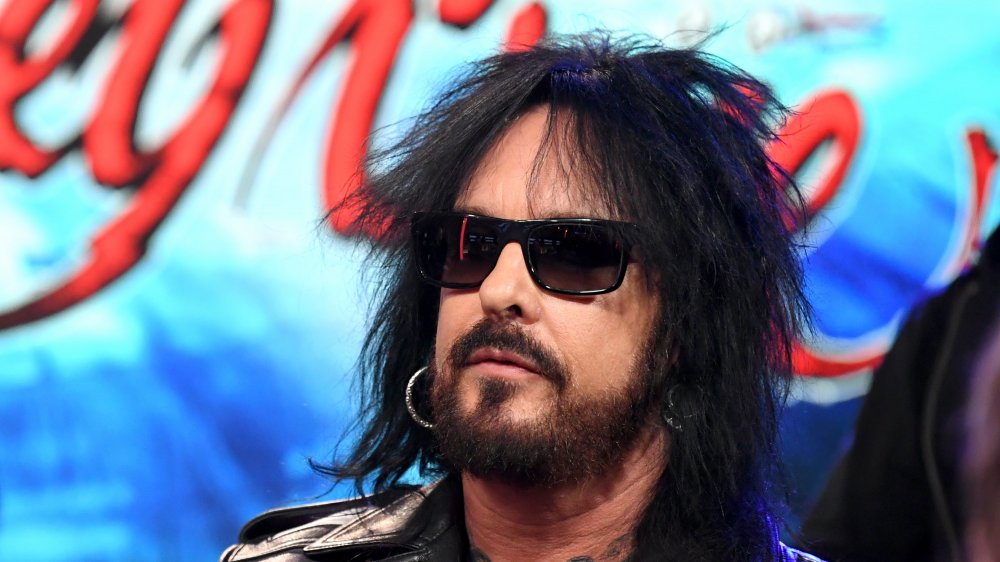
Sleaze metal champions Mötley Crüe, then of "Shout at the Devil" and "Theater of Pain" fame, were near the height of their popularity in 1987. The group had just released their fourth album, "Girls, Girls, Girls," to multiplatinum success and had embarked on an equally successful and completely debauched world tour in support of it.
But of course, if you've ever seen a rockumentary, you can probably guess that things behind the scenes were a bit less glamorous than corny '80s hair metal videos would have you believe. Nikki Sixx, the Crüe's founder, bassist, and chief songwriter, was battling a vicious heroin addiction that he detailed in his 2007 book "The Heroin Diaries: A Year in the Life of a Shattered Rock Star." But one incident, which has gone on to become one of the most notable stories in rock history, stands out. In December of that year, while partying with Guns N' Roses' Slash and Steven Adler in Los Angeles, Sixx overdosed on heroin and died, briefly, before being revived in the ambulance. The experience with twin lifesaving adrenaline needles inspired him to write one of the group's biggest hits, 1989's "Kickstart My Heart."
Blink-182's Travis Barker nearly died in a plane crash
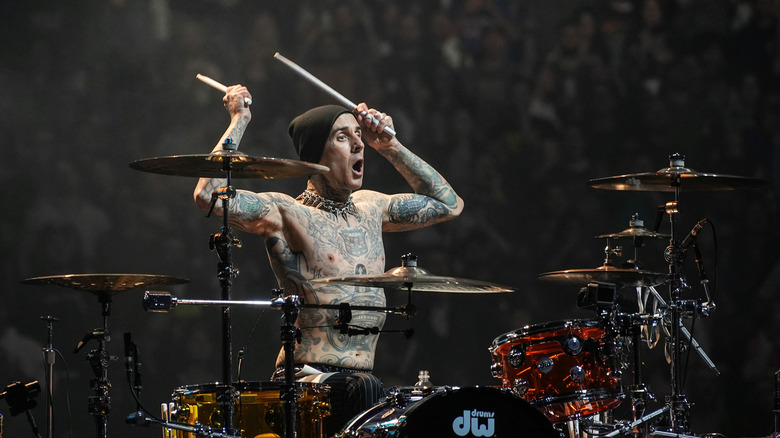
As if his genre-defining pop punk band's ongoing "indefinite hiatus" hadn't made 2008 bad enough for drummer Travis Barker, he nearly died when the Learjet 60 business jet he was traveling on crashed and burned following an attempt to abort takeoff by the pilot (who was reacting to burst tires). The plane ran past the runway, smashed through a boundary fence, crossed a highway, and then burst into flames on an embankment. Four of the six people on board, including the pilot, died on the scene (and DJ AM died the following year). Only Barker himself lives to tell the tale.
He discussed the immediate aftermath on The Joe Rogan Experience in early 2019: "I was in such a hurry to get out of the plane, and exit the plane, I jumped right into the jet, which is full of fuel. So my whole body lit up." For years, Barker wouldn't go near an airplane, choosing to stay home if an overseas Blink-182 tour was heading to a place he couldn't access by boat. It's understandable when you hear quotes like the one he shared with Rogan: "... I'd just never think about fire, until you're on fire." As of 2025 though, he told ET (via YouTube) that, though he is still weary of flying, he will do it. "... it's not something that can hold me back anymore, or I can be afraid of anymore."
Guns N' Roses' Slash was barely revived after an overdose
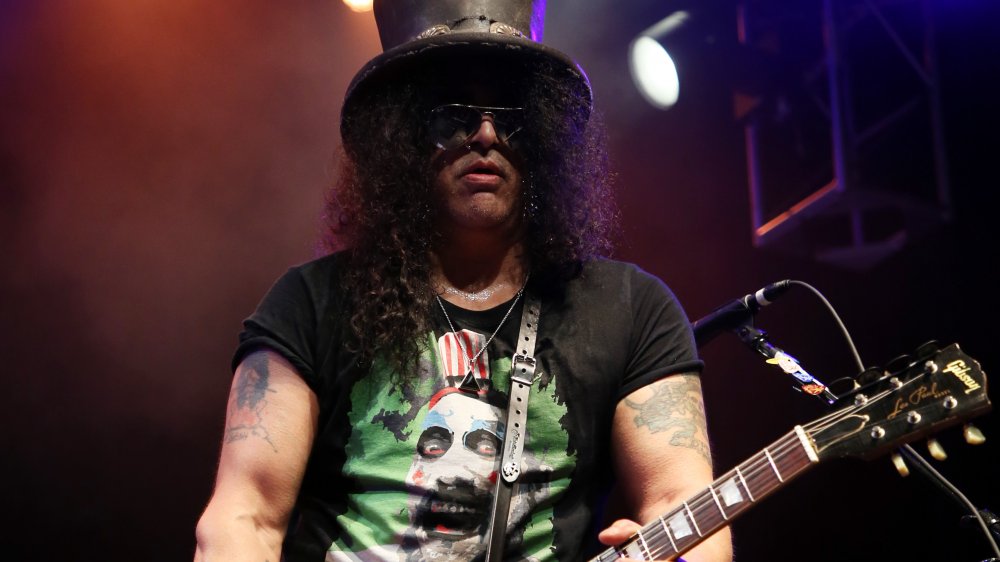
It's hard to be more self-destructive than the members of Guns N' Roses were at the height of their global popularity in the early '90s — and live to tell the tale. Top-hatted guitar hero Slash is perhaps the most infamous addict in a band consisting almost entirely of infamous addicts, any one of whom could've made this list — just ask bassist Duff, whose pancreas exploded due to alcohol abuse, or drummer Steven Adler, whose addictions nearly killed him with a stroke.
While touring in support of the "Use Your Illusion" double albums, then-heroin-addicted Slash bought every bit of a dealer's stash and retired to shoot it all up in his San Francisco hotel room. Speaking to The Guardian, Slash later recalled: "I started down the hallway and I ran into a maid, and I asked where the elevator was, and then bam! I collapsed." Afterward, he flatlined and was barely revived by paramedics. What happened next probably isn't surprising. "They took me to the hospital, but I said, 'I'm fine,' signed myself out, went back to the hotel, and we flew to the next gig."
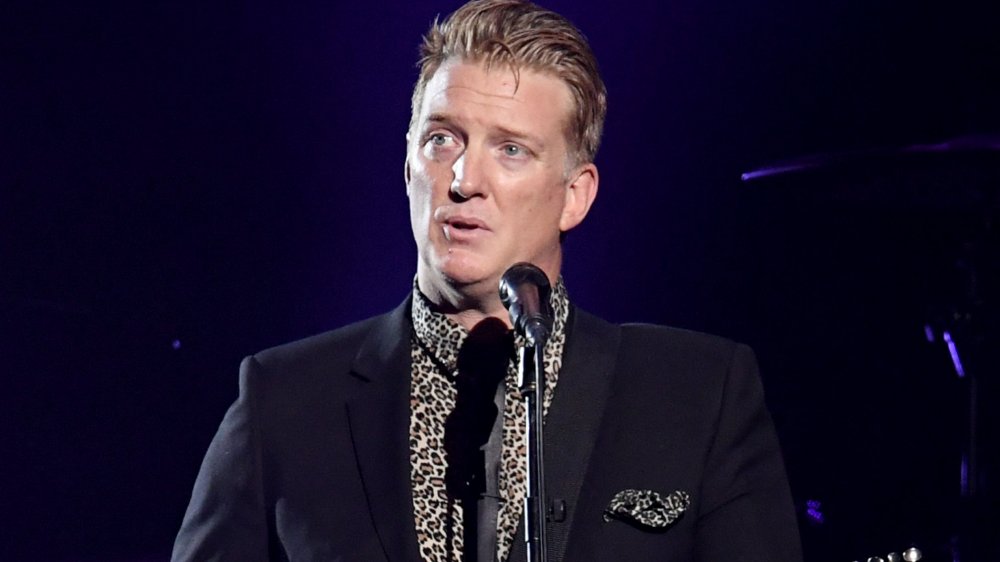
Queens of the Stone Age's Josh Homme was briefly declared dead
Rock stars encounter plenty of (usually self-imposed) threats — like hard drugs, excessive drinking, fast cars, plane crashes, and mental illness exacerbated by circumstances the average person can hardly fathom. (Imagine being surrounded by millions of fans and feeling hopelessly alone.)
Routine knee surgery, however, doesn't usually make the list. Queens of the Stone Age frontman, Josh Homme, put it simply to NME: "I had surgery on my leg and there were complications and I died on the table. I was in bed for three months." To Rolling Stone, he went into even further detail: "I was stuck in a room for four months, and I had all these tubes in my leg. And it was painful."
But being cleared by doctors and discharged wasn't the end of the ordeal. Homme still thinks the greatest challenge was the psychological damage he endured. In his own words (also to Rolling Stone), "The physical scars heal quick. It's the mental ones that are tougher." However, he's since cited the ordeal as what "zeroed" him: "And I'm really thankful for it because I know what's important."
Foo Fighters' Taylor Hawkins was almost killed by heroin addiction
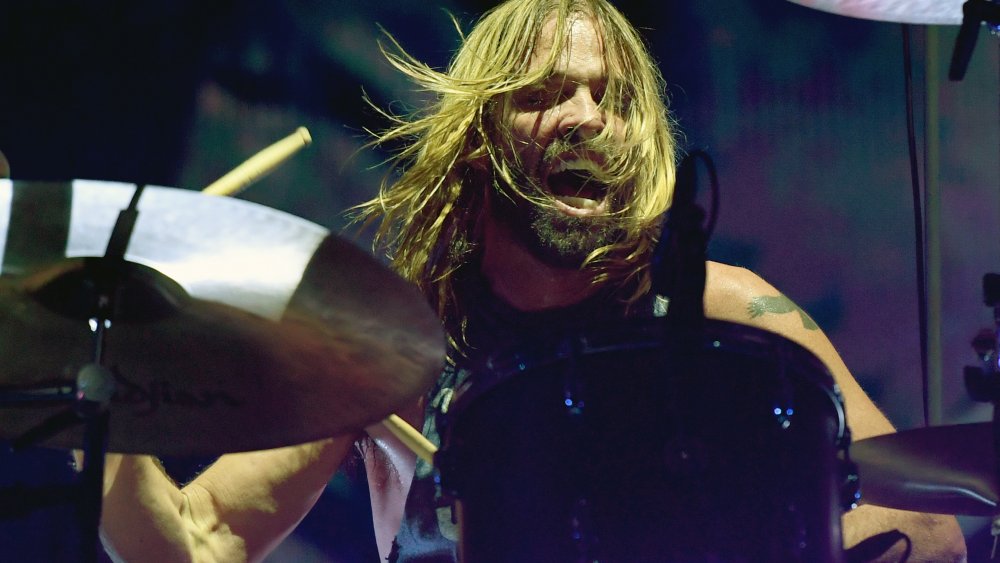
It's not every day you hear a recovered addict cite the dose that almost did them in as the best thing that ever happened to them, but that's how longtime Foo Fighters drummer Taylor Hawkins spoke about his 2001 heroin overdose, which left him in a two-week coma and nearly ended the band. Hawkins, who died in 2022, but joined the Foo Fighters in 1996 after playing with Alanis Morissette, said in a 2018 interview with Beats 1: "Well, I was partying a lot. I wasn't like a junkie per se, but I was partying. There was a year where the partying just got a little too heavy. Thank God on some level this guy gave me the wrong line with the wrong thing one night and I woke up going, 'What the f*** happened?' That was a real changing point for me" (via NME).
After his overdose, frontman Dave Grohl briefly played with Queens of the Stone Age, something Hawkins mistook as a sign he'd ruined the band. "It really looked like the end," he said. Thankfully, that wasn't the case. Hawkins and Grohl remained as close as ever, and the Foo Fighters kept touring up until Hawkins' untimely death in 2022 at 50 years old. Though, according to People, an official cause of death was never announced, Hawkins' heart was enlarged by 50%, and 10 different drugs, mostly pharmaceutical, were found in his system.
Metallica's James Hetfield was set on fire during a concert
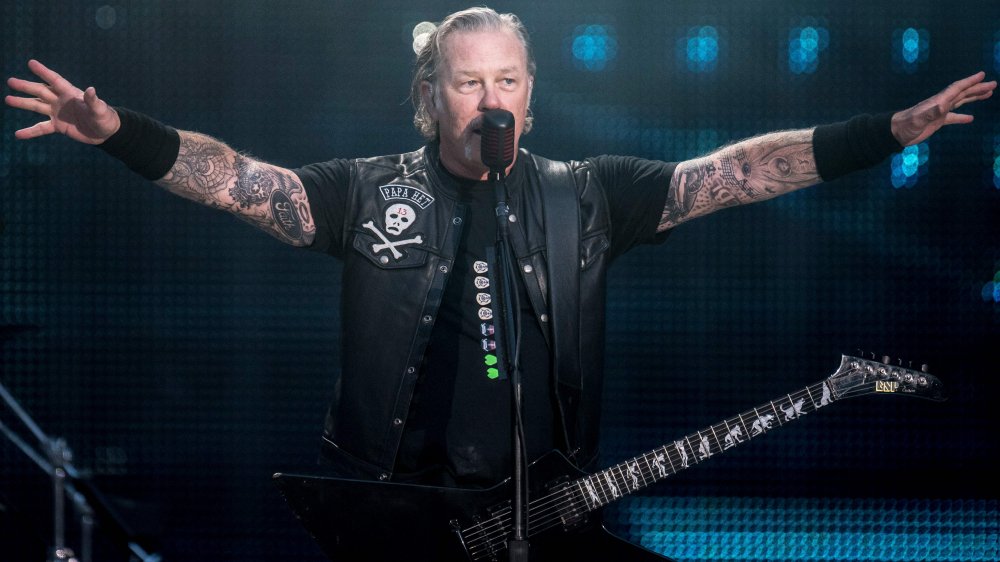
It seemed like a great idea at the time. Metallica's "Wherever We May Roam" tour comfortably overlapped with Guns N' Roses' "Use Your Illusion" tour, so the two titans decided to join forces for a brief North American stadium tour. Unfortunately, the effort is now widely seen as dysfunctional, largely due to the excesses and chronic tardiness of GNR's Axl Rose. The affair came to a head on August 8, 1992, when Metallica frontman James Hetfield, confused about the stage layout, wandered right into a pyrotechnic blast during "Fade to Black" and was left with severe burns. "Pyro guy doesn't see me, that I've walked back out there," Hetfield later said on "Behind the Music," and woosh, big colored flame goes right up under me." The band cut the set short as James was rushed to the hospital.
But the story gets crazier. Tour promoters frantically called Guns' management, who agreed to start their set early to appease a disappointed crowd. However, citing a failure to properly switch over the sound settings, Rose ended the show early and caused a massive riot. "I go and light myself on fire," Hetfield later said, "and he upstages me."
Pantera's Phil Anselmo shot up and went into cardiac arrest
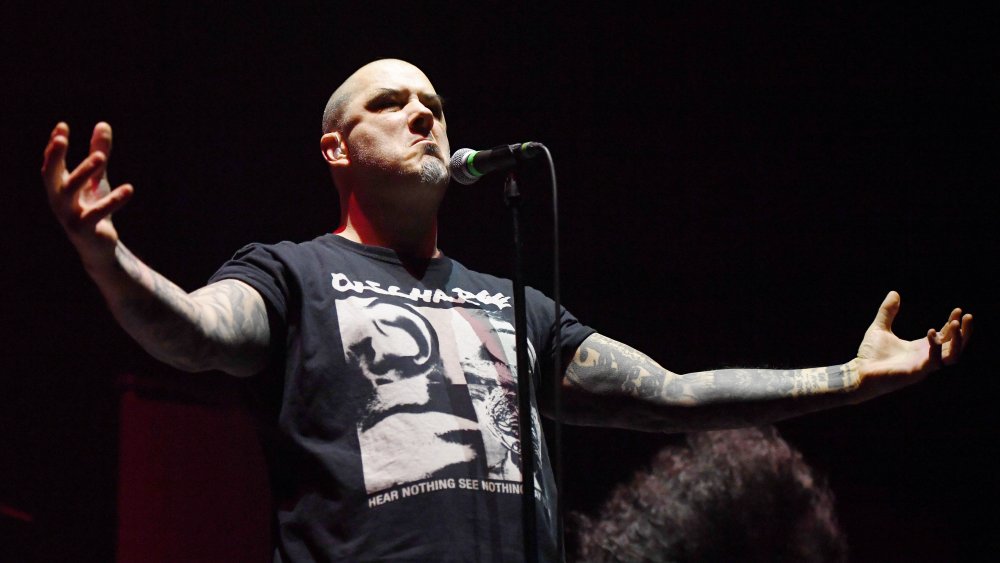
Texas groove titans Pantera may have almost single-handedly kept metal alive in the '90s, but certain members neglected their own well-being. Fans, of course, remain heartbroken over "Dimebag" Daryl Abbot's onstage murder in 2004 and his brother Vinne Paul's death from heart disease in 2018. But although many are aware that frontman Phil Anselmo battled heroin addiction in the latter half of the band's heyday (he self-medicated to deal with severe back pain that he couldn't take enough time off to treat), not everyone knows that he briefly died of an overdose.
After a show in Dallas in 1996, Anselmo shot up, as was his routine, and promptly slipped into cardiac arrest for four to five minutes. He summarized the events in a press conference a few days later: "I, Philip H. Anselmo [...] injected a lethal dose of heroin into my arm, and died for four to five minutes." (via The Dallas Morning News). "Make no mistake," he later said to Andivero. "I have died before; there's no faking death."
Interestingly, Anselmo's back problems were the cause of both his addiction and his recovery from it. When he finally found time to seek surgery in 2005, he had to kick the habit before going under. It wasn't easy, but it was worth it.
Ozzy Osbourne nearly died after crashing his ATV
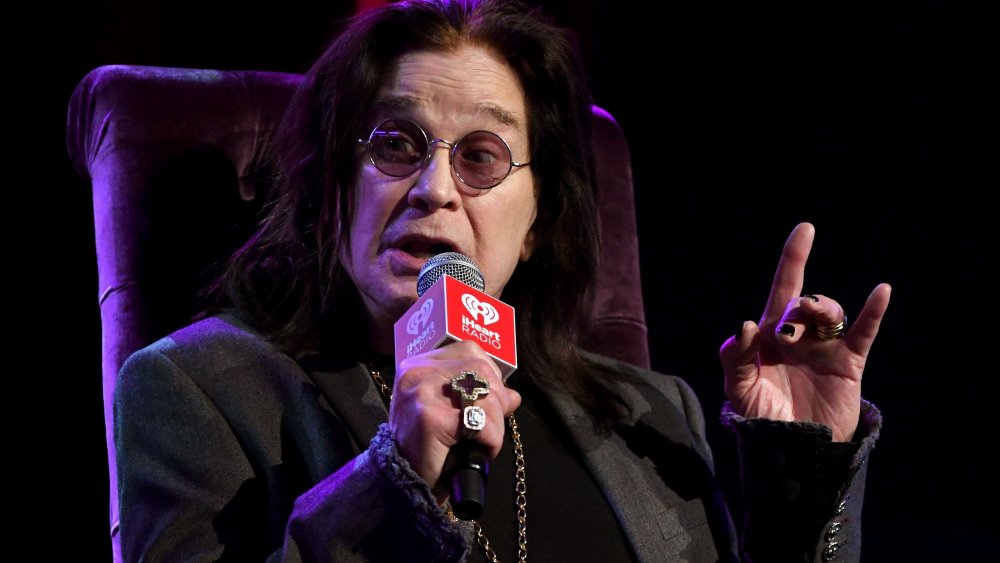
Of all the narcotic, hedonistic ways the Prince of Darkness flirted with death over the years, it's hard to believe a simple ATV accident came just about as close as anything else to doing him in. Ozzy Osbourne, who was 55 at the time of the December 2003 incident, decided to head out on a joyride across his estate outside London.
It didn't go so well. He crashed the vehicle, was rushed to the emergency room, and underwent extensive surgery to treat a myriad of injuries. His son, Jack, summarized them to reporters: "a broken collarbone, eight fractured ribs that were pinching crucial blood vessels and a damaged vertebrae in his neck" (via UCR). Brutal.
Much of what transpired on rock music's favorite reality TV show, "The Osbournes," which aired from 2002 to 2005, can actually be blamed on the painkillers Ozzy was placed on following his various surgeries. Ozzie went on to live nearly another 22 years after the ATV crash, but died in July of 2025 of a heart attack he had at his home.
Def Leppard's Rick Allen lost an arm in a car wreck

British pop metal pioneers Def Leppard are known as much for their one-armed drummer as they are for such decade-defining hits like "Pour Some Sugar on Me," "Photograph," and "Hysteria." As you might've guessed, the story of how the Thunder God got that way was a life-defining tragedy for Rick Allen.
It was New Year's Eve 1984, and Allen was driving his girlfriend around the outskirts of his native Sheffield when he lost control of his Corvette. The car then smashed into a field and launched Allen from the driver's seat, severing his left arm and leaving his girlfriend with severe whiplash and a handful of broken bones. Doctors did manage to reattach the arm, but an infection forced them to amputate it for good.
But the story of how Allen overcame his condition is even more incredible than the incident itself. Unwilling to consider retiring from one of music's then-biggest acts, Allen built a drum set in which parts normally played by the left arm would be played by the left foot and went on to master the custom-built kit in time for the band's 1987 titanic, hit single-packed album, "Hysteria."
Creed's Scott Stapp jumped off a balcony while high
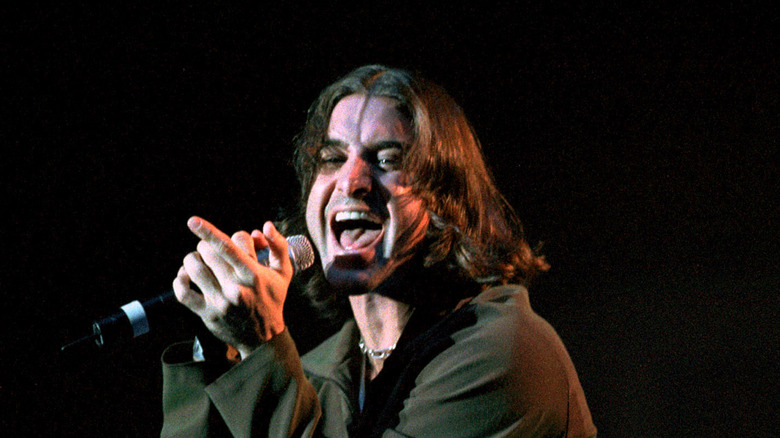
Followers of rock news might remember Scott Stapp of Creeds' bizarre 2014 mental breakdown, in which he filmed himself in his truck, broke due to the IRS freezing his accounts, hiding out from unspecified predators. It later came out that Stapp was enduring frightening hallucinations brought on by methamphetamine psychosis. Luckily, he got help and has been clean and sober ever since.
But that was far from the first time he experienced something like that. In a 2012 GQ interview, rapper T.I. recalls hearing pained moaning coming from a hotel balcony above him. He saw a wounded man attempting to continue his jump after the sixth floor broke his attempted 14-story drop. The man — who T.I. later realized was Creed's Scott Stapp — was spinning an intoxicated tale about how his girlfriend was cheating on him with his best friend. The rapper ultimately coaxed him down by offering him a joint in exchange for letting him call the authorities.
Poison's Bret Michaels totaled his Ferrari
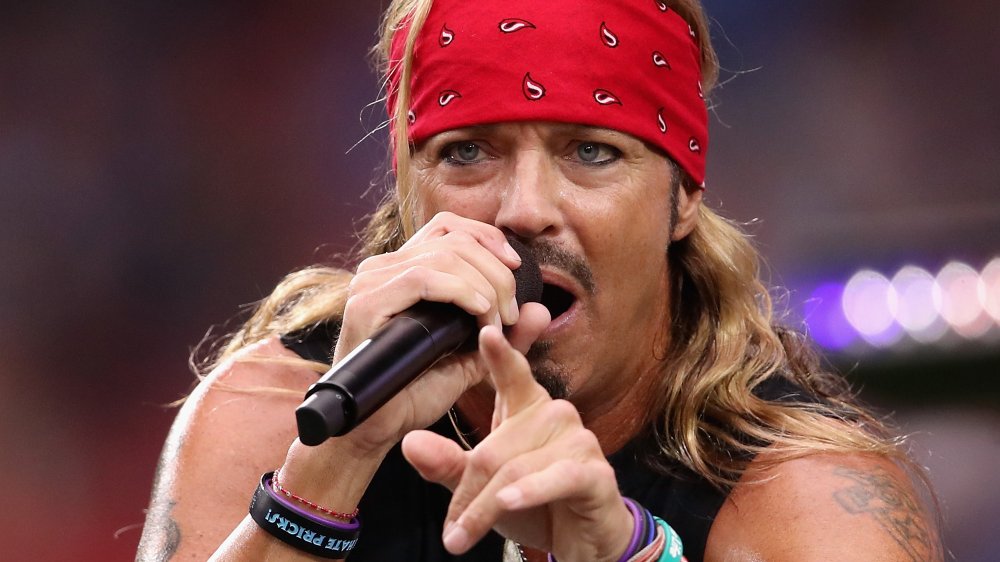
Apparently, longtime Poison frontman (and future mid-aughts reality TV icon) Bret Michaels wasn't aware his glam metal band's heyday was behind him, because his hard partying continued well into the '90s. Sadly, it came to a head in 1994, when he wrapped his Ferrari around a telephone pole and nearly died as a result. He wound up with several broken bones, including his jaw, his nose, several fingers, and a few ribs. In an interview with Houston Press, the "Every Rose Has Its Thorn" singer claimed he was heading to an after-party after partying with Sean Penn's brother, Chris, when the accident occurred. "I was just hauling ass and lost control of the car. That's pretty much it. And, just, thank God that I didn't hurt anyone but myself."
In 2015, Michaels caused another wreck when he rear-ended a Scottsdale, Arizona, woman with his Mercedes. Fortunately, there were no injuries, except to his pride.
R.E.M.'s Bill Berry suffered an aneurysm onstage

R.E.M.'s 1995 "Monster" tour took a toll on the band, to say the least. By the time it wrapped up, four members had undergone surgery for various health issues. The first, and most serious, incident happened to drummer Bill Berry.
The band was 90 minutes into a set in Switzerland when Berry felt a throbbing headache coming on. "It felt like a bowling ball hit me in the head," he later told the Los Angeles Times (via Diffuser). "There wasn't any warning. I was just singing the falsetto part on "Tongue" when it happened."
He played on to avoid causing a scene but collapsed moments later. Luckily, a riot was avoided when drummer Joey Peters from Grant Lee Buffalo (the opening act) filled in and finished the show. Fortunately for Berry, Switzerland was home to some of the world's foremost brain surgeons. They confirmed he'd suffered an aneurysm, found a second one waiting to happen, and performed a life-saving craniotomy. Days later, Berry was recovering.
Korn's Jonathan Davis has suffered several major health scares

Korn frontman Jonathan Davis has endured several health scares, and they started at a young age, too. As a kid, Davis suffered from severe asthma that landed him in the emergency room on a number of occasions. In a 2004 interview with Livewire, after stating that his upbringing had been terrible, he was asked if there had been any good parts. Davis responded: "Um, just staying alive. I was really sick as a kid. I almost died — I don't know how many times! I was in and out of the hospital so many times with really bad asthma."
Years later, after his band found enormous commercial success at the turn of the millennium, Davis found himself back in the hospital. "I started getting these weird bruises all over my body about two weeks ago. I was getting very weak after the shows so I saw a doctor in London Friday. He took some blood tests and when the results came in, they rushed me to the hospital." Davis, it turns out, was suffering from Immune thrombocytopenic purpura (ITP). In his own words, to People, ITP is "a blood infection where, because of an allergic reaction I had to some medication, my blood platelets were really low." He continues: "If I continued to headbang onstage, I could have had a brain hemorrhage and dropped dead on the spot."
Alice Cooper nearly died hanging himself live on stage
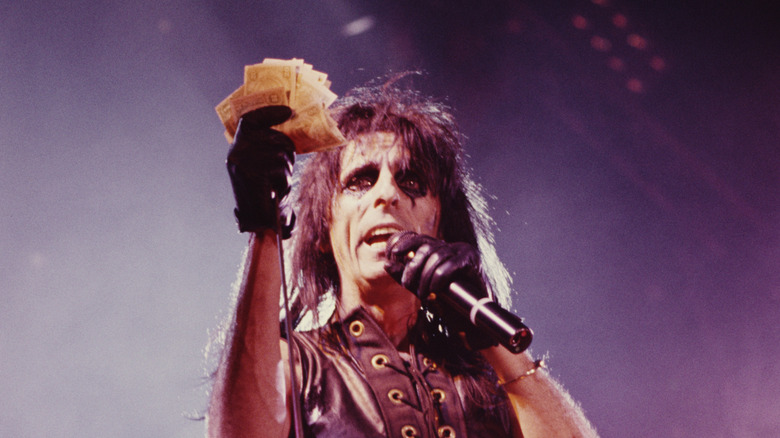
Part of the wild real-life story of Alice Cooper is how eager the raspy-voiced musician is about incorporating death-defying stunts into his live performances. As the "School's Out" singer once told Entertainment Weekly in an interview, he wanted to grab the audience's attention by making them feel unsure about his safety on stage, even comparing the resulting thrill to that of a tiger tamer or a tightrope walker. "I always wanted that in our show: What they're seeing could be the last night of Alice Cooper." And true enough, one fateful night in 1988 at Wembley Stadium came close to being the rock star's last.
The trick that nearly did Cooper in — a gallows setup using a harness and a "thick" piano wire that stops a full foot above his head — wasn't new at all. In fact, he had been performing it for 15 years at that point (though not at every show). It was a gimmick that he had formulated with the help of magician James Randi, and it had always gone on without a hitch. But at that particular England show, the wire snapped; had Cooper not flipped his head back in time, tragedy would have unfolded. Cooper walked away with his life, suffering only a "pretty good" rope burn and a few moments of unconsciousness. Ever the showman, he resumed performing after he recovered; he also continued to do a safer version of the trick in subsequent performances.
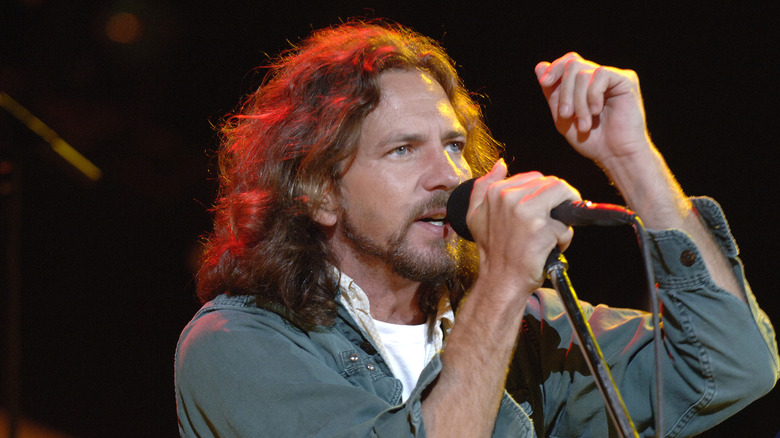
Pearl Jam's Eddie Vedder almost drowned while surfing
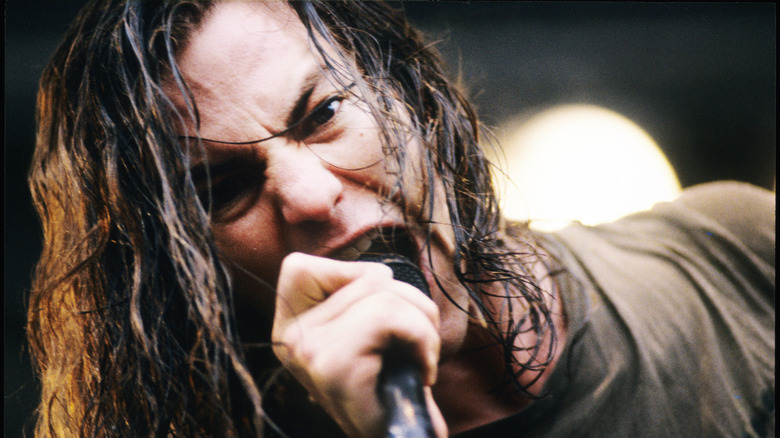
About five years after Pearl Jam debuted on the music scene, the now-iconic band nearly lost its lead singer, Eddie Vedder, to the waters of New Zealand. At the time, Pearl Jam was in the middle of their tour, which had New Zealand as one of its stops.
An avid surfer, Vedder made the most out of the days between his band's performances by inviting his friend and New Zealand local, songwriter Tim Finn, to go surfing with him. As luck would have it, the pair found themselves at a beach where the wind was particularly strong, but Vedder didn't mind. They soon learned their lesson, though, when a powerful riptide trapped Vedder and carried him approximately 250 feet from the New Zealand coast. Had it not been for the timely intervention of the on-duty volunteer lifeguards that day, Vedder would have drowned at sea. Vedder gave the guards who saved his life a "quick thank you," which was a bit of a letdown for them, considering his status. "We are volunteers operating on a shoestring budget, and a donation would have helped us along," senior lifeguard Eric Davis told The New York Times.
That wasn't Vedder's only brush with death. In 2001, he and some friends found themselves stranded in the Pacific off the coast of Maui after their boat capsized. They were eventually saved by a passing boat, and that time, Vedder ended up donating $70,000 to the boat captain 15 years later when the captain needed money for medical expenses, per Rolling Stone. Almost 30 years later, in 2024, Vedder spoke of yet another "near-death experience" involving unspecified members of Pearl Jam: an undisclosed ailment that caused them to cancel some upcoming shows in Europe. "You just realize how precious this life is," Vedder reflected (via Billboard).
Kiss's Ace Frehley was electrocuted during a live show
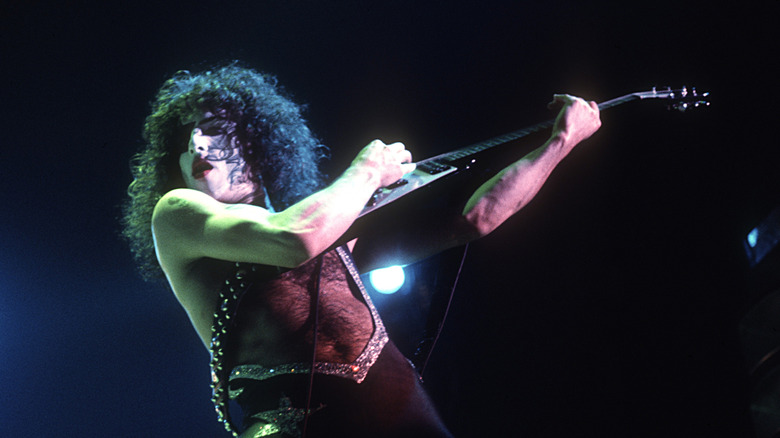
There's no doubt that guitarist Ace Frehley had made a significant contribution to the rise of KISS, the American metal rock musicians who made worldwide waves in the latter half of the 1970s. Though the founding member of the group died in October 2025, he also had a close brush with death in December 1976. As part of their promotional tour for their fifth studio album "Rock and Roll Over," the face-painted glam rockers did a show in Lakeland, Florida — one that nearly became Frehley's last when 220 volts surged from his guitar through his body as he was walking down a metal staircase.
Frehley shed more light on the "shocking" incident in a 2024 Facebook post. "I started descending on the railing and it wasn't grounded properly," said Frehley, attributing his survival to the way he fell: backward instead of forward and landing on the ground 20 feet below, which could have been catastrophic. After reportedly witnessing his life flash before his eyes and taking 15 minutes to recover in their dressing room, Frehley returned to the stage, despite suffering total numbness in his right hand. "I said, 'I can't play,'" Frehley revealed to the Morton Report (via Far Out Magazine). "Then the fans started chanting my name, and I finished the show [...] I don't know how I even did it. I guess it was all adrenaline."
Interestingly, while this would understandably be enough for anyone to rethink their life choices, the real reason Ace Frehley left KISS in the early '80s seemingly had nothing to do with this brush with death: Frehley just wanted to take a breather.
Five Finger Death Punch's Ivan Moody 'died for 3 minutes' from an alcohol withdrawal seizure
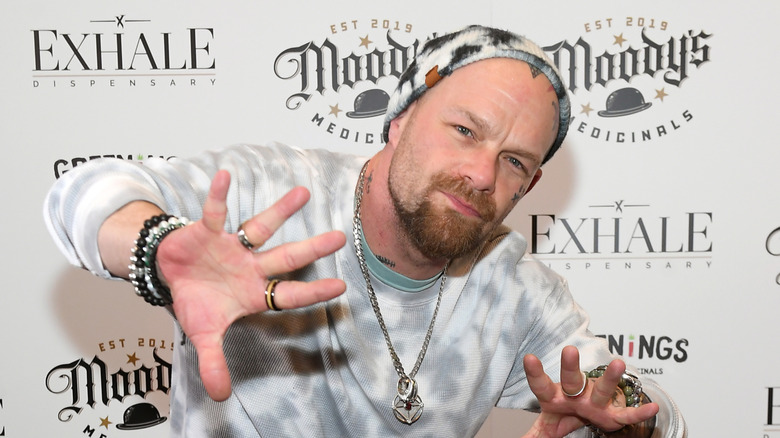
Five Finger Death Punch's lead vocalist Ivan Moody has been vocal about his journey through alcoholism and sobriety. He revealed in 2013 that his substance misuse nearly resulted in him getting the boot from his bandmates. Since then, the singer had been seriously attempting to quit excessive drinking — an effort that, on one unforgettable occasion, rendered him unresponsive for approximately three and a half minutes, as he shared in a 2022 interview with Metal Hammer.
According to Moody, he decided to quit cold turkey after being "on a bender for about two years." He locked himself inside his house for four days, but did so without proper preparation. As explained in a 2005 paper in Epilepsy Currents, the "abrupt cessation" of alcohol consumption could produce withdrawal seizures, which are potentially fatal.
"If you quit drinking without the right medications and whatever else, you will die," said Moody, who revealed that he became "part of something" that felt ethereal (a "blue haze" that, by his own description, was eerily akin to death). Moody attributes his revival to his daughter, who was with him at the time. "The next thing I know, I was laying there with two paddles on my chest, and my daughter was crying in my face."
Fans of Five Finger Death Punch are likely aware that the video for the band's 2022 single, "The Tragic Truth" features a re-enactment of Moody's near-death experience. As of July 2025, Moody sad he has been sober for seven years (via Instagram).
AC/DC's Brian Johnson survived a serious car crash (which wasn't even his first)

Brian Johnson left AC/DC in 2016 because his hearing had seriously deteriorated at the time. In his memoir, he wrote that doctors told him to quit ASAP; otherwise, he'd risk permanently losing his hearing. Interestingly, according to the AC/DC frontman, his music career wasn't the reason for his hearing loss; rather, it was his love for racing. "I got it from sitting in a race car too long without earplugs," he told Howard Stern in 2014 (via YouTube). Little did he know that just three years later, a racecar would put his life at tremendous risk in a totally different way.
In 2017, Johnson drove a vintage Austin A35 as a participant at the Celebrity Challenge Trophy race of the Silverstone Classic, which some regard as the largest classic car racing festival in the world. But during the race, Johnson's car completely rolled over, with photos showing what would undoubtedly qualify as a near-death experience. Miraculously, Johnson did not sustain any serious injuries, according to the medical professionals who treated him post-crash.
With that said, this was not his first car accident: In the 1970s, an 18-year-old Johnson was trapped inside his friend's burning car, which had been in a serious collision. He feared for his life, especially after rescuers pulled out his friend (who was driving), but not him. Johnson was soon saved, but suffered a burn on his hand in the process.
Foo Fighters' Dave Grohl nearly drowned while surfing
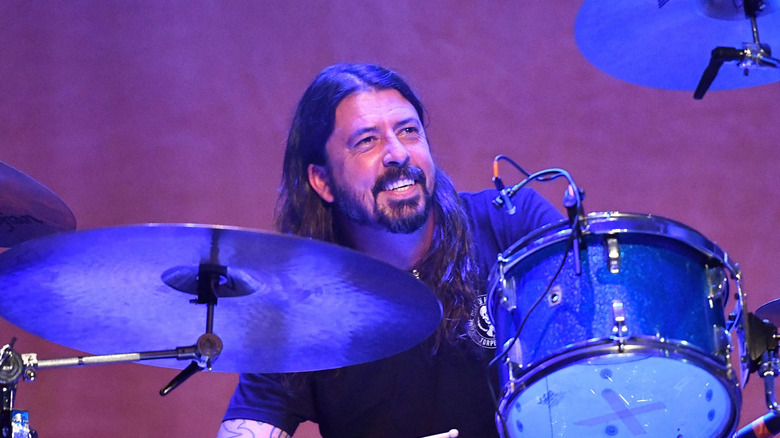
When people think of Dave Grohl, the first thing that comes to mind is likely Foo Fighters, the band he founded after his stint as Nirvana's drummer. What most might not know, though, is that he has also been a longtime surfing enthusiast. "I started surfing on the East Coast, which some people don't consider to be 'surfing surfing,'" Grohl told GQ in 2018, sharing fond memories of spending days at his North Carolina beach house riding four-foot waves and drinking beer. However, things haven't always been smooth sailing, er, surfing for the rock star, who talked about his frightening experience while attempting to surf with some friends in Santa Cruz, California.
According to Grohl, he borrowed a 14-foot-long longboard ("someone's father's longboard from the '60s") with no leash and just started riding; unfortunately, he picked the worst time to do so. "I lost the board up against the cliffs, and I was just caught in a set of waves that seemed to go on for five or 10 minutes," recalled Grohl, who added that almost immediately, panic began to set in that he was about to die. Realizing his predicament, though, the singer decided to just start paddling to safety instead of being paralyzed by fear. "I knew that if I panicked, I probably would [die], so I kept it cool."
Eric Clapton was hospitalized for bleeding ulcers, then injured in a car crash days after his release
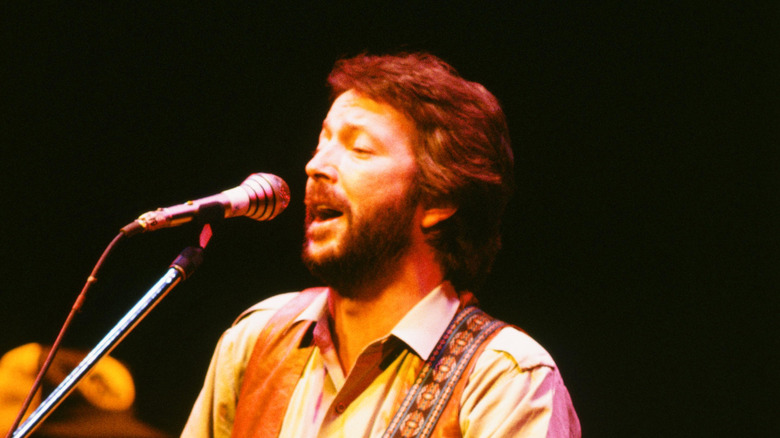
Most musicians are fortunate enough to survive one near-death experience. But in 1981, singer-songwriter Eric Clapton had to endure two in succession.
At the time, Clapton had a substance misuse problem (involving both alcohol and drugs) that also put a tremendous strain on his finances. But Clapton wouldn't become fully aware of the extent of his dangerous predicament until March 13, 1981, when he was seven shows into a 57-show U.S. tour. As Clapton shared in his autobiography (via UCR): "I collapsed in agony as I came offstage in Madison, Wisconsin." According to Clapton, doctors found five bleeding ulcers inside him ("one was the size of a small orange") and that he was in a literal life-or-death situation because one of them was poised to pop right beside his pancreas. After some time, he was discharged from the hospital; just days later, he was involved in a car accident that left him with multiple injuries.
Clapton took this as a sign that he should cut back on his drinking and drug use, but his planned lifestyle change didn't stick. Ultimately, Clapton sought rehab the following year, and eventually found himself in good health once again. Curiously, his biggest regret from that period of his life wasn't the toll it took on him, but the toll he took on those around him: "That's always the worst part about an addict or an alcoholic: people are dragged along, and sometimes they go down before the principal character" (via UCR).
The Rolling Stones' Keith Richards was electrocuted on stage

In a 2010 interview with The New York Times, Keith Richards of The Rolling Stones reminisced — with a smile, no less — that his most "spectacular" electrocution happened in Sacramento. On top of the shocking (pun intended) implication that this sort of mishap has happened to the musician more than once, it's also worth noting that the incident in question, which took place at the Sacramento Memorial Auditorium on December 3, 1965, was one of the many times Richards came close to meeting his maker.
As the story goes, the band was performing (eerily enough) "The Last Time," and as the then-21-year-old Richards leaned into his microphone to sing his part, the neck of his electric guitar came into contact with an ungrounded microphone. According to the account of a fan who was present at the concert, the surge was powerful enough to send Richards' body soaring backwards: "I thought he was dead. I was horrified. We all were" (via Far Out). As the musician regained consciousness at a nearby hospital, he recalled overhearing a doctor: "Well, they either wake up or they don't."
Curiously, Richards has had enough brushes with death to fill a list of his own, including almost being shot at the Altamont Festival in 1969, falling asleep with a lit cigarette with his mouth and almost burning to death inside his home in 1973, and being bonked on the head with some heavy books in 1998 (he fell down and broke three ribs; this incident also caused the Stones to reschedule their tour).
Depeche Mode's Dave Gahan died for 2 minutes after a drug overdose
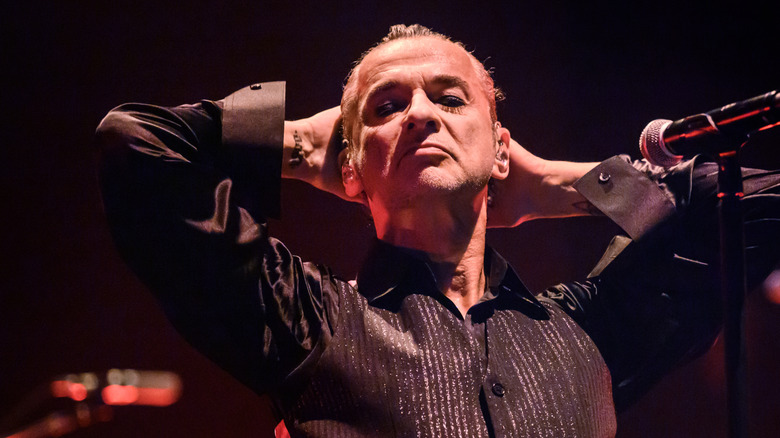
In 1996, Depeche Mode's lead singer Dave Gahan came close to dying, like the other names on this list. What set his brush with death apart, though, was what happened immediately after he bounced back: he found himself under arrest, which, as anyone could argue, is among the most unsettling things that could happen to you when you've just made it through a near-death experience.
Following a drug overdose, Gahan was medically dead for two minutes. Sharing his story with German newspaper Bild (via Far Out), Gahan described the whole thing as one would describe an out-of-body episode. "I was floating underneath the ceiling and could observe exactly what was happening underneath me: Paramedics were running around my body and tried to save me. I screamed that I wasn't actually lying down there but above them." When Gahan opened his eyes, he saw that he had been handcuffed to the hospital bed, with officers around him serving him a warrant for possession of cocaine and heroin.
According to Gahan, it was this incident that shocked him into sobriety (and likely saved the band as well). Speaking to The Guardian in 2007, Gahan had a profound reflection about his ordeal. "In the two minutes my heart stopped, this humungous voice inside of me went: 'This is wrong.' Like, I don't get to choose when this is over. It scared the s*** out of me."
Black Sabbath's Geezer Butler nearly died from food poisoning while on tour

Most rock stars who undergo near-death experiences typically do so in incidents directly related to their performances (e.g., accidents involving faulty electric equipment) or their risky lifestyles. But for Black Sabbath bassist Geezer Butler, the mortality reminder life gave him was related to an otherwise ordinary activity: eating.
Speaking to Kerrang! in 2020, the musician shared how their band's 1995 tour was sent to a screeching halt after he suffered from life-threatening food poisoning. He and his bandmates had resumed performing at clubs to "reconnect with an audience on a grass-roots level," as Kerrang! described it. But during one gig, Butler, an avowed vegan, suddenly felt horribly ill in his stomach, to the point where he could barely stand, much less perform: "I was leaning up against the amps and I think people just thought I was pissed off playing there. I started hallucinating at one point and Pedro [Howse, Butler's nephew] just called an ambulance and rushed me to hospital," recalled Butler, who admitted that at the time, he really thought his number was up.
According to Butler, he was brought to the ICU, where they attached a drip to him. He eventually got better, but the band had to cancel their remaining engagements to give him sufficient time to recover.
Nick Lowe grabbed a microphone and got electrocuted
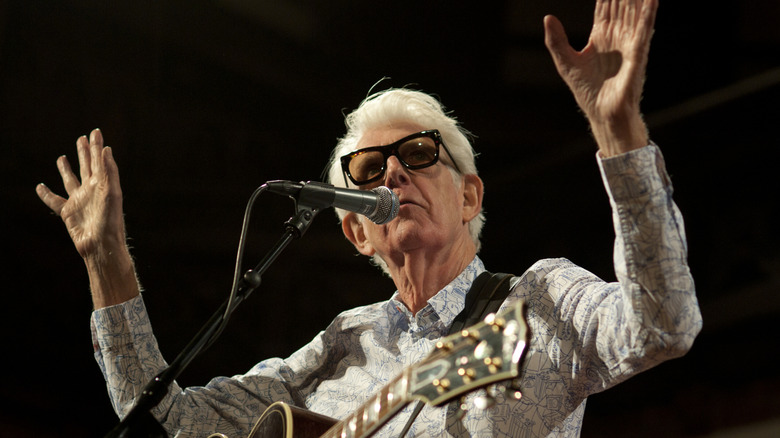
Singer-songwriter Nick Lowe has had many commercial successes throughout his long and prolific career — but much of it would not have materialized had he not survived his brush with death in 1969, just three years after his professional debut.
While performing alongside his rock band Brinsley Schwarz at the Marquee Club in London, Lowe, who was just 20 years old at the time, handled an ungrounded microphone while holding his bass guitar. According to an account of the incident in "The Show Won't Go On: The Most Shocking, Bizarre, and Historic Deaths of Performers Onstage," the surge of electricity sent the musician crashing into the amplifiers. Because he still had both his bass guitar and the microphone in his hands, no one could approach him and save him. Oddly enough, what ultimately saved Lowe was a miscalculated rescue attempt by their keyboardist, Bob Andrews. Aiming to kick the microphone from Lowe's hands, Andrews' boot smashed into the electrocuted performer's ribcage, effectively kick-starting his heart.
A rather humorous epilogue, as told by the Chicago Review Press: After regaining consciousness, Lowe quietly slipped out of the hospital and made his way to the bar across the venue where he had been shocked senseless. He found his bandmates (prematurely) mourning his death over alcohol. Needless to say, his sudden arrival gave them a good fright; they actually thought his ghost had appeared before them.
Slade's Don Powell crashed his car and went into a coma

While at the peak of their popularity in the early 1970s, glam rock band Slade suffered a devastating blow. On July 4, 1973, drummer Don Powell and his fiancée, Angela Morris, were in a horrific accident while riding in the musician's Bentley. The car crashed into a tree and a brick wall, sending both passengers flying out of it. Tragically, Morris immediately lost her life. Powell, barely hanging by a thread, was saved by the timely intervention of passing nurses, who promptly called for medical assistance. An ambulance happened to be in the area, and rushed to the scene. "The nurses were holding my head together, as it was split open. It was a miracle that I survived," Powell was quoted as saying in his autobiography (via Music Reporter Chris Charlesworth's blog, Just Backdated). They brought him to Wolverhampton Royal Hospital, where he underwent hours of surgery.
Powell's ordeal left him comatose for five days. Even though he regained consciousness, the state he was in left his and his bandmates' musical future in question. "Don survived, but his memory was wrecked," said Slade's lead vocalist and rhythm guitarist, Noddy Holder (via Louder). "His taste and smell had gone — he still can't taste or smell anything now, in fact. We didn't know how the band would carry on." The road to recovery for Powell was long and difficult; for the next two years, his bandmates helped him become fit enough to play live once more and refused to replace him with another drummer.