

5 Singers Who Were Wrong About Other Hit Artists' Success
There's nobody more qualified to speak out on the prospects of aspiring rock stars than established rock stars, but on occasion, those superstar singers from past generations delivered wildly incorrect predictions about the careers of the up-and-comers. Whether asked directly, in an impromptu and informal mentee-to-mentor situation, or by a reporter, to opine about the music of a young musician they've obviously influenced, many popular rock singers won't play the celebrity gladhanding game and will tell the world how they really feel. Namely, that they don't care for the music put out by this usurping whippersnapper, and that they don't think it's likely the newcomer will get to enjoy lasting fame or artistic and commercial success.
Fortunately, as far as the history of rock and those striving artists were concerned, those well-known musicians were completely and totally wrong. Here are five occasions when a respected and famous singer was proven quite wrong in their assessment of another rock star's chances.
Linda Ronstadt on Jim Morrison
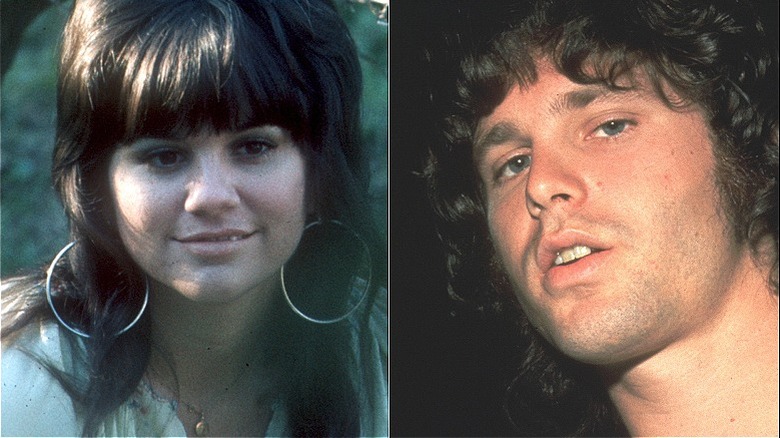
One strange thing about the Monkees you maybe didn't know is that the made-for-TV band's Michael Nesmith wrote "Different Drum," a Top 20 hit in 1968 for the Stone Poneys, a band fronted by Linda Ronstadt. She'd go on to be one of the most consistent hitmakers of the 1970s, interpreting and covering songs from a variety of genres, while the Stone Poneys got a major break when it was selected to be the opening act for the Doors, the psychedelic band led by imposing frontman Jim Morrison.
Their bands doing shows together made Ronstadt privy to the many sides of Morrison. "Jim was very soft spoken, quiet and very moody. When he was not drunk he seemed nice enough, but as soon as he began to drink he got very wild quickly," Ronstadt told Record Collector in 2013, noting that Morrison's behavior, which got the icon arrested while on tour, was unnerving. But still, she did get to repeatedly see the Doors perform, which was a mixed bag for Ronstadt. "I didn't much care for Morrison's singing even before we toured with them. The first time I saw them play live was at the Whiskey A Go Go and they had just recorded 'Light My Fire' and it hadn't become a big hit yet," she said, accurately predicting the band would take off to some degree. "I thought if they'd gotten a better singer they'd be a much better group!"
George Harrison on Oasis
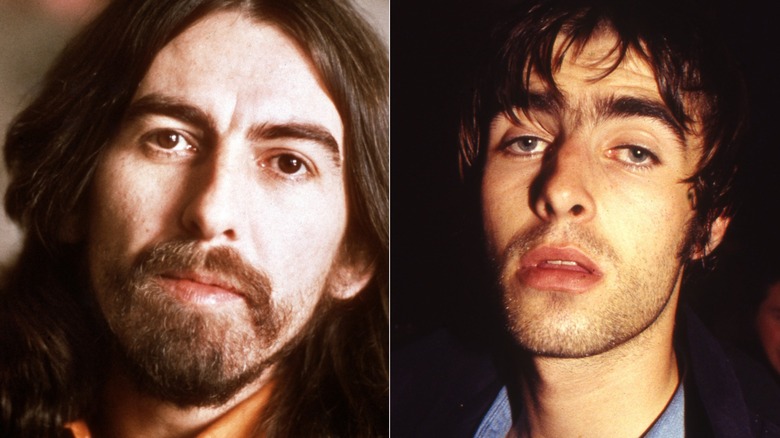
The U.K. music press likened Oasis to the next Beatles when the Britpop populists first started recording in the mid-1990s. The band itself — which would eventually notch eight No. 1 singles in Britain — didn't do much to brush off those comparisons, talking up a love of the Fab Four while blatantly referencing Beatles lyrics and melodies in its songs.
Actual Beatle George Harrison wouldn't have any of that, particularly when it came to Oasis singer Liam Gallagher. "He's like a bit out of date," Harrison told Independent Radio News (via MTV UK). "He's just silly. I feel a bit sorry for him really. Because I think he's totally missed the bus and I think it was proven when you see the band without him singing, you know. They're more in tune. He's just excess baggage I think." Of Oasis on the whole, Harrison found them "not very interesting," as he told French newspaper Le Figaro in 1997, as reported by MTV News. (Ironically, Oasis named its smash hit "Wonderwall" after a Harrison album.)
Bob Dylan on Counting Crows
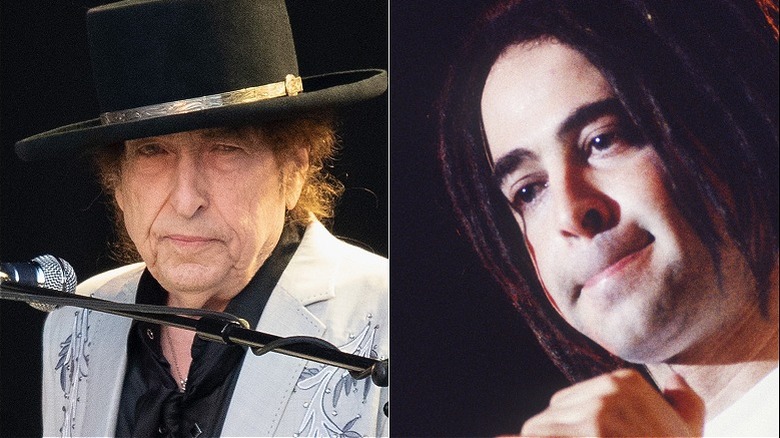
With its folk influence, use of a Hammond organ (such as on its 1994 breakthrough hit "Mr. Jones") and poetic, lyrically dense but still vague story songs, Counting Crows has clearly been influenced a great deal by Bob Dylan. On "Mr. Jones," singer Adam Duritz even asserts, "I wanna be Bob Dylan." Counting Crows has served as Dylan's opening act, and Duritz was hesitant to meet the guy. "I don't always rush to meet my idols because I don't know what the f*** to say to them. And I don't want to stand in front of them like an idiot and I've done that with some of my idols," he told American Songwriter.
The Nobel Prize-winning singer-songwriter and the mind behind classics like "Like a Rolling Stone" and "Tangled up in Blue" hasn't exactly enjoyed the comparisons or built up a mutual admiration society. He knew exactly who Counting Crows was, and he wasn't interested in the band's career trajectory. "I would go, 'Bob, the guy from the Counting Crows, he wants to be you,'" Dylan touring guitarist César Díaz recalled, according to Vulture. "And that was before they did that 'Mr. Jones' thing, you know. And he goes, 'Yeah, look at them. What a piece of s***.'"
Neil Diamond on Jim Peterik
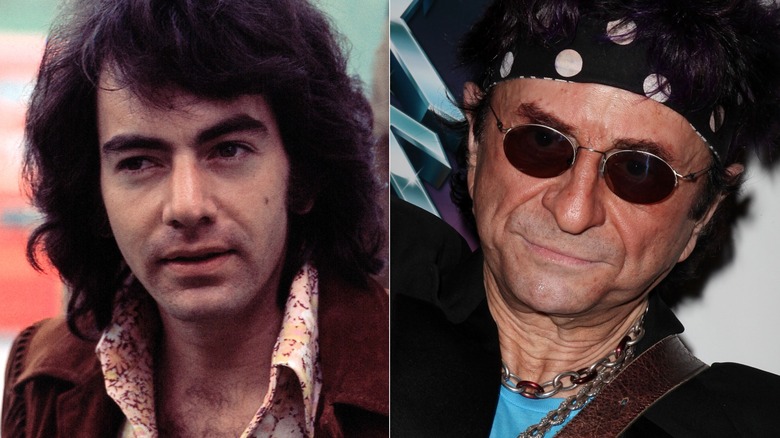
Jim Peterik is a rock 'n' roll lifer, and he's been objectively and repeatedly successful through a number of disparate pursuits. As a songwriter, sideman, and producer, he's worked with Cheap Trick, Brian Wilson, and the Doobie Brothers, and he wrote and played guitar and keyboard for the '80s band Survivor (best known for its "Rocky" movie songs "Eye of the Tiger" and "Burning Heart"). Peterik first hit the charts in 1970 with "Vehicle," a No. 2 smash he composed and belted out for his brassy, jazzy rock band the Ides of March.
Early in Peterik's career, none of that seemed to be in the cards — at least not according to the legendary pop-rock showman Neil Diamond. In 1968, Diamond played a concert at a high school, and his opening act was an early iteration of the Ides of March. Peterik was a fan who valued Diamond's opinion, and after his band's set, he sought out the headliner backstage and asked for his honest opinion about it. Diamond delivered a passive-aggressive but extremely withering put-down. "He thought for a long three seconds and said, 'Jim, next time only play your best material,'" Peterik recalled in an interview with Adam Mendler.
Mike Patton on Wolfmother
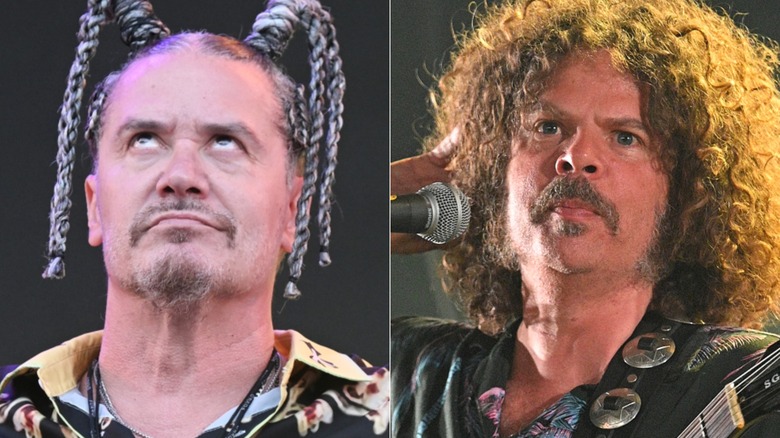
In 2006, Australian band Wolfmother emerged with a loud, heavy, and hard-charging style that could've represented the sound of 21st century rock to come while also audibly resembling ultra-familiar bands of the past like Black Sabbath and Led Zeppelin. Wolfmother charted a few old-is-new metallic singles, including "Woman" and "Joker and the Thief," a glimpse of what the band had in store across a career that has included six studio albums as of 2026.
But Wolfmother was supposed to be an annoying, embarrassing, flash-in-the-pan of a throwback, according to Mike Patton, leader of the beloved cult band Mr. Bungle and hit-making rock group Faith No More. As Wolfmother played "Woman" on a stage nearby at Lollapalooza 2007, Patton engaged in an interview with the G4 show "Icons." When Andrew Stockdale's vocals began, Patton could no longer speak about his upcoming projects, such was his level of incredulity and irritation. "Are you hearing this s***? What year are we in? Forgive me. But Wolfmother, you suck," Patton declared. "Help me, am I f***ing crazy? Can I get an 'amen'? Enough already. Are people that stupid? I guess they are."