

The Meanest Things Your Rock Heroes Have Said About Fans
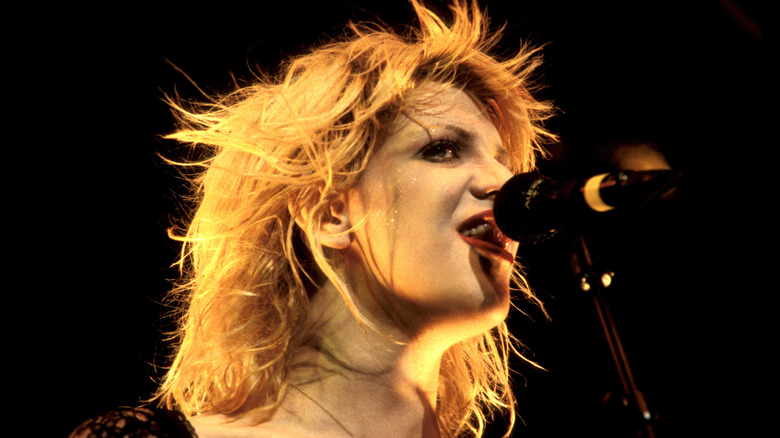
They say you should never meet your heroes, and that is especially true for rock fans, whose favorite artists often have a love-hate relationship with the very people who listen to their music. Yes, rockers are often ego-driven figures who are drawn to performing for the adoration of the listening public. But the truth is that they don't always show the same respect for the multitudes of people who make up their fan bases.
As this article demonstrates, sometimes rockers are more than happy to take shots at the people who buy their records and go to their shows. Cult legend Lou Reed, for example, revealed that portions of his discography are a joke at his fans' expense. Then there's Tool frontman Maynard James Keenan, who admitted that he would prefer certain portions of his fanbase didn't listen to his music at all. Here are five rock heroes who have openly shared their disdain for their fans, revealing their tense relationships with those who consume their music.
Oasis
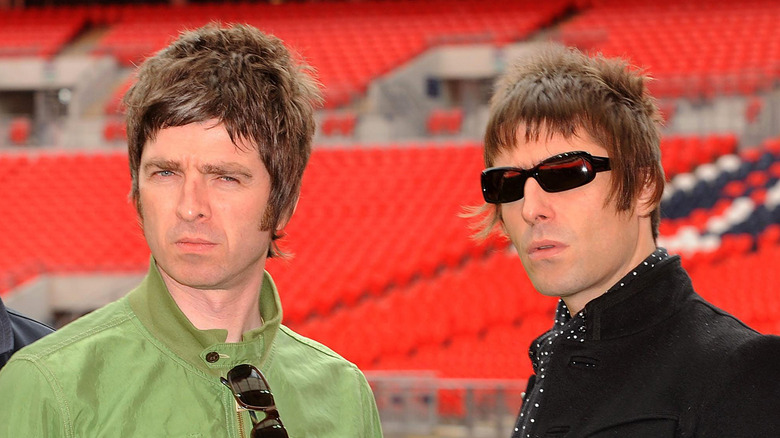
Oasis' Gallagher brothers may have made a name for themselves by creating some of the most memorable and infectious rock music of the 1990s. But as any fan knows, they are also known for their willingness to get mouthy in public. This can be to fire out insults directed at other bands, tear shreds from each other, and even insult their own listeners.
In 2019, songwriter Noel Gallagher made headlines after giving an interview in which he criticized younger fans for failing to connect with the music he was making later in his career with his band High Flying Birds, which failed to achieve the classic status of the work he did with Oasis. As was widely reported, he ranted (per The Sun): "The new stuff that I am doing they f******* hate it. Which makes me want to do it more ... You little f****** idiot, you are only 15 ... What the f***! You were only 10 when the band broke up. F*** off."
Vocalist Liam Gallagher also has a way with words but has stopped short of insulting his own fanbase. Instead, he has defended attendees of the much-publicized 2025 Oasis reunion shows, who were characterized as drunken middle-aged men by the Edinburgh Council when the band visited the city. In response, Liam posted on X, "I've heard what you said about OASIS fans and quite frankly your attitude f****** stinks I'd leave town that day if I was any of you lot." He added in another X post, "I'd love to see a picture of all the people on the Edinburgh council bet there's some real STUNING [sic] individuals."
Tool
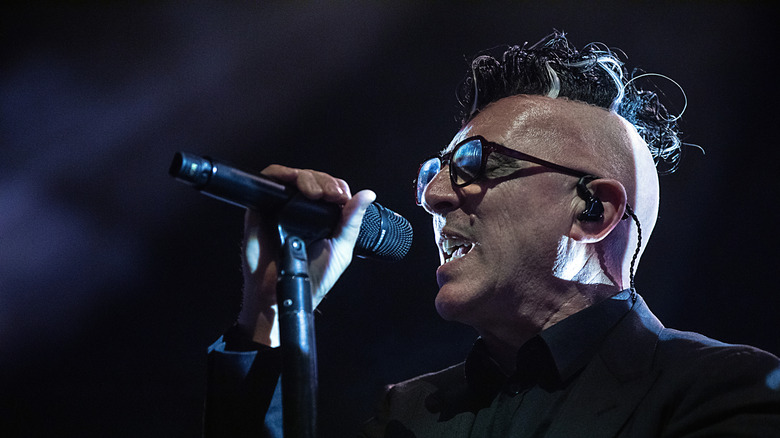
Legendary alternative rock band Tool has managed to attract a huge following over the decades despite the complexity of the band's music and its members' unwillingness to compromise their artistic vision. Frontman Maynard James Keenan has been especially vocal about how he wants his work to come across. He's even taken the step of criticizing certain fans who turn up to their shows, taking particular exception to their perceived uncleanliness.
In a 2006 interview with AV Club, Keenan, who is also the frontman of A Perfect Circle and Puscifer, unabashedly described how the marketing practices of Tool's record label have seen them attract a certain fanbase that he seemingly finds undesirable. "[You play] heavy music, and your record company, which has never owned an album anything like what you're doing, immediately markets you to the obvious stinky kid with the dreadlocks and the B.O. and the urine on his shoes because he's been sleeping in his own filth in a festival in the middle of the rain," he said. Keenan goes on to describe such fans as "primates, these weird, cretin people." However, elsewhere in the same interview, he describes how such criticisms come from his own curmudgeonly nature and how pleased he is that the band's wide fanbase has helped make Tool's difficult music hit No. 1 on the album charts.
Courtney Love

Hole frontwoman Courtney Love is a famously confrontational star who has taken swipes at fellow musicians, including Madonna, Taylor Swift, and Lana Del Rey, over the years. The widow of the equally opinionated Nirvana frontman Kurt Cobain, she has also shown on multiple occasions that she is willing to get into altercations with fans if she doesn't approve of their behavior at shows. Back during one notorious gig in 2011, however, she simply resorted to threats when a fan at a show in Brazil drew her ire for repeatedly holding aloft a photo of her late Kurt Cobain, who died in 1994.
"You know, I don't need to see a picture of Kurt, a******," Love said, per YouTube. "And I'm gonna have you f****** removed if you keep throwing that up. I'm not Kurt. I have to live with his f****** s*** and his ghost and his kid every day. Throwing that up is stupid and rude, and I'm gonna beat the f*** out of you if you do it again." Shortly after the outburst, Love left the stage, ending the show.
Lou Reed
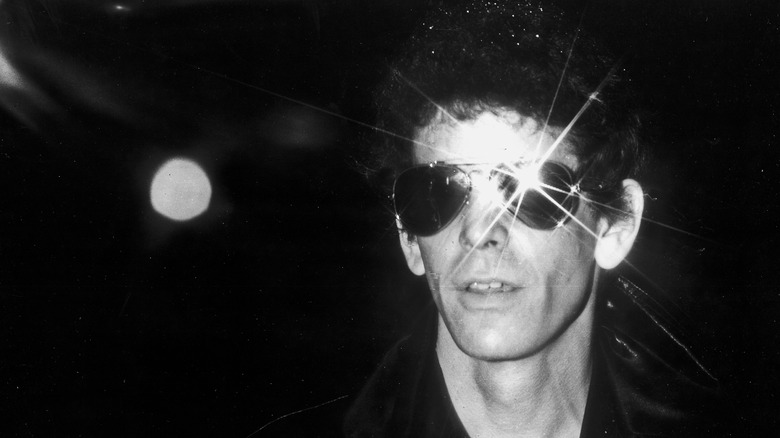
Velvet Underground frontman and alternative rock icon Lou Reed earned a reputation for his cantankerous personality over the course of his career. Famously uncompromising in his worldview and attitude toward his art, he proved time and time again that he was more than willing to alienate his own fanbase for the sake of creating space in his life for greater artistic freedom. His final album before his death in 2013, "Lulu," a collaboration with thrash metal band Metallica that managed to turn away fans of both acts in droves, is testament to that.
But the most famous musical left turn of Reed's career came in 1975, when he delivered the notorious double album "Metal Machine Music." The record was comprised of noise music that Reed had created with tape loops and a great deal of distortion, with no song structure or anything for casual listeners to hang onto. It grinds on for over an hour and was utterly blasted by critics after Reed had delivered more fan-friendly releases in the couple of years prior, such as the live album "Rock N' Roll Animal" and "Sally Can't Dance."
Was the record a deliberate attempt to bait his fans? Critics? Record label? Or was it a genuine artistic statement? Years later, Reed has something to say about fans who attempted to take "Metal Machine Music" seriously, reportedly telling a friend of music critic Lester Bangs (per The Observer), "Anyone who gets to side four is dumber than I am."
Counting Crows
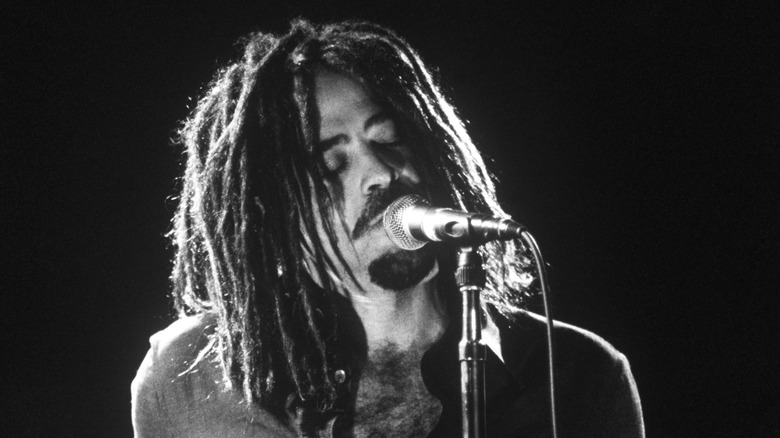
Counting Crows frontman Adam Duritz was an early adopter when it came to using the internet to connect with his band's fanbase. Back in the 1990s, Counting Crows became one of the biggest rock bands in the U.S., thanks to Duritz's melancholic lyrical and vocal style combined with the band's retro-rock sound. At the time, the singer used to visit fan message boards and attempt to answer fans' questions about upcoming releases. The habit eventually grew into a sprawling online community that has sustained throughout the band's existence.
But as anyone who has spent any time on the internet knows, online discourse isn't always pleasant. In 2005, Duritz took to his website to publish a diatribe aimed at fans who he believed were posting unfairly critical things about the band on Counting Crows message boards. "Gee, did you ever wonder what it's like to have a website filled with fans who genuinely love you and your work and are genuinely decent and caring people? Me too," he posted sarcastically. Later in the same message, he blasted members of the community for criticizing the band's charity work and for collaborating with GAP to put on a free show. "Don't you ever get tired of listening to yourselves? I know I do. And you wonder why I choose not to communicate with you lately. I wonder why anyone would," Duritz added, suggesting they should join a "Counting A*******" forum instead.
Jack White
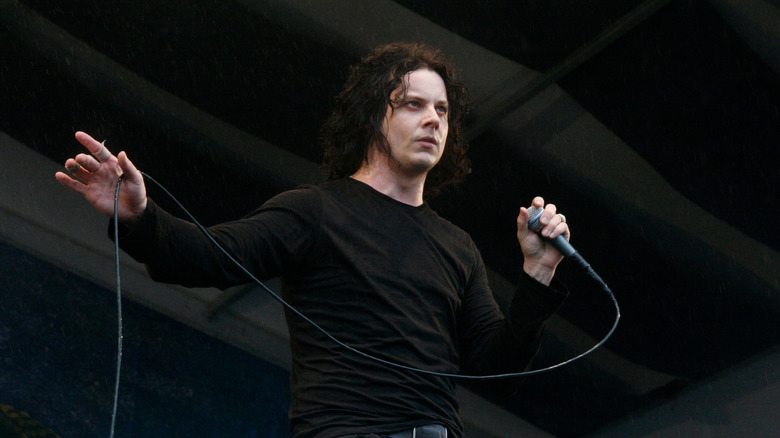
Former White Stripes frontman Jack White doesn't hold his tongue when it comes to calling out poor fan behavior. Over the years, the indie hero has repeatedly chastized his own fanbase for what he perceives as a lack of effort in terms of creating an atmosphere at his live shows. But he has also taken to social media to tell his fans that he has no intention of fulfilling their expectations when it comes to how much music they receive on any one night.
"Been hearing a lot of chatter throughout the year of this glorious electric touring about how long our sets are 'supposed to be' on stage," he wrote on Instagram, before ridiculing fans who he says "brag" about attending shows with 3-hour sets. "The Beatles and Ramones played 30 minute (ish) sets, and If I could, I would do the same at this moment in my performing life. That's actually the kind of show I'd like to put on right now. But there becomes this chatter that the cost of a ticket 'entitles' people to some kind of extra long show." He added that he was "bridging the gap" by playing shows longer than he would like.
White is a rock music devotee and believes certain acts are foundational to the entire genre. And when it comes to his fans' taste in music, he has some strong opinions. "Do not trust people who call themselves musicians or record-collectors who say that they don't like Bob Dylan or The Beatles," he told Rolling Stone.
Metallica
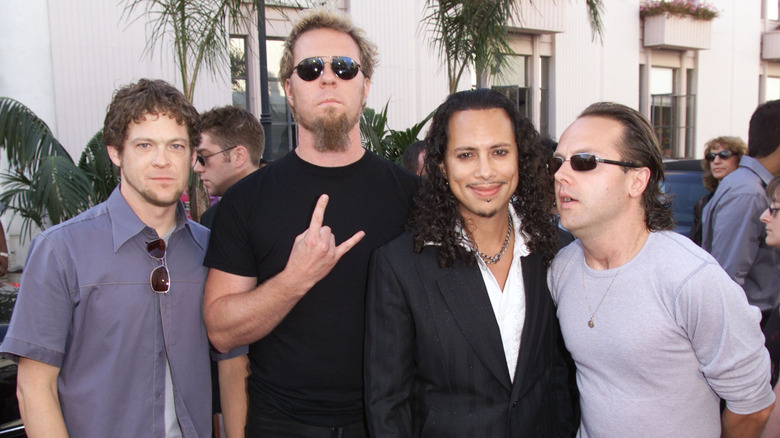
Despite Metallica being one of the biggest bands in heavy metal for decades by now, it has had its moments of trouble, with the tensions underpinning it plain to see in the documentary "Metallica: Some Kind of Monster." But arguably the band was at its most controversial in 2000, when it went to war with the peer-to-peer file sharing platform Napster. A precursor to commercial streaming platforms, Napster allowed users to share MP3 music files for free. After a leaked Metallica song was discovered on the website, alongside the band's full discography, the band sued the platform for copyright infringement.
Metallica ultimately won the case, but it was a PR disaster. Notably, drummer Lars Ulrich appeared in court with a list of thousands of Napster users whose files the band wanted to be deleted. It pitted the band against everyday fans and made its members seem out of touch with their own fanbase. Ever defiant, however, frontman James Hetfield stuck to his guns, not holding back in an April 2001 Playboy interview (via Digital Journal).
"Metallica fans sided with Napster because they're lazy b******* and they want everything for free, I like playing music because it's a good living and I get satisfaction from it but I can't feed my family with satisfaction," Hetfield said. Ulrich added: "If you'd stop being a Metallica fan because I won't give you my music for free, then f*** you. I don't want you to be a Metallica fan." However, the band's demand for $10 million from Napster arguably undermined the message.
Axl Rose
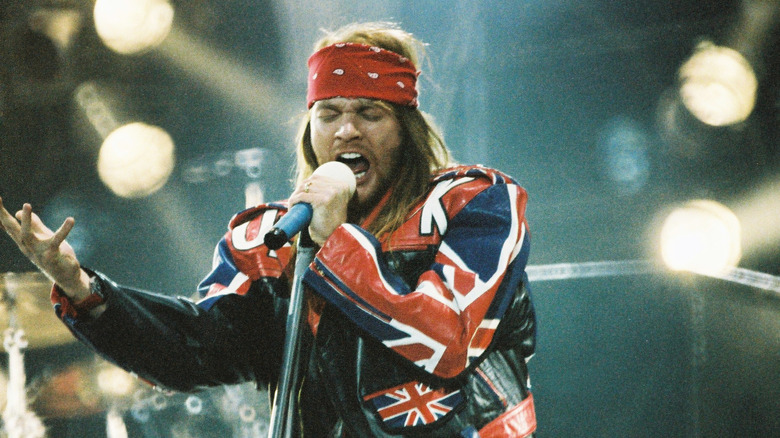
Guns N' Roses frontman Axl Rose has occasionally had a troubled relationship with his fanbase. Particularly during the band's early years, when he was known for getting into altercations with fans at shows and occasionally hurling abuse at the crowd. In fact, one widely-shared — but, we should concede, unverified — quote suggests that Rose would happily do away with male listeners altogether.
According to fan mythology, Rose once admitted to a concert crowd (via the NZ Herald): "I'm not God but if I were God, three quarters of you would be girls, and the rest would be pizza and beer." The quote is a favorite on GNR fan forums and is reflective of the band's hedonistic brand during its hay day. Not that the quote itself should necessarily be considered a compliment to the women at his shows. In a 1989 MTV interview, Rose explained that he considered pursuing partners a hobby, like skateboarding or basketball (via Instagram). In this instance, perhaps being commodified alongside pizza and beer isn't for everybody.
John Lydon
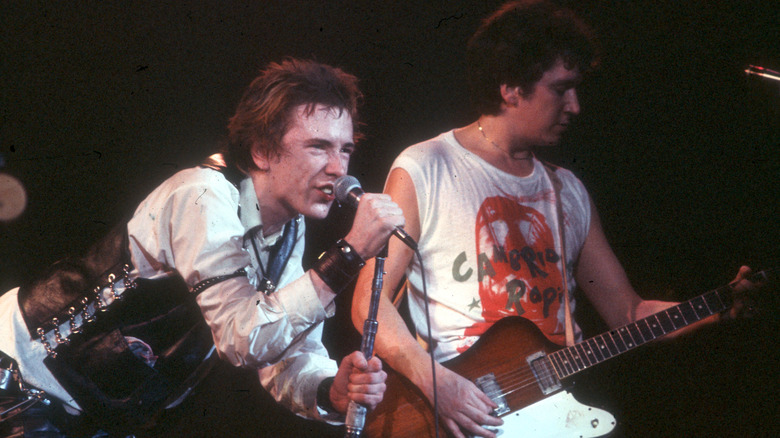
"Ever get the feeling you've been cheated?" These immortal words heralded the final collapse of one of the 1970s' most seismic bands: the Sex Pistols. They were uttered by frontman John Lydon, aka Johnny Rotten, at the band's final show at San Francisco's Winterland Ballroom venue on January 14, 1978.
The band had been on a whistle-stop tour of the U.S., playing questionable venues chosen by manager Malcolm McLaren while dealing with issues such as bassist Sid Vicious' heroin addiction and Lydon's growing alienation from his bandmates. Performances were poor, and the Winterland show was no different. Lydon's comment may have been an admission that the audience that day had been short-changed.
But there are other interpretations, one of which is that Lydon was reflecting on his own position as part of a punk band that had devolved into a circus. But more than that, the quote can be read as a refutation of the punk movement as a whole. Was it really all a cynical charade? For those who saw the Sex Pistols come crumbling down, it must certainly have felt so, with Lydon's outburst arguably coming across as chastising his fans for believing in the authentic power of punk in the first place.