

Fans Got It So Wrong Blaming These Women For The Breakup Of Their Favorite Rock Bands
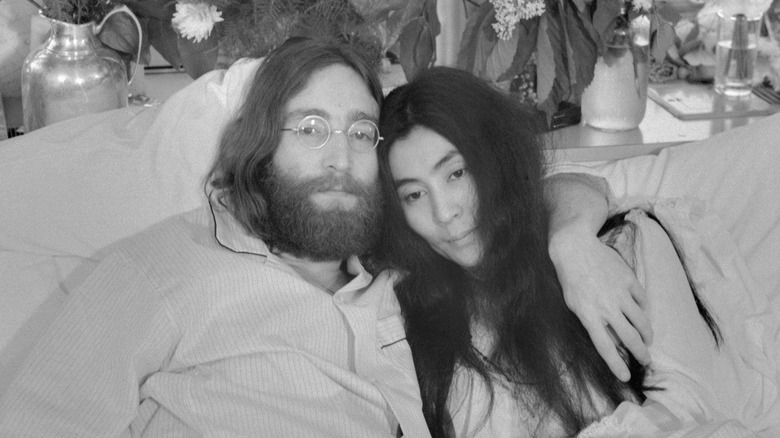
When a band breaks up, its most devoted fans can naturally be pretty upset. Whether that split has been a long time coming or is a sudden, seismic shift in how a group operates, everyone starts to look for an explanation, and sometimes the blame is unfairly placed on a woman.
Yet, things are rarely that simple. Rock bands can often arise in a heady mix of meteoric rises to fame, a sudden influx of cash, and intense artistic opinions. Over the years, any number of other factors can come in that could destabilize what may already be fairly unstable working relationships. That's not to say that women can't be integral parts of rock groups or even be part of the story of their breakups, but the truth is usually complex and messy. Here are some of the most notorious examples, and why some fans have got it so wrong for pinning a group's downfall on these women.
Michelle Phillips
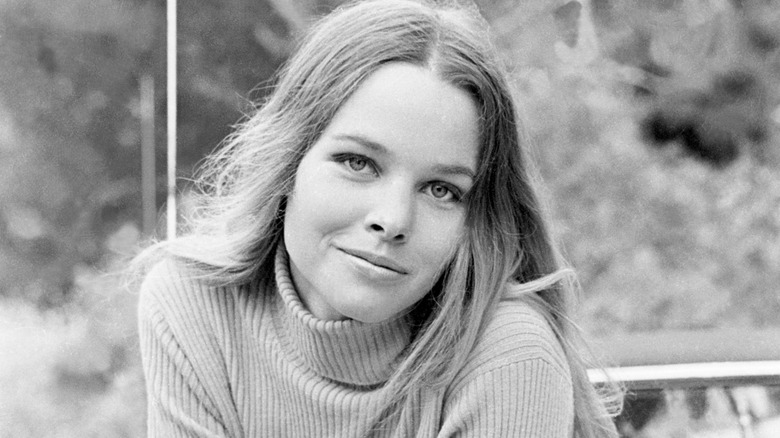
Behind the folksy four-person harmonies of the Mamas & the Papas lay serious trouble that led to the band's dissolution by 1968. But was band member Michelle Phillips really to blame for the implosion? While the band's relationships could get intense, and she was certainly a part of that dynamic — Phillips was temporarily ousted from the group in 1966 – she was hardly the only one stirring up drama.
At the time of the band's formation, she was married to John Phillips, who had divorced his prior wife, Susan. As Michelle recalled to Rolling Stone, Susan once told her that John "has a Michelle in every town." Eventually, Michelle had an affair with bandmate Denny Doherty and Gene Clark of the Byrds. All the while, John Phillips was reportedly disregarding his marriage vows, too, while others recount personal and professional relationships marred by his controlling nature. Later, he would also struggle with substance use.
So, what was the real reason the Mamas & the Papas broke up? Like so many things, it's complicated. Many accounts support the multifaceted tale of interpersonal difficulties within the group. Consider that, in 1968, vocalist Cass Elliot told Rolling Stone that she bristled under the constraints of being in a band. "I didn't just want to be part of a group," she explained, detailing that she wished "to sort of diversify myself, to extend myself. Within the framework of a group, that freedom is not possible."
Yoko Ono
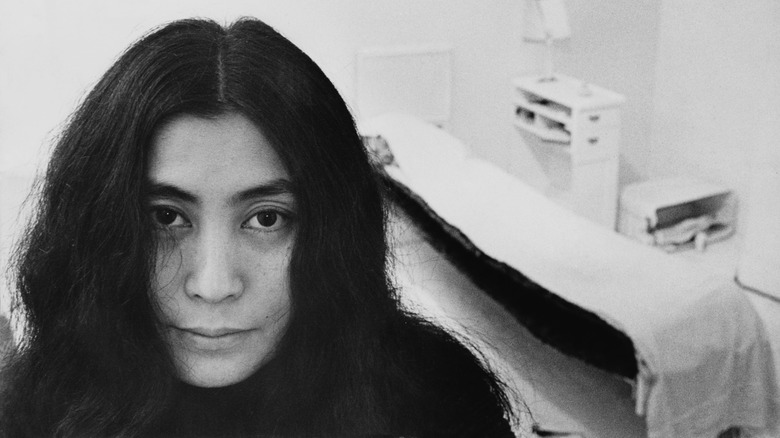
If there were to be a monument to the wrongfully blamed rock girlfriend, then the statue at its center would surely be that of Yoko Ono. Her role in the breakup of the Beatles is mythical ... and about as accurate as any tall tale. As the tale goes, Ono strolled onto the scene as John Lennon's girlfriend, influencing him into weirdo stunts like the couple's "bed-ins" and sending acorns to world leaders, and driving a wedge between Lennon and the rest of the Beatles. Resentment toward her has cast a dour glance at her work as a conceptual artist, not to mention her status as a woman, Japanese national, and someone who wanted to spend time with her partner.
But, even if you're not into Ono's boundary-pushing art style and think that Lennon did get kind of annoying after linking up with her, she was hardly to blame for the Beatles' breakup. The disintegration of the band was due to multiple factors. The Beatles formed when its members were only teens and quickly rocketed into superstardom, complete with intensive tours and intrusive, screaming fans. When its original manager died from a drug overdose, new, less able management meant their creative and business ventures began to falter.
Interpersonal tensions hardly helped things, either, with Lennon and Paul McCartney in particular in a long-running creative rivalry. Lennon was also dealing with serious substance use problems that further destabilized the situation. So, while Ono was certainly a participant, to lay the breakup of one of the biggest bands of all time solely at her feet is a gross oversimplification.
If you or anyone you know needs help with addiction issues, help is available. Visit the Substance Abuse and Mental Health Services Administration website or contact SAMHSA's National Helpline at 1-800-662-HELP (4357).
Courtney Love
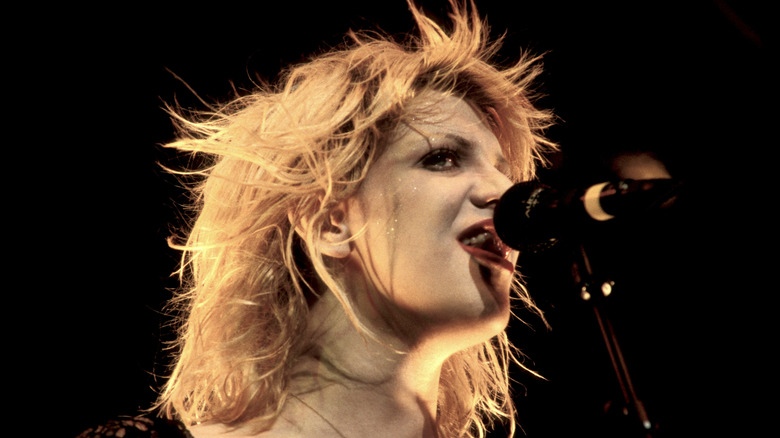
There's no denying that the relationship between Courtney Love and Kurt Cobain was troubled. The two were notoriously volatile, entering into a marriage after only a few months and amidst a heady, dangerous mix of fame, substances, and strong personalities. After their 1992 marriage, at which Love was already pregnant with their daughter, Frances, Cobain reportedly continued in a depression kicked off by the pressures of writing and touring. The newlyweds grappled with addiction, attempting to get clean — and failing — before Frances' birth in August 1992.
Yet, the two experienced moments of joy and family togetherness, though it was marred by continuing substance misuse, hints at infidelity (though Love claimed she never followed through), and worries about artistic integrity. Cobain died by suicide in 1994 and Nirvana, bereft of its front man, dissolved. Before and after all this, tales arose that Love was a domineering harridan who had contributed to Cobain's fall. These tend to ignore her own successful music career.
But, regardless of your personal opinions about Love, the story in which she plays an evil band- and Cobain-destroying figure is hardly fair. That leaves little agency for Cobain, which one imagines would have caused him to bristle as much as any hint that he was "selling out." He certainly spoke glowingly of his new wife and daughter to multiple outlets, telling the Los Angeles Times that "There's nothing better than having a baby. ... I can't tell you how much my attitude has changed since we've got Frances."
If you or someone you know is struggling or in crisis, help is available. Call or text 988 or chat 988lifeline.org
Stevie Nicks
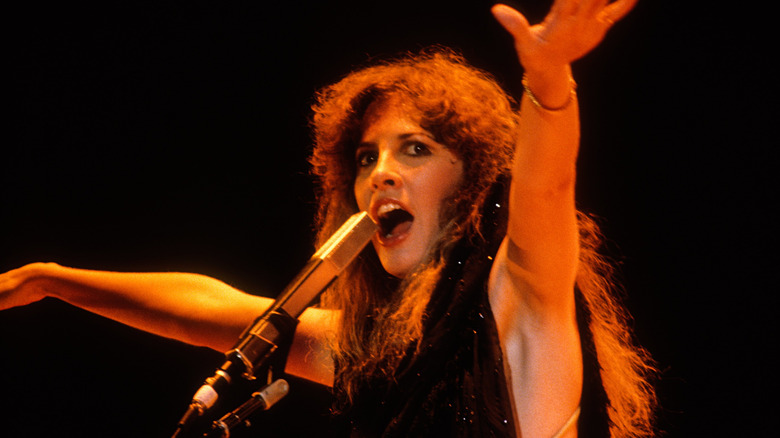
Today, Fleetwood Mac is pretty much a byword for "troubled band." Despite the legendary status of its 1977 album, "Rumours," things went off the rails after its next studio album, "Tusk," confused fans and the title earned the disgust of vocalist Stevie Nicks. Band members began producing solo work and, though they made a few more studio albums and performed together, things were shaky. Even when they were ostensibly working together, their romantic links, new hires, and creative squabbles became notorious over the years, including the infamously tetchy relationship between Nicks and guitarist/vocalist Lindsey Buckingham.
To hear Buckingham and his fans talk of it, Nicks is to blame for the band's ultimate faltering. He told Classic Rock magazine that Nicks declined to join a new album that began recording in 2012, perhaps because she had "gotten a little bit disoriented in her wanting to pursue Stevie Nicks in capital letters, if you will." By 2018, he was officially no longer part of Fleetwood Mac, and Nicks was again to blame, apparently upset at his behavior during an earlier performance. Manager Irving Azoff reportedly told Buckingham that Nicks had "given the band an ultimatum and either I had to go or she was going to go" (via CBS News).
Yet, the truth could be more thorny. One can't help but notice that Buckingham's account is awfully complementary to Buckingham. Both Nicks and Mick Fleetwood also stated Buckingham had been dragging his feet on a tour. "It became just a huge impasse and hit a brick wall, where we decided that we had to part company," Fleetwood told CBS News.