

Musicians Who Soared To Fame After Their Rock Bands Kicked Them Out
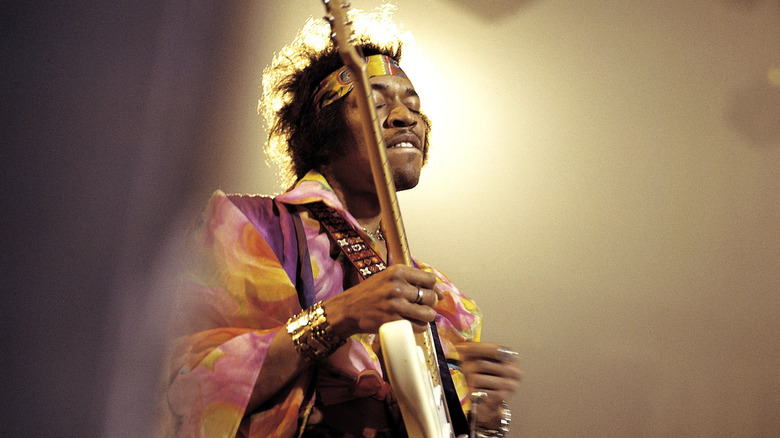
That adage often repeated in motivational and self-help circles — that every time one door closes, another opens — certainly applies to rock 'n' roll. While it must bruise a rocker's ego to be kicked out of a band, that sting can serve as inspiration, fuel ambition, and ultimately spur success. Time and again, fired musicians found fame, fortune, and accolades that eclipsed their time in their former bands.
Whether caused by artistic differences, personality conflicts, unprofessionalism, or personal issues, walking papers have been duly dispatched to truly legendary rock musicians. A young Jimi Hendrix was kicked out of Little Richard's band, for instance, and Motörhead legend Lemmy Kilmister was bounced from English psychedelic rock band Hawkwind. In both cases, the band's loss — whether warranted or not — was the music and pop culture world's gain. And often, that setback proved to be the very spark that set the musician's career into the stratosphere.
There are no straight lines in rock 'n' roll. Sometimes, it takes a bump in the road to remind you where you're headed, and where you'd like to be.
Hawkwind flies Lemmy home
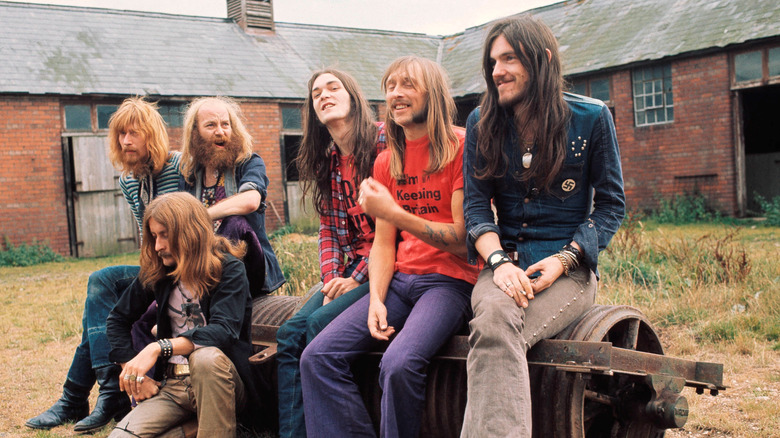
As frontman and bassist of Motörhead, Lemmy Kilmister embodied living fast, playing loud, and rocking hard. But before his face (and top hat) joined rock 'n' roll's Mt. Rushmore, the former Jimi Hendrix roadie played bass in Hawkwind. Known for their intense psychedelic rock and anarchic live performances, the band reached a commercial peak after Lemmy joined the line-up in 1971. He also took on lead vocal duties on Hawkwind's biggest single, "Silver Machine." which peaked at No. 3 on the U.K. Singles chart in 1972. Following Lemmy's death in 2015, Hawkwind vocalist and guitarist Dave Brock joined the parade of tributes on Facebook, writing, "We had a magical bond together."
However, rifts emerged between Lemmy and the rest of the band. These mainly had to do with the substances the musicians liked to use. "Part of the growing divide was that Lemmy took downers and speed," Brock told Metal Hammer, "while the rest of us were into LSD." Things fell apart on a North American tour in 1975, when Canadian border police discovered a baggie of amphetamines on the bassist and arrested him. Seen as a liability, he was flown back to England, but that was just the beginning of his next chapter. Taking its name from a song he'd written and recorded with Hawkwind, Motörhead formed soon after. Cut loose and pushed to the front, Lemmy soared to new heights, becoming a metal icon and legend.
Alt rock band loses faith in Love

Peerless and polarizing, Courtney Love is a grunge rock icon. Often overshadowed by her marriage to Kurt Cobain — and her many public feuds with artists like Trent Reznor, Billy Corgan, Dave Grohl, and Bikini Kill — is her work as the frontwoman of the band Hole. The group's second album, "Live Through This," is as raw, gritty, and brilliant an album as any released in 1994, alternative rock's banner year. But 10 years before that, a 20-year-old Love briefly took the helm of an alternative band that would make a mark of its own: Faith No More.
According to the band's members, she pushed her way into the line-up after a gig in their native San Francisco. In the Faith No More biography "The Real Story" by Steffan Chirazi, bassist Bill Gould recalled her making a "huge pitch about knowing what we wanted and being able to do it" (via Revolver). The band did its first television appearance on a Bay Area public access channel with Love in front, but ultimately, her personality was too chaotic and big. As Gould noted, "It got to this point where things were just too much... She was the dictator, and in our band, things were democratic."
For Faith No More, the firing cleared the way for Chuck Mosley and eventually Mike Patton, with whom they'd breakthrough in 1990. And as Love told an interviewer in 2021, "Getting kicked out of this band was one of the best things that ever happened to me... it made me determined, gave me the head of steam to keep going" (via Louder). We all know how it worked out.
Jimi Hendrix gets axed by Little Richard
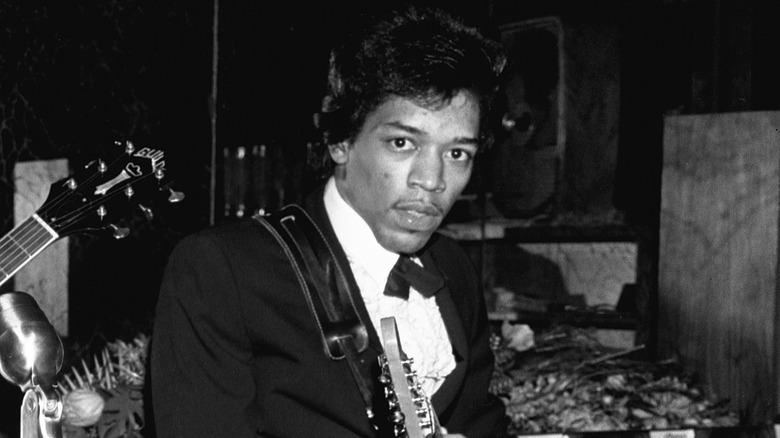
Before he set the rock world (and his guitar) ablaze, Jimi Hendrix — then going by "Jimmy James" — cut his teeth as a backing musician for artists like Wilson Pickett, Sam Cooke, and the Isley Brothers. Around 1964, he joined the Upsetters, the backing band of one of his musical heroes, Little Richard, and even played on two of the band's recordings: "I Don't Know What You've Got (But It's Got Me)" and "Dancing All Around the World." However, it was quickly clear that the group wasn't big enough for both musicians.
As the story goes, Little Richard didn't like the way the young guitarist's stage antics pulled attention away from the bandleader. Backstage after a support slot with the Hollies at Brooklyn's Paramount Theatre, Graham Nash told the The Times he recalls Little Richard "screaming, 'Don't you ever play your ... guitar behind your head again, don't you upstage me'" at Hendrix. Another issue, according to Richard's brother and manager Robert Penniman, was punctuality. When the guitarist missed the tour bus to Washington, D.C., after a gig at the Apollo Theater, it was over.
Soon after, Hendrix formed his own group, Jimmy James and the Blue Flames, and started gigging around Greenwich Village. In the summer of 1966, the Animals' Chas Chandler caught him and convinced him to move to London, kickstarting his career. By early 1967, the Jimi Hendrix Experience's first single, a cover of Bob Dylan's "Hey Joe," was in the top 10 on the U.K. Singles charts. He'd found his place on the stage: in the spotlight.
Black Sabbath gives Ozzy the boot
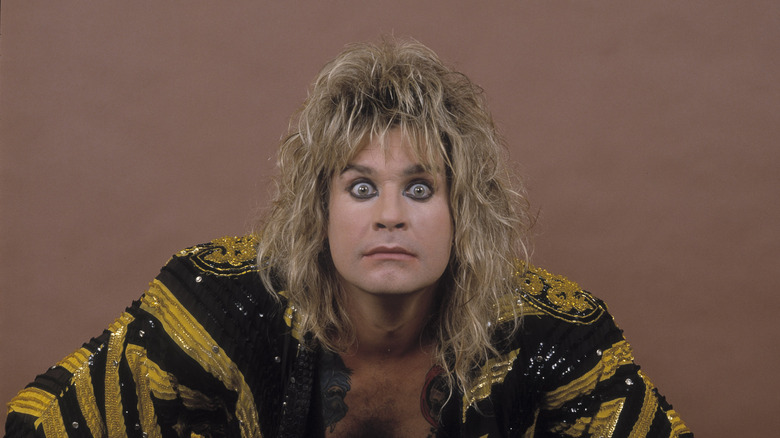
You'd think that losing your job as the lead singer of the world's most legendary heavy metal band would tank your musical career. But for Ozzy Osbourne, that tragic part of his story became a new beginning. After getting axed from Black Sabbath in 1979, the "Prince of Darkness" had a massively successful solo career, founded Ozzfest, and gained popularity beyond music thanks to "The Osbournes." When Ozzy died in 2025, he was as well known as a reality TV star as a heavy metal icon – a pop culture giant with footprints everywhere.
Ozzy's original run as Black Sabbath frontman, from 1968 to 1979, saw the band hit both massive peaks and deep valleys. The singer quit and rejoined the band during the recording sessions for the disappointing "Never Say Die!" album, and tensions erupted during writing sessions for the follow-up. The band members recall Ozzy drinking and using drugs heavily, disappearing for weeks at a time and arriving too trashed to sing. "Ozzy came apart from us. ... It got to a stage where nothing was happening with him," guitarist Tony Iommi explains in "Louder Than Hell: The Definitive Oral History of Metal."
Seeing an untenable situation, Iommi and the others made the painful decision to let the singer go. Though they reconciled, the move bothered Ozzy for a long time. In a 1990 interview posted to YouTube by Sunset Vinyl, he called it "ironic" that he was fired by bandmates who also drank and used drugs. "As I look back, it's funny now — you know, the pot calling the kettle black."
Dave Mustaine blazes his own trail out of Metallica
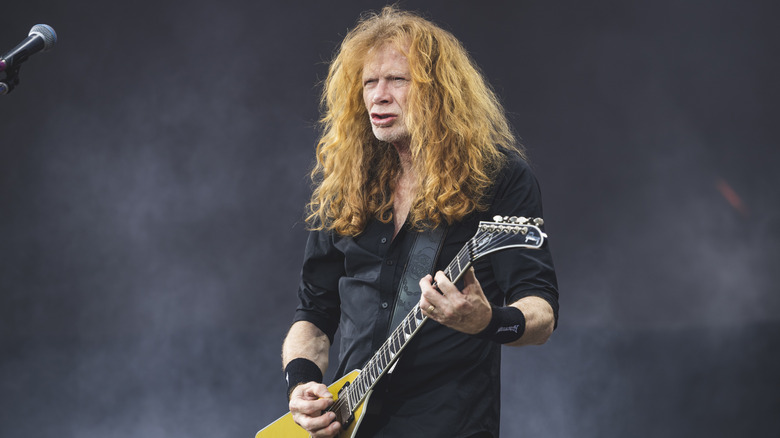
Dave Mustaine learning that he was fired by Metallica in April of 1983 was a gut punch in more ways than one. When his bandmates blindsided him with the news, their original lead guitarist was in bed nursing a hangover — a common sight in a group that jokingly called itself "Alcoholica." While the others liked to "drink and get silly," he told Loudwire, "I was a violent drunk... and that didn't go over too well." Once again, a musician left a trail of empty bottles on their way out.
Metallica was on tour in New York City, and Mustaine was dropped off at Port Authority Bus Terminal with a one-way ticket. "There have been more than a few bad days in my life, but this one remains right up there with the worst of them," Mustaine wrote in his 2010 autobiography "Mustaine: A Life in Metal." Another blow was that the band was gearing up to record their debut album, "Kill 'Em All," which included material he'd written.
Mustaine could've used an aspirin. What he got instead was a four-day journey back to California to stew in his bitterness. Along the way, he started writing lyrics and came upon the name of his next project on a pamphlet warning about nuclear missiles: the "arsenal of megadeath" (he cut out the second "a" for an edgier look). Megadeth eventually joined Anthrax, Slayer, and, of course, Metallica to become one of the "big four" of '80s thrash metal bands. Overcoming hangovers and creative heartbreak, Mustaine became an iconic rock musician.