

Band Members Who Got Caught In The Crosshairs Of Their Feuding Frontmen
What is it about rock 'n' roll musicians that makes them so likely to feud with each other? You could chalk it up to pride, attention-seeking, overinflated egos, the often drug-fueled lifestyle, and a thousand other factors, but whatever the reason, that need to squabble and scrap infects a huge percentage of the great rockstars. For every legend, there's a nemesis or two (or 10). Paul McCartney has John Lennon, Mick Jagger has Keith Richards, Roger Daltrey has Pete Townshend, Axl Rose has Slash, Roger Waters has David Gilmour, and the list goes on and on. As you may have noticed, all of those feuds were, or still are, fought between bandmates, which relegates a lot of fellow band members to the role of mortified bystander.
As their frontmen trade verbal, and sometimes physical, jabs, a host of innocent bassists, drummers, and guitarists have heaved sighs, thrown up their hands, and reluctantly waded into the conflict as peacekeepers. With how vocal the combatants tend to be, it's time to give the mic to the supporting players and hear their rendition of the drama. To that end, here are five band members who got caught in the crosshairs of their feuding frontmen.
Kirk Hammett
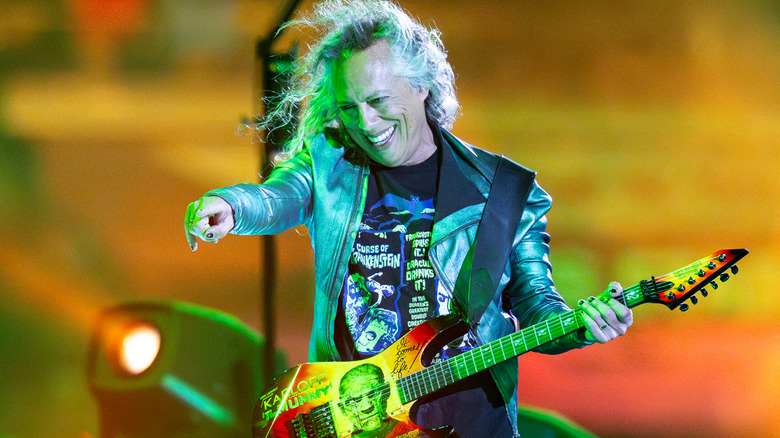
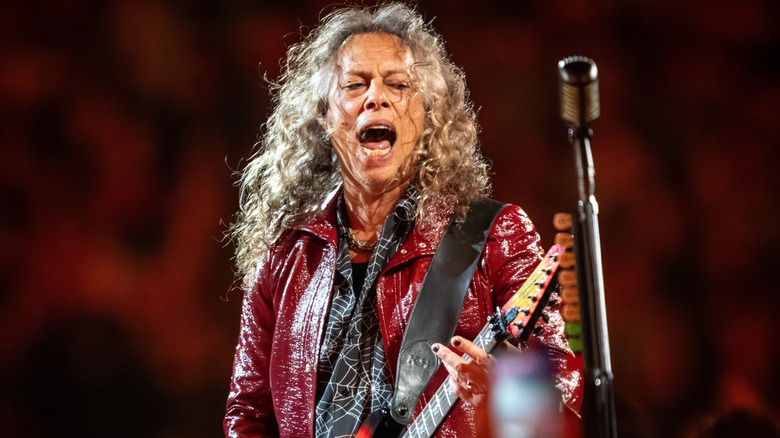
Poor Kirk Hammett. There are a number of moments during Metallica's 2004 documentary "Some Kind of Monster" that make it clear just how much inter-band bickering the guitarist has had to deal with over the years. A fun drinking game for the doc would be to drink every time Hammett clears his throat uncomfortably and looks away as his bandmates go at it. Of course, that's only when he's not actively playing peacemaker, a role he's gained a reputation for and one he seems not to mind. That's a good thing because it seems Hammett's destiny is to remain stuck between endlessly iterating bandmate feuds forever.
In "Some Kind of Monster," Hammett has a line that sums up his role in Metallica's spats neatly, and has the added bonus of unintentional comedy. "You know what, guys?" he pleads. "Why don't we just go in there and just hammer [the recording] out instead of hammering on each other?" That appeal for harmony was undoubtedly one of many in that era, one that saw the band in the press often thanks to infighting between James Hetfield and Jason Newsted. The pair, along with the other members, aired their many grievances in a series of interviews for Playboy, including barbs between every combination of Hetfield, Newsted, and drummer Lars Ulrich. As ABC News tellingly revealed of the interviews, "Only guitarist Kirk Hammett, a yoga devotee, said he has never hit anyone in the band."
Mick Fleetwood
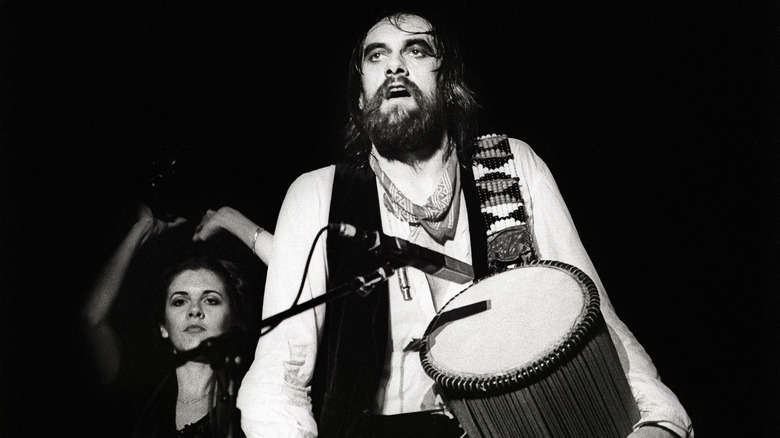
In 1974, Mick Fleetwood asked the musical and romantic duo of Stevie Nicks and Lindsey Buckingham to join his band Fleetwood Mac, having heard their music and seen them in studio, and therefore knowing full well the tremendous value both would add to the band. What he likely didn't foresee was the pair's almost immediate breakup upon joining and how it would lead to a messy, petty, decades-long feud that would play a major role in breaking Fleetwood Mac apart more than once.
On top of Nicks and Buckingham parting just after joining the band, longtime band members John and Christine McVie divorced during the same period. Even more remarkably, Fleetwood divorced his wife during that period, too, but unlike the rest (and perhaps just because his partner wasn't also a band member), Fleetwood held his drama (relatively) in check and focused on the bigger picture: the success of Fleetwood Mac and the recording of "Rumours." As Christine told Rolling Stone, "Somehow Mick was there, the figurehead: 'We must carry on. Let's be mature about this, sort it out.' Somehow we waded through it." In the years since, as the feud between Nicks and Buckingham has ebbed and flowed, Fleetwood has repeatedly told the press about his desire to see the two bury the hatchet, but he'll just have to wait and see if they are indeed, ahem, never going back again.
John McLaughlin
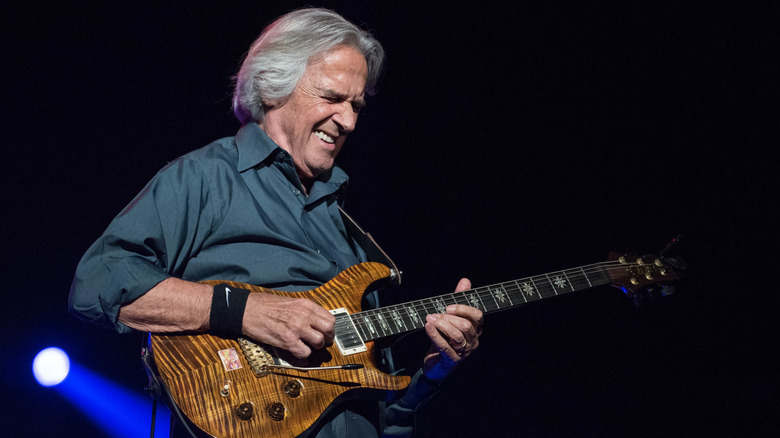
This entry is about legendary fusion guitarist John McLaughlin, but it could just as easily have been about multiple other rockstars. That's because the war McLaughlin had to witness between bandmates Jack Bruce and Ginger Baker raged on through the years — and even through different bands. Eric Clapton, for one, found himself caught up in the duo's clashes while serving with them as Cream, and McLaughlin dealt with the same when the three made up part of the Graham Bond Organization. Or, to put it as simply as McLaughlin himself did to Guitar Player, "I know Eric suffered, and I did, too."
McLaughlin ultimately credited Bruce and Baker's volatility as a source of their passionate musicality, but that doesn't mean their fights weren't intense. "I remember one night," McLaughlin told Guitar Player. "Ginger got so bored with Jack's bass solo that he started throwing drumsticks at him. Ginger was throwing the sticks at Jack too hard, and Jack turned around, took his upright bass and smashed it down on Ginger's drums." Scary as the Baker/Bruce feud may have been at times, anything that helped bring Cream's "Wheels of Fire" into the world is a net positive in our book.
Ray Davies

In 99 out of 100 articles that contain the words "Kinks" and "fight," the battle in question is almost certain to be between brothers Ray and Dave Davies. The rivalry between the band's two frontmen is as long as it is storied, but their eternal struggle wasn't the Kinks' only. One of the wildest fights in Kinks history didn't involve Ray at all, though he was there to witness it and once spilled all the sordid details to Wales Online.
The row took place during a gig in 1965 and according to Ray, went from zero to attempted decapitation in a flash. Apparently, in response to a drunken fight the night before, Dave cussed out drummer Mick Avory early in the Kinks' set. In response, Avory brandished a cymbal and struck Dave in the head (whether by swinging it or throwing it is never said), resulting in a gash that required a trip to the hospital and 16 stitches. "The police wanted to [charge] Mick for attempted murder," revealed Ray. "When they finally caught up with and arrested him, Mick tried to deny it all. But the cops turned round and said 'Mr Avory, we've got 5,000 witnesses!'." No criminal action came as a result of the incident, though it did give notoriously feud-prone Ray Davies a chance to play innocent bystander for once.
Tommy Ramone
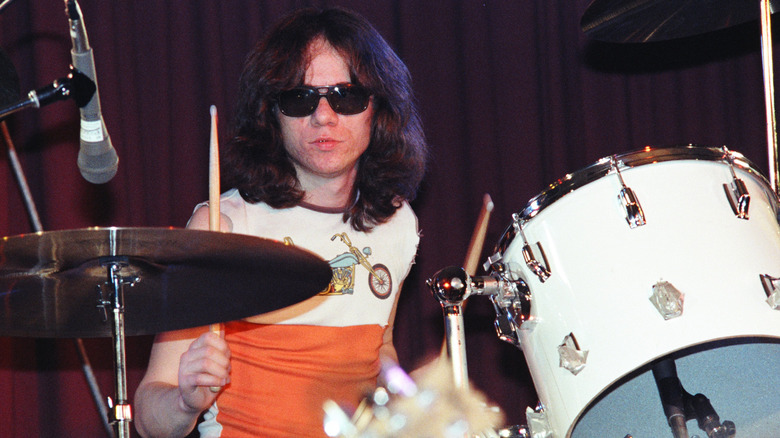
One of the most immediate and undeniable qualities of the Ramones' music is how fun it is. It isn't just "Blitzkrieg Bop;" their sound in general is bopping, and it lends itself to jumping, whooping, and fist-pumping with joy. The great tragedy of the Ramones, though, is that the joy in their music didn't translate to their lives as bandmates. The band was rife with bitterness and resentment, most of it between frontmen Joey and Johnny Ramone, explaining why drummer-turned-producer Tommy Ramone once told the Hollywood Reporter, "It was never fun being in the Ramones."
Tommy's story with the Ramones has a unique sense of heartache to it because it was Tommy who first conceived of the band, got them all together, and not only played drums but acted as producer for five of their albums. In short, he was a bit like the band's father and musical director in one, which made watching his metaphorical sons/band members tear each other apart all the harder. "The Ramones were not about having a good time," Tommy told Pitchfork. "We were out there to basically to get the fans to see the Ramones. There was a good sense of humor and all that stuff, but the environment was very harsh. It really was." It's tragic that Tommy had to live amid the other, feuding Ramones but if anyone else had been there instead, the Ramones likely wouldn't have held together as long as they did, if at all.