

The Best Slow Songs Of The '70s Are Simply Unforgettable
Crushing lyrics, searing melodies, and emotional depth that seizes your heart and won't let go — that's our recipe for an unforgettable slow song. The '70s were chock full of slow burners that still inspire chills when they play, even in their original form, although some are so phenomenal they've been covered several times in the decades since. You might find a haunting and unrequited romance at the core of an unforgettable '70s slow song, or you may discover an artist pining for a departed lover. And sometimes, you learn that simple existential questions about who we are and who we love turn out to be low-key heart-scorchers but never seem to lose their edge.
We find that the best slow songs of the '70s are the songs you reach for when depth is required in your slow-dance soundtrack. In our view, these slow jams to purge your soul of the anguish of a lost love or reflect on the vast emptiness of solitude. Though they're infused with a dramatic vibe, we think what makes them memorable is their authenticity. These aren't cheesy or facile swipes at the torment of life; these are clear-eyed contemplations on life, love, and loneliness, sometimes all in the same song. Our choices for the most unforgettable '70s slow songs are tunes that drop the tempo, look you in the eye, and say, "I feel you, and I have just what you need."
Killing Me Softly with His Song — Roberta Flack
Roberta Flack struck a chord and a nerve with her timeless ballad, "Killing Me Softly with His Song." Her warm, woody voice paints such a vivid picture of a woman finding a kindred soul in a performer whose songs are so prescient, they seem to be invading her thoughts. The irony of Flack singing a searingly resonant slow jam about a singer's songs resonating so strongly with her is like a mirror reflecting another mirror — a meta musical moment that crystalizes the power of music to forge sometimes disquieting connections.
As personal as it sounds, it isn't Flack's own composition. The story behind "Killing Me Softly with His Song" is that in 1972, a singer named Lori Lieberman saw Don McClean perform and jotted down her thoughts about it on a napkin. She shared them with her songwriting partners, Norman Gimbel and Charles Fox, and the trio turned it into a song. Flack heard it and reworked it to suit her style, turning her dramatic interpretation into a No. 1 hit that's never left our hearts.
A reinterpretation by The Fugees became a sensation in 1996 and gave Lauryn Hill a slow-burning '70s classic to wrap her silky voice around. It added new layers to the musical mythos while staying true to the eerie tone of Flack's take.
The Air That I Breathe — The Hollies
When The Hollies put out "The Air That I Breathe" in 1974, it set a new standard for power ballads, combining searing guitar work with a plaintive vocal performance and intense lyrics that gave the ache of love a heart-wrenching new expression. It's a song you can feel in your chest every time you hear it, especially as you belt the chorus along with vocalist Allan Clarke.
The tune starts out with a mind-blowing twist: "If I could make a wish, I think I'd pass / Can't think of anything I need." It's not confusing or soft-pedaling; this guy would not ask for a single thing. He lists them off, too, "No cigarettes, no sleep, no light, no sound / Nothing to eat, no books to read." How could someone be so satisfied that he couldn't come up with at least something to wish for? The breathtaking chorus unlocks the mystery as it soars, declaring "Sometimes, all I need is the air that I breathe and to love you." It's simple and direct, clarifying the existential lack of desire for anything more than love.
The haunting desperation that comes through in the lyrics imbues the song with an almost operatic sense of urgency. It was so effective that nearly 30 years later, the melody and chord structure were interpolated by Radiohead on their 1992 alt-rock standard, "Creep," used to great effect in a bridge that follows the original in a near note-for-note tribute.
Ain't No Sunshine — Bill Withers
Bill Withers set fire to the airwaves when he let "Ain't No Sunshine" loose on the world. His soulful revelation of his lover's distance darkening his world recalibrated the meter for '70s slow songs and set the bar miles higher for artists who followed. Not too shabby for a singer who posed for his album cover onsite at his day job with his lunchbox in hand (it made the final photo).
The song rolls along at a mesmerizing tempo, spare in its arrangement with the ticking precision of a metronome. It provided the perfect texture for Withers' honey-coated vocals as he declares, "Ain't no sunshine when she's gone / Only darkness every day / Ain't no sunshine when she's gone / And this house just ain't a home." Here's a man who can't be without his better half without her absence throwing his world into a tailspin. And the seemingly unending rounds of "I know" might feel like a blues-soaked vamp, but it was originally a placeholder while recording, until Withers could finish the lyrics. But the producer loved the effect so much that it stayed in and helped sell the emotion of the song.
Withers slow-jammed his way to No. 3 with this unforgettable '70s song. Considering he also scored big with "Lean on Me" and "Just The Two of Us," he sure knew how to deliver the down-tempo goods. This is one of those '70s break-up songs every boomer listened to, and for good reason.
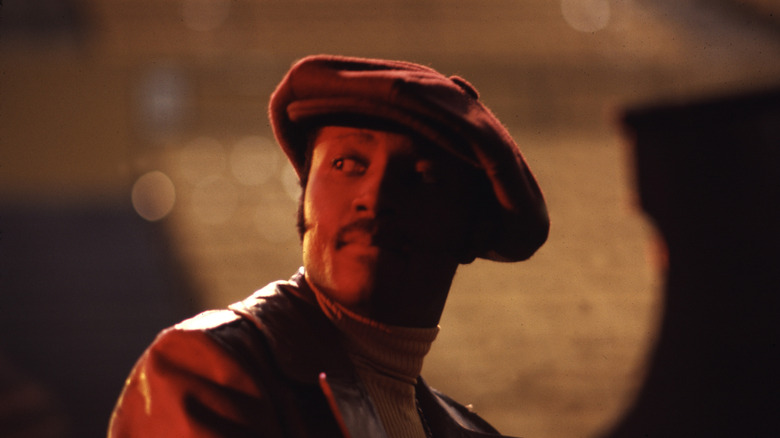
A Song for You — Donny Hathaway
One of the bluesiest torch ballads to come along in an age when it showed up on singer-songwriter Leon Russell's 1970 debut album, "A Song for You," is one of those piano bar soul crushers that can get you crying into your beer, even if you're the designated driver nursing a Dr. Pepper. It's been covered by a Who's Who of the best pop singers in the world, each with a distinctive interpretation of the song's aching emotional landscape. But Donny Hathaway's 1971 version takes it into an entirely different realm altogether.
The confessional piece feels custom-made for Hathaway's honey-rich voice, which delivers a raw authenticity that's utterly stirring. How could you not hear the line, "I love you in a place where there's no space or time," and not get all throat-lumped and spine-tingled? And let's not start on the tearjerking phrase, "And when my life is over, remember when we were together / We were alone, and I was singing my song for you." It's even more poignant in light of Hathaway's 1979 death by suicide at age 33.
Hathaway's reading of Russell's timeless tune of prayer-like devotion becomes a spiritual experience that leaves listeners simultaneously exhilarated and drained. But a song this beautiful is well worth the emotional roller coaster ride.
All by Myself — Eric Carmen
He may be a forgotten '70s singer known by '80s audiences for his "Hungry Eyes" contribution to the "Dirty Dancing" soundtrack, but Eric Carmen's 1975 ballad "All by Myself" still hits people in the feels, even this far down the road. It may be the ultimate tribute to self-pity, but it's so chilling and relatable that it actually feels good to wallow in it for a while.
Carmen wrote the song around Rachmaninoff's Piano Concerto No. 2, giving the melody a grand classical sensibility. It's a lush musical backdrop for lyrics so laden with emotion. The phrase "When I was young, I never needed anyone/ And making love was just for fun," is a set up for a total gut punch in the line that follows: "Those days are gone." You know things are going to get juicy and melodramatic when the music does a cinematic descent before Carmen unleashes the chorus like a torrent of self-realization. "All by myself, don't want to live / All by myself anymore," he howls — and so do you, because a slow tune this spirited requires you to sing along at top volume.
"All By Myself" reached No. 2 on the Billboard Hot 100 chart in 1976, giving the former Raspberries lead singer his first solo hit single. With chart action like that, it's clear that fans couldn't claim to be "all by myself" in loving this memorable heartbreaker.