

Classic Rock Bands That Launched The Most Successful Solo Careers
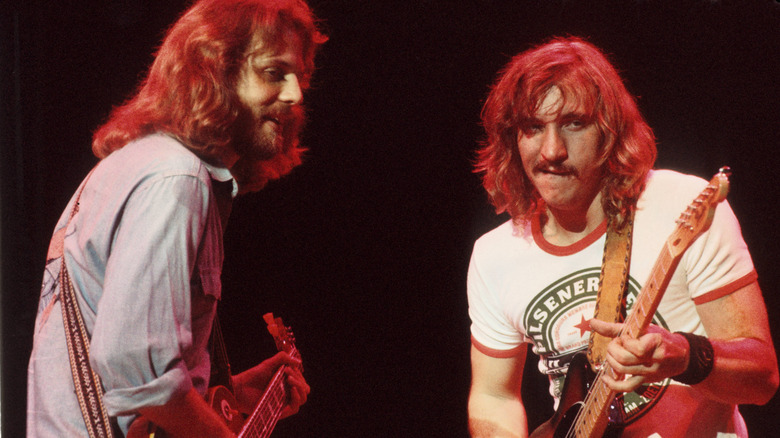
Some of classic rock's most iconic bands boasted such a wealth of talent that after the original group started to run its course, multiple members were able to start up successful solo careers. A combination of talent and enduring fan goodwill allowed those artists to become stars in their own right. And while it's fairly common for a singer or even a guitarist to mount an illustrious career away from their original band, it's rare for a group to foster multiple future superstars.
Many rock musicians left their first successful band to start other groups that also did well, and others still went on to form some of the best supergroups in history. Perhaps not so coincidentally, these initial bands are among the most popular and best-selling acts in music history, such as The Beatles and Fleetwood Mac. And for a time, they were the home of multiple musicians who went on to land at least one single in the upper reaches of the Billboard charts. Here are five classic rock bands that generated the most solo-artist hit machines.
Fleetwood Mac
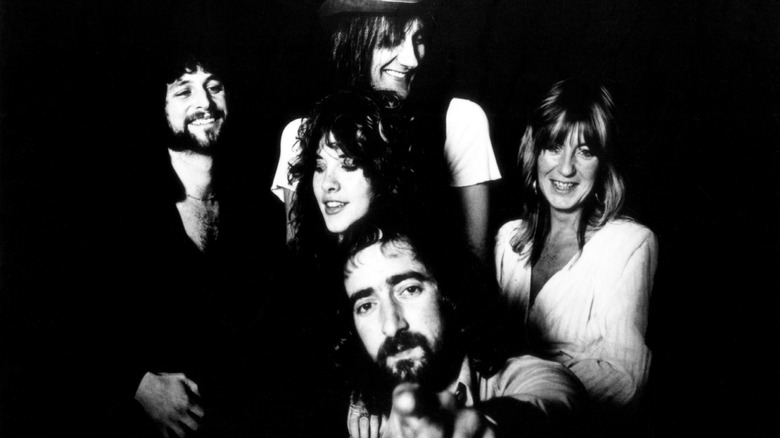
Across its many versions, Fleetwood Mac produced five notable solo acts, some of whom became household names. When it formed in the late '60s as a blues-inspired combo, guitarist Jeremy Spencer was among its earliest members. After exiting Fleetwood Mac in 1971, he took The Jeremy Spencer Band's "Cool Breeze" and "Travellin'" to the U.S. adult contemporary chart in 1979. One of Spencer's ostensible replacements in Fleetwood Mac, Bob Welch, departed the band in 1974 and then took a string of smooth soft rock songs, such as "Sentimental Lady," into the Top 40.
That soft rock environment was forged in part by the mid-1970s Fleetwood Mac lineup, and all three of the featured performers from that era recorded solo smashes in the 1980s. Lindsey Buckingham reached No. 9 in 1982 with "Trouble," while Christine McVie, who before Fleetwood Mac was a solo act under her pre-marriage name of Christine Perfect, had a 1984 Top 10 hit with "Got a Hold on Me."
Stevie Nicks, however, was the biggest star of them all. Her uniquely ethereal pop rock, which had brought a new dimension to Fleetwood Mac, then took Nicks as a solo artist to the Billboard Hot 100 no less than 14 times, notably with classic rock staples like "Edge of Seventeen (Just Like the White Winged Dove)" and "Stand Back."
The Beatles
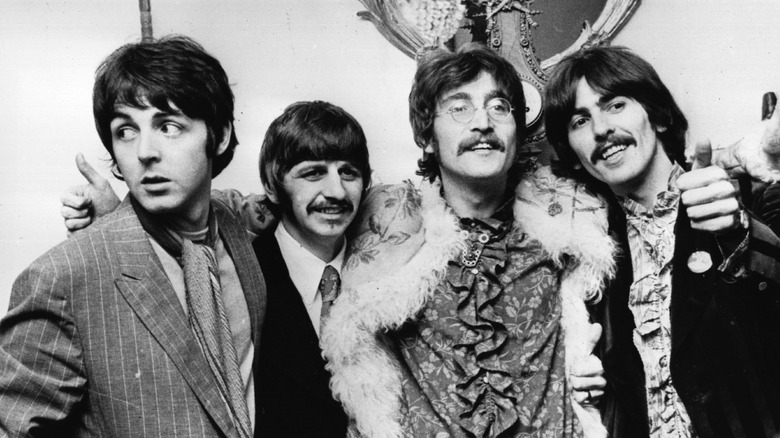
When The Beatles broke up in 1970, the '60s-dominating band was still extremely popular. The Fab Four took four singles to No. 1 in 1969 and 1970, and so heavy demand remained for whatever anyone associated with the band produced. Subsequently, The Beatles became the only act in Billboard history in which every member would eventually top the pop chart. After John Lennon hit the Top 10 with "Instant Karma (We All Shine On)" and "Imagine," he went to No. 1 in 1974 with "Whatever Gets You thru the Night" and again in 1980 with "(Just Like) Starting Over."
The Beatles' other primary songwriter and front man, Paul McCartney, stormed the charts on his own, both with his wife Linda McCartney and as the front man of Wings. McCartney's had nine No. 1 singles, facilitating his status as Billboard's 12th-most-successful artist ever. Among these hits were "Band on the Run," "Silly Love Songs," and "My Love," a classic love song that held the No. 1 spot the longest in 1973.
But the first Beatle with a post-band No. 1 single was guitarist George Harrison. His meditative "My Sweet Lord" / "Isn't It a Pity" topped the charts in 1970, followed by two more No. 1 hits over the next two decades. The songs of drummer Ringo Starr also resonated: Between 1971 and 1975, Starr sang seven Top 10 hits, including the No. 1 singles "Photograph" and "You're Sixteen."
The Eagles
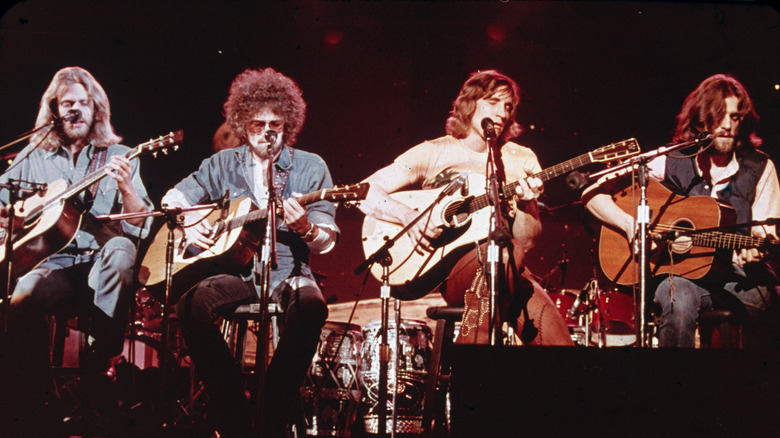
From 1971 to 1980, and across multiple lineup changes, seven musicians comprised the Eagles, and six of them proved they could go it alone. After the band succumbed to personal and professional tension and split up in 1980, the two primary vocalists – Don Henley and Glenn Frey, who sang most of the Eagles' best-known songs – went on to major solo careers. Henley was a pop and soft rock chart presence throughout the 1980s and early 1990s, with high-charting hits such as "The Boys of Summer" and "Dirty Laundry." Frey also hit it big in the '80s, particularly with "The Heat is On" and "You Belong to the City."
Late of the James Gang, Joe Walsh had a solo career going before, during, and after his time in the Eagles, earning a few Top 40 hits like "Rocky Mountain Way." Meanwhile, Randy Meisner, whose vocals headlined the Eagles' "Take It to the Limit," charted some pop hits in the early '80s, including "Hearts on Fire." Timothy B. Schmidt started making solo albums that same decade, and he landed his first and only Top 40 hit in 1987 when "Boys Night Out" made it up to No. 25. Even Don Felder recorded multiple LPs, including a couple in the 2010s, peaking at a somewhat respectable No. 43 in 1981 with "Heavy Metal (Takin' a Ride)."
The Edgar Winter Group
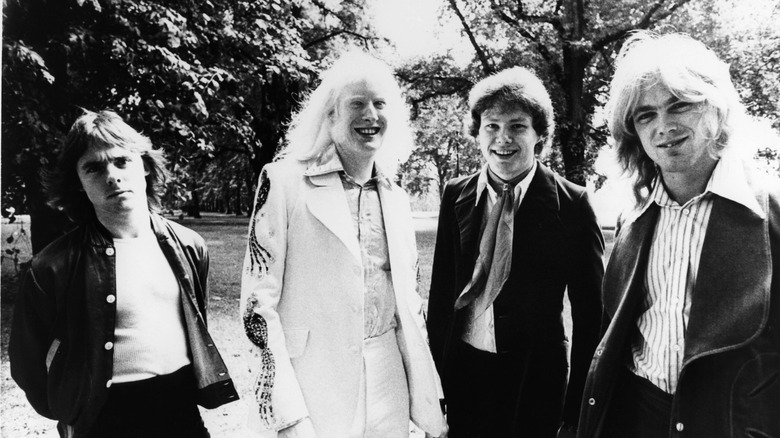
The Edgar Winter Group was a hard rock outfit of the early 1970s that showcased the talents of multi-instrumentalist Edgar Winter. It wound up scoring a No. 1 hit with the instrumental "Frankenstein" and became an undeniable incubator of the talents of three future stars. The combo's debut 1972 album, "They Only Come Out at Night," prominently featured guitarist and mandolin player Ronnie Montrose, who departed the band to build his own eponymous group, Montrose. The first, self-titled Montrose LP sold 1 million copies and introduced singer Sammy Hagar to hard rock fans.
When Montrose left the Edgar Winter Group, Winter brought in a replacement, Rick Derringer, formerly of the hit '60s rock band The McCoys. Derringer then stepped out to make the 1973 classic rock radio staple "Rock and Roll, Hoochie Koo" and later became an in-demand producer and songwriter, responsible for Hulk Hogan's personal theme song, "Real American." The group also included Dan Hartman, a bassist and singer who sang on the Edgar Winter Group's hit "Free Ride." When he eventually went solo, he adopted a soft rock and synth pop sound, reaching the top 30 in the 1980s with "We Are the Young" and "I Can Dream About You."
The Runaways
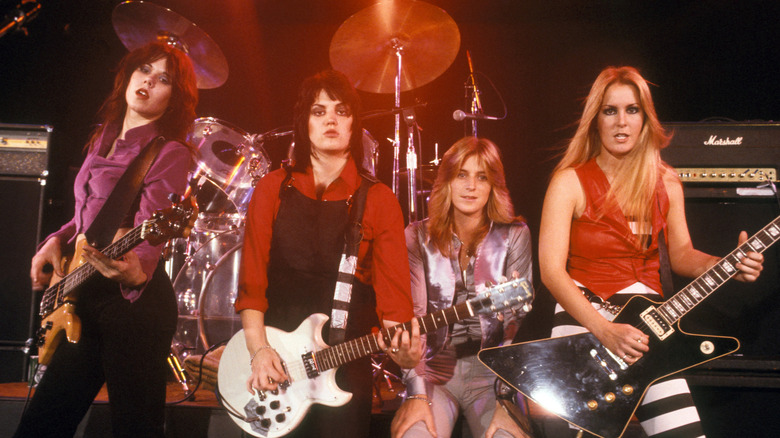
The Runaways left its mark on rock history as one of the first bands with an all-female lineup, but three of its members went on to greater success as solo artists. The band recorded four studio albums in the late '70s, none of which sold very well in the U.S. The group is probably best known for its minor hit "Cherry Bomb," a sinister, hard-rocking anthem of youth in revolt that exemplified the Runaways' rebellious image.
Original Runaways lead singer Cherie Currie left in 1977, and in 1978 she released her first solo LP, "Beauty's Only Skin Deep." A year later, Currie reemerged as half of a duo with sister Marie Currie. The pair enjoyed a No. 95 hit with a cover of the '70s classic rock song "Since You've Been Gone."
Both of the Runaways guitarists — Joan Jett and Lita Ford — helped shape 1980s hard rock. Ford, marketed as a hair-metal-adjacent performer, hit No. 12 in 1988 with "Kiss Me Deadly" and No. 8 in 1989 with the Ozzy Osbourne duet "Close My Eyes Forever." By far the most notable former Runaway, however, is Jett. Inducted into the Rock & Roll Hall of Fame, Jett fronted the Blackhearts and made many memorable '80s hits, including "Little Liar," "I Hate Myself for Loving You," and "I Love Rock 'N Roll," the latter spending seven weeks at No. 1 in 1982.
The Who
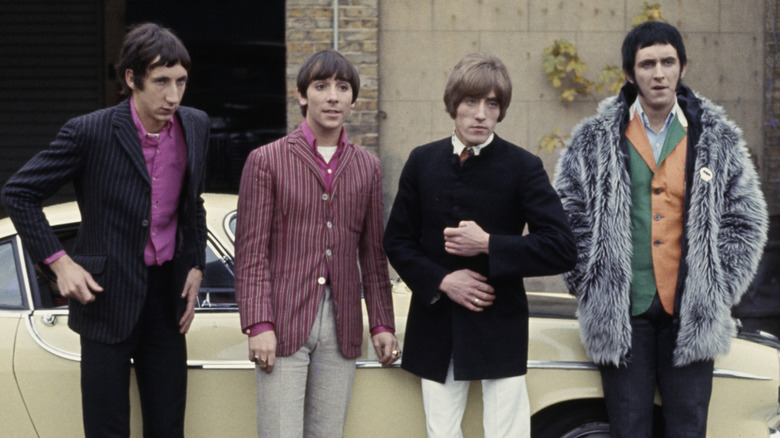
The Who was already one of the louder and heavier bands associated with the 1960s British Invasion, and the group got more inventive as time passed. After recording rock operas like "Tommy," three of the act's core members ventured out on viable solo careers. Guitarist Pete Townshend went first, with 1970's "Happy Birthday," one of three tributes to his guru, Meher Baba. Then came the more rock-based and wryly titled album "Who Came First," which charted in the U.S. and U.K. Townshend didn't nail a hit until 1980, when the million-selling "Empty Glass" set loose the Top 10 smash "Let My Love Open the Door" and the minor hits "A Little Is Enough" and "Rough Boys."
Prodigiously piped frontman Roger Daltrey, who was once kicked out of The Who, launched his side-work era with 1973's "Daltrey," his first of 10 studio albums. Despite possessing one of rock's most famous voices, only once could Daltrey land a single in the Top 20, and that was "Without Your Love," taken from the soundtrack of the 1980 crime drama "McVicar" in which he also starred.
John Entwistle took his thundering bass solo and also got to use the songwriting and vocal skills only occasionally deployed on Who songs. He recorded seven studio albums between 1971 and 1999. In 1981, the single "Talk Dirty" was a moderate hit on rock radio.
Bauhaus
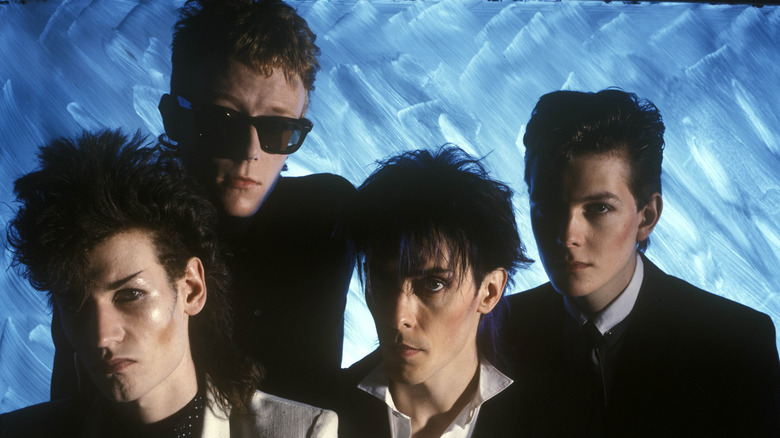
The dreary and haunting Bauhaus helped create goth rock, a predecessor to 1980s and 1990s alternative rock. And that's when three out of four members of the highly influential but still indie band really got to enjoy the fruits of fame. After Bauhaus' initial five-year life ended in 1983, everyone who wasn't singer Peter Murphy formed Love and Rockets, which had a huge, No. 3 pop hit in 1989 with "So Alive." The group was followed onto the charts by the enigmatic and brooding Murphy, whose single "Cuts You Up" hit No. 1 on the Billboard alternative rock chart in 1990. That radio format also made hits out of subsequent early '90s Murphy singles "A Strange Kind of Love," "The Sweetest Drop," and "You're So Close."
Also in 1990, ex-Bauhaus bassist David J also topped the alternative chart with "I'll Be Your Chauffeur," a rare hit single for the musician who has regularly released solo works across more than three decades. Bauhaus' guitarist Daniel Ash, who was the singer for Love and Rockets alongside David J, has also released lots of his own work, releasing numerous and varied solo albums since 1990.
Genesis
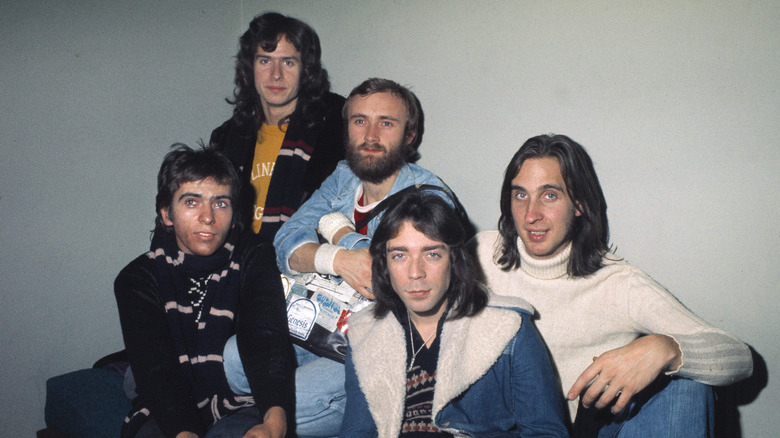
In the middle of a 1975 tour, Peter Gabriel informed the rest of Genesis that he'd be departing the progressive rock band out of a want to separate himself from the music industry. And yet just about two years later, he released his first of four self-titled albums. In the '80s, Gabriel churned out hit singles that rode the line between experimental alternative rock and sophisticated adult contemporary, like "Shock the Monkey," "In Your Eyes," and "Sledgehammer." The latter ascended to the No. 1 spot in 1986, displacing "Invisible Touch" by Genesis — which sold a lot of records after drummer Phil Collins assumed the position of lead singer.
Collins carried on as a solo artist alongside Genesis' evolution into a more approachable pop-rock band, and he had a significant run. He became the second person from Genesis to hit No. 1, and he did so seven times, with singles like "Against All Odds (Take a Look At Me Now)," "Sussudio," and "Another Day in Paradise." A third member of Genesis also found a receptive audience for his extracurricular activities: multi-instrumentalist Mike Rutherford. He issued two solo albums in the early '80s, "Smallcreep's Day" and "Acting Very Strange," which both reached the Billboard album chart. He then served as the titular "Mike" in the pop band Mike + the Mechanics, best known for synthy soft rock standards like "All I Need Is a Miracle," "Silent Running (On Dangerous Ground)," and the 1986 No. 1 smash "The Living Years."
The Zombies
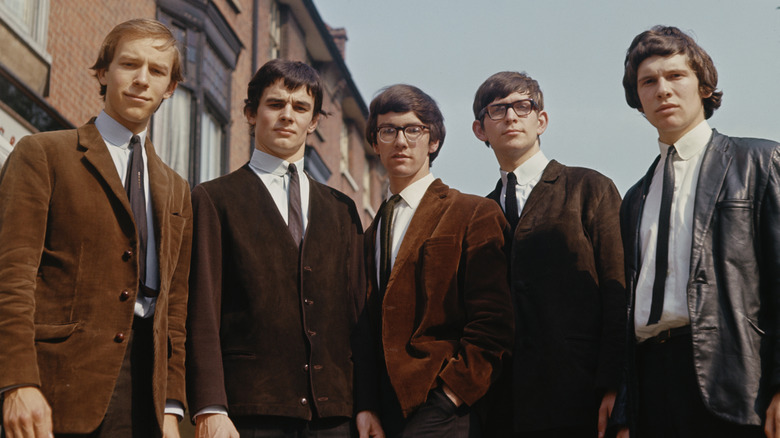
With 1960s hits like "She's Not There" and "Tell Her No," The Zombies made some of the dreamiest, spaciest pop rock of the decade. The Zombies stopped making music in 1967 after recording the album "Odessey and Oracle," although the track "Time of the Season" proved to be a smash in 1969. After the end of the band, its members were able to dissipate, and three had respectable solo careers. The hits first started coming for vocalist Colin Blunstone in 1972, when "Say You Don't Mind" and "I Don't Believe in Miracles" made it to the upper section of the U.K. singles chart. Also in 1972, Argent had a No. 5 with the anthemic and inspirational "Hold Your Head Up." That band was created and led by Zombies keyboard player Rod Argent.
Another ex-Zombie, guitarist Russ Ballard, sang on that Argent tune, but he left that group in 1974 and set off on his own. In 1980, Ballard hit No. 58 on Billboard with the single "On the Rebound," but he also worked behind the scenes in the music industry as a reputable songwriter. Among the songs written by Ballard but which became hits when performed by others: "Winning" by Santana, "New York Groove" for Kiss' Ace Frehley, and "You Can Do Magic" for America.
The Mynah Birds
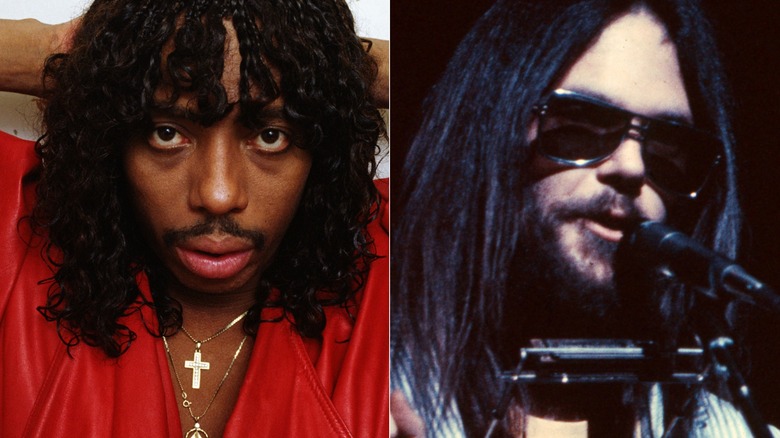
Musician Rick James grew up in Buffalo, New York, not far from the U.S.-Canada border. When he was 16, he signed up for the U.S. Navy and quickly regretted it, so he illegally absconded to Canada. Acting on the recommendation of an associate, he went to the Yorkville area of Toronto because it had a hip and bustling arts and music scene. Very quickly, and under the name Ricky James Matthews, he landed a spot as the frontman for The Mynah Birds, the resident band at the Mynah Bird coffeehouse. At first, The Mynah Birds was a Beatles-emulating group that performed many Rolling Stones songs. It added more originals with the addition of newly arrived acoustic guitarist — and future folk-rock icon — Neil Young.
In 1966, The Mynah Birds headed to Detroit after scoring a deal with Motown Records. No album was made after James got arrested for evading military service. In the 1970s and 1980s, he resurfaced as a soul-funk megastar, known for hits like "Super Freak (Part I)" and "Give It To Me Baby." In addition to James' and Young's remarkable solo careers, other group members went on to be instrumental in some of the most important rock bands of the 1960s. Keyboardist Goldy McJohn and bassist Nick St. Nicholas both joined Steppenwolf; Bruce Palmer moved into Buffalo Springfield, alongside Young.