

5 Musicians More Successful Than The Rock Idols Who Inspired Them
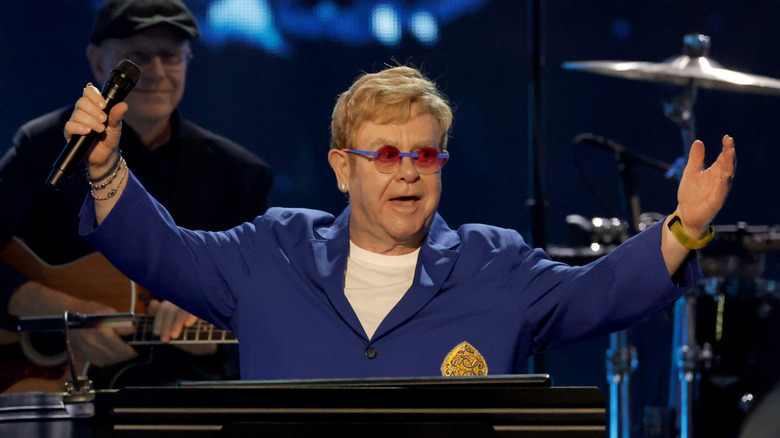
The biggest musicians in the world didn't come to the conclusion that they could light up the world with their talent on their own. They had rock idols who forged a path that sparked recognition and inspired them on their path to success. Sometimes, those powerhouse acts strode ahead of the musical champions who'd established the blueprint, becoming more successful than the guiding lights that led them to the stage in the first place. And when they've met the idols they've surpassed and even help them a little along the way? Well, that can be a bit awkward.
Is it a matter of ambition, luck, or just plain hard work that leads a performer to a higher spot on the ladder of success than those who gave them a blueprint to follow? Maybe it's a combination of all three, with a bit of proper timing thrown in to stir the pot. Whether it's a gold-dust woman like Stevie Nicks outperforming and outselling her muse Janis Joplin or a piano-pounder like Elton John going far beyond the accomplishments of his admitted idol Leon Russell, the musicians who've garnered more success than the singers and players they admired most are some of the best-known artists in the world of rock 'n' roll.
Stevie Nicks
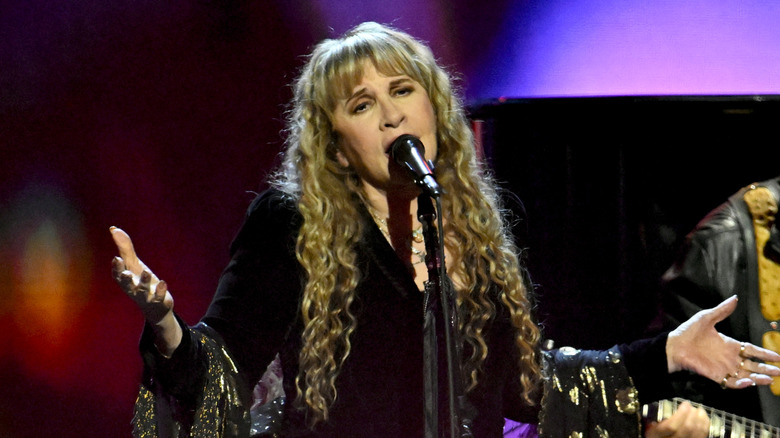
Imagine being the opening act for one of your rock heroes, then outlasting them and soaring to the heights of rock fame. That's how it happened for Stevie Nicks, who's love for Janis Joplin can be seen in some form of Nicks' singing style, stage presence, and all-around rock goddess aura. Though the tragic story of Janis Joplin ends with her untimely death at age 27, it was also close to the age Nicks was when she was just starting to rock with Fleetwood Mac, a move that altered her destiny and made her a far greater success than the singer she idolized.
As a fledgling rock star in the '60s, Nicks took a whole slew of cues from one of her favorites, the daring Janis Joplin. Nicks' DNA as a performer has so many hallmarks of Joplin's wild child persona, it's more like a family resemblance than a case of musical cloning. Nicks even had the dream job of opening for her idol while sharpening her chops in San Francisco as part of her early band, Fritz. However, Nicks was yelled off-stage by Joplin, an incident which the singer considers an "honor" (via American Songwriter).
While Joplin became a legend and an inspiration for many musicians even after her death, Nicks' success exploded, both with Fleetwood Mac and in her ongoing her solo career. After selling millions of albums and touring practically non-stop for decades, Nicks has become a legend in her own right.
Billy Idol
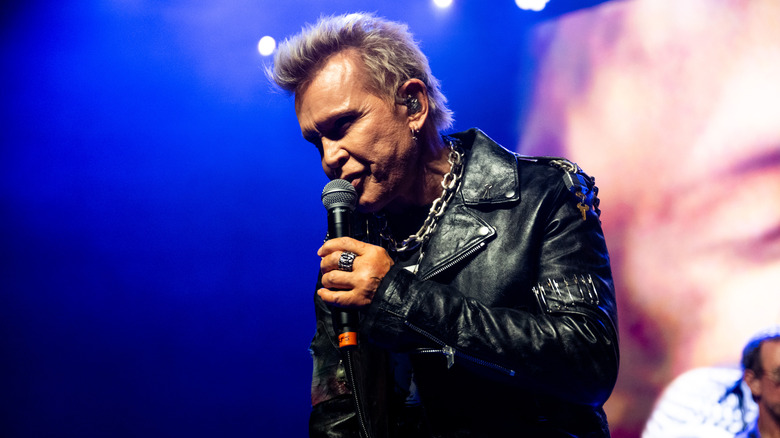
Billy Idol and The Sex Pistols were essentially peers in the beginning, establishing a more aggressive form of rock music during the same span of the '70s. Though the preeminent U.K. punk band was the spark that lit the punk rock flame, Idol started as a Sex Pistols fan trying to make his own mark with his hard-hitting unit, Generation X.
Sadly, the break-up of The Sex Pistols in 1978 and the death of Sid Vicious the following year cut the careers of the punk pioneers short. But Billy Idol's waltz with fame was just getting fired up. Generation X dissolved in 1980, and Idol lit out for NYC in 1981 to make his fortune as a solo act. By the following year, he was an MTV staple, giving the fledgling video channel groovy, brooding content that made punk-laced rock accessible to the masses — and danceable, too. Idol even recruited Sex Pistols' guitarist Steve Jones to come along for the ride, playing on Idol's hit "Dancing with Myself" and joining in on a cheeky supergroup called Generation Sex.
Billy Idol's hard living through chemical indulgence culminated in a life-threatening motorcycle accident that nearly resulted in a leg amputation, but the rocker rose from the ashes more than once to resume his ascent. He put 12 songs on the Billboard Hot 100 between 1982 and 1990 — three of those landed in the top 10, with one reaching the No. 1 spot, and he's still rocking stages and rattling cages more than 50 years after he started, outrunning the Sex Pistols' notoriety by a wide mile.
Joan Jett
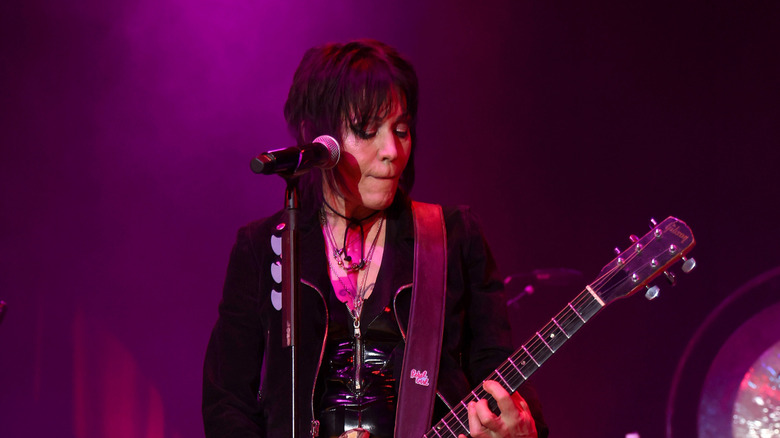
Joan Jett was a leather-clad rocker with serious axe skills leading her own band when she burst into the mainstream in the early '80s — and in fact, she still is. But she started out as the leader of the Runaways, an all-girl rock band that took inspiration from a similar unit called Fanny, featuring a guitarist-singer named Patti Quatro. And it was Patti's sister, fellow guitarist and songwriter Suzi Quatro, who gave Jett a template to follow.
Suzi Quatro was one of the first female acts to show that women could seriously rock rather than being background singers or stage ornaments for male-dominated rock bands. But the rock star who inspired Joan Jett was ultimately more successful in the U.K. She did score a top 10 hit in the U.S. in 1979 with "Stumbling In," a duet with Chris Norman, among other charting singles. She also created the character Leather Tuscadero in the iconic sitcom "Happy Days," a rocker who bore a striking resemblance to the real Quatro.
Jett adopted much of Quatro's image, from her leathers to her shag haircut to her commanding, high-energy stage presence. Then, she took over the airwaves with her band The Blackhearts with a little classic called "I Love Rock N' Roll," which hit No. 1 and hung there for seven weeks. With 10 charting singles, millions of records sold, and a spot in the Rock & Roll Hall of Fame, Jett has zoomed right past Quatro.
Elton John
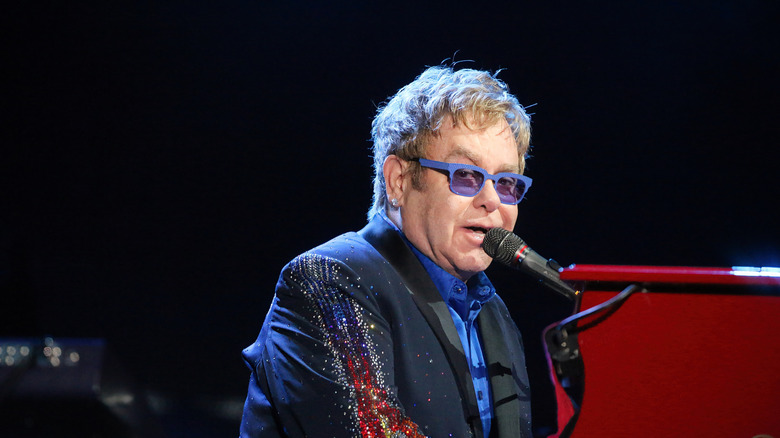
Elton John is one of those massive rock stars whose crossover appeal transcends time. He's sold in excess of 325 million records worldwide, according to his website, and had a staggering 71 singles hit the Billboard Hot 100 chart, nine of which have gone to No. 1. He's also conquered more than just the mainstream music scene, adding film soundtracks and composing tunes for smash Broadway musicals. John is one of a handful of entertainers to attain EGOT status, having won Emmy, Grammy, Oscar, and Tony awards over his multi-decade career. And if all of that weren't enough, he also happens to be Sir Elton John, a CBE recipient who received the honor from Queen Elizabeth II herself.
But in his early days as a rocking pianist, John found great inspiration in another hard-hitting piano player, Leon Russell. John credits Russell's 1971 ballad "A Song for You" as his introduction to the artist, whom he called his "Idol," per The Guardian, one he was able to tour with when John arrived in America. Russell was largely a session player who'd produced and played for such massive acts as Bob Dylan and the Beach Boys; he also happened to have George Harrison, Ringo Starr, and John Lennon as guest players on his first solo album.
Despite his presence as a journeyman musician, Russell's solo career never caught fire. John was able to lend his considerable star power to a shared project with Russell, 2010's "The Union," in hopes of reigniting his idol's career. Russell died in 2016 at age 74, never having achieved a fraction of John's success.
Bruce Springsteen
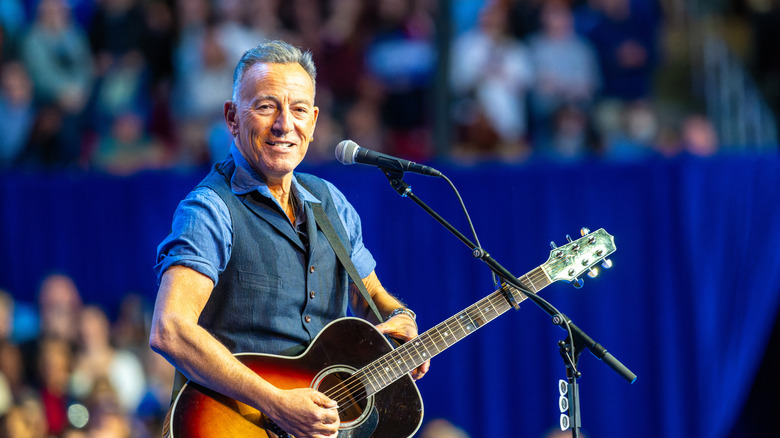
Bruce Springsteen credits Bob Dylan as an influence and an inspiration, driving him to become a musician with a street-poet soul. The two mega-stars' paths have crossed a few times in the years since both became massive musical figures, a fun overlap that gives music fans a thrill. But in the arena of material success, Springsteen has far outdone his idol, and with a smaller body of work.
With both artists amassing enormous devoted followings during their decades-long careers, Springsteen's eclipse becomes apparent when you work the numbers. The Bob Dylan Center says Dylan has released 50 albums, translating into 125 million records sold; Springsteen's much smaller 21-album oeuvre has moved more than 150 million records as of 2021. The Boss has also racked up a whopping 20 Grammy awards out of 51 nominations, to Dylan's still-amazing 10 wins and 38 nominations. When Dylan sold his back-catalog rights, it generated $200 million for his masters and between an estimated $300 million to $400 million for his publishing rights; Springsteen's lesser catalog of masters netted him $500 million. And when it comes to overall net worth, Dylan's six-plus decade career has brought him to an estimated net worth of $500 million overall. While that's a sizable haul, Forbes estimates Springsteen's fortune at a whopping $1.2 billion and growing.
Both artists are still actively recording and touring, so there's always a chance Dylan could soar above The Boss someday. But considering how long it's taken for the two to achieve their respective profiles, a flip-flop isn't likely to happen.