

5 Rock Songs From 1962 That Sound Even Cooler Today
The year 1962 was pivotal in many respects. In the world of music, rock continued to ascend with acts like Roy Orbison, the Ventures, and Booker T and the M.G.'s releasing innovative songs that would help transform popular music. The distractions were likely welcome, as that year also saw the Cuban Missile Crisis, in which the U.S. and the Soviet Union faced off and took the world to the brink of nuclear war. The Civil Rights Movement also continued to fight for justice, and Marilyn Monroe tragically died. And while those events may or may not have dated 60 years later, the musicians of 1962 managed to create songs that still sound fresh and new today.
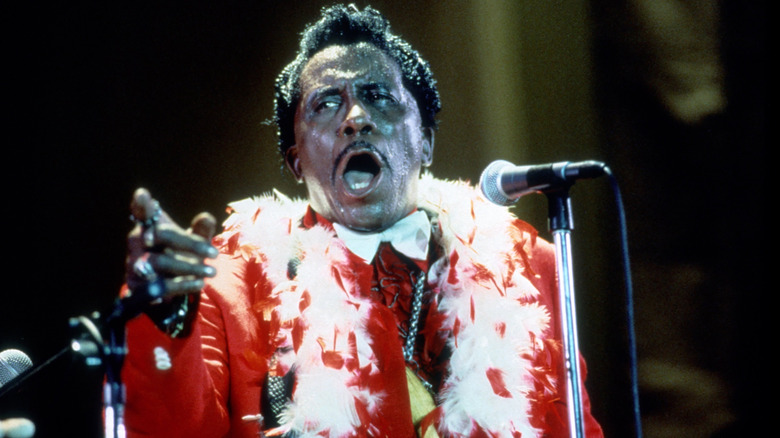
It's fair to say everyone has their own definition of cool. In making our choices, we looked for songs that pioneered sounds and styles that formed the bedrock of today's rock music, and sound all the cooler for it. Take the fuzz box, that now-ubiquitous tool of modern guitarists, which was first used to devastating effect by the Ventures, or the early shock-rocker Screamin' Jay Hawkins, whose spooky sound effects and emotion-drenched vocals still send a shiver up the spine. These and other artists from 1962 gave us the following songs that stood the test of time and still get our feet tapping.
Green Onions — Booker T and the M.G.'s
What started as a jam session at Memphis' Stax Records studio would become a huge hit for the new label and a groundbreaking instrumental for its house band, the racially integrated Booker T and the M.G.'s. "Green Onions" still sounds modern, combining soul, rock 'n' roll, and R&B in one spicy package, and that may be due in part to not being defined by lyrics or a singer, which can sometimes pigeonhole a tune into a specific historic period.
"Green Onions" instead relies on Booker T. Jones' driving organ and Steve Cropper's short bursts of funky, eclectic guitar, all held together by drummer Al Jackson Jr. and Lewie Steinberg, the original bassist, in a slow-burning 12-bar blues structure. The end result is a funky masterpiece that also still sounds contemporary due to how influential the song and the band itself have been. The band's sound helped to define Memphis soul and inspired countless other artists, including the Beatles.
Loneliness — Roy Orbison
Singer-songwriter Roy Orbison built his career on rock ballads about loneliness and the inner turmoil of the heart, such as "Only the Lonely" and "In Dreams." One song from his 1962 album "Crying," called "Loneliness," is distinctive from those hits due to an upbeat tempo that contrasts sharply with its subject matter. The song begins slowly with soft strings and Orbison's signature operatic tenor singing, "Loneliness is the worst thing in the world." But the tune quickly picks up speed and instruments — a twangy electric guitar, blatting saxophone, screaming trumpet — that turn this into a dance track.
The disconnect between the lyrics about feeling isolated and the rollicking music seems to prefigure our modern social-media world in which outward appearances may mask a solitary existence. Likewise, the swirling strings that bookend a high-energy rockabilly-style guitar solo in the middle of the song present an unusual combination that echoes the narrator's tangled emotions. Indeed, he may have sounded believable singing about heartbreak because Orbison indeed had a tragic life that included the early death of his first wife in 1966, among other misfortunes. Still, "Loneliness" stands out for its modern sensibility on the subject.
I Don't Wanta Go — Wanda Jackson
Wanda Jackson, the "Queen of Rockabilly," was a genre hopper as comfortable singing country, blues, and gospel as she was with rock. Her 1962 album "Wonderful Wanda" focuses on traditional country, veers into blues, but also features a tune that defies categorization and sounds as wild today as it did in the early '60s: "I Don't Wanta Go."
Jackson's gritty and growling voice takes center stage in "I Don't Wanta Go," a sultry song that starts with a backing chorus before Jackson enters. It has a lot going on, from trilling strings to an electric guitar so drenched in echo it sounds like a saxophone. Jackson was called a "hurricane in lipstick" by Bob Dylan (via Rolling Stone), toured with Elvis Presley in the mid-1950s, has influenced everyone from the Cramps to the White Stripes, and was inducted into the Rock & Roll Hall of Fame in 2009. With these kinds of rock and roll bona fides, it's little surprise that Jackson's "I Don't Wanta Go," with its unique combination of blues, pop, and early rock, still sounds fresh more than 60 years on.
The 2,000 Pound Bee (Parts 1 and 2) — The Ventures
With its gritty, woolly, blues-influenced electric guitar and breakneck pace, "The 2,000 Pound Bee (Parts 1 and 2)" from the instrumental surf rock giants the Ventures (formed in 1958 by guitarists Don Wilson and Bob Bogle) still sounds contemporary. The single, released in the fall of 1962, helped introduce the fuzz box to the world and would forever change rock guitar after British artists such as Jeff Beck and the Rolling Stones' Keith Richards began to adopt the sound. Likewise, the heavily distorted fuzz box tone would later find a home in garage and punk rock.
While "The 2,000 Pound Bee" was never that big of a hit compared to some of the Tacoma, Washington, band's other tunes, notably "Walk, Don't Run" and "Hawaii Five-O," it's a unique track from a groundbreaking band that helped popularize rock guitar. A lack of vocals in the song helps keep it fresh, and the pioneering use of the fuzz box — now a common rock guitar sound — as well as the song's fast pace work in its favor to make it sound even cooler today.
I Hear Voices — Screamin' Jay Hawkins
Long before Alice Cooper was shocking audiences with his wild stage antics, there was Screamin' Jay Hawkins, the true progenitor of shock rock way back in the late 1950s and early 1960s. Best known for his '50s hit "I Put A Spell On You," the eccentric artist's shows included a range of macabre props from a skull atop a staff to coffins, and produced some of the wildest rock 'n' roll ever recorded. And perhaps the most intense was his "I Hear Voices," released in February 1962.
Hawkins moans, growls, shouts, and screams, among other vocalizations, over an organ, electric guitar, and a drum beat that sounds like a rattling window. Added to this are more screams and chatterings of a background singer. It's a gorgeously strange song held together by Hawkins' forceful baritone. It bears repeated listens and, despite being a product of 1962, still sounds eternal.