

Rock Legends With Zero No. 1 Hits
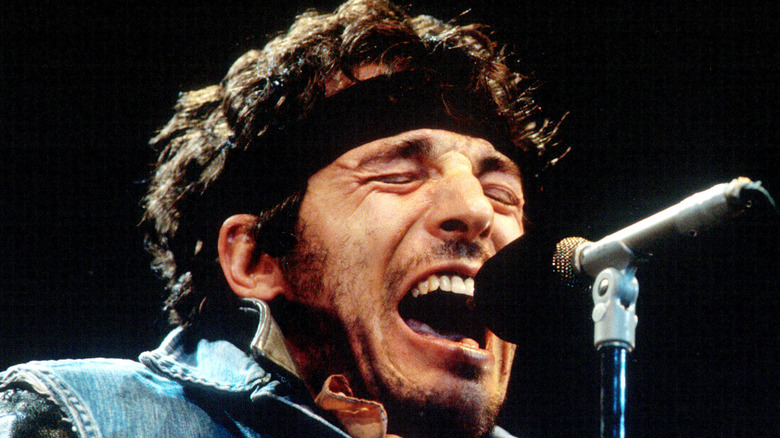
Some of the most famous and important rock 'n' roll acts of all time enjoy that status and adulation despite having never checked off one very monumental career milestone: a No. 1 hit single. There are many ways to define rock-star success. Most everyone regarded as a pillar of classic rock has been inducted into the Rock & Roll Hall of Fame, sold millions of records over the years, played to packed arenas and stadiums night after night, and watched as their most memorable and resonant songs helped form the foundation of the genre and the playlists for classic-rock radio stations. And during rock's zenith of cultural and commercial importance in the latter third of the 20th century, numerous artists did take one of their singles all the way up the pop chart to the top slot — but not all of them.
The reasons for how this one chart-topping achievement passed by so many significant rock acts are many. Some bands were more album-oriented than others, a few didn't really care about singles, others found their popularity in other ways, and many were just unlucky. Here then are the most objectively and massively famous and vital rock stars that never had a No. 1 hit.
Tom Petty
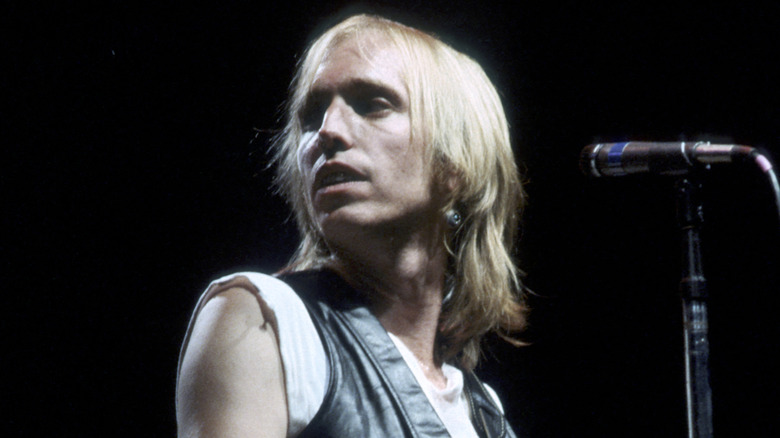
Tom Petty wasn't a fan of modern music, but he certainly helped influence and shape it. With a vocal style somewhere between a warble and a wail with a drawl indicative of his Southern rock sensibilities, Petty combined old-fashioned, straight-forward rock 'n' roll with arena rock and blues. Over his career, he made countless anthems that still get plenty of play decades after their creation.
With his consistent backing band The Heartbreakers, Petty recorded 13 studio albums and released three solo efforts. Either with his band or without it, Petty notched 16 hits on the Top 40. Among those are enduring smashes that span the late '70s to the early '90s, like "Don't Do Me Like That," "Free Fallin'," and "You Don't Know How It Feels." The highest-charting tune of Petty's life was a collaboration: "Stop Draggin' My Heart Around" featured The Heartbreakers as well as Fleetwood Mac's Stevie Nicks on vocals. In September 1981, it made it up to No. 3, narrowly missing the top spot.
The Grateful Dead
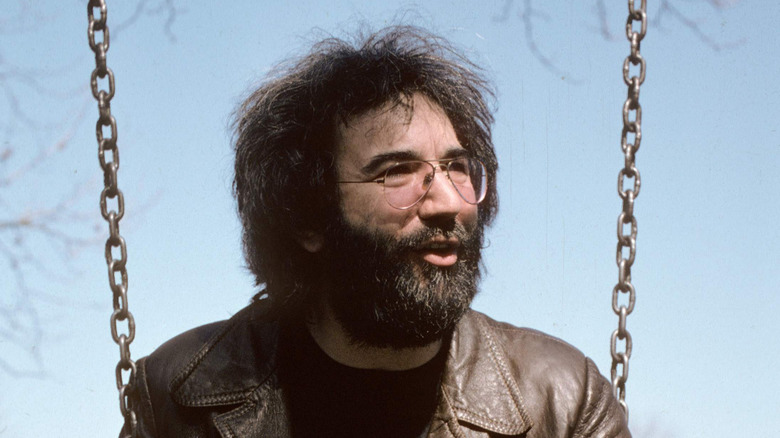
The Grateful Dead accomplished what very few other bands in rock history ever did: It established a subculture. The band's exploratory, progressive, and improvisational sound made rock 'n' roll into a free-wheeling affair. From the mid-1960s until the mid-1990s — when the band fractured after the death of leader and founder Jerry Garcia — it was almost always touring, with its peaceful army of "Deadheads" in tow. This was a group to experience live, and so it was never a big mover of recorded media. It only ever achieved gold status for one LP, "Ladies and Gentlemen... The Grateful Dead," and went quadruple platinum with the 1974 collection "Skeletons from the Closet."
Nothing on that best-of album could be considered a hit single. Many die-hard Grateful Dead fans may not know that the group was technically a one-hit wonder. The Grateful Dead took only six singles onto Billboard's Hot 100 pop chart, and all but one languished in the bottom half. In 1987, more than 20 years into its life, The Grateful Dead finally scored its first and only Top 40 hit: "Touch of Grey" peaked at No. 9, and that's the closest the band ever got to the top position.
Jimi Hendrix
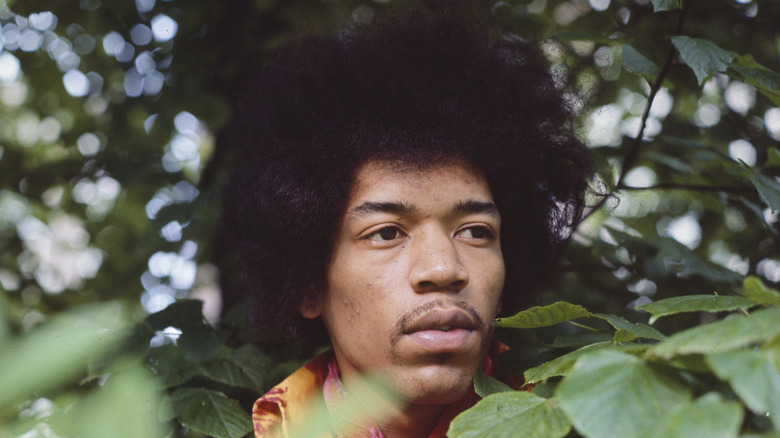
Jimi Hendrix's talent as a guitarist and impact on rock music are undeniable. From lighting his instrument on fire at the Monterey International Pop Festival in 1967 to a scorching rendition of "The Star-Spangled Banner" at Woodstock in 1969, Hendrix's big moments are some of rock's biggest moments of the '60s, too. He came to a place of such prominence as an unparalleled guitarist as well as a composer, finding an audience with originals like "Purple Haze," "Voodoo Child," and "Foxey Lady."
Hendrix died in September 1970, making his career relatively brief but also prolific. Sometimes credited to his trio the Jimi Hendrix Experience and sometimes just as a guitarist alone, Hendrix starred on more than a handful of studio albums released between 1967 and 1971. Those LPs helped generate a wealth of singles, but most of them flopped. Of Hendrix's seven songs that appeared on the pop chart, only one of them got into the Top 40. He is actually a one-hit wonder by that metric, as "All Along the Watchtower," a cover of a Bob Dylan song, is his only track to make it up to No. 20 in 1968.
Creedence Clearwater Revival
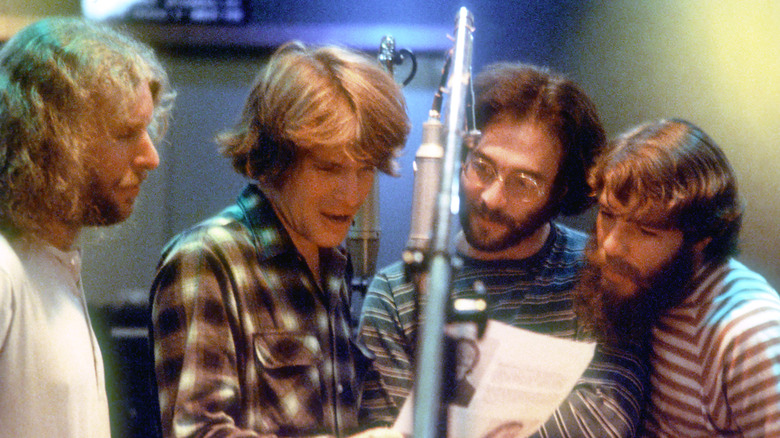
Creedence Clearwater Revival was objectively one of the most popular rock acts of the late 1960s and early 1970s. Propelled by the poetic and varied songs and impassioned vocals of John Fogerty, six of the band's seven swamp rock-filled studio albums made it to the upper reaches of the Billboard album chart, and all seven LPs went at least gold. Between 1968 and 1973, Creedence managed to churn out one hit single after another with remarkable regularity. The band reached the Top 40 nine times in that span, and a few of those songs just barely didn't top the pop chart.
Creedence Clearwater Revival actually narrowly missed the No. 1 spot so many times that it set a record. It's the act that scored the most No. 2 hits without ever going to No. 1. Five times, CCR had to settle for the runner-up spot: "Proud Mary," "Bad Moon Rising," "Green River," and double A-side singles "Travelin' Band" / "Who'll Stop the Rain" and "Lookin' Out My Back Door" / "Long As I Can See the Light" all stalled too early.
Led Zeppelin
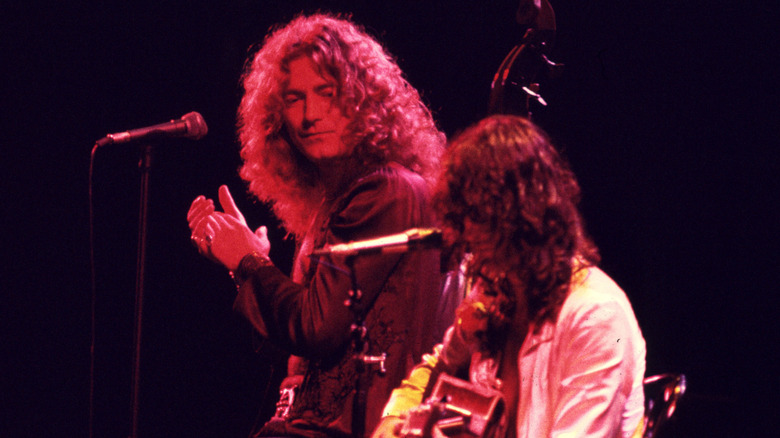
With more than 112 million albums sold just in the United States, Led Zeppelin is far and away the top-selling hard rock band of all time. During its 1968 to 1980 heyday and well beyond, fans were transfixed by the group's unique poetic lyrics about the dark, mysterious, and fantastical brought to life by Robert Plant's almost supernaturally high and emotive voice. And of course, the crunchy, hard-charging, and blues-based riffs of Jimmy Page helped.
So many of the band's individual tunes, singles, and album cuts became classic rock staples, but Led Zeppelin was only a middlingly popular singles act. It's surprising that an act so demonstrably successful made it to the Billboard Top 40 in the U.S. only six times. Well-known pieces like "D'yer Mak'er," "Immigrant Song," and "Black Dog" squeaked into the Top 20, while Led Zeppelin's towering achievement and most famous tune, "Stairway to Heaven," wasn't initially released as a single, at the behest of the group. The only time Led Zeppelin truly had a shot at a No. 1 single was with "Whole Lotta Love." In January 1970, it peaked at No. 4.
Pat Benatar
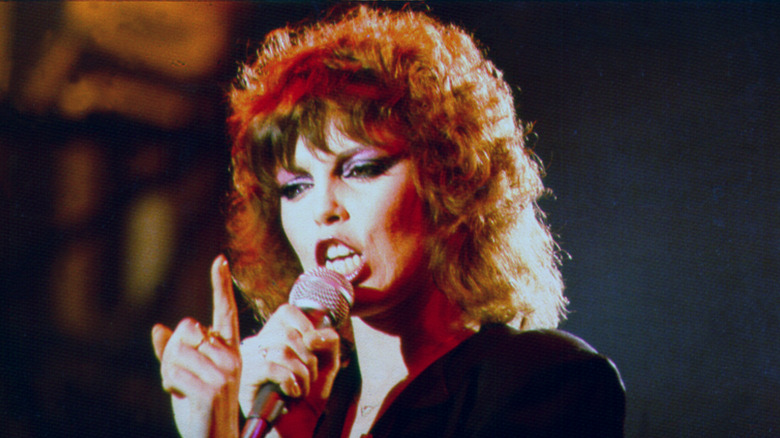
One of the most visible solo rock stars of the 1980s, Pat Benatar was a consistent and objectively successful mainstream musical presence throughout the decade. Between 1981 and 1990, Benatar was nominated for the Grammy Award for best pop vocal performance, female, once and best rock vocal performance, female, eight times, winning once for an album and three times for three of her most noteworthy hit singles: "Fire and Ice," "Shadows of the Night," and "Love Is a Battlefield." The latter was certified gold for sales of 500,000 copies, as was "Hit Me With Your Best Shot," the song that started Benatar's run of hits back in 1980.
By the end of the 1980s, the vocal powerhouse had powered her way into the Top 40 15 times. While four of those tracks creeped into the Top 10, Benatar never did go up to the No. 1 slot. She came close, however, in 1983 and 1985, when "Love Is a Battlefield" and "We Belong" both topped out at No. 5, respectively.
Talking Heads
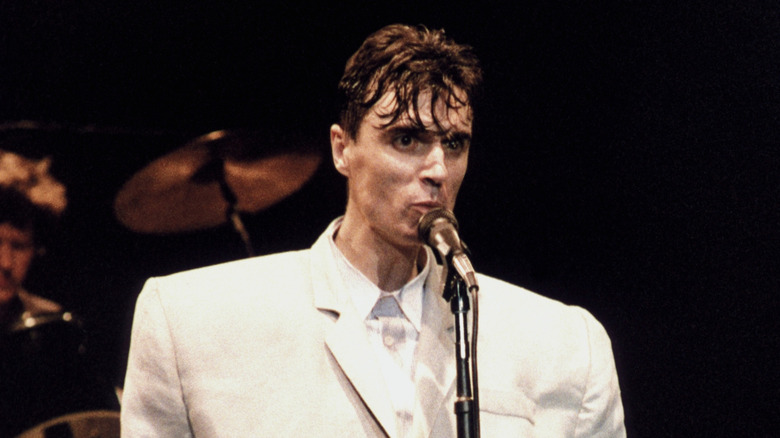
For Talking Heads, critical praise and robust album sales didn't translate into very many true pop hits. Between 1977 and 1988, Talking Heads put out eight studio albums, and all of them went gold, platinum, or multi-platinum. The group made artsy and exploratory music that pushed the boundaries of rock and presented it in a performance artist kind of way. Mainstream success was always going to be hard to come by for Talking Heads.
And yet Talking Heads managed to make it almost to the top on a few occasions, judging by the band's minor presence on the Hot 100. The act reached the Top 40 with three singles, all of them years apart. "Take Me to the River" hit No. 26 in early 1979, for example, and "Wild Wild Life" got to No. 25 in 1986. In between, Talking Heads veered the closest to No. 1 as it would ever get when "Burning Down the House" climbed up to No. 9.
ZZ Top
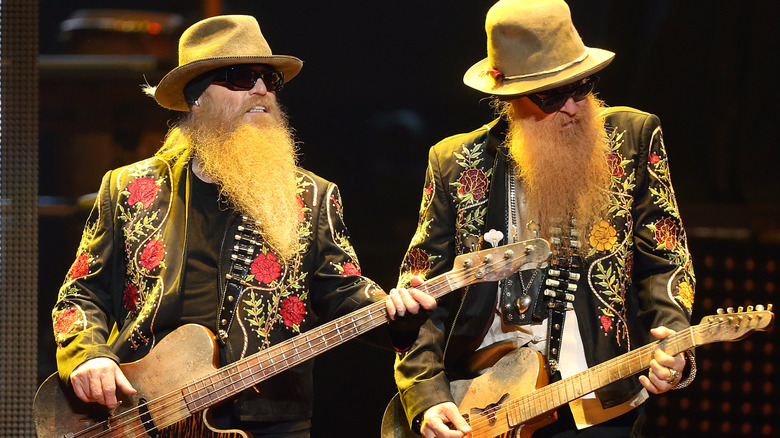
Across multiple distinctive eras with various adaptations and evolutions, ZZ Top has always uncannily and cleanly blended the electric guitar prowess and swagger of hard rock bands with traditional American blues. That unique and lively combination made ZZ Top one of the most recognizable and consistently selling bands of all time. The trio broke through in the early 1970s, and while its albums moved, its singles didn't fare so well commercially. "Tush" bottomed out at No. 20 on Billboard's Hot 100, "La Grange" managed to get to No. 41, and nothing else fared much better.
In the 1980s, when the band adopted a slicker and more heavily produced sound — and made a bunch of videos for outlets like MTV that emphasized band lore and visuals such as long beards, sunglasses, and spinning guitars — ZZ Top's songs scored better spots on the Hot 100. And yet, none ever made it to No. 1. "Gimme All Your Lovin" and "Velco Fly" squeezed into the Top 40, and "Legs" and "Sleeping Bag" both got as high as No. 8, which is where ZZ Top topped out.
KISS
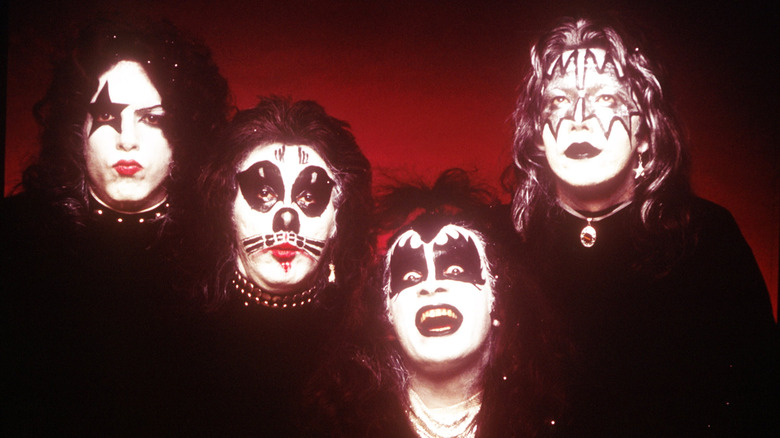
KISS traded in the kind of big, bombastic songs that could fill arenas and stadiums and invite singalongs. In the 1970s and into the 1980s, the hard rock band devoted its energies to its stage show, which featured light effects, lots of fake blood, and the four musicians wearing costumes and makeup to create science-fiction-style characters. Its songs served that entertaining rock 'n' roll extravaganza, and often they were about rock 'n' roll itself — or the tried-and-true rock 'n' roll subjects of partying and captivating women. (For example: "Detroit Rock City," "Rock and Roll All Nite," and "Hard Luck Woman," respectively.)
So, while KISS played a lot of shows and sold millions of copies of its albums, its focus was never on the pop chart. Strangely, when the group strayed from its signature style of fun, loud, and grimy rock, that's when it did its best in the singles market. "Beth" is a strings-backed soft song that puts non-frontman and drummer Peter Criss on vocals without any of the other band members. KISS' biggest hit, "Beth," was a No. 7 smash in 1976, one spot better than the band's 1990 comeback ballad "Forever." The act's third-best-performing pop chart entry was "I Was Made for Lovin' You," a disco song that danced to No. 11. All told, KISS never placed a single in the Top 5, let alone No. 1.
Lynyrd Skynyrd
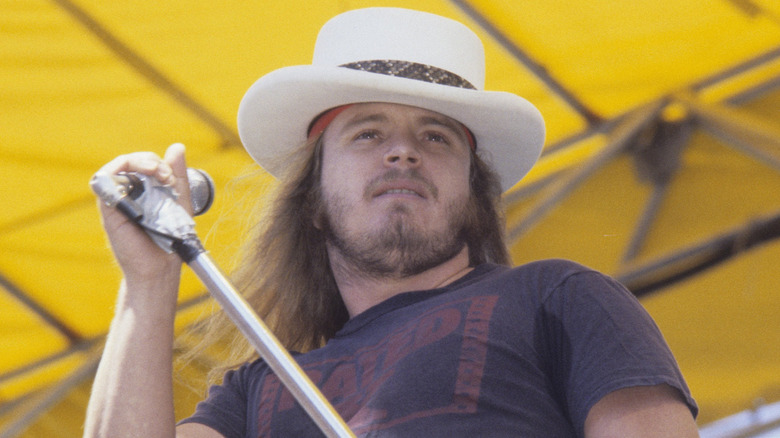
It takes about 12 songs to tell the story of Lynyrd Skynyrd, a classic-rock stalwart act and the one band with a sound that can define the gritty, groovy, and punchy genre of Southern rock better than any other. The large band out of Florida offered something different to '70s hard and arena rock fans, and it even mustered the strength to regroup after a plane accident in 1977 that claimed the lives of three of its own, including guitarist Steve Gaines and vocalist Ronnie Van Zant. Lynyrd Skynyrd's music was strong enough to endure, although few of its tunes made much of a dent on the pop chart in its first era.
Just half a dozen Lynyrd Skynyrd songs ever graced the Hot 100, and of those, only three made it up to the Top 20. The epic "Free Bird" soared to No. 19 in 1975 and no higher, while "What's Your Name" did a little better, reaching No. 13 in March 1978, five months after that deadly crash. Lynyrd Skynyrd's biggest hit was ultimately its first one, but it wasn't a No. 1: "Sweet Home Alabama" peaked at No. 8 in October 1974.
Van Morrison
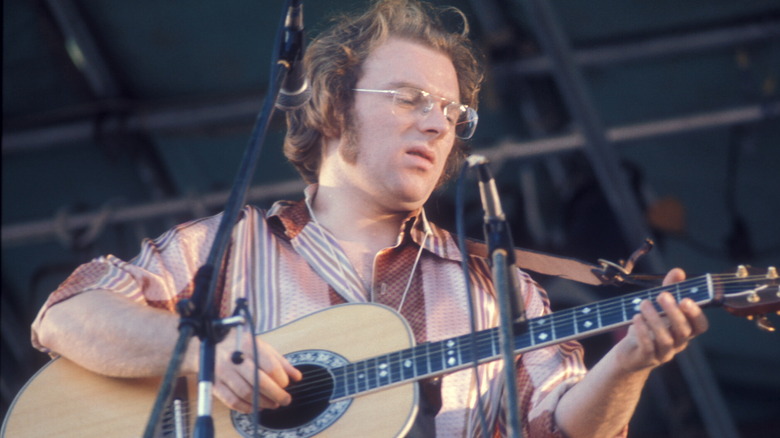
Recorded and unleashed right after Van Morrison departed his band Them, "Brown-Eyed Girl" was an auspicious debut to a long and acclaimed solo career. The way that the 1967 song has never really left the airwaves or the collective consciousness for going on six decades now, one would think that Van Morrison's sweet and rapturous uptempo love song would've been a No. 1 hit in its day, but it wasn't. With that said, "Brown-Eyed Girl" did sell 1 million copies and has been streamed on Spotify more than 1.4 billion times. And with an excess of 13 million spins, it's among the most-broadcast songs ever on terrestrial American radio.
Oddly, "Brown-Eyed Girl" isn't Van Morrison's biggest hit in terms of pop chart accomplishments. In fact, Morrison never fared all that well on the Hot 100. His works appeared in the Top 40 just five times, and never after 1971. "Wild Night" only made it as high as No. 28, while "Brown-Eyed Girl" parked itself at No. 10, one spot below what is technically his largest smash, "Domino," which peaked at No. 9.
Bruce Springsteen
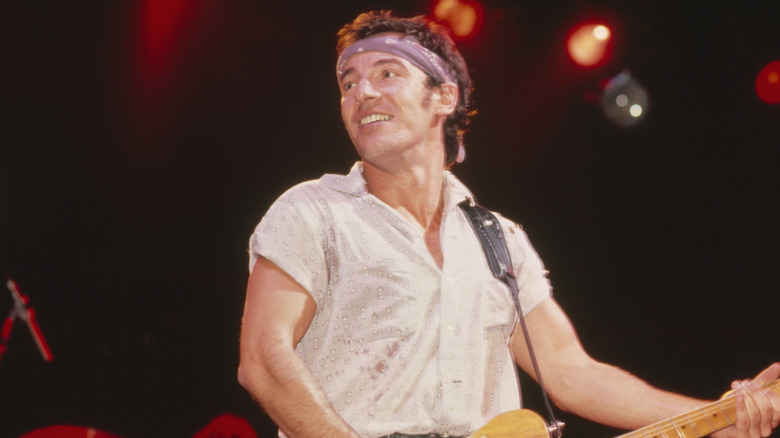
In the late 1970s and early 1980s, Bruce Springsteen was a very well-known musical figure. His folky, introspective, and poetic populist pop-rock appeared on well-received albums like "Darkness on the Edge of Town" and "The River," both of which eventually went multi-platinum. He was also nominated for Grammy Awards on multiple occasions. But in 1984, Springsteen went from mere rock star to one of the most successful musicians on the planet.
Before the release of the "Born in the U.S.A." album, Springsteen (and the E Street Band) had made it to the Top 40 with just four singles, including the No. 5 hit "Hungry Heart." However, "Born in the U.S.A." generated a whopping seven singles that all headed straight into the Top 10 throughout 1984 and 1985. As well as they sold — and helped encourage 17 million people to purchase the LP — none of those Bruce Springsteen songs that sound even cooler today could get to No. 1. Not "Glory Days," not "Cover Me," not "I'm on Fire," not the title track, and not "Dancing in the Dark." That song did the best of them all, though, peaking at No. 2 in the summer of 1984.
The Who
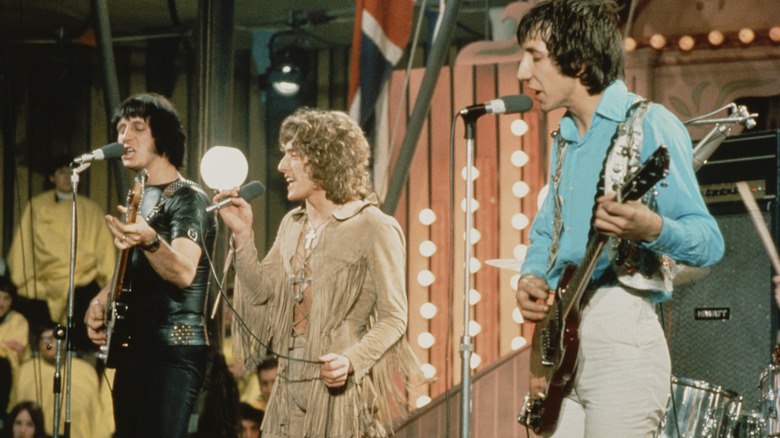
The British Invasion dominated mainstream pop music for a good part of the 1960s — so many U.K. rock bands with lots of hooks scored huge hits on the U.S. pop chart in that decade (and beyond). Groups including The Beatles, The Rolling Stones, The Animals, The Dave Clark Five, and Herman's Hermits all captured the No. 1 spot on the Hot 100 at least once. Conspicuously missing from that list is one of the best-selling and longest-lasting of all the bands once associated with the British Invasion: The Who.
At one point recognized by Guinness World Records as humanity's loudest act, The Who was always a bit harder and noisier than its brethren, and it also outlasted most of its peers. The Who actually charted more singles in the Top 40 in the 1970s than it did back in the 1960s, but not one song from any decade could take The Who up to No. 1. The band cranked out hits from 1967 all the way to 1982 but only landed in the Top 10 once: Its 1967 single "I Can See for Miles" went to No. 9.