

The Best Slow Songs Of The '80s Are Beyond Dreamy
The '80s may have rocked fiercely with its metal bands and new wave movement scorching sound systems and airwaves, but when it came to slow songs, the artists of the era had the magic. The elements of romance and longing captured in the slow songs of the decade gave fans of a gentler genre plenty of dreamy music to dig into. These tunes provided a perfect excuse to drop down a gear or two and slip into an easier pace, whether you were dancing with your sweetheart, singing along with your homies, or simply contemplating the nature of love.
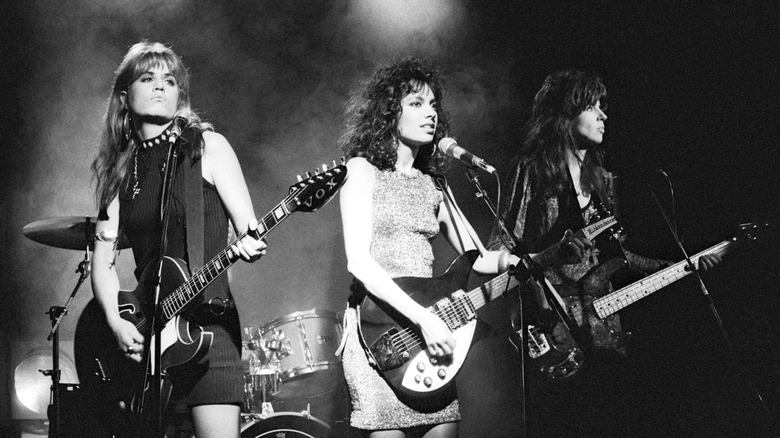
Our vision of dreamy slow songs from the '80s crosses genres and sounds, offering everything from the blue-eyed soul of Spandau Ballet's "True" to the Beatles-style carousel stylings of The Bangles' "Eternal Flame." These mellow tunes showed off the artists' skill at dialing down the tempo without missing a beat. While most of the songs we chose were big on both the charts and MTV, a few are one-hit wonders that made a lasting impression. There's even a deep cut from Prince and the Revolution with a whisper-to-a-scream electro-groove performance that still feels surreal whenever we queue it up.
True — Spandau Ballet
Spandau Ballet was the smooth-rock alternative to Duran Duran, a grooving unit that took a more sophisticated approach during the '80 Brit Pop wave. The band's biggest hit, "True," made an old-school romance wave in the New Romantic sea when it showed up in the summer of 1983. It was a classy, low-key counterpoint to the noisier material hitting the airwaves, and it became one of the silkiest slow jams of the whole decade.
Anyone who saw the iconic video could tell from the sleek suits and the sax solo that this was cosmopolitan pop at its finest. Vocalist Tony Hadley delivered a mature, soulful performance, backed by a foursome who locked into a groove and didn't let go. "True" broke through to the mainstream in a way that early peers like Roxy Music couldn't quite manage. Maybe it was due to the tribute Spandau Ballet paid to its classic soul influences, even mentioning Motown legend Marvin Gaye in the lyrics. The swirl of backing vocals and plinking guitars cast a spell that's impossible to resist.
Fans of soothing, soulful sounds responded by driving "True" to No. 4 in October 1983. Spandau Ballet would attempt a similar feat with future singles, but none captured the slow-moving allure of this mesmerizing piece of '80s memorabilia. Almost a decade later, it would reappear as the sonic backdrop for P.M. Dawn's No. 1 single "Set Adrift on Memory Bliss," proving the tune's dreaminess had staying power.
Eternal Flame — The Bangles
As an all-female rock band, The Bangles became known for their energetic tunes that went note-for-note with songs from similar acts like The Go-Gos and Bananarama. But in 1989, the band took a sharp left turn into easy listening territory with a chiming ballad called "Eternal Flame." It expanded the group's catalog with a slow-moving masterwork that explores spiritual connection and romantic longing in equal measure. That layering gives this affecting ballad deeper meaning, lifting it from the status of a simple love song and turning it into a soulful pop-music triumph.
The Beatles-esque instrumentation and melodic turns call to mind classics like "Strawberry Fields" and "Something," tapping into a slow-song pedigree established by the greats. Susannah Hoffs' vocals aren't pitch-perfect, generating palpable vulnerability. Swells of strings take things into the cinematic realm. Her voice crackles with sincere emotion, the perfect complement for keeping the song's earnestness in frame. Hoffs even questions her own experience as she sings, wondering, "Do you feel the same? / Am I only dreaming? / Or is this burning an eternal flame?"
"Eternal Flame" became The Bangles' second No. 1 song, a stark contrast to its other No. 1, the groove-laden "Walk Like an Egyptian," which had a music video that helped define MTV's '80s era. Sadly, that success couldn't keep the band together, and its members split shortly after the song reached the top. Thank goodness they didn't quit before they created this dreamy gem.
Tender Love — Force M.D.s
One of the most inescapable slow songs of the mid-'80s didn't come from a major player in the pop world, but a lesser-known R&B group that experienced a major breakthrough. Force MDs was an East Coast crew that entered the scene when hip-hop was still finding its place in mainstream music. With help from hitmakers Jimmy Jam and Terry Lewis, the troupe dropped "Tender Love," a slow song custom-made for romantic moments and low-light situations. The keyboard-heavy arrangement and chill-inducing harmonies provided a candlelit soundscape that made the tune feel timeless.
The tune got a major boost as part of the soundtrack for the 1985 musical film "Krush Groove," which starred R&B and rap luminaries Sheila E., Run DMC, and Kurtis Blow, among others. "Tender Love" slow-grooved its way into the Billboard Top 10 in 1986, which seemed an auspicious turn for the group. But despite the promising crossover appeal of "Tender Love," Force MDs' future success was restricted to the R&B charts. Even as one-hit wonders, the group managed to craft a lovely vocal piece that bridged the gap between old-school harmony groups and the up-and-coming hip-hop scene.
Force MDs rolled out the carpet for Boyz II Men and other R&B vocalizing group in the years that followed. In an era of power ballads that changed rock music forever, "Tender Love" reminded '80s listeners of how enchanting a slow song executed with a delicate touch could be.
The Beautiful Ones — Prince and the Revolution
The conflicted love song "When Doves Cry," which held the No. 1 spot the longest in 1984, and the dance fest "Let's Go Crazy" may have been the No. 1 hits that made "Purple Rain" an '80s institution, but Prince and the Revolution offered one of the most haunting slow songs ever pressed into vinyl with "The Beautiful Ones," a deep cut that percolates with eerie longing and shows just how expansive The Purple One's skill for evocative songwriting really was. From the spare electronic-heavy arrangement to the slow burn that rises into a full inferno by the end of the song, this could be the most stunning and memorable slow song of the decade.
Prince puts on his finest falsetto here, bringing urgency to the shiver-worthy cries of "Baby, baby, baaaaaby" that pepper the verses. He testifies with a supreme high note while confessing, "The beautiful ones, you always seem to lose," before screeching, "Do you want him / Or do you want me? / 'Cause I want you." Without warning, the song shifts from delicate pleading to full-throated begging. If you don't feel the shift in your nervous system, you may need a check-up to see if your heart is in proper working condition.
"The Beautiful Ones" was never released as a single, though it was one of the best-selling songs after Prince's death in April 2016. Even without that status, it's an exemplary '80s slow song that gives dreamy longing tones and romantic nightmare fuel in the best way possible.
Drive — The Cars
Who would've guessed new-wave rockers The Cars could pull off a ballad as exquisite and aching as "Drive"? Ric Ocasek and his band of merry post-punk players had become famous for their quirky pop-rock tunes, with radio fodder like "Let's Go" and "Shake it Up" presenting zippy synth riffs set against crunchy guitars and Ocasek's wobbly warble, a voice that made the band sometimes seem like a novelty act. The punchy mix made perfect sense in the neon-drenched '80s.
But then, bassist Benjamin Orr took the wheel (and the mic) on "Drive," and The Cars cruised headlong into slow song stardom. The lush electronic soundscape and subdued rhythmic hits turned the tempo and the volume down to a hypnotic hush, giving Orr's pleading vocals all the room they needed to shine. Orr had sung the band's breakthrough 1979 tune"Just What I Needed," but that performance sounded like a Ric Ocasek impersonation; "Drive" let Orr show off his superior control and soothing tone. It turned the song into a slow-pulsing fever dream that cracked hearts wide open with the line, "You can't go on thinking nothing's wrong, but now / Who's gonna drive you home tonight?"
This ballad gave fans a new appreciation for just how far The Cars could stretch its trademark sound, turning into a No. 3 single in 1984 and becoming the band's biggest hit. It also gave lovers of slow songs a gorgeous art piece to add to their mix tapes.