

Iconic Moments That Changed Rock History Forever
Of all the monumental innovations, performances, songs, and albums that comprise rock 'n' roll's history, a small collection of specific moments shaped the genre and changed it forever. Hailing from the early '50s, rock music is about 75 years old now, and it's evolved and expanded because of the contributions of hundreds, if not thousands, of influential figures. Among them, certain individuals and their acts stand out as the most important, from the Beatles to Elvis Presley to the Ramones. Their actions created and defined rock 'n' roll, pushing it forward into new realms of creativity, popularity, and cultural influence.
The moments that have shaped rock 'n' roll history have come in many forms. Sometimes, it was a recording session or a TV appearance that started a social revolution. Other times, it was using an instrument or studio technology in a new and exciting way — even if by accident, which is how rock 'n' roll distortion was created. In recent years, the rise of MTV has changed how rock music has been delivered to the masses. No matter how they happened, the following iconic and important milestones permanently changed rock music.
Rocket 88 is recorded in Memphis (1951)
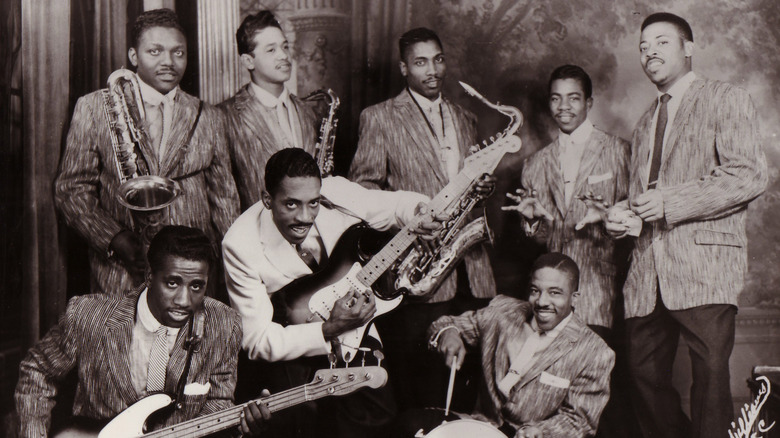
Many foundational concepts came out of what many historians consider to be the first true rock 'n' roll song: 1951's "Rocket 88." It's the first recording that sounds like rock 'n' roll, and it was made by a band that combined blues and R&B with something entirely new. Producer Sam Phillips, who would later help launch Elvis Presley's career, welcomed Ike Turner and his Kings of Rhythm for a session at his Memphis studio. The large band recorded under that name with Turner before saxophonist Jackie Brenston took on vocals for "Rocket 88." Like so many later rock songs — like those that would frame The Beach Boys' story in particular — "Rocket '88" is about a car. It also introduced the very rock 'n' roll idea of distortion, as guitarist Willie Kizart's amp had tumbled from the vehicle earlier that day, creating a fuzzy effect.
Phillips sold the tapes to Chess Records as two different bands: the Rhythm Kings and, for "Rocket '88," Jackie Brenston and His Delta Cats, which didn't really exist. Nevertheless, that first rock song got a new era rolling when it went to No. 1 on the R&B chart. (And soon thereafter, Brenston became the first rock star to leave their successful band to go solo.)
Elvis Presley takes the Stage Show (1956)
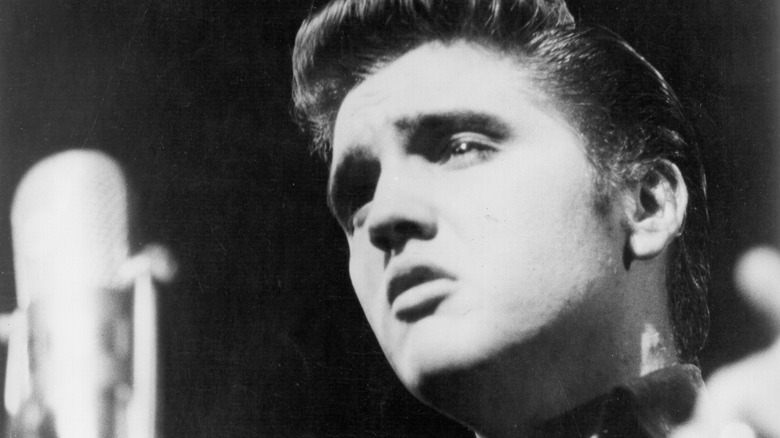
Rock 'n' roll started to pick up steam in the mid-1950s. Fortuitously, that was also when television became a widely adopted technology. As millions of people bought their first TV sets, the networks at the time sought to showcase viewer-attracting talent. For the CBS variety series "Stage Show," that meant booking a rising and charismatic rock 'n' roller named Elvis Presley.
Elvis Presley's story as a public figure and musician began in 1954, when he made his first recordings, and in 1955, when he reached No. 1 on the U.S. country chart with "I Forgot to Remember to Forget." On January 28, 1956, Presley was featured on TV across the U.S. for the first time on "Stage Show," hosted by big bandleaders Tommy and Jimmy Dorsey, aka the Dorsey Brothers. In a moment that felt like a torch-passing from one era to the next, Presley sang "Shake, Rattle and Roll," "Flip, Flop and Fly," and "I Got a Woman." He guested on "Stage Show" a total of six times in 1956, and it's the exposure that helped him cross over to the pop chart. "Heartbreak Hotel" went to No. 1 that year, and Presley's TV slots helped turn rock 'n' roll from an obscure R&B offshoot and Southern phenomenon into a national and international sensation.
The Kingsmen knock out Louie, Louie (1963)
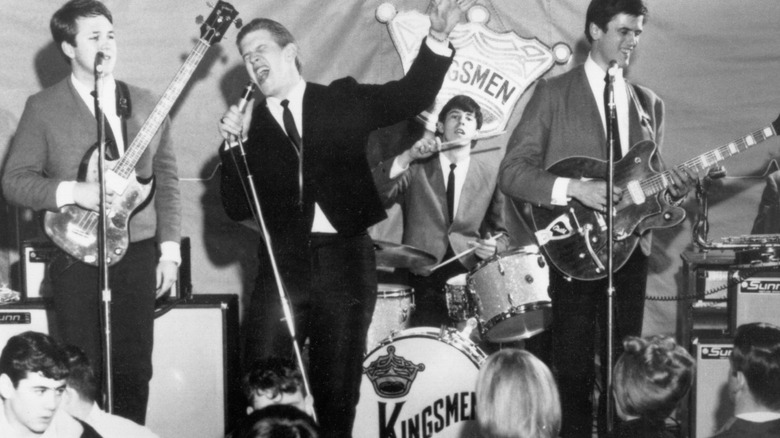
By the early 1960s, rock 'n' roll was segmenting, with some musicians moving away from the country-and-blues-influenced material into something more propulsive and tightly structured but also sloppy and edgy. That became known as garage rock. After all, so many bands were the result of friends coming together to learn their instruments on the fly in suburban practice spaces. Few were more influential on that movement than the Kingsmen, which bashed out "Louie, Louie" all at once in a single take in 1963.
"Louie Louie" was a mid-'50s calypso-meets-R&B minor hit by Richard Berry, and the Kingsmen turned it into a template with its transformative rock version of the tale about a lonely sailor. The four-piece Portland band added an extremely catchy riff and motif, a hard-charging drum beat, and playfully tough-to-understand lyrics. The eternal party-starter hit No. 2 on the Hot 100 in late 1963 and also launched a scandal, as it was cited as obscene in Indiana. An authority figure was convinced that the song's lyrics were garbled on purpose because they must have been filthy, and the FBI and other federal agencies had to get involved. Meanwhile, British Invasion bands continued what the Kingsmen started. The joyous and amateurish sound of "Louie, Louie" was revived about a decade later, with the garage sound heard in back-to-basics forms like punk and new wave.
The Beatles perform on The Ed Sullivan Show (1964)
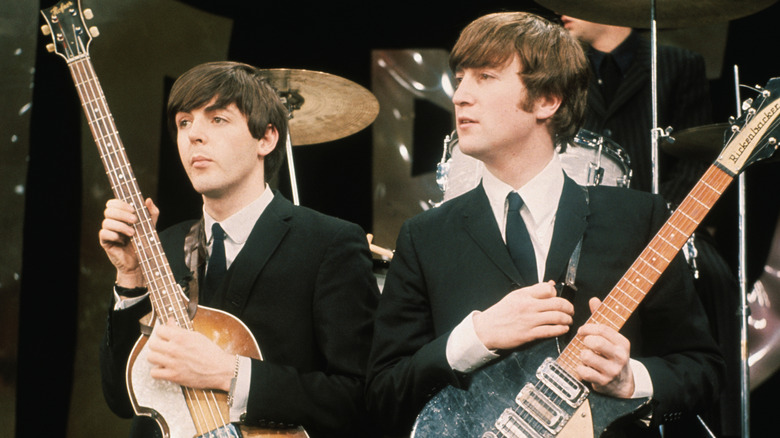
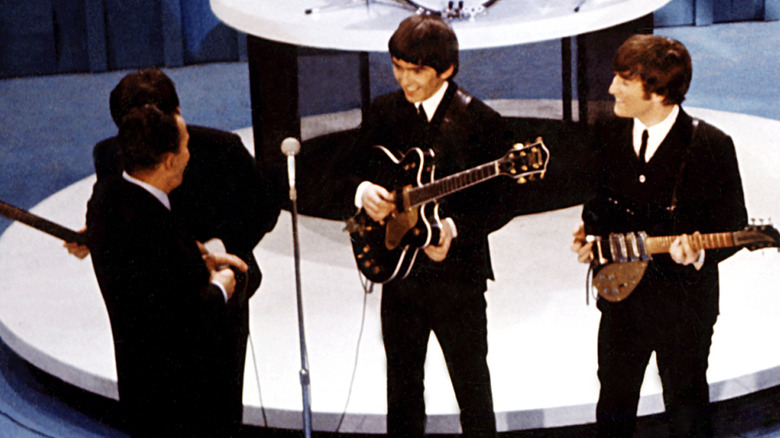
In 1963, the Beatles captivated England with its very catchy and jaunty pop-rock, scoring three No. 1 singles in the U.K. Buzz and airplay increased for the Beatles and crossed the Atlantic Ocean, so when the band made its national American television debut on "The Ed Sullivan Show" in 1964, it was a major cultural event and a coronation of the hottest act in years. On February 1, 1964, in only its third week on the chart, "I Want to Hold Your Hand" hit No. 1 on the U.S. pop chart. The band's management timed its first appearance on the already heavily watched "Ed Sullivan" perfectly: February 9, just over a week later.
The army of newly minted American Beatles fans, as well as those who wanted to see what all the fuss was about, tuned in to the show for what, at the time, was a record for a television audience: 73 million. The Beatles took to the stage to the screams of the studio audience, playing five songs in two segments: "All My Loving," "Till There Was You," "She Loves You," and then "I Saw Her Standing There" and "I Want to Hold Your Hand." So many people experiencing the Beatles at once was a shared and iconic moment, and it sent the band's popularity into the stratosphere. By 1964's end, the Beatles had notched 19 Billboard Top 40 hits, including six No. 1s.
Bob Dylan plugs in (1965)
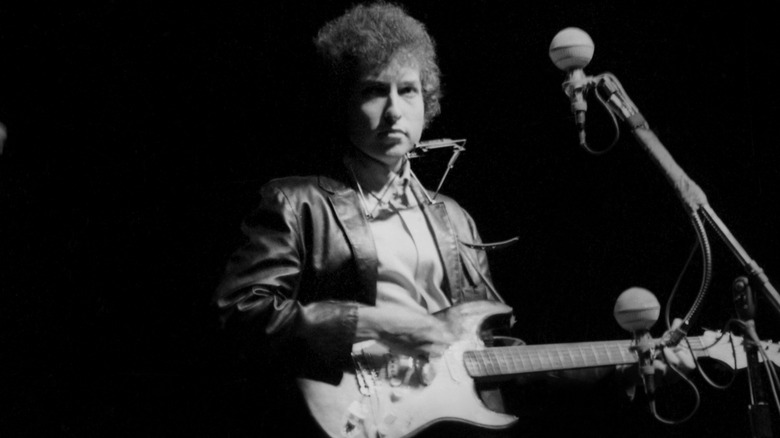
Bob Dylan was such a superstar in the small, tight-knit, and ultra-serious Greenwich Village folk scene of the early 1960s that it was almost inevitable that he'd cross into mainstream music. While his reputation and popularity strengthened throughout the first half of the 1960s, two events from the same week in 1965 — a song release and a live performance of it — solidified the notion that Dylan was a special talent who'd go on to change music, blending rock with folk and becoming a vital voice in the former and alienating proponents of the latter.
Dylan debuted a fuller rock sound with the 1965 single "Like a Rolling Stone," which included organ and electric guitar to go along with his freewheeling free-verse lyrics. He performed it for the first time five days after its release at the 1965 Newport Folk Festival with a full band. Dylan had played that reputable, traditional folk festival before, and fans of his earlier work expected him to give them more of the same. Instead, he unveiled "Like a Rolling Stone," played in public for the first time on an electric guitar. His old fans thought he'd sold out and abandoned them, while the mainstream music world welcomed a new star to the scene. Dylan maybe got some boos and jeers at the festival for what was only three songs of electrified material within a larger set, but he'd go on to be heralded as one of the most important creative forces of the rock era.
The Beach Boys record Pet Sounds (1966)
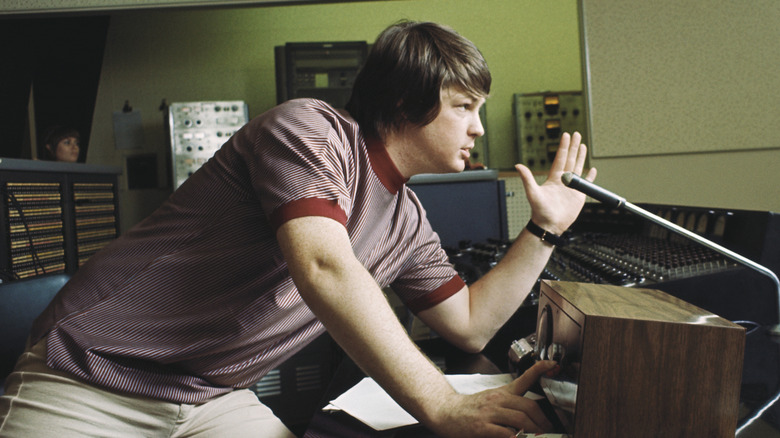
When The Beach Boys burst onto the scene in the early 1960s, it did so with gorgeously crafted pop songs about cars, women, and having fun, such as "Little Deuce Coupe," "Barbara Ann," and "Fun, Fun, Fun," respectively. And then bassist and songwriter Brian Wilson, enduring mental health issues, opted out of touring and playing live with the band to follow his muse and spend his time and creative energies in studios in 1965. Driven by the increasingly complex songs he conceived, Wilson led the writing, arranging, and production on the 1966 album "Pet Sounds."
The LP was so far out, so beyond anything any other guitar-based pop-rock band was doing at the time, that it sent rock into a period of curiosity and invention. "Pet Sounds," with its introspective and intricate, studio-crafted songs like "Wouldn't It Be Nice," "I Just Wasn't Made for These Times," and "God Only Knows," showed the dizzying heights where rock was headed because its musicians were all the more capable and creative. "Pet Sounds" inspired The Beatles to experiment even further than it already was, resulting in parts of the LP "Revolver." It represented a new maturity level for rock music and presaged the development of artsy and progressive rock, too.
The Woodstock Festival offers 3 days of peace, love, and music (1969)
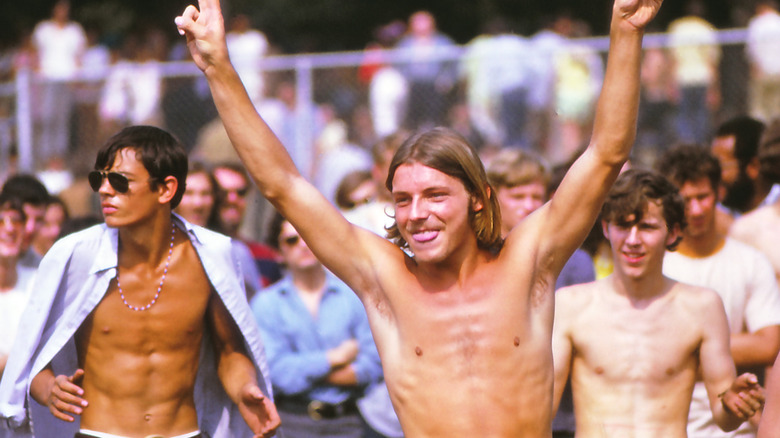
Somehow, Woodstock wasn't the largest music festival ever, but it's definitely among the most important and foundational. It's also the event that defined the countercultural segment of the boomer generation while also bringing together into one spot nearly 400,000 of its members to share its values and to experience, live, many of the most popular and groundbreaking musicians of the fruitful late 1960s.
It's the most iconic musical moment of the whole decade, which is all the more amazing because the Woodstock Music & Art Fair went down over a single weekend in August 1969. Among the huge number of major acts that took the stage at some point were Joan Baez, Santana, the Grateful Dead, Creedence Clearwater Revival, The Who, Jefferson Airplane, Janis Joplin, Sly and the Family Stone, and Jimi Hendrix. The "Woodstock" live double album and accompanying documentary film entrenched the music and its impact in the public consciousness and history, as did the many songs reflective of Woodstock. Among those classic rock tracks: "Woodstock" as performed by Crosby, Stills, Nash & Young, and "Lay Down (Candles in the Rain)" by Melanie.
The Ramones play CBGB (1974)
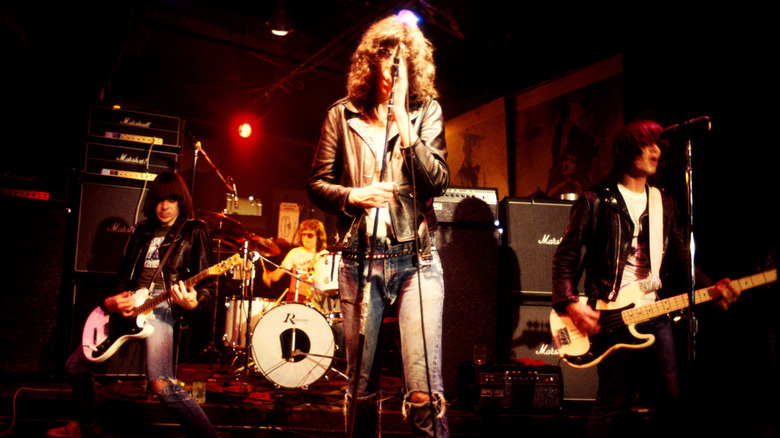
Every so often, rock 'n' roll needs a reinvention to restore and remind the world of all its innate excitement. In the 1970s, punk provided that rock reboot. American punk bands made rock as simple as possible, with groups consisting of a couple of guitars, a bass, and drums, and many played with very few chords and as loudly and quickly as possible. The first major American punk band to break through was the one that set the template: the Ramones, out of Queens, New York.
The Ramones consisted of the stage-named Joey, Dee Dee, Johnny, and Tommy Ramone. The group evoked old-school rock bands like The Beatles with its uniform look — jeans, leather jackets, and long hair — but sounded new and modern with its snotty, snarling, and energetic songs. The no-nonsense band jumpstarted the punk rock revolution to come when it made its live debut at CBGB, a club in New York City, on August 16, 1974. Just about seven months after forming and beginning to hone its sound, the Ramones played that venue — later a famous incubator of '70s rock talents — because nobody else would have the group. And look how it turned out for them!
The Sex Pistols rock Manchester (1976)
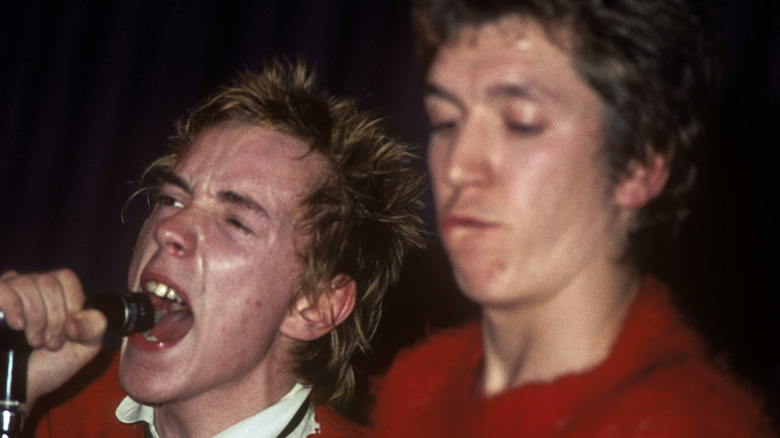
While the Sex Pistols caused a stir in England with purposely snide and controversy-baiting songs like "God Save the Queen" and "Anarchy in the U.K.," the band's true power lay in how it inspired so many other musicians to pick up a guitar or form a band of their own. One Sex Pistols show was directly responsible for populating the U.K. music scene with multiple punk, post-punk, and alternative rock bands whose sounds would dominate the late 1970s and 1980s.
Clearly there was something magical in the air when the Sex Pistols played an early show at the Lesser Free Trade Hall in Manchester on June 4, 1976. Only about 40 people showed up to watch the then little-known band, but a shocking percentage of those attendees went on to start bands that would rewrite history. The gig was arranged by locals Howard Devoto and Pete Shelley, who saw the Sex Pistols play in London and convinced them to book a show in Manchester. After witnessing the show, Devoto and Shelley created the punk band the Buzzcocks. Peter Hook, Bernard Sumner, and Ian Curtis would go on to put together a band that eventually became known as Joy Division. Mark E. Smith of The Fall was also in attendance, as was Morrissey of The Smiths and Mick Hucknall of Simply Red.
MTV hits cable television (1981)
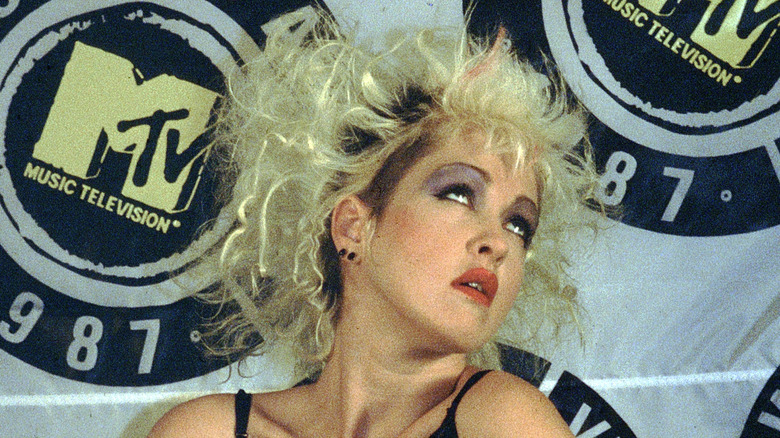
The rise of the music video made an artist's image a crucial part of their presentation and persona. While clips of bands playing or lip-synching their songs have been around in various forms for decades, videos in the 1980s influenced the kind of music that was produced, sold, promoted, and consumed. And that's all because of MTV. Available in the homes of some pay-TV subscribers in New Jersey upon its launch in August 1981, cable helped spread the word of the channel, while the company also influenced the widespread adoption of the new programming delivery system.
When MTV premiered, it had a small library of low-budget clips, mostly of obscure acts. But as the channel got bigger, the videos got more sophisticated, moving from a solely promotional tool into a new vehicle for artistic expression. And the videos that were the most cinematic and creative or that featured the most charismatic, fashionable, and conventionally attractive people were the ones that got the most attention. As such, so many pop and rock stars of the 1980s were the ones that had the most unforgettable videos. Visually oriented new wave bands like Men at Work and Duran Duran and solo singers like Michael Jackson and Billy Idol benefited from having their videos running on MTV day and night.
Nevermind goes to No. 1 (1992)
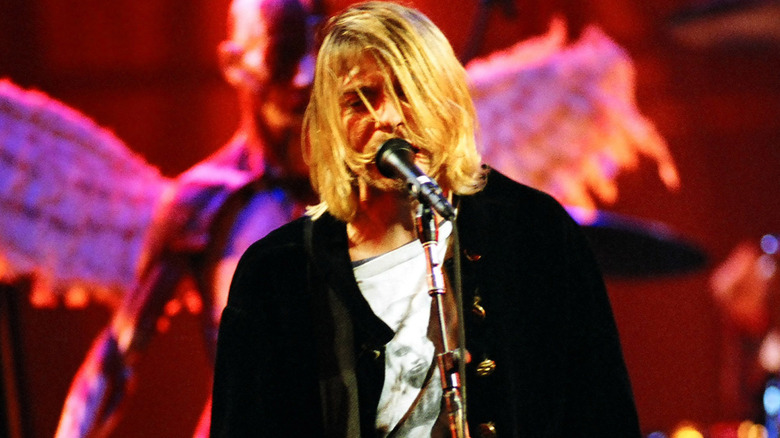
Nirvana is one of the most influential rock bands of all time because it was a giant of grunge, the last major rock movement of the 20th century, which defined 1990s music. Itself influenced by hard rock and obscure punk bands, the Seattle-based grunge scene featured loud, sludgy, and down-tuned music with huge riffs and dour lyrics. All of that stuff was present in Nirvana's first major-label single, "Smells Like Teen Spirit," which topped the modern rock chart in late 1991 and then moved over to the Hot 100, peaking at No. 6 in the January 11, 1992, issue of Billboard. That same week, the album that spawned the hit, "Nevermind," reached No. 1 on the LP chart, displacing the previous chart-topper: the very mainstream and highly promoted "Dangerous" by Michael Jackson, the "King of Pop."
That showed exactly what the youth of America was listening to at that moment. The timing of the ascension to No. 1 indicated that hundreds of thousands of people had returned their copy of "Dangerous" received for Christmas for "Nevermind" or used gift certificates or holiday money to purchase the Nirvana release. It also showed where the future lay: in grunge. Jackson's '80s pop sound was instantly passé in the wake of '90s grunge and, subsequently, alternative rock coming from Washington State bands like Nirvana, Pearl Jam, and Soundgarden.