

The Absolute Worst Concert Performances Of The 1990s
We may receive a commission on purchases made from links.
Ideally, attending a concert featuring your favorite musical act should leave a lasting positive impression on your memory, since it's an opportunity that not a lot of people get to enjoy (and, more often than not, comes with a hefty price tag). But sometimes, the concert you've been looking forward to just doesn't turn out the way you expected — and for music fans who grew up in the 1990s, some of the most iconic singers and rock bands of that era put out some truly questionable performances that were burned into the fabric of music history for the wrong reasons.
To be fair, the simplest things can make or break a concert performance. Sometimes, equipment malfunctions can completely ruin even the most well-prepared act. On other occasions, a rude, unruly, or uncooperative audience might turn out to be too much for the musicians to handle. Accidents ranging from set-ruining to life-threatening can also happen, throwing everything into utter disarray. And of course, there are instances when the musicians themselves just aren't in the right state of mind to give their best in front of an enthusiastically roaring crowd.
But when more than one of those factors come together, the resulting chaos can become truly unforgettable, and may even outlast the musicians' careers. This list features some of the '90s music scene's biggest names — while telling the story of their biggest live letdowns.
Guns N' Roses and Metallica - Quebec, Canada, 1992
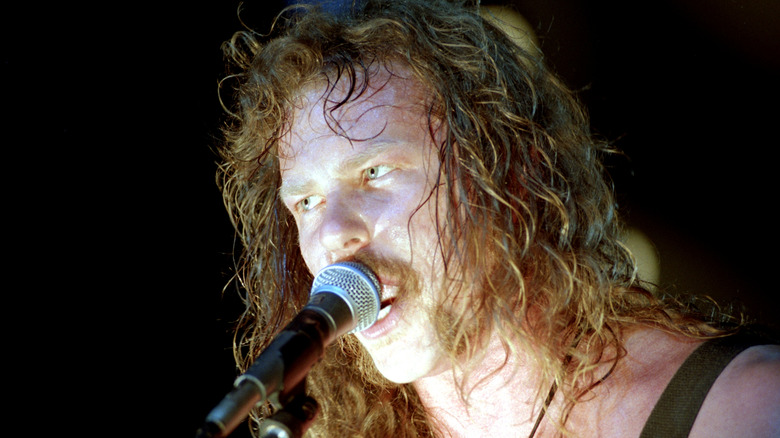
One of the biggest scandals to ever hit Metallica involved another equally-legendary rock band. On August 8, 1992, at the Olympic Stadium in Montreal, Canada, the heavy metal icons co-headlined a concert with Guns N' Roses, part of a joint concert tour advertised with bombastic posters bearing the tagline, "They Said It Would Never Happen." Earlier concerts in the series went off with barely a hitch, but for some reason, this particular performance, which took place on a Saturday and reportedly sold out in record time, turned into an absolute nightmare.
Metallica hit the stage after the opening act by Faith No More, but things went quickly awry when a firework malfunctioned at the exact spot where vocalist James Hetfield was standing. The resulting flame was so intense that it reportedly melted the strings from the singer's guitar. Hetfield sustained serious burns and had to be rushed to the hospital, effectively ending the band's set for the night. Guns N' Roses was up next, but an increasingly irate, 53,000-strong audience found itself waiting for over two hours for the band to show up — only for an angry Axl Rose to leave the stage after less than an hour due to supposed technical issues.
When the attendees realized that the concert was effectively over, between 2,000 and 10,000 fans rioted, resulting in extensive property damage, theft, multiple arrests and injuries, and Guns N' Roses being permanently banned from the Olympic Stadium.
Nirvana - Buenos Aires, Argentina, 1992
While concerts can sometimes turn out to be total disasters due to factors out of anyone's control, this infamous Nirvana performance, which took place at the José Amalfitani Stadium in Buenos Aires, Argentina on October 30, 1992, is an example of a concert that went wrong precisely because the musicians wanted things to go wrong. To be more specific, the band — particularly vocalist Kurt Cobain — intended this to be payback for how the nearly 50,000 audience members, most of whom were men, severely disrespected their opening act for the night, the all-female grunge rock band Calamity Jane.
After seeing firsthand how the concert attendees spat at the female rockers, threw mud and assorted objects at them, and even flashed them to get them to leave the stage, Cobain reportedly didn't want to play at first, but ultimately decided to give the "sexist" audience a deliberately terrible performance. Aside from repeatedly baiting the crowd with the opening riff of "Smells Like Teen Spirit" then abruptly stopping (via YouTube), the band chose to play songs that they knew the audience was unfamiliar with (because they were from new albums or albums that weren't even released yet). And while they ended their set with a song from their iconic album "Nevermind," the song in question was "Endless, Nameless," a secret track that most people who owned the album might not have even heard. Ultimately, the band enjoyed trolling the heck out of their audience that night.
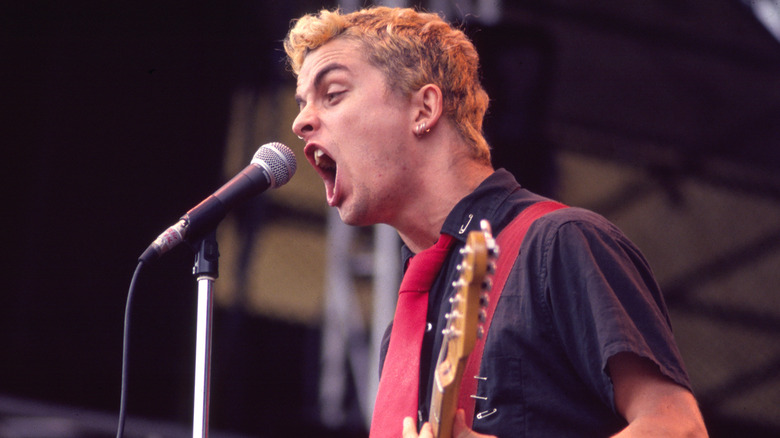
Green Day - Woodstock 1994, New York
People who were alive in 1994 may remember it as alternative rock's best year ever, but folks who attended Woodstock '94 might be more inclined to sling mud at it (figuratively). Intended as the quarter-century celebration of the 1969 Woodstock Festival, Woodstock '94, which took place from August 12 to 14, 1994, in Saugerties, New York, attracted approximately 250,000 to 400,000 attendees, more than half of whom did not pay for a ticket. Combined with bursts of heavy rain during that weekend, what was supposed to be a rollicking rock party became an uncomfortable, mud-caked, tension-filled atmosphere — one that then-rising pop-punk band Green Day pushed to its limits when it was their turn to perform on the festival's last day.
Building upon the attendees' rowdy behavior towards the acts that preceded them, Green Day egged the crowd on and let their set devolve into a massive, vicious mud-throwing brawl. As the enraged audience lobbed mudball after mudball at the rabble-rousing rockers (who quickly returned the favor, via YouTube), frontman Billie Joe Armstrong brought his pants down to his knees, ran around the stage and started beating the muddy floor with a microphone, and insulted the crowd by calling them "mud hippies" and "idiots," abruptly exiting the stage as mud-covered crowd members started climbing it. In the ensuing chaos, bassist Mike Dirnt received a punch in the face (and lost his front teeth) when a guard thought he was one of the unruly attendees.
Oasis - Whisky A Go Go, Los Angeles, California, 1994
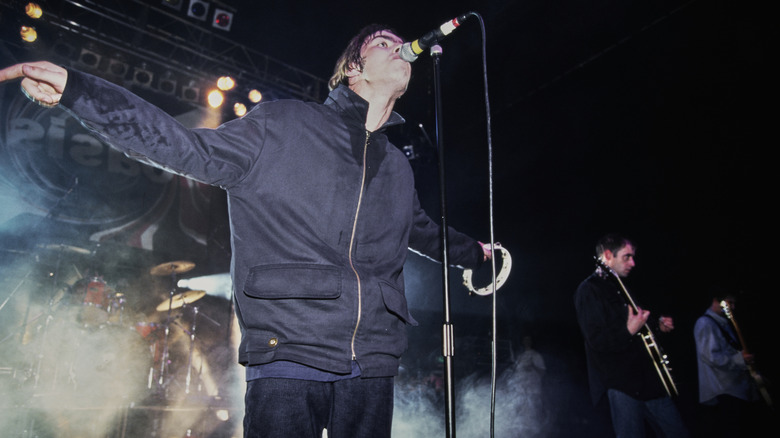
The seemingly never-ending stream of troubles between Noel and Liam Gallagher of Oasis is perhaps one of the most explosive sibling rivalries in rock history. One of the more memorable instances of this took place on September 29, 1994, a night when they absolutely should have kept it together.
At this point in the band's life, they were already successful in the U.K., but had yet to properly break into the U.S. market. This set the stage for their first-ever U.S. tour, and one of their destinations was Whisky A Go Go in Los Angeles, a legendary nightclub with many music history milestones under its belt. One would expect that the notorious siblings would, at the very least, try to be on their best behavior for such a significant undertaking, but that wasn't the case.
The night started with Liam showing up to tell the crowd that he would be performing alone, a jest that set the stage for a truly horrible performance. In addition to sound quality issues, uncoordinated and unserious singing from Noel, and picking fights with the audience, the Gallaghers also got into one of their signature brawls, with Liam smashing a tambourine (along with some choice words) on his brother's head before exiting the stage and heading off into Sunset Boulevard in a frenzy. Noel subsequently quit the band for about half a month. In interviews, Liam attributed their atrocious conduct to (unexpectedly strong) substance misuse in the days prior to their concert.
Guns N' Roses - Riverport Amphitheatre, Missouri, 1991
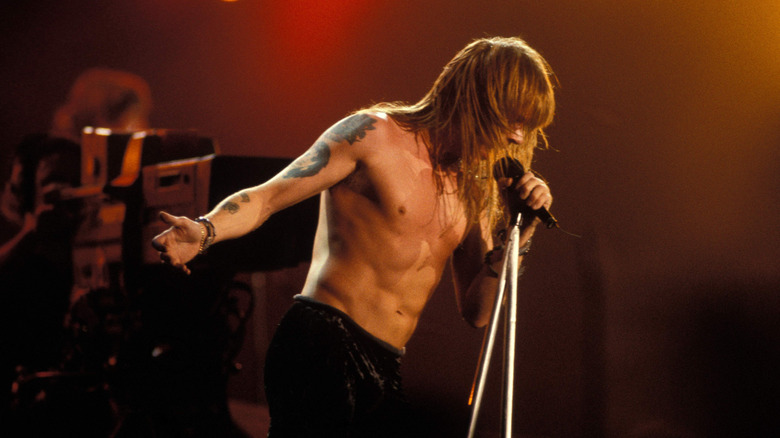
The disastrous Montreal concert that Guns N' Roses co-headlined with Metallica wasn't the first time the "Sweet Child O' Mine" hitmakers became embroiled in a concert-related controversy; in fact, the night of July 2, 1991 (also known as the "Riverport Riot"), was so infamously chaotic that it led to Missouri authorities issuing a warrant of arrest for Axl Rose.
The Riverport Amphitheater the in St. Louis metro area was one of Guns N' Roses' stops for their pre-album release promotional tour that year. To the band's credit, they made it through most of their set without any serious incidents. Unfortunately, this changed once they started playing their 15th song for the night, "Rocket Queen." Mid-song, Rose noticed an attendee snapping photos of their performance, potentially leaking information to the public. This incensed the frontman, who commanded security guards to subdue the shutterbug. Eventually, he took matters into his own hands, leaping into the crowd and being summarily pulled back. Infuriated, Rose (shortly followed by the rest of the band) bailed, joining a long list of musicians who stormed off stage during live performances.
Hell immediately broke loose, and a riot erupted. Officers struggled to control the violence, with rioters stealing equipment from the stage, setting things on fire, and even causing injuries to 65 people, some of whom were cops. As for the so-called "most dangerous band in the world," nearly three decades passed before they returned to the area to perform again.
Red Hot Chili Peppers - Saturday Night Live, 1992
On February 22, 1992, the Red Hot Chili Peppers were the featured musical act on "Saturday Night Live." Unfortunately, what would typically be a career highlight became a demonstration of how behind-the-scenes drama can find its way onto a stage and produce wince-inducing results — and the reason why the funk rock band became one of the most controversial SNL musical guests of all time.
According to some stories, guitarist John Frusciante was already exhibiting some signs that he wasn't comfortable that evening, way before their performance began. Isolating himself while complaining about the supposed treatment he received from crew members and fellow guests, things didn't get better for Frusciante, who already wasn't on very good terms with vocalist Anthony Kiedis. Near the end of the first song they played ("Stone Cold Bush"), Kiedis started cavorting, swinging his microphone stand and hitting Frusciante in the leg. He followed this up with a swift kick to Frusciante's rear end (via YouTube).
By their second song ("Under The Bridge"), it was clear that the two were anything but harmonious. Frusciante's garbled, confusing guitar intro sounded like an attempt at freestyling (via YouTube), and near the end of the song, the guitarist started howling into his microphone instead of properly backing up Kiedis' vocals (via YouTube). In his autobiography "Scar Tissue," Kiedis described the experience as akin to "getting stabbed in the back and hung out to dry in front of all of America" (via Live for Live Music).
Limp Bizkit - Woodstock 1999, New York
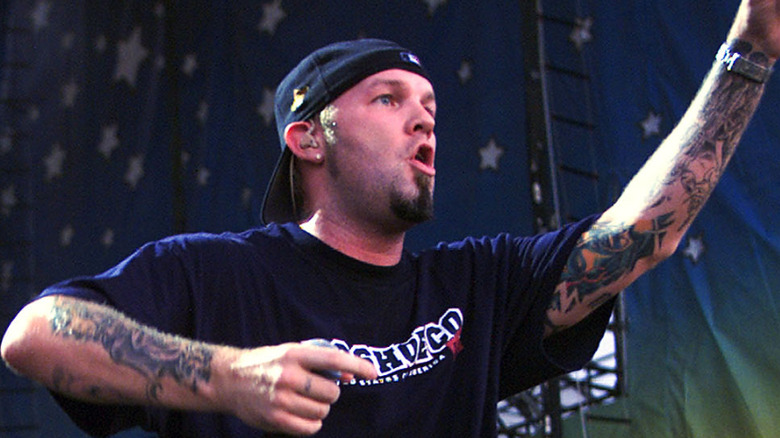
For people familiar with '90s music history, it's impossible to think of disastrous concert performances without remembering Woodstock '99. Held in Rome, New York, from July 23 to 25, 1999, the massive music festival featured such music heavyweights as Rage Against The Machine, Alanis Morissette, Jamiroquai, DMX, and Korn, and pulled in an estimated 225,000 attendees over the course of three days. But what was originally meant to be a celebration of music and peace became a catastrophic riot, with reports of aggressive attendees destroying vendor stalls and trailers, looting, attacking law enforcers, and assault. And one band (perhaps unfairly) received the lion's share of the blame for the messed-up things that happened at Woodstock '99: Limp Bizkit.
As the band walked up the stage during their Saturday evening slot, vocalist Fred Durst felt the crowd's energy and decided to crank things up a notch. Ignoring requests (presumably from management) to calm down the increasingly rowdy audience, Durst encouraged the attendees to go wild. By the time Limp Bizkit started playing their (ominously titled) hit "Break Stuff," the folks on the ground were already, well, breaking stuff. The band finished their set, and Durst was reportedly told that he had "kind of incited a riot," he shared in a 2012 interview (via Radio X). With that said, Durst and other musicians have pushed back against the "Limp Bizkit caused the Woodstock '99 riots" narrative over the years, saying that the worst of the riots actually happened the day after they performed.
Poison - MTV Video Music Awards, 1991
On September 5, 1991, glam metal band Poison took the stage at the MTV Video Music Awards, slated to perform their chart-topping hit "Unskinny Bop." But their moment in the spotlight rapidly deteriorated into a confused mess of garbled notes, sudden stops, and reverse duck-walking, all because the band ended up playing the wrong song on live television. At the center of this disastrous display was a long-brewing conflict between two band members — vocalist Bret Michaels and guitarist C.C. DeVille — exacerbated by touring-related stress and the latter's reported substance misuse issues.
That night, their performance started off well enough, despite DeVille appearing to be quite intoxicated during an earlier shout-out segment to at-home viewers. The trouble began when DeVille wandered off to the side of the stage and spoke to host Arsenio Hall, after which the guitarist suddenly stopped strumming. A visibly caught-off-guard Hall bought the musicians time to recover with a quick spiel; the band resumed playing, but, as Michaels revealed in a documentary interview (via People), he was shocked when DeVille started playing the intro to "Talk Dirty To Me" instead of continuing "Unskinny Bop." The band slogged through the rest of the song; at one point, DeVille accidentally stepped on his guitar's cord, unplugging it.
An awkward, disconnected "finish" mercifully capped off the performance, with Michaels conceding, "It ain't perfect, but it's rock and roll!" Backstage, DeVille and Michaels came to blows, and DeVille left the band for some time, rejoining Poison in 1996.
Bob Dylan - Late Show With David Letterman, 1992
There have been stories about how music legend Bob Dylan would throw temper tantrums before shows, but in some cases, the singer-songwriter made his displeasure known to a larger, more public audience. One noteworthy example took place on "Late Night with David Letterman," in an episode shot on January 18, 1992, and aired a month later as part of the show's 10th anniversary celebration.
Letterman's team asked Dylan to perform his popular song, "Like a Rolling Stone," to cap off the episode, but what they got was, in the words of Letterman himself, "Bob's little way of having fun with [them]." The talk show host first introduced Dylan's star-studded backup ensemble for the song (assembled by Letterman's musical director Paul Shaffer) before welcoming Dylan himself. The singer walked to the center of the stage, clapping as if there were nothing wrong — and then proceeded to treat the live audience to approximately six minutes' worth of barely comprehensible mouth sounds.
Shaffer later noted that the reason behind this apparent sabotage on Dylan's part was the singer's unhappiness about being accompanied by a backup band. As Shaffer wrote in his book, "We'll Be Here For the Rest of Our Lives," Dylan allegedly said, "I don't need this band to play my music [...] Me, I got four pieces. That's all I need" (via Louder). Fortunately, this didn't sour Dylan's relationship with Letterman, as the former made subsequent appearances on the program, including its penultimate episode.
The Stone Roses - Reading Festival, United Kingdom, 1996
The breaking up of a band is hardly ever a cause for celebration, but it's an entirely different matter when the group becomes engraved in the fandom's collective memory for going out with a whimper instead of a bang. Unfortunately, this was the case for The Stone Roses, an English rock band whose popularity peaked in the first half of the 1990s.
Hampered by the departure of two key members (drummer Alan "Reni" Wren in 1995 and lead guitarist John Squire in 1996), the Roses — vocalist Ian Brown and bassist Gary "Mani" Mounfield, joined by Aziz Ibrahim on guitars and Robbie Maddix on drums — carried on for a few more months, but the press and fans alike already saw that the band wasn't quite like what it used to be. The writing on the wall became much clearer when the Roses headlined the final day of the Reading Festival on August 25, 1996 — the event that also became their final concert.
Attendees noted the distinct lack of power and tonality in Brown's voice throughout the majority of their set. Between his off-key singing and Ibrahim's "emotionless" strumming, critics panned the concert; an oft-quoted review in the New Musical Express described the band's rendition of their hit "I Am The Resurrection" as "more like the eternal crucifixion." Two months later, the Roses split up. They reunited in 2011, but called it quits once more — for good this time — in 2017.
Nirvana - Hollywood Rock Festival, Brazil, 1993
When Nirvana performed at the Hollywood Rock Festival in Sao Paolo, Brazil, on January 16, 1993, it was regarded by the press and by fans as one of the band's worst concerts ever, in no small part because Kurt Cobain didn't seem to have his heart into it. From singing the wrong words and going off-key to straight-up destroying equipment on stage, Cobain seemed to have little interest in delivering any semblance of a quality performance or cooperating with his bandmates (or, as one music magazine review noted, "[didn't know] whether he was coming or going"). The show was so terrible that some members of the crowd of about 50,000 reportedly walked out.
Seven days later, Nirvana did another set for the festival, this time in Rio de Janeiro. Those who were among the 40,000 in attendance said that it was better than the earlier concert, though not by much. Once again, Cobain sang the wrong lyrics to some of their songs, which negatively affected his bandmates' performance. The singer also smashed a pineapple onstage with his guitar, and used the fragments as picks. Most notably, during one of their last few songs, Cobain grabbed a video camera, spat on it, and partially disrobed.