

Musicians Who Lost Their Backup Singers To Mega-Successful Solo Careers
Every singer or rock star who eventually found fame, fortune, and their name on a marquee had to start somewhere. And for many, it was working as a backup singer for another musical artist who would eventually lose their services. Maybe they provided additional vocals or harmonies to studio tracks or toured with a big-name act they'd later surpass or join in terms of stardom. Regardless, those future stars paid their dues and honed their skills while just out of the spotlight, working in a fame-adjacent capacity to a major name who elevated them to household-name status.
Working as a backup singer, helping other musicians realize their dreams and artistic visions, provided just the boost these artists needed to move into a new level of fame as a solo act. But they all had to leave somebody behind: Their bosses who took a chance on them and integrated them into their scenes, bands, or touring contingents. Here are the big stars who cultivated the careers of backup singers, only for those singers to go on to their own superstar runs.
Kanye West and John Legend
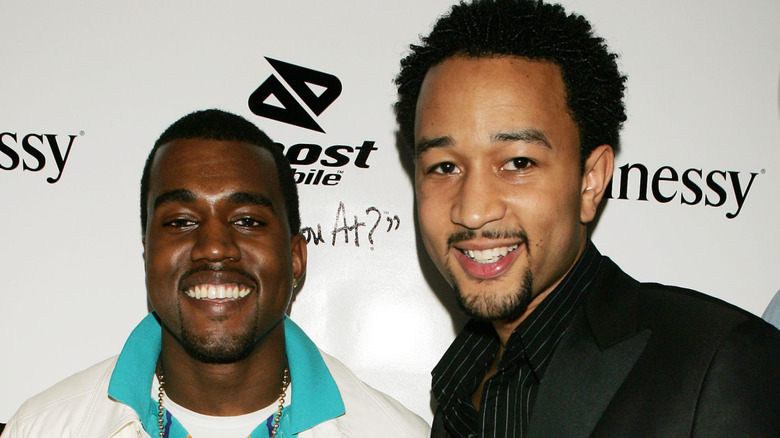
Around the same time that aspiring musician John Stephens contributed piano to Lauryn Hill's 1999 hit "Everything is Everything," he met the cousin of his college roommate, entertainment deal-maker Devo Springsteen. That cousin was Kanye West. After adopting the performance name of John Legend, the musician contributed heavily to West's first full-length studio album, 2003's "The College Dropout." "I played piano and sang a lot of stuff on that album," Legend told The Independent. "From the 'Graduation' song at the beginning of the album, to 'Never Let Me Down,' I sang on everything! I even did a little rap on 'Kanye's Workout Plan.'"
Also in 2003, Legend helped out rapper Jay-Z on "Encore" before focusing on his own work. The following year, the musician completed his first LP, "Get Lifted." The album included hits like "Ordinary People" and was a factor in his best new artist win at the Grammy Awards.
POD and Katy Perry
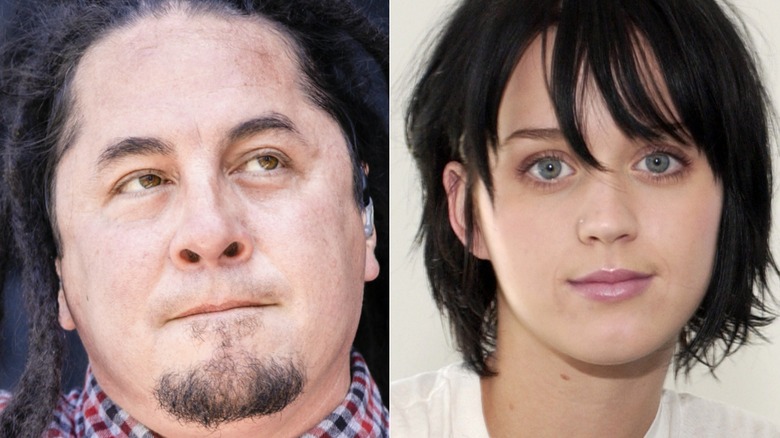
Katy Perry became a huge star after switching genres. Before she became one of the most consistently chart-topping pop acts of the 2000s and 2010s, she recorded under her real name, Katy Hudson. In 2001, she released a poor-selling, Christian pop LP before giving secular music a try. One of her biggest breakthroughs was singing backup for sometimes spiritual metal band P.O.D.
For the 2006 album "Testify," the group embraced a poppier sound, bringing in producer Glen Ballard. The song "Goodbye for Now" necessitated the addition of a female singer, and Ballard brought in who he thought was the ideal candidate: Perry. "That was his protégé at the time," P.O.D. frontman Sonny Sandoval told Songfacts. About two years after the release of "Goodbye for Now," Katy Perry emerged with the album "One of the Boys." The breakout single, "I Kissed a Girl," spent seven weeks at No. 1 on the Billboard Hot 100.
Brenda K. Starr and Mariah Carey
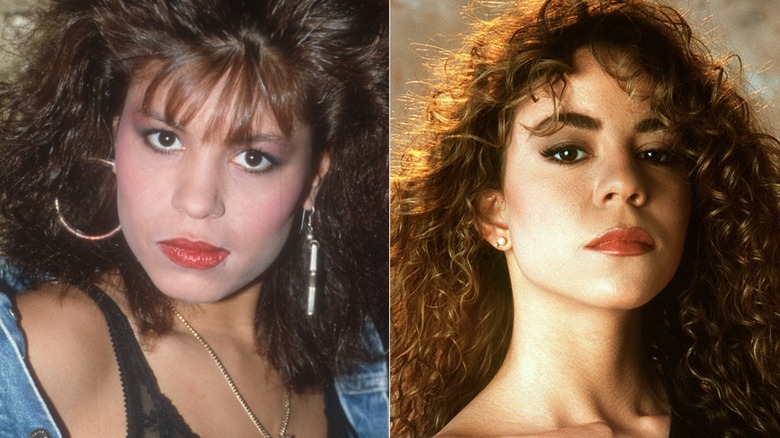
An '80s musician we completely forgot about, Brenda K. Starr mixed dance, pop, and Latin freestyle to make some catchy music that was quintessentially of its time. She charted a succession of singles on the charts in that era, most notably "Pickin' Up the Pieces" and "I Still Believe." Starr operated out of New York City, and in the late 1980s she hired a teenage singer to back her up on stage named Mariah Carey. They got along well, and Carey made no secret about her own aspirations for fame. She recorded a demo cassette showcasing her tremendous voice and gave it to Starr, who at a music industry party passed it along to Sony Music head Tommy Mottola. He later married Carey, but not before signing her to one of his labels.
Starr never had a pop hit past 1991, while Carey went on to become one of the most successful musicians ever. To date, she has scored 19 No. 1 hits and sold more than 190 million records. In 1999, Carey paid tribute to her former boss and champion by covering "I Still Believe" for her greatest hits compilation "#1's."
Michael Jackson and Sheryl Crow
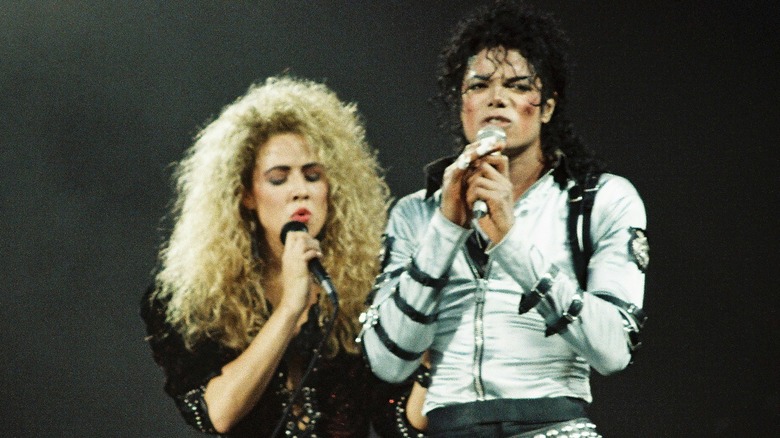
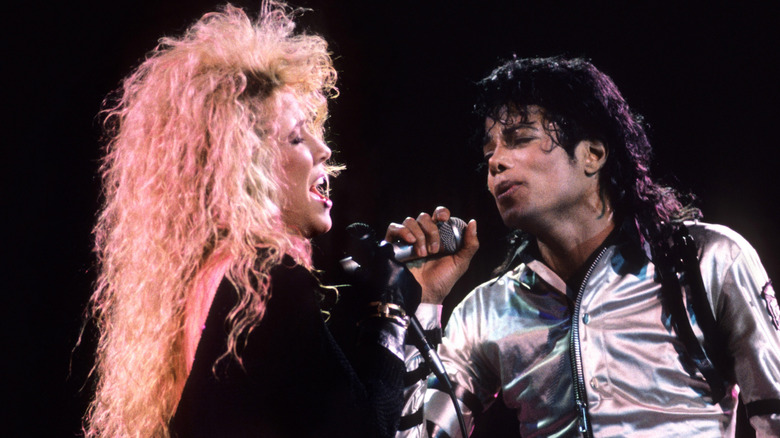
Sheryl Crow is now worth millions, and she's been working in music in some capacity since the late 1980s. After working as an elementary school music teacher and singing for TV commercials, she landed just about the biggest backup singer gig possible at the time: Performing behind and alongside Michael Jackson each night of his "Bad" tour, which played around the world from late 1987 until early 1989. When the show required Jackson to recreate his hit duet "I Just Can't Stop Loving You," Crow performed the parts originated by Siedah Garrett and featured heavily in "The Way You Make Me Feel."
Getting repeatedly featured by Jackson sent more support work Crow's way. In 1989, she added backing vocals to Don Henley's album "The End of the Innocence" and became the less famous of two duet partners on the 1991 Kenny Loggins track "I Would Do Anything." And then, Crow was off to her own projects. Following a canceled 1992 album that Crow felt didn't come out right, she recorded "Tuesday Night Music Club," which sold seven million copies and led to a Grammy Award for best new artist.
Bette Midler and Barry Manilow
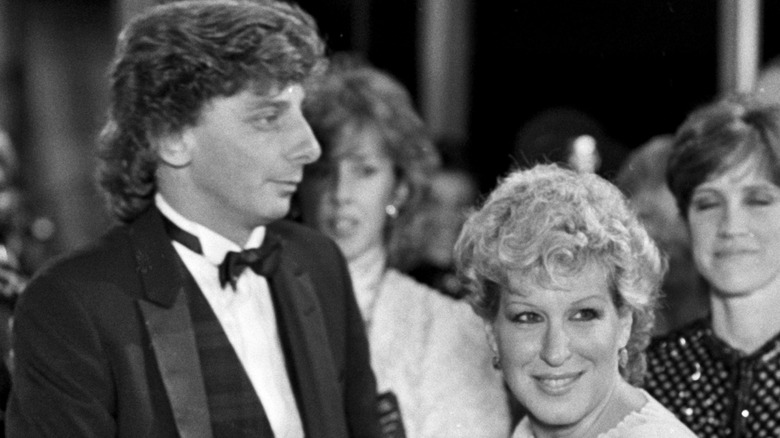
Before he became a 1970s soft rock icon, Barry Manilow scraped together a living as a musician in New York City. While Manilow wrote catchy commercial jingles, he also found work as an arranger and piano player for singers who needed an accompanist. The most notable of those performers, who'd also go on to mega-stardom in the 1970s, was Bette Midler.
A favored performer at the LGBTQ+ community hangout the Continental Baths, Midler sang crowd-pleasing standards while Manilow kept up on piano. He could sing, but Midler preferred that he refrain if at all possible. When Manilow first signed to a label, based on the strength of a self-recorded demo tape, he informed Midler, who was utterly confused. "'You don't sing.' I said, 'Yeah, I know, but they think I do!'" Manilow recalled to People in 2023. Nevertheless, Midler retained Manilow's services for two of her first albums in the 1970s. Not only did he play piano and arrange songs, but he added backing vocals, too.
No Doubt and Gwen Stefani
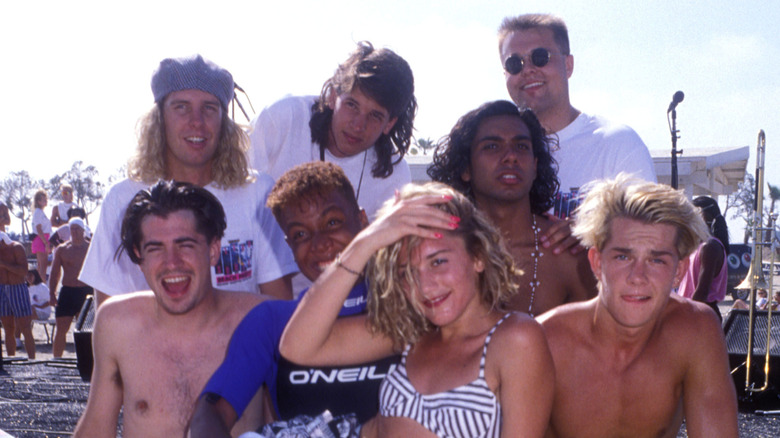
In 1986, three young people working at a Dairy Queen in Orange, California, decided to start a ska band, inspired by the likes of Madness and Fishbone. The first three members of No Doubt were Gwen Stefani, her brother Eric, and their friend John Spence. Initially, Stefani would take the lead on a song every now and then at a Southern California club gig, but she primarily served the group as a background singer.
Only about a year after forming, Spence died by suicide. After briefly disbanding for about a month, No Doubt reformed with a new lead singer: Gwen Stefani, and it wasn't a task for which she volunteered. "She tends to be shy by nature," former No Doubt member Eric Carpenter told People (via Interview). "It took a lot of convincing to get her to the lead singer position." The former backing singer fully ascended to No Doubt leadership after Eric exited the group during production on what would be its first major success, the 10-million-selling "Tragic Kingdom." Since the mid-2000s, No Doubt has been largely dormant in the wake of Stefani's solo turn as a pop star.
David Bowie and Luther Vandross
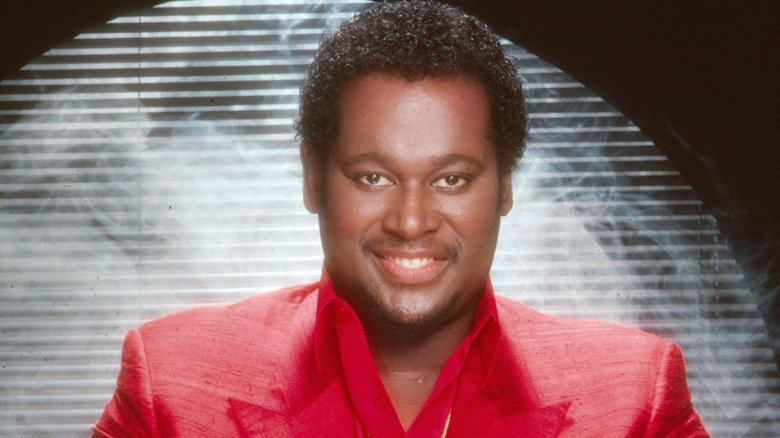
Luther Vandross made some of the greatest and most consistently popular R&B in the 1980s and 1990s, topping that genre's Billboard album and singles charts eight times and seven times, respectively. He also crossed over to the pop chart with memorable, expertly sung hits like "Here and Now" and "Power of Love / Love Power." But Vandross had the experience: By the time he released his debut album, "Never Too Much," in 1981, he was already a seasoned music industry professional as a songwriter, producer, and versatile and prolific session and background singer.
One of Vandross' first jobs was backing vocals on Roberta Flack and Donny Hathaway's 1972 collaborative album, an assignment he'd later repeat for artists like Bette Midler, Donna Summer, and Diana Ross. Then, in 1974, the singer received crucial exposure when David Bowie helped mentor him. That year, Vandross' high school pal, Carlos Alomar, was recording with Bowie in Philadelphia, and the rock star so liked Vandross' vocal experiments on the song "Young Americans" that he featured the singer on the song and had him arrange the vocals for the entire LP. Then Bowie hired him as a support singer for his upcoming tour.
Faithless and Dido
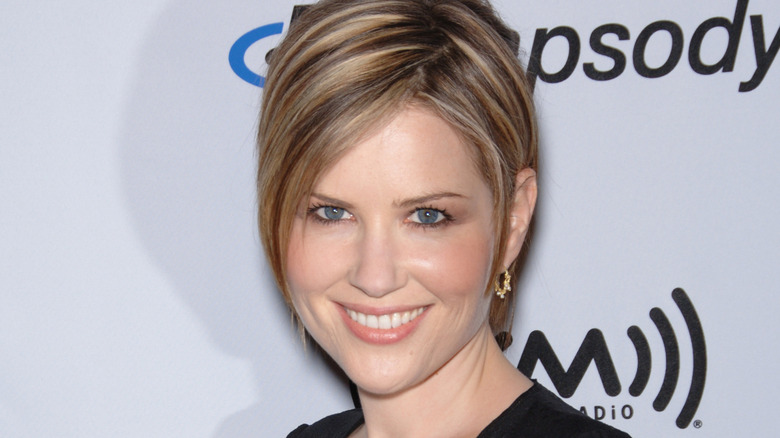
The U.K. band Faithless is credited with helping electronic dance music move out of warehouses and clubs and into the radios, cars, and headphones of non-club-goers. In the 1990s, Faithless blended parts of two different kinds of propulsive, droning, synthesized music: house and trance. The group went on to sell about 15 million albums and score a bunch of hits on the U.K. Official Charts, like "Salva Mea," "God Is a DJ," and "We Come 1."
One of its last Top 10 smashes arrived in 2002: "One Step Too Far." That song included a featuring credit for Dido, a definitive pop star of the early 2000s. With a soulful and ethereal voice, Dido captured fans in the pop, electronic, rock, and hip-hop fields with hits like "Thank You" and "White Flag," as well as "Stan" — she sang the hook on the 2000 Eminem song. That's also what she did on "One Step Too Far" and many other Faithless songs, just without an eye-catching credit. Faithless' leader was producer Rollo, aka Rollo Armstrong, Dido's brother, aka Dido Armstrong.
Gloria Estefan and Jon Secada
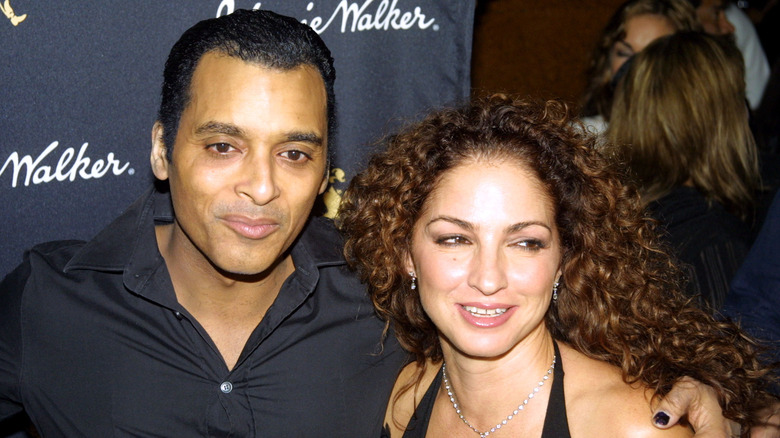
For about a two-year period in the early 1990s, Jon Secada was the biggest new star on the mature, radio-friendly, adult contemporary scene. With a powerful and emotive voice, Secada quickly took half a dozen songs into the Hot 100's Top 40, including "Just Another Day," "Do You Believe in Us," "Angel," and "I'm Free." His music often included elements of traditional Latin American styles, and before his solo career, he was a part of a group that familiarized U.S. listeners with such sounds.
Secada studied music in Miami, and that's where he joined the Miami Sound Machine, fronted by singer Gloria Estefan. He sung backing vocals for the Latin pop collective and continued his professional relationship with Estefan when she segued into a solo career. Secada contributed backup vocals to Estefan's 1991 LP "Into the Light" and co-wrote half a dozen songs, later singing on a tour in support of the album. Just a year later, Secada had moved on from Estefan to focus on his burgeoning career and record under his own name.
The Wrecking Crew and Cher
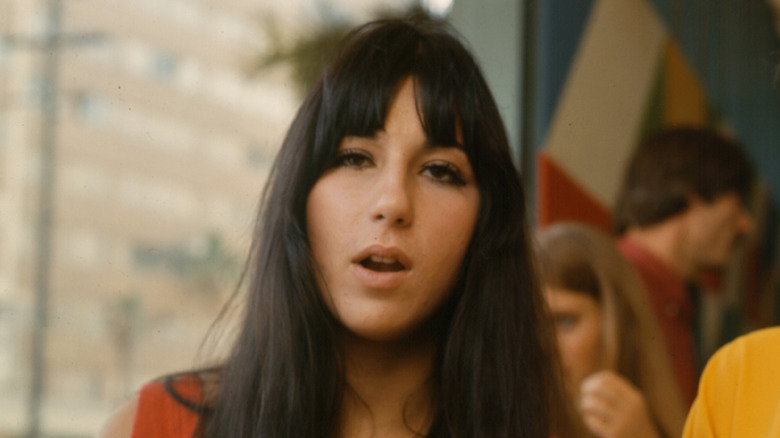
Possessing one of the most unique and recognizable voices in music history, Cher has been a superstar since the mid-1960s. With her then-husband Sonny Bono, and as half of Sonny & Cher, the singer went to No. 1 in 1965 with "I Got You Babe." Along with numerous smashes in the 1970s and 1980s, like "Dark Lady" and "If I Could Turn Back Time," Cher most recently claimed the top spot in 1999 with the Auto-Tune popularizing dance classic "Believe." It's hard to imagine a time when Cher wasn't part of the pop cultural firmament or when her voice was used to blend into the mix of a song, but she started her career in the early 1960s as a backing vocalist.
At first, Cher was a teenager hanging around Los Angeles studios and befriending members of a loose assortment of in-demand session musicians known as the Wrecking Crew. Especially favored by pop and R&B producer Phil Spector, Cher got the chance to sing when regular studio vocalist Darlene Love wasn't able to make it to a session on time. Spector figured Cher's voice would fit in nicely on the track, and she reluctantly stepped up to the mic. "Then I became a part of the background on every Spector song. The last thing I did was 'You've Lost That Lovin' Feelin,'" Cher told the Plain Dealer in 2014, referring to the Righteous Brothers classic.
Genesis and Phil Collins
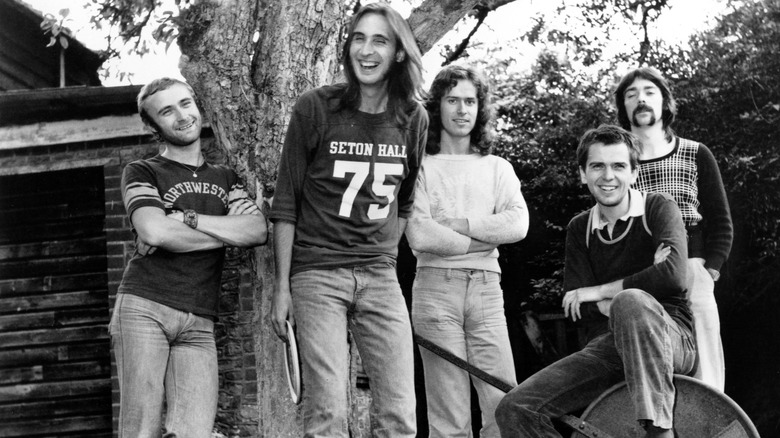
Genesis started out as an ambitious progressive rock band and finished up as a provider of pleasant content for soft rock radio. That transformation coincided with a change in the act's lead singer. In 1975, performance artist frontman Peter Gabriel up and left. After rejecting the idea of continuing on as an instrumentals-only band, Genesis considered the applications of hundreds of new lead singers.
Nobody that auditioned seemed like a good fit, prompting Genesis to hire from within. "We couldn't find another singer and so the rest of the band convinced me to do it," Phil Collins, Genesis' drummer and its fourth overall, told The i Paper. "There really wasn't another option and I drew the short straw." The band's music slowly went more mainstream, and it rode the charts in the 1980s along with Collins' solo work. Before singing lead with Genesis (and on his own albums), he only occasionally provided support vocals.
If you or someone you know is struggling or in crisis, help is available. Call or text 988 or chat 988lifeline.org.