

The Monkees' Massive No. 1 Hit In 1967 Was A Complete Accident
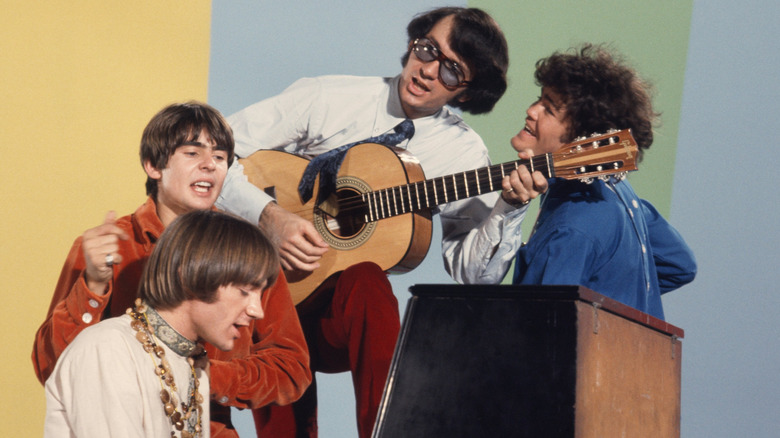
Among the strange things about the Monkees you didn't know is that one of the made-for-TV pop-rock band's biggest smashes was never even supposed to be a single. "Daydream Believer," a No. 1 hit on the Billboard Hot 100, is so bright and catchy that it helps prove that 1967 was the decade's best year for sunshine pop. Yet the band's record label, Colgems Records, had earmarked it for an unceremonious dumping onto a B-side. The Monkees were just about the biggest band in the world at the time, scoring four No. 1 albums in 1967 and reaching the Top 40 half a dozen times that year. The group's most massive hit of all in 1967 was "Daydream Believer," which spent the entirety of December in the pop chart's peak position.
Powered by a gentle piano line and blasts of a horn section and with a huge chorus, "Daydream Believer" is an irresistible, hook-filled anthem. It's pretty unbelievable that Colgems didn't think it had any chance or business striking a chord with the Monkees' army of fans. Necessity and urgency led the label to issue "Daydream Believer" as a single, and the label's instincts were proven incorrect, with the results being a nice surprise for all parties involved.
Daydream Believer was already an odd and unpopular choice
With many obstacles in place from the beginning, it seemed unlikely that "Daydream Believer" could ever be a hit. While musically it's a joyful belter, the lyrics are somewhat nonsensical, and it wasn't a typical pop song aimed at the Monkees' young fanbase. It was also the brainchild of John Stewart, once part of popular folk act the Kingston Trio, who had written it as part of a suite of songs about suburban dreariness. After Monkees producer Chip Douglas encountered Stewart at a party and solicited him for songs, the singer-songwriter sent him a demo of "Daydream Believer." The band's label authorized the band to record it, so long as Stewart altered a single word. Singer Davy Jones wouldn't be permitted to sing "Now you know how funky I can be," so it became "Now you know how happy I can be."
Jones was picked to sing lead on "Daydream Believer," despite the fact that it wasn't in his key or range and that he couldn't make sense of the words. He required multiple takes to get the song right. In fact, some versions of "Daydream Believer" feature the increasingly frustrated Monkee getting snippy with the studio personnel in the recording booth.
Daydream Believer proved the naysayers wrong
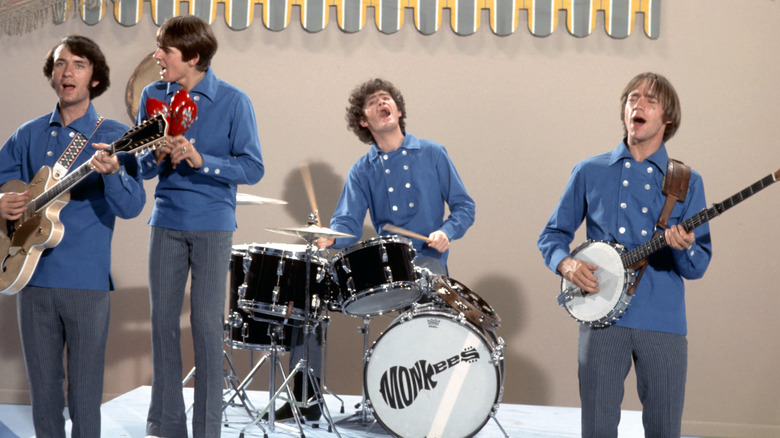
After all that strife, the Monkees' handlers still didn't think that "Daydream Believer" had what it took to be a pop chart smash. Plans were made to include the song as the flip side of the planned single "Love Is Only Sleeping," a track from the album "Pisces, Aquarius, Capricorn & Jones Ltd." that featured the singing of Michael Nesmith. But when it came time to press the first vinyl 45s in Europe, the master recordings of "Love Is Only Sleeping" weren't yet finished. "Daydream Believer" was ready to go, though, and as Colgems Records had to issue some kind of product, that song got promoted from B-side to A-side. (The new B-side was another song, "Goin' Down".)
The song that the record company and at least one Monkee didn't necessarily like proved very popular. "Daydream Believer" never should've been a single at all, and yet, in just its third week on the Hot 100, it ascended to the No. 1 spot. It ultimately spent four weeks at this position in 1967 and is one of the two biggest hits the Monkees would ever enjoy, just behind "I'm a Believer."