

'60s Rock Icons Who Walked Away From Their Careers
The following article contains mentions of addiction and mental illness.
Given the legendary status of so many 1960s rockers, it's hard to imagine why some of them would want to leave it all behind. Who doesn't want the glory, the artistry, and the financial satisfaction of making it big, after all? But therein lies the problem. With all of the benefits can come tremendous pressures, whether it comes in the form of artistic frustration, a variety of mind- and behavior-altering substances, or the terrible sinking feeling you get as your latest album flops straight onto its face in front of disappointed critics and fans. No wonder, then, that some of the greats of this era decided to make a break for it.
Some left the music industry almost entirely, like Pink Floyd's notoriously uneven Syd Barrett, who went from being the band's creative powerhouse to living quietly in Cambridge, England. Others made an honest effort to keep going but ultimately had to call it. Grace Slick overcame addiction and even helped revived Jefferson Starship, only to step back once the band's attempted comeback floundered. She was hardly alone, as other rockers from her heyday likewise found their lives taking them on paths that led away from the stage.
Syd Barrett
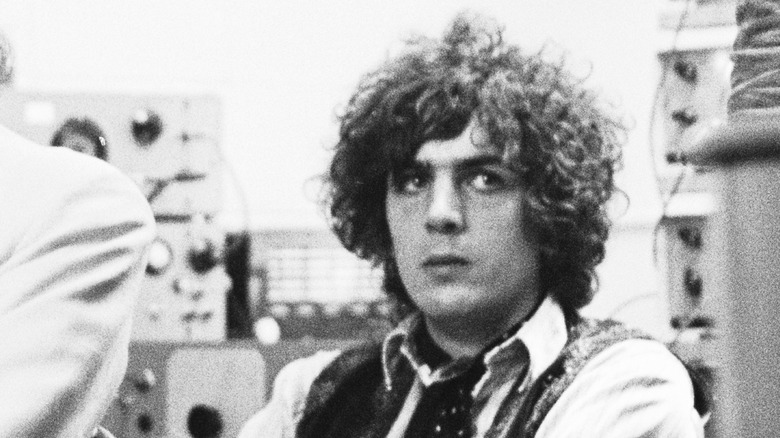
When Pink Floyd first assembled in 1965, Syd Barrett was the group's lead guitarist and a major creative force within the group. However, his substance misuse and increasingly overt struggles with mental health made creating and performing seriously difficult. However, claims that he had schizophrenia aren't well-supported, and Barrett himself didn't publicly discuss any diagnosis.
Whatever it was, the rest of Pink Floyd eventually concluded that Barrett couldn't perform anymore. After a series of troubling incidents, the group faced a decision. Just before a January 1968 concert, the band (now including David Gilmour, who had effectively replaced Barrett as lead guitarist) ditched him. "We were driving up Ladbroke Grove and someone said 'Shall we go and pick up Syd?'" Gilmour recalled to MOJO. "Somebody else, probably Roger [Waters], said '[Nah], let's not.'"
Gilmour admitted that they hadn't handled the breakup well, and that he and Waters helped Barrett with two solo albums out of guilt. Yet, those albums fizzled — and Barrett's new band, Stars, didn't last. By 1974, he exited the music world completely and moved back to Cambridge. There, he lived a quiet life that included painting (Barrett never exhibited his work and even destroyed some paintings), coin collecting, and cooking. Later tales of him remaining off his rocker are perhaps unfairly influenced by his displeasure with reporters hounding him. He also never accepted offers to return to the music industry (even when big names like Jimmy Page and Brian Eno came knocking). Barrett dealt with diabetes later in life and died of pancreatic cancer at age 60.
Sterling Morrison
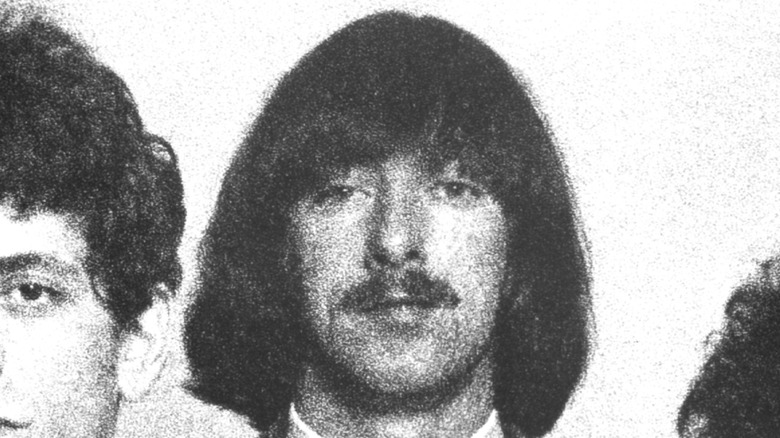
Sterling Morrison was a founding member of The Velvet Underground, the avant-garde 1960s rock outfit that arose in New York and... didn't actually make much money. But Morrison, the group's guitarist, wasn't all that concerned with financial success, given how he left The Velvet Underground in 1971. As it's often retold, The Velvet Underground played a show in Houston, then made their way to the airport. At the gate, Morrison revealed that he was actually carrying an empty suitcase (or one full of phone books, in some versions) and would remain behind. "Things weren't fun for him anymore, he told me that," said his wife, Martha (via Far Out).
Morrison then worked as a teaching assistant at the University of Texas, where he studied for a Ph.D. in medieval literature and went by his birth name, Holmes Morrison. The process would take over a decade (he finally earned the degree in 1986), but in the meantime, he enjoyed both academia and the Austin music scene.
Things took another turn in the '80s, when Morrison moved to Houston and became a tugboat captain. "There is no one who was more perfectly made for [the job]," The Velvet Underground frontman Lou Reed later said (via The Austin Chronicle). "There was nothing he couldn't master." Others noted the financial necessities of his situation (a doctorate in medieval lit isn't exactly the key to riches), but Morrison reportedly thrived in his new role and even very occasionally performed with his old bandmates in the mid-1990s. Even old friends were sometimes surprised by his tendency to conceal key developments, including a diagnosis of non-Hodgkin lymphoma, which took his life in 1995.
Grace Slick
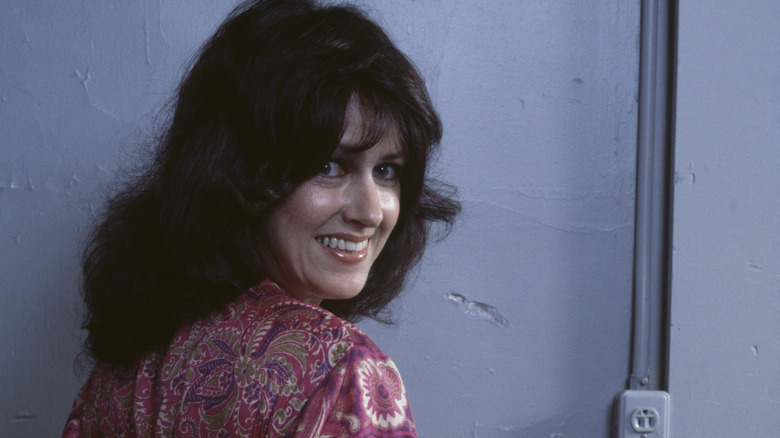
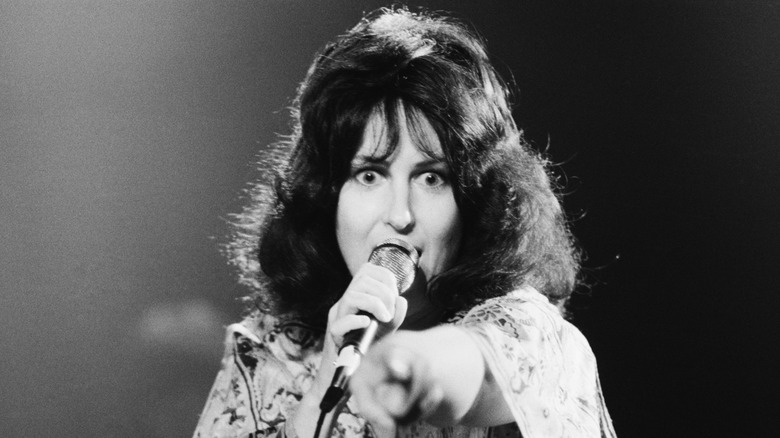
Any discussion of '60s rock must include Grace Slick, the lead singer of the psychedelic Jefferson Airplane and, for a time, Jefferson Starship and Starship. But, by the 1970s, things were starting to go awry for Slick, who found herself facing alcohol addiction. While on tour with Jefferson Starship in Germany, she was so inebriated one night that she couldn't perform. Other band members came to blows backstage over the situation, the show was canceled, and the audience rioted so tremendously that they set the stage on fire.
A second concert in Hamburg was again disrupted when an inebriated Slick managed to get on stage, only to harass the crowd with World War II references. "I wanted the Germans to see a mirror of repulsive self-loathing, I wanted the band to see an uncontrollable mutant, and I wanted to be so out of line that when I fired myself the next day nobody would object," Slick claimed in her memoir, "Somebody to love?"
Slick eventually became sober and re-joined Jefferson Starship in 1985, which became simply Starship after Paul Kantner's departure. In 1989, she and the other members of Jefferson Airplane reunited for an album and tour that subsequently flopped. In the aftermath, she retired and turned to painting. In 1998, she declared to VH1 that "All rock-and-rollers over the age of 50 look stupid and should retire" (via Far Out). She's performed twice as part of Jefferson Starship, in 1995 and 2001, but has otherwise stuck to her bluntly stated ideal.
If you or anyone you know needs help with addiction issues, help is available. Visit the Substance Abuse and Mental Health Services Administration website or contact SAMHSA's National Helpline at 1-800-662-HELP (4357).
Brian Wilson
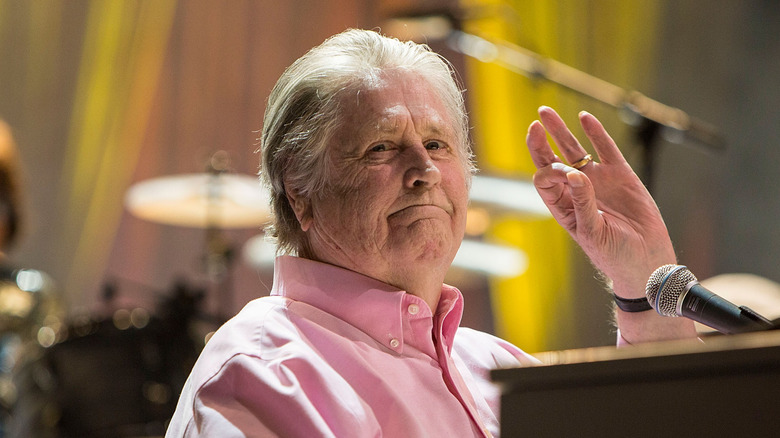
In 1964, the pressure finally got to Brian Wilson. On a plane taking The Beach Boys to a Houston gig, Wilson suffered a major panic attack. "We were really scared for him," guitarist and vocalist Al Jardine told Houston Press. "None of us had ever witnessed something like that." Upon landing, Wilson attempted to return to Los Angeles but was persuaded to go to the group's hotel and eventually the venue. After that performance, however, Wilson would not go onstage with The Beach Boys for 12 years; his performances with them afterwards remained markedly rare. In 1971, now largely working behind the scenes, Wilson told Rolling Stone he had become burned out. "I felt I had no choice," he said. "I was run down mentally and emotionally because I was running around, jumping on jets from one city to another on one-night stands, also producing, writing, arranging, singing, planning, teaching."
Wilson was also struggling with mental health and substance misuse. He was eventually diagnosed with schizoaffective disorder, which included depression and auditory hallucinations. By the 1970s, he was working closely with mental health professionals and was arguably more focused on regaining his health than music; though he did produce his first solo album, "Brian Wilson," in 1988. He only began regularly performing live again in the '90s and didn't have a solo tour until 1999. Wilson continued performing into the 2020s, taking breaks as necessary, until declining health brought a more definitive end to touring. He died at age 82 in 2025.
If you or someone you know needs help with mental health, please contact the Crisis Text Line by texting HOME to 741741, call the National Alliance on Mental Illness helpline at 1-800-950-NAMI (6264), or visit the National Institute of Mental Health website.