

The 5 Best Songs That Nail '70s Power Pop
Power pop is one of the most beloved and fawned-over rock subgenres of the 1970s, and the whole style can be understood with a sampling of five representative songs. The decade was truly one of the most experimental and creatively fruitful periods in music history, with rock music veering off into so many different new and exciting directions. Along with hard rock, heavy metal, arena rock, progressive rock, punk, and new wave, the power pop movement developed, and it kept one foot in the past and one in the future.
Tightly packed and efficient music, power pop in the '70s harkened back to the early days of rock 'n' roll with its simple instrumentation of guitar, bass, and drums, while also incorporating a Beatles-style pop-rock sensibility. Grittier, louder, and often more focused on the ribald side of life than '60s British guitar pop ever was, '70s power pop was all about agitation, guitars and drums played in unison, and hooks on top of hooks on top of hooks. The genre could best be described as radio-friendly punk but played adeptly and cleanly. It had its moment throughout the 1970s, and certain bands took their representative hits to the top of the charts and into the hearts of rock fans. Here are the five songs that can serve as an audio primer of '70s power pop.
No Matter What — Badfinger
"No Matter What" encapsulates power pop, and if one were to break it down even more, the song's introductory guitar lick alone sums up what the genre is all about. It bursts out of speakers with a descending two-note riff that leads into some picking, with just a little bit of fuzz and distortion lingering, before ending with a moment of brief and anticipatory silence. "No Matter What" announced that Badfinger wasn't just a project for the Beatles. Sure, the group was part of the roster at the band's Apple Records and even sounded a bit like them in its early singles. But this was a band that took the Fab Four's understanding of what makes a populist pop song and made it rock harder — and that's power pop.
Badfinger, a band that broke in 1970 that should still be famous, hit the Top 10 of the Billboard Hot 100 late that year with "No Matter What." Along with that recurring, happy guitar riff, the song features an inspired and effervescent guitar solo, soaring harmonies, and plenty of surprise percussive flourishes. The members of Badfinger sound like they're all on the same page in "No Matter What," and more importantly, like they're having a great time playing music.
September Gurls — Big Star
A big part of the tragic story of Big Star is that label mismanagement prevented the Memphis trio with potentially wide appeal from getting its music to the masses. Very few people were able to purchase or listen to Big Star's albums when they were fresh and new in the 1970s. "September Gurls" is a stellar cut from album No. 2, "Radio City," and it set a template for '70s power pop as well as the jangling sub-set of rock that would come of age in the 1980s thanks to Big Star acolytes like R.E.M., the Replacements, and the Bangles.
A hard-charging but non-invasive drumbeat propels "September Gurls," a romantic and swoony mid-tempo song that one could almost slow dance to if it were a little bit slower and a lot less cool. But multiple ringing guitars are the big stars for Big Star here, as is singer Alex Chilton's plaintive wailing vocal style. "September Gurls" is a casual anthem, and it invites singing along and harmonizing. There's also inherent melancholy, witsfulness, and mystery, which evoke a kind of nostalgia, just like the best classic rock songs and timeless pop songs.
Go All the Way — The Raspberries
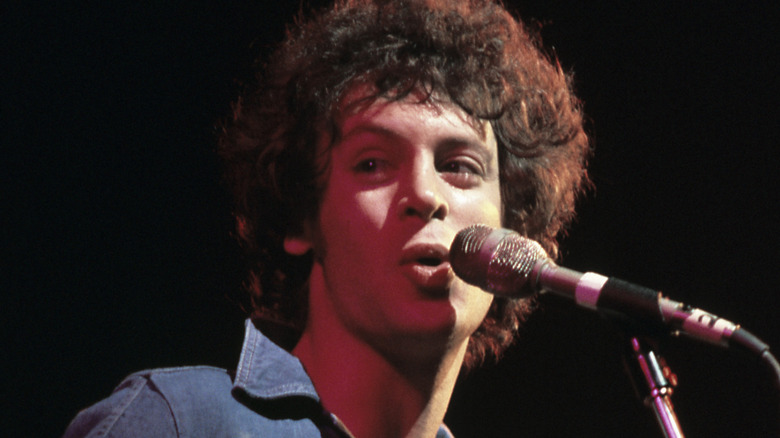
A constant contradiction, the Raspberries was so rough and scratchy on the guitars and at the same time so self-assured with its radio-worthy melodies and bewildering harmonies. Operating under a well-chosen name that conveys a lot of sweetness and a little bit of sting, the Raspberries slid into the Top 5 of the Hot 100 in 1972 with "Go All the Way." With ringing, distant-seeming guitars, unrelenting drums, and vocalist Eric Carmen crooning from a very deep place, "Go All the Way" is the sound of a garage band trying to figure things out, trying to sound like the Who and the Kinks but secretly aspiring to be the next Beatles or Beach Boys.
A standout on "Guardians of the Galaxy: Awesome Mix Vol. 1," the gem-loaded soundtrack that topped the album chart in 2014, "Go All the Way" is as clever as it is infectious. While lots of songs released prior to this one featured a guy trying to coerce a woman into physical intimacy, "Go All the Way" deals with an overwhelmed young man struggling to resist the advances of a lady. The result is one of the most luscious rock songs of the decade.
Surrender — Cheap Trick
Combining crunchy guitars and tightly woven melodies with self-consciously smirky and fun-loving lyrics made Cheap Trick one of the most important rock bands of the 1970s. The group behind fast-moving, guitar-driven hits like "Surrender" bridged the gap between arena rock and new wave and discovered that in the middle stood power pop. Cheap Trick makes exactly that: Pop music amped up with enough heft to make it palatable for hard rock bands. This especially comes through on 1978's "Surrender," which feels like a bigger, louder, just-obnoxious-enough version of a '60s pop tune.
All the elements for a great top 40 hit are here, as are the things that make it worthy of a head-banging, lighters-aloft rock show encore. It begins with a muscular drum fill and a spooky and leading synth bit, and then come the walls of guitars and an oddly heartwarming story about kids connecting with their presumably fuddy-duddy parents. There's even a band member roll call and a chant — because by the end of "Surrender," listeners will want to scream "We're all alright!" too.
My Sharona — The Knack
Repetitive to the point of hypnotic, "My Sharona" was jerky and frenetic, and the whole song is just one riff and hook on top of another. The Knack went for maximum catchiness and explosive pop sweetness with its debut single, stacking on and throwing in every piece of musical stickiness it could find. A thundering and jumpy drum beat starts the song, and then comes the bass and guitars, and they all play virtually the same rhythm. As "My Sharona" spent six weeks at No. 1 on the Hot 100 and was the biggest hit of 1979, the band certainly succeeded.
The lyrics are the stuff of classic early rock 'n' roll but made more graphic and lewd because 1979 was a long time past the mid-1950s. Like so many older, popular songs that have aged poorly, "My Sharona" is told from the point of view of a guy with an unhealthy and illegal fixation on a woman much younger than himself, and he's virtually feverish about it. That all comes out musically in the guitar solo and the adjacent bridge. Guitarist Berton Averre absolutely shreds through the wickedly fast solo before everything gets broken down and built up again, allowing "My Sharona" to start it all back up again. It's a wild ride that never lets up.