

Rock Musicians From The '70s Whose Stage Costumes Defined The Decade
When it comes to stage costumes, perhaps no other decade has quite reached the heights of the daring, indelible looks of '70s musicians. Of course, the heart and soul of music is all about what you hear, but hardly anyone goes to a concert simply to close their eyes and ignore what's happening onstage. Performances naturally have a visual component, be they a humble guitar and microphone sort of setup or a more dazzling arena spectacle with pyrotechnics and multiple costume changes. Then, there's the fashion.
Given the way some artists bent all the rules of music and living an artistic life, it's no surprise so many of them also wanted to make a visual splash with arresting looks up on the stage. There's David Bowie's Ziggy Stardust persona, naturally, with his striking makeup, technicolor hair, and clinging bodysuits, but why stop there? Who could forget the fashion-forward drama of Freddie Mercury, or the edgy goth space clown thing Kiss has had going on for decades? From glittering capes to full face-paint ... and then a little more makeup on top of that ... there's a deep closet to explore in the world of 1970s rock 'n' roll.
Freddie Mercury
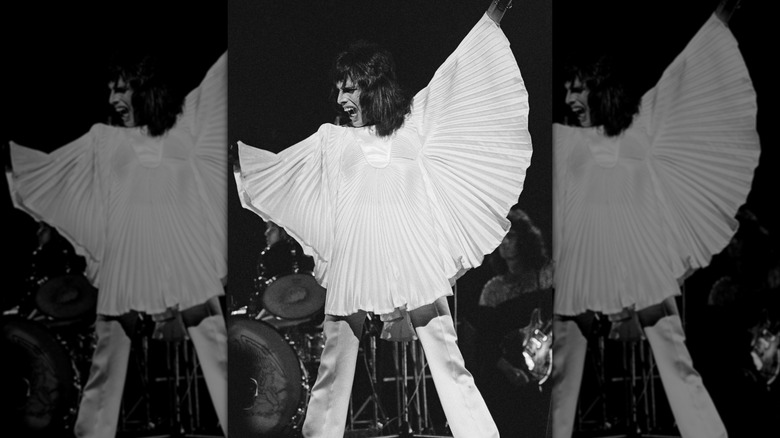
Queen frontman Freddie Mercury knew that rock wasn't just about the music (though he certainly brought the heat with his towering vocals). As he reportedly once told an audience, "It is not a concert you are seeing, it is a fashion show" (via AnOther). The selection from the '70s alone is dizzying, including leather suits, bedazzled leotards, and an iconic series of catsuits. Fashion designer Dame Zandra Rhodes often worked with Mercury to create some of his most unforgettable stage looks, including a dramatic pleated cape designed in 1974.
Jimmy Page
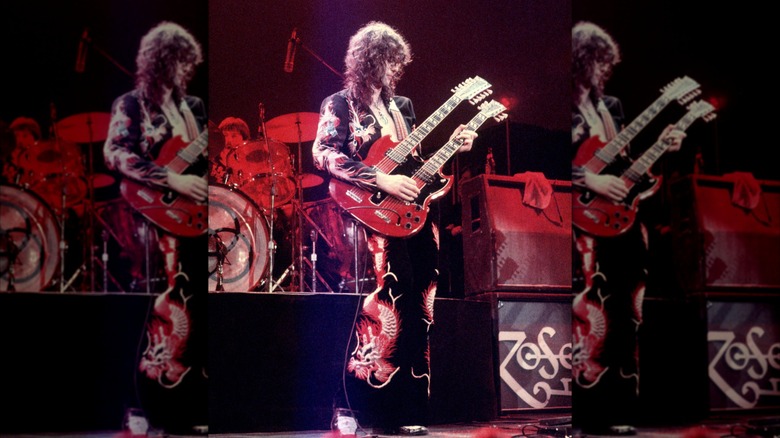
True to the name, Jimmy Page's "dragon suit" was a black outfit embroidered with colorful dragons, which Page wore at Led Zeppelin concerts throughout 1975 and 1977. He also sometimes sported a white suit emblazoned with red poppies. Both suits were donated to the Victoria & Albert Museum in 1980, though the decision caused Page serious angst, as he wasn't consulted on the donation. The V&A eventually agreed to swap the suits for a Page-approved donation that included another outfit, the unfinished but still pretty cool "Egyptian suit."
Kiss
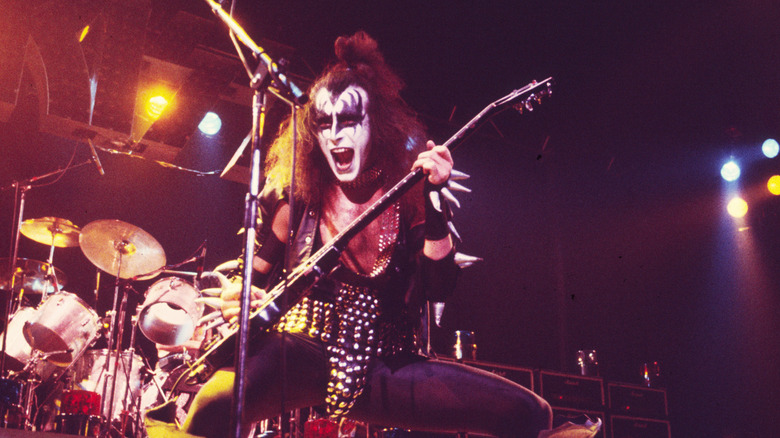
If any band's reputation was built on stage costumes, then surely it's Kiss. The group took to the stage in the '70s sporting elaborate full-face paint in white, black, and silver, going well beyond the glam rock look of the time because, ironically enough, they wanted to maintain an air of masculinity via makeup . They also sported stage costumes meant to grab attention, with a similar color palette, oftentimes skin-tight duds, towering heels, and edgy personas. The group attempted going makeup-free in the '80s, but fan reactions were so unimpressed that they went back to their previous look in the next decade.
Stevie Nicks
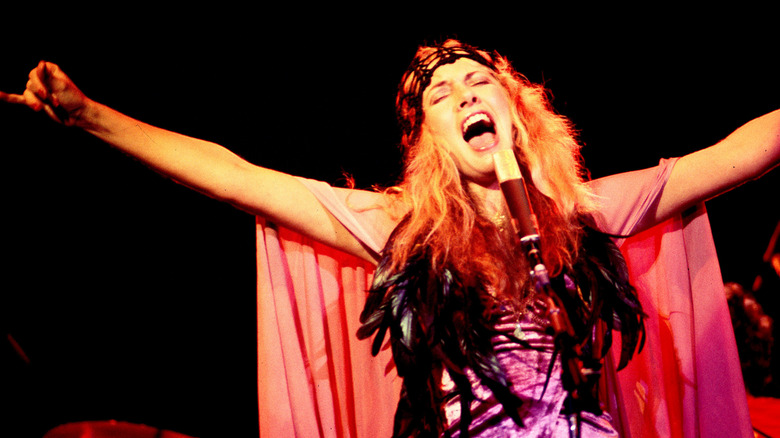
If you're on the more witchy side of fashion, then you're already keyed into the 1970s looks of one Stevie Nicks. While the singer-songwriter was recording and touring as part of Fleetwood Mac and developing a mysterious "spider woman" persona, she became known for a dreamy stage presence accentuated by ephemeral, flowing fabrics (oftentimes in dark, moody tones), lots of fringe, chunky boots, a top hat here or there, and the occasional bit of statement jewelry.
David Bowie
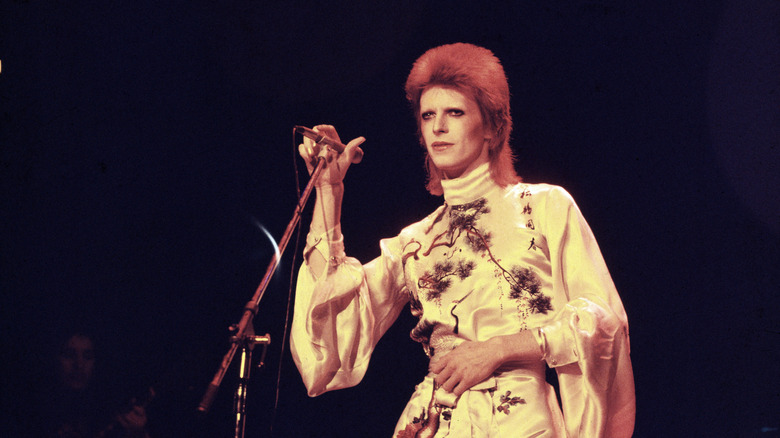
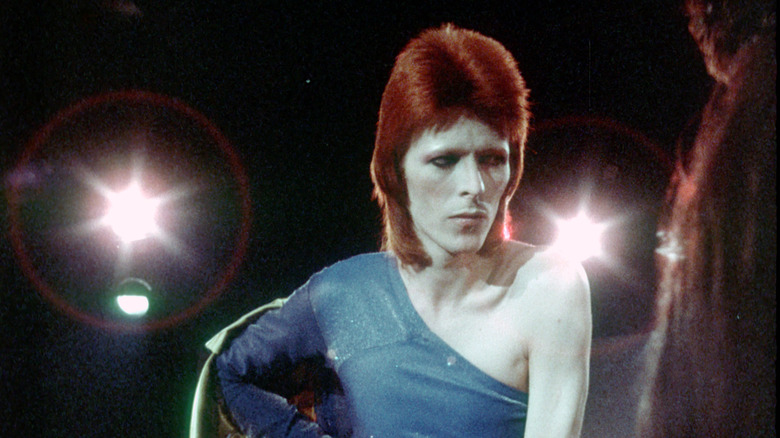
Who but David Bowie could epitomize the glam rock look of the 1970s? He helped cement the trend as the Ziggy Stardust persona, linked to his 1972 concept album, "The Rise and Fall of Ziggy Stardust and the Spiders from Mars." Ziggy sported a bright red, fluffy mullet, along with plenty of avant-garde makeup, an occasional eyepatch, and sparkling (and often quite revealing) stage wear. The persona was officially retired in 1973, leaving Bowie to transition to the more pared-down "Thin White Duke" stage of his career and paving the way for some of Bowie's most famous looks.
Alice Cooper
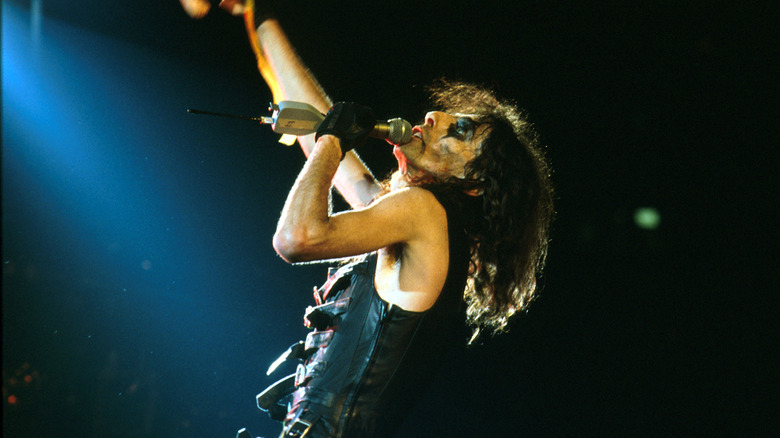
If a 1970s teen really wanted to shock their fuddy-duddy parents, then they could pretty efficiently do the job by putting up a poster of Alice Cooper. Though Cooper (real name Vince Furnier) is said to be a nice guy who's been happily married for decades, attends church, and plays golf, his stage persona was built on spectacle. This included dramatic costumes with plenty of tight black leather, dark eye makeup (though not enough to really conceal his true face), fake blood, live snakes, and pieces inspired by glam rock, including heeled boots and dazzling pants.
Rick Wakeman
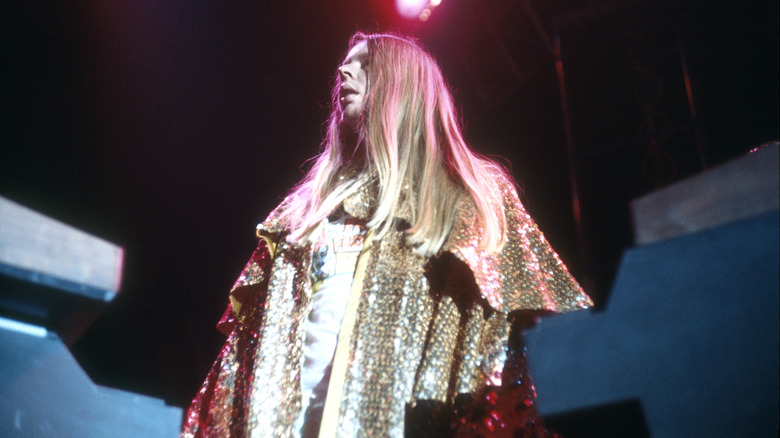
Rick Wakeman, the keyboardist and regular member of prog rock band Yes, has become famous for his fabulous, glittering capes. The genesis of this fashion-forward look came out of a rather cruel review that, as Wakeman told Electronic Music, "said that I played well but looked like a demented spider with legs and arms stretching everywhere." Catching sight of a caped DJ at a subsequent performance, Wakefield bought the man's gear then and there, made quite a splash, and began commissioning capes for subsequent tours.
Chris Squire
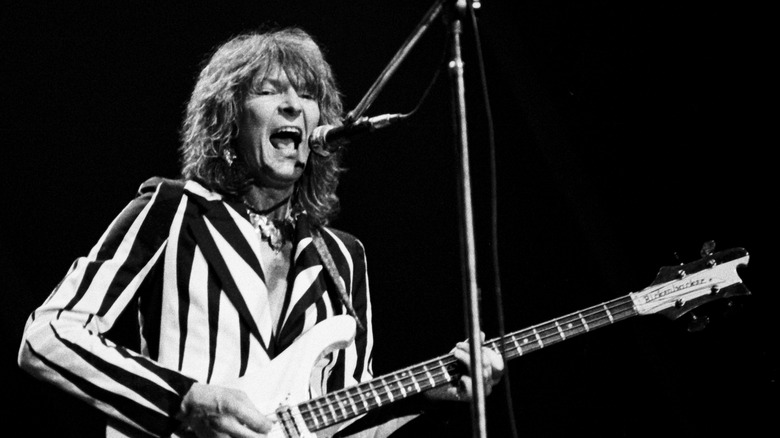
Bassist Chris Squire also made quite the fashionable mark performing with prog rock band Yes in the '70s. While keyboardist Rick Wakeman was doing his thing onstage in a cape, Squire was no fashion slouch. His looks often brought to mind kimonos, though with acid-bright colors and long, dramatic draping and a scatter of sequins or metallic thread. He also sported some more structured looks, sometimes with unique velveteen fabrics or striking black and white patterns that must have made spotting him from the back of the crowd easy.
New York Dolls
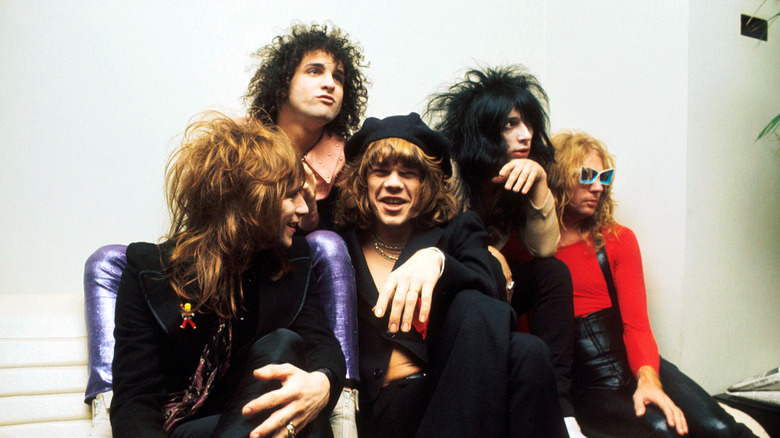
With a name like the New York Dolls, it's little wonder that this '70s rock band garnered attention for their glammed-up stage looks. These included 'fits that blurred the lines between genders (whether or not it was full-on drag is even now a matter of debate), complete with towering platform heels, plenty of makeup, towering teased hair, and enough shimmering lamé fabric to make a dance troupe swoon with jealousy. The original looks demanded a fair amount of creativity, too, with band members trolling thrift stores and borrowing makeup from relatives and girlfriends.