

How Long Does A Vinyl Record Last With Proper Care?
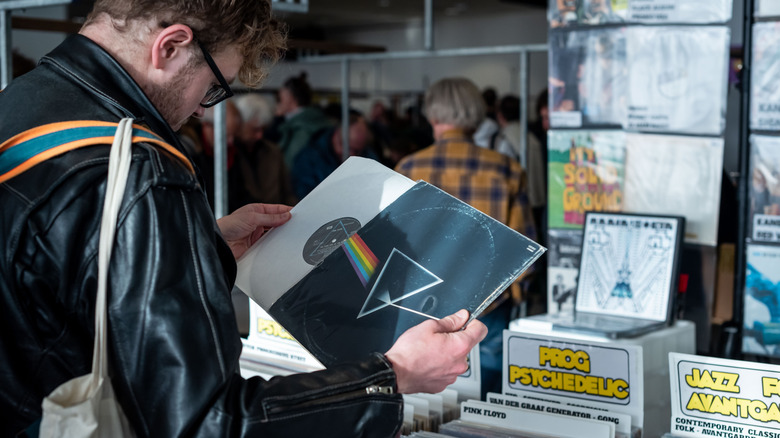
Though music may last forever, its media won't. Whether you've got a trove of vinyl on proud display next to your record player, or you're one of the new and proud generation of vinyl adherents to invest in the '70s music lover's mainstay, the direct-drive turntable, you owe it to yourself to take care of what you love. If you do, how long can a vinyl last? Longer than you, if we're being honest: about 100 years.
That 100-year lifespan comes with loads of provisos, though. Firstly, records really are made from vinyl, plus a whole lot of chemical wizardry that makes them very different from Catwoman Halloween costumes. Specifically, they're made from polyvinyl chloride (PVC). PVC, aka that stuff that some waste disposal and water management pipes are made from, is obviously meant to last a long time. But, its lifespan can seriously shrink if you batter, mistreat, or even slightly mishandle your vinyls day by day, bit by bit. Like anything you want to last — whether it be an acoustic guitar, a laptop, a book, or a pair of jeans — you've got to actively take care of your records.
On top of this, certain vinyls are more durable than others. Thicker (180 grams) means more long-lasting. Plus, if you've got a really old record (pre-World War II), it's likely made from shellac and is vastly more fragile than newer vinyls. And no matter what, the more you use it, the more likely it is to deteriorate.
Helping your vinyls reach 100 years old
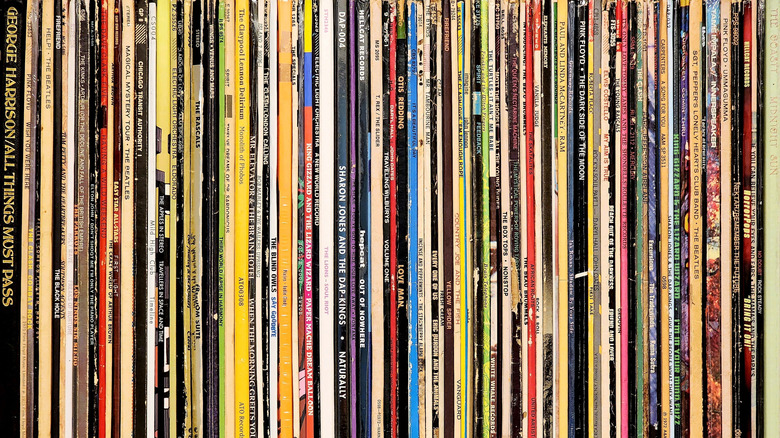
Records are very, very sensitive things, as the music is encoded on their surfaces in a series of grooves and troughs that look like miniature mountain ranges. When a needle tip passes through these ridges, its vibrations send an electric signal that mimics the sound waves that made the ridges. Magic, in other words.
All that fine-tuned, even microscopic, craftsmanship means one thing above all else: don't touch. Human skin oil, dandruff, fabric from your clothes, dust from the air, humidity that warps the surface, dampness, direct sunlight: All of these things wreck vinyls. If you're going to play your record, pick it up by the edges and don't touch the center area. And when you're not using it, put it back in its sleeve (one sleeve, one record), and store your records vertically — none of this horizontal stacking business. Also, don't physically stop the record from spinning at any point; let it stop naturally.
Then there's cleaning. You've got to use a vinyl-specific cleaner, brush, and cloth to wipe the records clean now and then. The turntable itself needs to be cleaned, too, much like how you wouldn't eat off a grimy plate (we hope). And those thin, paper inner sleeves? You should replace those, too, from time to time. Just put on "The Dark Side of the Moon" or something while you replace all of them for all your records, at one time. Make it fun and spacey. Even if your vinyls don't reach 100 years old, they'll definitely outlast cassettes (whose sales have skyrocketed thanks to TV shows and movies), which die within 30 years, max. Good thing you went with vinyl.