

5 Classic Songs That Will Remind Boomers Of Their First Best Friend
While there are no doubt more songs about romantic relationships, there are also plenty about friendship. Boomers (those born between 1946 and 1964) grew up with countless cuts celebrating the loyalty, kindness, and unconditional support that exists between true pals. And to this day, certain classic songs from the '60s, '70s, and early-to-mid '80s continue to transport them back to simpler times spent with their first best friend. The songs can be like a warm hug, reminding you that true friendship is unconditional, lifelong, and perhaps just an easy, long-delayed phone call away.
Throw on Bill Withers' "Lean on Me" or Dionne Warwick & Friends' "That's What Friends Are For," and hear declarations of support and shoulders to cry on. On The Beach Boys' "Friends," you hear an aching, nostalgic portrait of lifelong friendship, while Jefferson Airplane's "My Best Friend" tells us that a best friend frees your mind. And then there's Andrew Gold's "Thank You for Being a Friend," a pitch-perfect late-'70s pop ode to lifelong loyalty. Heartwarming and unafraid to be sentimental, these classics remind boomers of the special people who were always there for them.
In assembling this list, we included songs spanning from the '60s to the '80s, when many boomers were in their teens and 20s. We also sought classics across pop, rock, and R&B genres, reflecting this era's musical diversity and innovation. But most of all, if you're a boomer, they're guaranteed to make you think of your first best friend: the one at your side as you found your way in the world.
Friends — The Beach Boys
The title track of The Beach Boys' "Friends" album from 1968 flew somewhat under the radar in its day. It barely cracked the top 50 of the Billboard Hot 100, which is a shame because it's a sublime psychedelic gem. The song floats on beautiful harmonies, groovy but minimal arrangements, bright sonic spaces, and sweet and heartfelt lyrics. It's the latter that makes boomers misty-eyed as they think of their first best friends.
Most people checking "Friends" out in 1968 got to know The Beach Boys years before the song's release through youthful early hits like "Barbara Ann" and "Surfin' USA." But rather than celebrating young love, partying, surfing, driving, or living in the moment, this song is grown up; it finds the band in adulthood and looking back. With Brian and Carl Wilson singing the leads, lines like "We've been together through the good times and the tears / Turned each other on to the good things that life has to give" convey the profound impact a best friend can have.
It takes life experiences — both good and bad — to show you the true value of a friendship. "I loaned you money when the funds weren't too cool," goes the third verse, "I talked your folks out of making you cut off your hair." If there's one person who understands you and is always in your corner, it's your best friend.
Thank You for Being a Friend — Andrew Gold
The late-'70s pop confection "Thank You for Being a Friend" is as heartfelt and pure an ode to friendship as any — and catchier than most. Written and recorded by songwriter, singer, and multi-instrumentalist Andrew Gold, this piano pop tune doesn't shy away from its message of gratitude and lifelong support. Perhaps the most powerful moment comes in the bridge, which zooms out and lays everything bare. "And when we die and float away / Into the night, the Milky Way," Gold sings against a spacey backdrop, "You'll hear me call, as we ascend." The connection between best transcends time and space; it becomes etched into the stars.
Though Gold saw more chart success with 1977's "Lonely Boy" and his many collaborations with artists like Linda Ronstadt and Art Garfunkel, "Thank You for Being a Friend" did well when it came out in 1978. It spent 15 weeks on the Billboard Hot 100, peaking at No. 25. However, the song caught a second wind 10 years later, when a version recorded with singer Cynthia Fee became the theme song of "Golden Girls." While Dorothy, Blanche, Rose, and Sophia were members of the silent generation (born before the end of World War II), the show certainly resonated with boomers.
"Thank You for Being a Friend" is perfect pop and another song from the '70s that sounds even cooler today. Nostalgic and sweet, it continues to get boomers to reminisce about the special people in their lives: their first best friends.
Lean on Me — Bill Withers
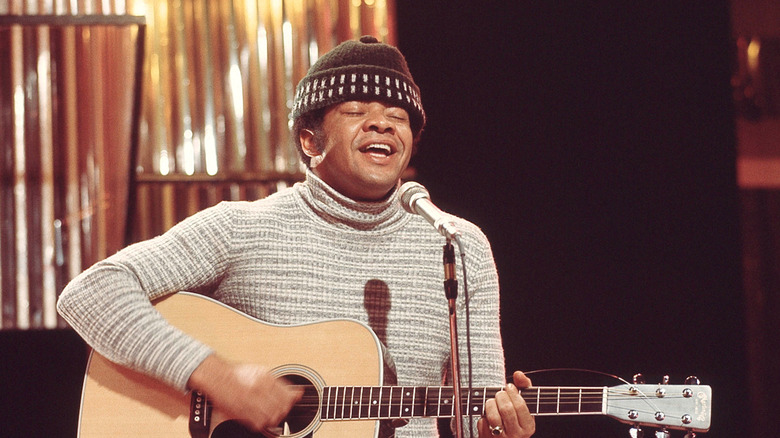
When Bill Withers passed away in 2020, we lost a true master in stirring up emotion. The songwriter and singer's music has almost medicinal properties; it soothes the soul like a bowl of chicken soup does cold symptoms. And among songs that capture the profound power of friendship, few are as sweet, catchy, and powerful as "Lean on Me." Spending three weeks at No. 1 on the Hot 100 in 1972, it's one of Bill Withers' most popular songs and a nostalgic masterpiece of the era. When Withers was inducted into the Rock & Roll Hall of Fame in 2015, his performance of "Lean on Me" with Stevie Wonder and John Legend had the audience clapping and completely enraptured. For decades, this song's been at our side.
Set off by one of the most memorable piano riffs in '70s R&B, "Lean on Me" — like many of Withers' recordings — hugs its listeners. Authentic and direct, the lyrics remain some of the sweetest in pop music. Boomers and non-boomers believe Withers when he sings the third verse: "If there is a load you have to bear / That you can't carry / I'm right up the road / I'll share your load / If you just call me." What makes "Lean on Me" especially powerful is that the song urges us to be unafraid of asking for help. It reminds us that friendship is a two-way street, and that our best friends are those that help us up when we need it most.
My Best Friend — Jefferson Airplane
Off the legendary "Surrealistic Pillow" album released the February before the Summer of Love in 1967, "My Best Friend" is the grooviest on this list. Elevated by Jefferson Airplane's characteristic layers of vocals and sunny folk-rock arrangements, it tells us that our best friends are a crucial part of our trip. Dosed with the psychedelic sounds emerging from San Francisco in its '60s heyday, the song presents friendship as mind-expanding and liberating. "Now I can see I've fallen into your love stream," goes one line, followed by, "I follow your dream." Your best friend is someone who's as far out as you are.
"My Best Friend" was penned by Jefferson Airplane's original drummer, Skip Spence, who left the band in 1966 and would go on to co-found Moby Grape. And as with much of their material at that time, the interplay of Marty Balin and Grace Slick's vocals makes the song sublime. In contrast to headier tracks on "Surrealistic Pillow," like "White Rabbit," it's lighter and poppier but no less touching. The song adds to the sonic tapestry of the record that brought psychedelic rock from the underground to the pop charts. With "Surrealistic Pillow" reaching No. 3 on the Billboard 200, "My Best Friend" no doubt spun on turntables as boomers bonded, tuned in, dropped out, and became best friends.
That's What Friends Are For — Dionne Warwick & Friends
The youngest boomers turned 21 in 1985 when Dionne Warwick & Friends — Elton John, Stevie Wonder, and Gladys Knight — released Burt Bacharach's "That's What Friends Are For." But this ode to lifelong loyalty can provoke nostalgia in any member of that generation. Sung by Warwick, the first verse asks us to hold on to those we cherish: "And if I should ever go away / Well, then, close your eyes and try / To feel the way we do today." Sealing the deal are the harmonies of all four singing together in the final chorus: "For good times and for bad times / I'll be on your side forevermore, Oh." It sounds effortless and easy, as if coming from old, intimate friends.
Behind the scenes, "That's What Friends Are For" marked a major personal reunion. Along with songwriting partner Hal David, Burt Bacharach discovered music icon Dionne Warwick and helped her get started in the business. He penned formative '60s hits for her like "Anyone Who Had a Heart," "Walk on By," and "I Say a Little Prayer." But by the early '70s, the partnership crashed out, leading to a lengthy legal dispute over contracts (eventually settled out of court). With the song, bygones became bygones. "We realized we were more than friends. We were family," Warwick told The News Journal in 1997, adding, "Time has a way of giving people the opportunity to grow and understand" (via Biography). Audiences understood; it hit No. 1 on the Billboard Hot 100 and netted Bacharach his first and only Grammy for song of the year. That's the power of friendship.