

'70s High School Hits With Supremely Singable Lyrics
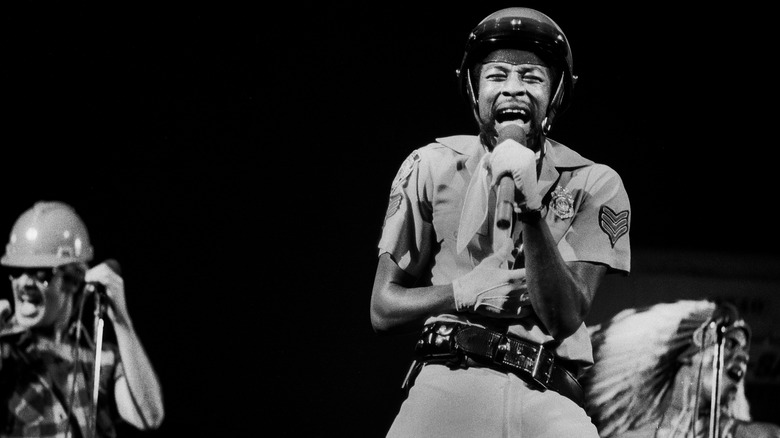
For high schoolers in the 1970s, music was paramount, and plenty of songs resonated with teens of the time. While some tracks rocked out, others made you want to dance or, alternately, get into your feelings. One thing all genres and formats could do, though, was make you want to sing along. Here, we're highlighting some of the tunes that high schoolers loved to sing in the '70s.
A high school hit can be anything that would have resonated with teens. Sometimes, these songs have lyrics that are geared toward the youth, while others may have to do with love, crushes, or those kinds of all-encompassing feelings that many young people grapple with for the first time. Of course, some tunes are easier for the masses to sing than others. And while it's fun to pretend we can hit those high notes trying to sing the lyrics to Queen's "Bohemian Rhapsody" or carry the tune properly for ABBA's deceptively simple-sounding "Dancing Queen," we quickly realize we cannot.
In the '70s, there were plenty of great songs that were irresistible to sing along with, consequences be damned. For our picks, we look at a variety of styles of singable songs from the Jackson 5 to Alice Cooper, Janis Joplin to the Village People. These hit songs were fun to sing for kids in high school in the '70s and have retained that quality throughout the decades.
School's Out — Alice Cooper
In 1972, Alice Cooper gifted students everywhere an anthem celebrating the kick-off to summer with "School's Out." That last day of school feeling is like no other, with months ahead of "No more pencils, no more books / No more teachers', dirty looks." The delivery of that part of the song is literally sing-songy, almost like a nursery rhyme from the Godfather of Shock Rock.
Cooper said on the podcast "Rock & Roll High School with Pete Ganbarg" that he set out to write an anthem after seeing how The Who pulled it off: "We understood what an anthem was after hearing 'My Generation' ... 100 years from now, a 16-year-old kid hears that song and goes 'Oh, he's talking about me!'" Cooper went on to say that track inspired him to write "School's Out" with a goal in mind. "If you could capture the last three minutes of the last day of school before summer vacation, that would be a joyous song even though it was subversive," he explained.
"School's Out" became an anthem for students, complete with the chorus' chant beginning with "School's out for summer!" The song was even debuted on the Billboard Hot 100 chart in June 1972, peaking at No. 7 at the end of July. No doubt, high school kids were singing that one all summer long.
I'll Be There — Jackson 5
From the first lines of the Jackson 5's 1970 hit, "I'll Be There," it's hard not to go all in. The song has a great lede in the opening lyric, "You and I must make a pact." Right then and there, we know this is serious. The song is a duet of sorts, with verses sung by Michael Jackson when he was about 12 years old and the chorus in a lower register handled by his brother Jermaine Jackson, who was almost 16 when the song was recorded. The Jackson 5 had a meteoric rise, and part of that was because the group was extremely relatable to the youth of the time.
"I'll Be There" was the band's biggest hit and its fourth in a row to go to No. 1, where it stayed for five weeks, so you know it got some serious traction in the singing-into-hairbrushes-in-the-mirror arts. The Jacksons deliver a tender and loving track, with singable lyrics like, "I'll reach out my hand to you / I'll have faith in all you do / Just call my name and I'll be there," and it's made all the sweeter by Michael's prepubescent, high voice. Though no one that age could possibly have a handle on the ins and outs of romantic love, the song resonates with the idealism of youth and those feelings you think will last forever. When Jermaine kicks in, we get a little more optimism and soul, and his vocal range is much more forgiving to accompany. Regardless, it's a beautiful song that is irresistible to sing along with.
Me and Bobby McGee — Janis Joplin
Janis Joplin's "Me and Bobby McGee" is a song about adventuring around the U.S. with a romantic partner, focusing on the kind of exploration and freedom that many teens fantasize about as they embark on adulthood. The song was released in January 1971 as a single, just a few months after Joplin died in October 1970. By March, it had hit the top spot on the Hot 100, where it stayed for two weeks.
It wasn't always easy to sing along with Joplin, as her full-throated, powerful voice was often punctuated with a rawness, emotion, and range that most high school kids (and everyone else) were incapable of. But with "Me and Bobby McGee," penned by Kris Kristofferson, Joplin keeps it reined in, and people can joyfully sing along. The song tells the story of a relationship forged in travel and the intimacy shared through the ups and downs: "From the Kentucky coal mine to the California sun / Yeah, Bobby shared the secrets of my soul / Through all kinds of weather, through everything we done / Yeah, Bobby baby, kept me from the cold." It has universal themes of wanderlust, love, and heartbreak, as Joplin sings of how much she misses her Bobby McGee after it's all over. "But I'd trade all of my tomorrows for one single yesterday / To be holdin' Bobby's body next to mine," she sings.
It's an immensely singable song — until the end, when it's capped by a bunch of "La da da la da da da, la da da da da da das" along with some masterful freestyling. That's where Joplin reminds everyone she is the singer here, not you. Know your role, class of '71.
Y.M.C.A. — The Village People
Love it or hate it, the Village People's "Y.M.C.A." is supremely singable, and we're talking about the '70s here, so it would be wrong not to include a disco song. The fabulous disco divas of yore had voices that soared to places most of us will embarrass ourselves trying to reach. But the Village People's biggest hit, which reached No. 2 in February 1979, is sung in low registers, so it's one that even high school principals could pull off, and we're betting some of them did.
From the first high-energy notes of the song, it's clear that Y.M.C.A. requires participation. It's not for listening to as much as singing and moving your body to. Though the song is upbeat, it's geared toward men who need a little help, and they can find it at the YMCA, singing all the way there: "Young man, there's no need to feel down, I said / Young man, pick yourself off the ground, I said / Young man, 'cause you're in a new town / There's no need to be unhappy / Young man, there's a place you can go, I said / Young man, when you're short on your dough you can / Stay there, and I'm sure you will find / Many ways to have a good time."
The song is mostly interpreted as an anthem for gay men, but songwriter Victor Willis said that wasn't his intention. "I wrote it about hanging out in urban neighborhoods in my youth," he told Australia's News.com.au. "'You can hang out with all the boys' was a term about me and my friends playing basketball at the Y. ... I'm happy the gay community adopted it as their anthem. I have no qualms with that." Either way, the song is supremely singable and has been so since 1979.