

The Story Behind The Jackson 5's Unlikely Meteoric Rise
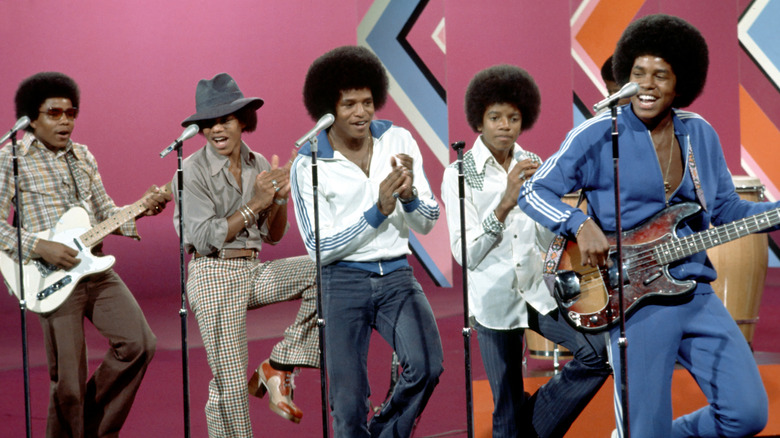
If it wasn't for the sheer singing, dancing, and overall musical talent of the Jackson 5, and the undeniable charisma of its members, it's unlikely that the family band from Gary, Indiana, would have so rapidly ascended to become one of the most dominant pop acts of the 1970s. Their music was intended for a juvenile audience, but it was produced and presented by the Motown Records machine, which churned out pop, soul, dance, and R&B hits like they were factory-made goods. That team-up between the Jackson 5 and the influential label proved perfect and precise: The group helped define the early '70s sound with joyful and irresistible numbers such as "ABC" and "I Want You Back," as well as sweet ballads like "I'll Be There."
Of course, the Jackson 5 had an advantage over all the other vocal groups and pop artists of the day: Jermaine, Tito, Marlon, and Jackie Jackson had Michael Jackson. Not even a teenager when the Jackson 5 emerged, he showed all the skills and gifts of the superstar he'd eventually become. But Jackson became the King of Pop only after taking his brothers to the top of the charts and around the world. Here's a look at the rapid and monumental rise (and slow, eventual decline) of the Jackson 5.
The Jackson 5 could've been the Jackson 3
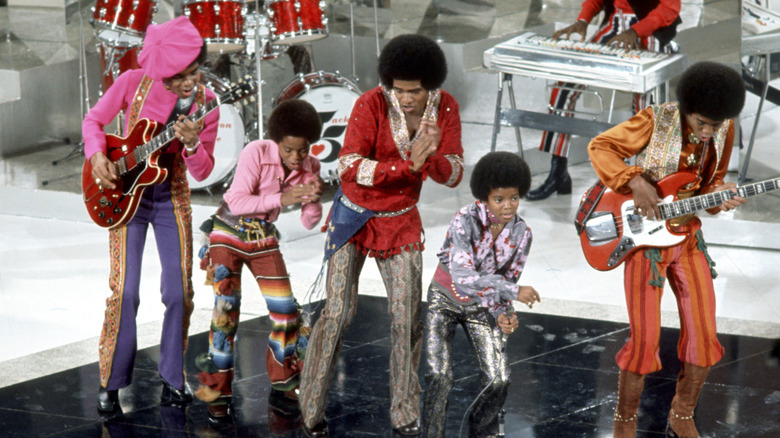
The overbearing father of the Jackson brothers, Joe Jackson, was originally a blue-collar worker and former guitarist for a small band called the Falcons. He realized his sons' musical talents — and the riches they could bring — after Tito, Jermaine, and Jackie Jackson were caught playing Joe's old guitar. Joe's initial anger turned into a vision, and by 1962, the three Jacksons, along with a couple of cousins, had formed a group and were playing local shows.
Before long, the cousins were out and brothers Michael and Marlon Jackson were in. "One day Michael joined us, playing bongos on a Quaker oatmeal box," Jackie Jackson said in Fred Bronson's book "The Jacksons: Legacy" (via GQ). "He played them so well, we thought he should be part of the group." Displaying mastery of the dance moves he learned by copying James Brown and Jackie Wilson, as well as a natural stage presence and exceptional singing ability, Michael Jackson not only got to be in the band — he was made the frontman.
In 1966 and 1967, the group ran through names like the Ripples & Waves Plus Michael and the Jackson Brothers before settling on the Jackson 5, and then won talent shows in Gary and at the Apollo Theater in New York. In 1968, the Jackson 5 made its first recordings, a 45 of "Big Boy" backed with "You've Changed" for a small Indiana label, Steeltown Records.
Diana Ross boosted the Jackson 5
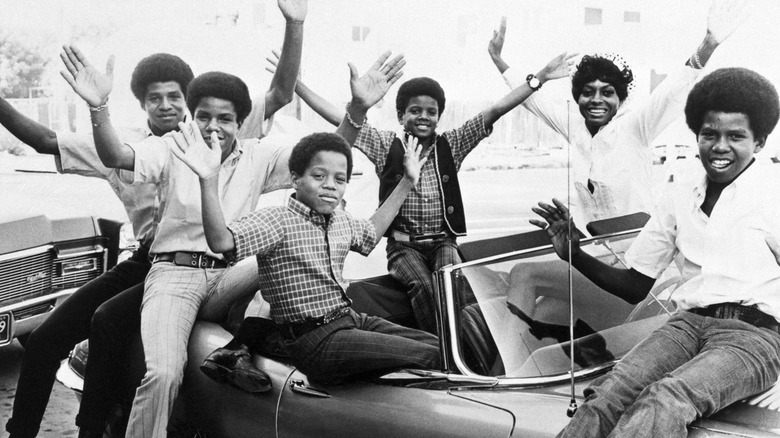
The Jackson 5 honed its skills in the traditional way, playing tons of gigs before earning the attention of the late 1960s music industry, contracting with the iconic R&B label Motown Records in 1969. Rather than just release its music to radio and book the Jackson 5 performance slots on TV talk and variety shows, Motown linked the rising act to one of its most famous and storied stars, Diana Ross of the Supremes.
After decamping to Los Angeles for recording sessions of songs written for the band by veteran Motown songwriters, overseen by label head Berry Gordy, the Jackson 5 was presented to the public for the first time at a publicity event in Beverly Hills, headlined by Ross. Just after their signing, the Jackson 5 also played Ross' lavish and star-studded birthday party, and were trotted out in front of fellow Motown acts Stevie Wonder and Smokey Robinson. Then, timed to around when Ross left the Supremes, the singer personally debuted the Jackson 5 on TV's "Hollywood Palace." Ross' name appears on the notes for the first Jackson 5 album, which also bore her tacit approval, titled "Diana Ross Presents the Jackson 5."
But Diana Ross didn't really discover the Jackson 5
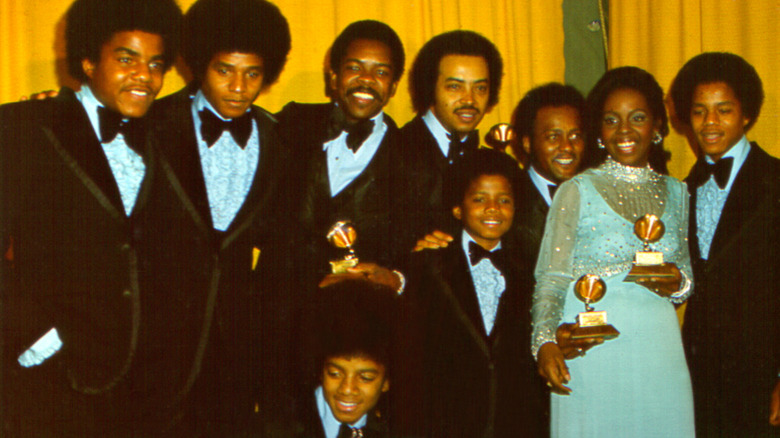
Diana Ross discovering or having anything to do with the rise of the Jackson 5 was really a headline-grabbing fabrication, orchestrated by Motown Records as a marketing strategy. A different Motown star, albeit one with less clout and time with the company than Ross, was more directly responsible: Gladys Knight. During a week-long stint in Chicago in 1969, Joe and Katherine Jackson brought their five children to see her every day, pleading with her to get an introduction to Motown brass. Knight, after watching the singers perform and being completely dazzled, hipped the label to their existence and recommended someone scout them.
Meanwhile, the Jacksons also petitioned Motown house producer Bobby Taylor to check out the Jackson 5. They found him in his apartment and sang for him, whereupon Taylor summoned Suzanne de Passe, a low-level Motown advisor who'd been hired about two weeks earlier and who happened to live in the same complex. After that, and upon the recommendations of Taylor and de Passe, things started moving in the Jackson 5's favor.
The Jackson 5 was huge in the early 1970s
The careful, deliberate, high-profile, and media-saturating launch of the Jackson 5 paid off, and it paid off quickly. Its first three LPs, "Diana Ross Presents the Jackson 5," "ABC," and "Third Album," were all released within a nine-month period across 1969 and 1970, and its singles zoomed up the pop chart right away. From January through October 1970, the Jackson 5 made a stunning run of the Billboard Hot 100, reaching No. 1 no less than four times with "I Want You Back," "ABC," "The Love You Save," and "I'll Be There." No artist in pop music had ever made it to No. 1 with their first four singles.
The Jackson 5 nearly extended that impressive streak into 1971. But then its next two non-holiday singles, "Mama's Pearl" and "Never Can Say Goodbye," could only muster No. 2 positions. Indeed, while the Jackson 5's future was bright, it would never again replicate that barnstorming debut year of 1970.
The Jackson 5 had its own Saturday morning cartoon
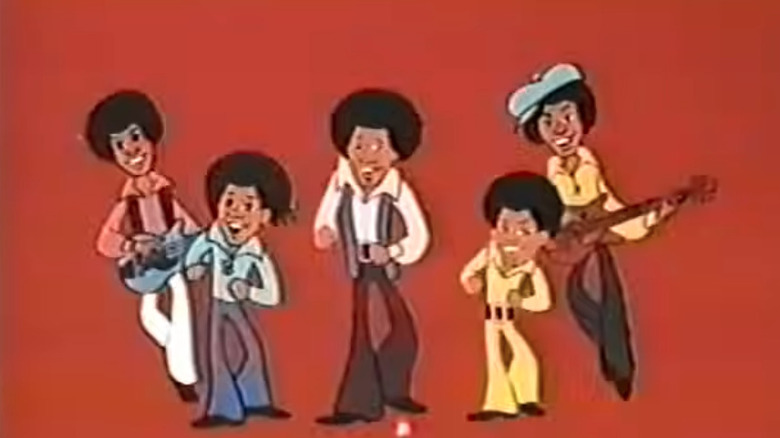
In the first few years of the 1970s, the public appetite for all things Jackson 5, which label Motown Records called "Jacksonmania," was robust, particularly among kids. The Jackson 5 was a legitimate group with sophisticated hits, but it was still marketed as a bubblegum act to a young audience, and as such that led to "Jackson 5ive," a Saturday morning cartoon show about the five brothers that debuted on ABC's lineup in the fall of 1971.
Apart from their songs being used in the series, the members of the Jackson 5 had very little involvement in the series. While their public benefactor and supposed discoverer, Diana Ross, voiced herself in one episode, the cartoon Jackson characters' performances were provided by veteran cartoon voiceover actors; Donald Fullilove, best known as Mayor Goldie Wilson in "Back to the Future," played Michael Jackson, for example. The plots were absurd cartoon nonsense, such as being mistakenly conscripted into the army, being wanted for crimes they didn't commit, or stopping a rich guy from tearing down a forest.
Only 23 episodes were produced, which aired on Saturday mornings for two years before disappearing from circulation. However, they were offered for weekday syndication in the mid-1980s, during the peak of popularity of Michael Jackson's "Thriller."
It launched solo careers right away
Jermaine Jackson was the third-oldest member of the Jackson 5, and turned 18 years old in 1972, making him the right age and a prime candidate for Motown to present as a teen idol. But the overwhelmingly obvious breakout star of the Jackson 5 was its youngest and lead singer, Michael Jackson. Motown didn't have to decide which Jackson would have a solo career at the height of the Jackson 5's popularity — it went with both.
In early 1973, between releases by the family band, Jermaine's debut solo single was released. "Daddy's Home" was a ballad more mature than the usual Jackson 5 fare, and showcased the soulful voice of a performer who usually sang backing vocals. It was also a smash, reaching No. 9 on the pop chart. In fact, while he'd never get as much press as his relatives, Jermaine was a solid hitmaker, landing songs in the Top 40 of the pop and R&B charts all the way into the 1990s.
Michael's solo career began in 1971, when he was 13 years old. "Got to Be There" cruised into the Top 5, as did "Rockin' Robin" in 1972, followed by "Ben." The latter is an impassioned ballad of friendship and loneliness, and was the love theme from the 1972 rat-based horror movie of the same name. It was also the first of Michael's 13 No. 1 smashes, most of which came when he was the most prolific No. 1 hitmaker of the 1980s.
The Jackson 5 inspired a lot of imitators
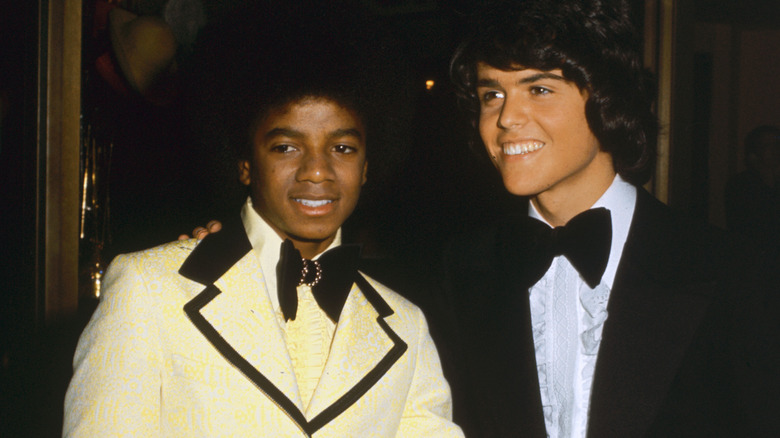
After the Jackson 5 quickly became the biggest thing in pop music and a money maker for Motown Records, other sectors of the recording industry took notice, and soon numerous other labels trotted out what they hoped would be their own version of the Jackson 5. That meant the pop music world was flooded with vocal acts usually consisting of teenage and younger siblings with matching outfits and tight choreography, as well as one photogenic star member positioned to receive the most attention for their preternatural singing ability or appeal to the teen magazine-reading demographic.
Most of the Jackson 5 knockoffs and competitors went on to become '70s musicians we completely forgot about. The toothy and clean-cut Osmonds had a No. 1 hit with "One Bad Apple" and launched a family entertainment empire, the DeFranco Family featuring Tony DeFranco went to No. 3 in 1973 with "Heartbeat – It's a Lovebeat," and the brothers and sisters in the Sylvers made it to No. 1 in 1976 with "Boogie Fever." Even the fictional sitcom band the Partridge Family (with David Cassidy) benefited from the environment created by the Jackson 5.
The momentum continued into the '80s, when family bands like the Jets and DeBarge used the Jackson template to great success.
When the Jackson 5 became the Jacksons
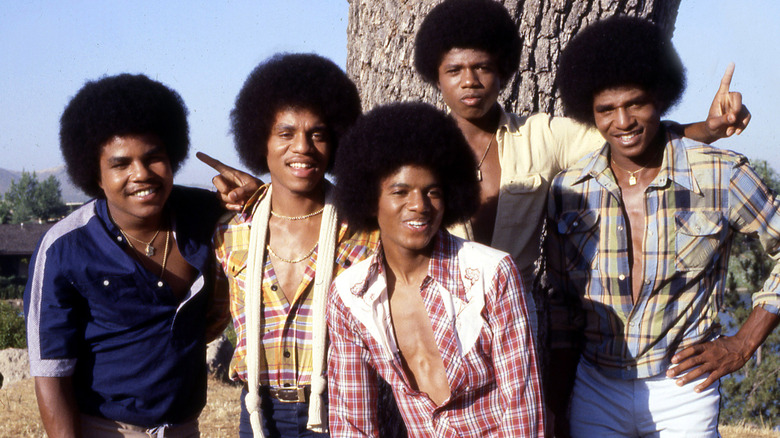
In the first half of the 1970s, the Jackson 5 sold 60 million albums, but the family saw precious little of the fortune generated for Motown Records. The group was entitled to a paltry 2.8% royalty rate, so father and manager Joe Jackson sought better financial terms, as well as more creative freedom and less label interference over his children's music. In 1975, after some back and forth, the Jackson 5 moved to Epic Records, a division of CBS/Columbia Records, where the singers stood to receive a generous 20% royalty at their new professional home. It was a switch all the more complicated for Jermaine Jackson, who at the time was married to Motown boss Berry Gordy's daughter, Hazel Gordy, and delayed his decision about his future.
The jump to a new label represented a major shift in many ways for the Jackson 5, starting with the group's name, which Motown had trademarked. That meant the group had to ditch what had become a household name: Going forward, with a 1976 self-titled album, the group was henceforth known as the Jacksons. Jermaine Jackson had little choice but to ultimately remain with Motown Records, where he had an active solo career and personal connections, which meant he couldn't be a member of the Jacksons. Taking his place in the lineup was younger sibling Randy Jackson.
Michael Jackson overshadowed his brothers in the '70s
The Jacksons' older, more sophisticated, funky, and disco-sampling music of the late 1970s wasn't something the public wanted lots of, at least not to the same degree as when it clamored for the effervescent pop hits of the former Jackson 5, just a few years earlier. Under the new name, the smash hits were few and far between — only "Enjoy Yourself" and "Shake Your Body (Down to the Ground)" made it to the Top 10.
The Jacksons also flopped when it attempted a move into television. While there were loads of musical variety shows hosted by big-name acts on the airwaves in the 1970s, the one starring the Jacksons didn't connect with audiences. "The Jacksons," which prominently featured singing and dancing by Michael Jackson and also starred previously little-seen sisters Janet and La Toya Jackson, lasted just 12 episodes in the 1976-1977 season and was canceled with poor ratings, finishing in 70th place out of 101 shows.
However, Michael's star continued to rise. His 1979 solo album "Off the Wall" was massive, quickly selling a million copies and sending four singles into the Top 10, including the chart-topping "Don't Stop 'Til You Get Enough" and "Rock With You." And yet the Jacksons kept going, evolving into an '80s musical group we completely forgot about.
Michael Jackson didn't tour for Thriller, but he did for his family
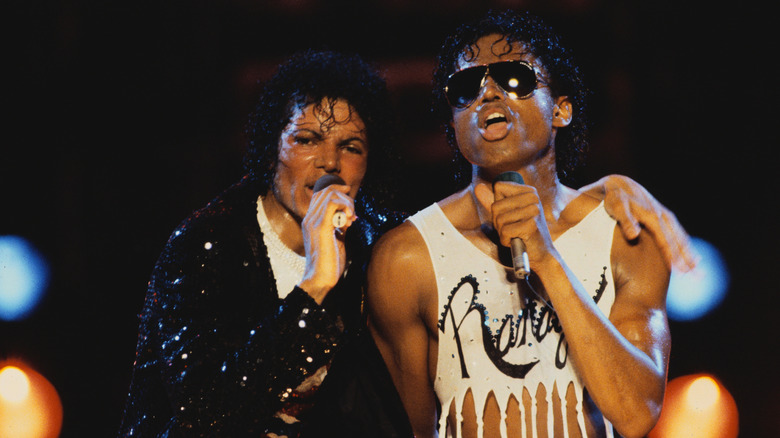
In 1982, Michael Jackson released "Thriller," which eventually sold 34 million copies in the U.S. alone, enough to make it the most popular studio LP ever. When the dominance of "Thriller" died down in 1984, Jackson released a follow-up: "Victory," an album with the Jacksons, which sold a comparatively paltry 2 million copies. And yet the big Jackson tour of the era wasn't for "Thriller," it was one to promote "Victory," at the urging of Jackson family patriarch Joe Jackson.
"Michael has had very big success, and sometimes the success of the Jacksons got undermined a bit. I think the tour is a chance for us to show our success, too," Tito Jackson griped to People in 1984. The set list was split between Michael's solo work, Jackson 5 and Jacksons songs, and some Jermaine Jackson hits — who'd rejoined the act after a long absence.
The "Victory" tour was a significant undertaking, with 30 trucks hauling equipment from city to city, where 300 laborers constructed a stage that weighed 700,000 pounds, was five stories tall, and took up 20,000 square feet. While the events made a record-setting amount of money — $75 million — it was disastrous. The Jackson brothers stopped speaking midway through, Michael required medical attention for dehydration and exhaustion, and business arrangements were handled in a sloppy and haphazard way. Promoters Chuck and Billy Sullivan took such a financial hit that they had to sell the New England Patriots.
The Jacksons got back together after Michael Jackson's death
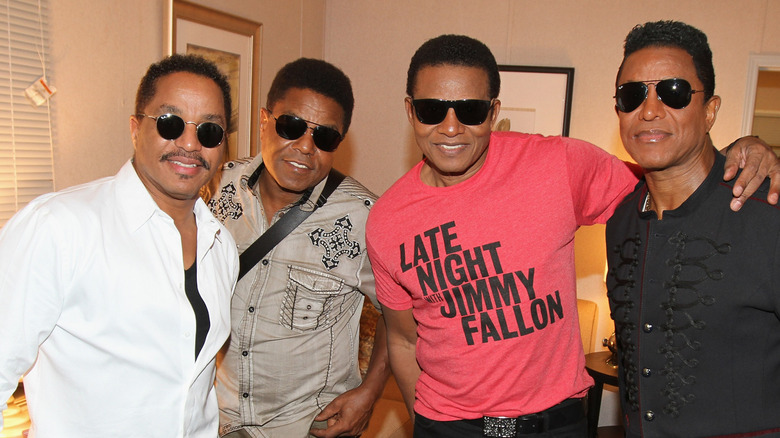
In 2009, Michael Jackson died at the age of 50. Three years later, his four surviving brothers got their original band back together without its most famous and pivotal member, with Jermaine, Marlon, Tito, and Jackie Jackson reuniting for the "Unity Tour 2012." The modest road trip took the unofficially nicknamed "Jackson 4" into theaters, casinos, pavilions, and winery amphitheaters for 27 concerts in the summer of 2012, a decidedly scaled-down affair when compared to the last time so many Jacksons performed together during the 1985 "Victory" jaunt.
With Jermaine Jackson tapped to be the primary vocalist, the set list of about two dozen songs treated audiences to songs the brothers made famous decades earlier, including hits from their Jackson 5 and Jacksons eras. Oddly, they also delivered some Michael Jackson solo favorites with which they'd never had any involvement, including "Rock With You" and "Gone Too Soon," while images and clips of Michael Jackson occupied a large screen during shows. "With Michael not being with us anymore, who better to do his material than his brothers?" Tito Jackson posited to Billboard. "The music lives on, and we just feel that he's a part of us. He's on stage. We feel his spirit, and he's there."