

Riffs That Still Rip: Led Zeppelin's Candy Store Rock & Other Classics Released 50 Years Ago This Week
Welcome to the first edition of Riffs That Still Rip, a biweekly column where we unearth some absolute classics that deserve a modern spin.
In the third week of June 1976, new songs appeared that would go on to help define the classic rock canon — and still rock today. Summer was starting, and established acts like Rod Stewart and Led Zeppelin unveiled their latest envelope-pushing masterpieces, and newer bands such as AC/DC and Blondie were also making waves at the start of legendary careers. These tunes have been around for so long that it's tough to imagine a time when they were just the latest new songs hitting the radio or competing for attention at record stores. Almost immediately, they were well on their way to becoming classics of then-emerging sub-genres like hard rock, new wave, folk rock, and arena rock.
Between June 14 and 20, 1976, songs that would go on to be hit singles, important tracks, or radio staples were just gracing the public's ears for the first time — and how lucky were those first listeners? Here are a few songs, some enduring and some that have needlessly slipped into semi-obscurity, that were getting attention 50 years ago this week and which should be popped onto your turntable (or 8-track player) pronto.
Jailbreak — AC/DC
Until the death of AC/DC's Bon Scott brought about a new era with new lead singer Brian Jonson, the Australian hard rock band enjoyed an increasingly high profile in the U.S. and the U.K. Included on some versions of the 1976 album "Dirty Deeds Done Dirt Cheap," "Jailbreak" is among AC/DC's best and (best-known) songs from the Scott years. Embracing, presenting, and bragging about the danger so inherent to rock 'n' roll, "Jailbreak" is a celebration of a character — "a friend" of the song's narrator — who can't bear to spend 16 hard years in a work prison. And so, he busts out, "all in the name of liberty," and then snuffs out his partner's new lover before becoming a statistic himself after the authorities give chase.
"Jailbreak," reportedly modeled after a true story, became an AC/DC standard and fan favorite. The band taped an early music video for the song to promote its initial June 14, 1976 single release, and it's appeared on various AC/DC collections over the decades — as performed by both Scott and Johnson.
X Offender — Blondie
Issued by Private Stock records as a 45 rpm disc on June 17, 1976, "X Offender" is not only a profoundly underrated Blondie song, it's also the first single ever released by the pioneering new wave band fronted by Debbie Harry. "X Offender" hits hard right out of the gate with a wall of sounds — a formula that's unmistakably Blondie. While the band would eventually experiment with punk, disco, pop, and reggae, "X Offender" blends ringing synths, crunchy guitar, crashing drums, and Harry's powerhouse but aloof vocals — the quintessential Blondie combination. That makes "X Offender" an announcement that a hot and influential new band had arrived.
Evoking a 1960s pop sound with some provocative and playfully modern lyrics, which Blondie would later try on standouts like "Sunday Girl" and "In the Flesh," "X Offender" is a milestone moment not just for a big band but for when arena rock gave way to the more underground and edgier musical movements of the late 1970s.
The First Cut is the Deepest — Rod Stewart
Rod Stewart landed one of his most familiar classics during his plaintive folk-rock phase of the 1970s with a song that began as a 1965 Cat Stevens demo that eventually became a mega-hit for five different artists. Under Stewart's control, "The First Cut is the Deepest" is a bittersweet rock ballad, with the singer artfully and convincingly selling the real pain and anguish that inspired the song. Stewart's famously raspy and emotive voice is a good match for Stevens' lyrics about the difficulty in trying to figure out how to move on and love again after getting one's heart broken by their first true love.
The world first got to hear Stewart take on "The First Cut is the Deepest" on or after June 18, 1976, when the album from whence it came, "A Night on the Town," made its way into record stores. The LP peaked at No. 2 on the album chart, while "The First Cut is the Deepest" found an appreciative and relating audience so large that the single made it to No. 21 on the pop chart.
Candy Store Rock — Led Zeppelin
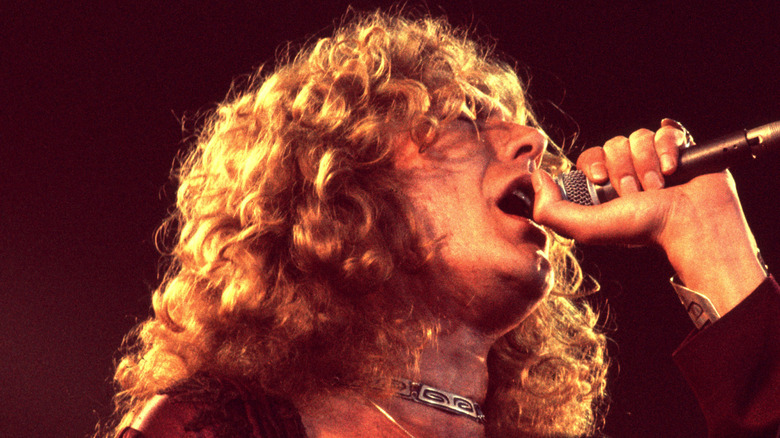
Led Zeppelin only issued one single from its 1976 LP "Presence" and it was a little lighter than the usual loud and heavy fare fans and critics had come to expect from them. That song was "Candy Store Rock," and despite Led Zeppelin's status as one of the most important rock bands of the 1970s and also among the decade's top-selling acts, it didn't make it onto the American pop chart. Up for sale on its own on June 18, 1976, "Candy Store Rock" was a self-indulgent but celebratory lark, a throwback to the rockabilly and early rock 'n' roll that Led Zeppelin leaders Jimmy Page and Robert Plant dearly loved. Already an anomaly and an outlier in the Zeppelin canon, the band never once performed the song in concert.
It's unfortunate that "Candy Store Rock" was received with a collective shrug, because it's a musical gem lurking in the extremely familiar collection of Led Zeppelin singles. And while it's an attempt at rockabilly and other 1950s-centric styles, "Candy Store Rock" still sounds very much like a mid-1970s Led Zeppelin song, heavy on the blues riffing and instrumental showing-off. Plant's vocals and Page's guitars engage in a dance-like race, with the former delivering bursts of "baby, baby"-dominated lyrics and the latter countering with rapid-fire fret-work. Led Zeppelin clearly had a lot of fun making "Candy Store Rock," and listeners were invited to the party.