

In 1972, Cat Stevens Released What Might Be His Most Head-Over-Heels Love Song
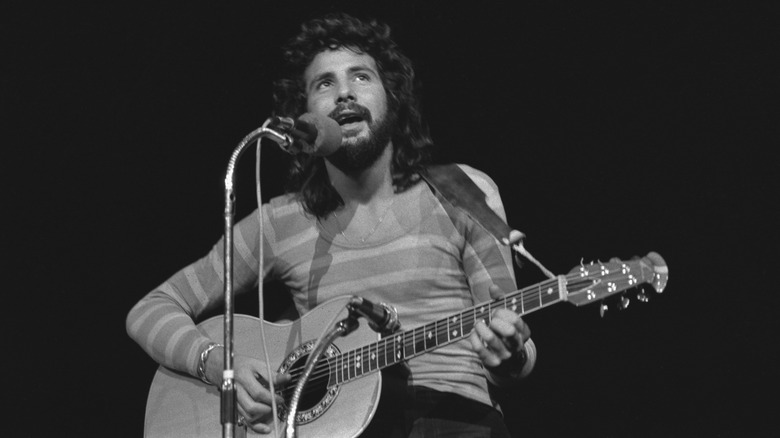
Cat Stevens wrote and recorded a number of excellent songs of all varieties over his long, successful career, ranging from folk and rock 'n' roll to pop and even religious music, but a love song released in 1972 is among his most straightforward romantic tunes, and is absolutely worth revisiting. The talented singer and songwriter, also later known as Yusuf Islam, was off to a hot start in the early '70s, releasing many of his most well known tracks in the two years prior — including 1970's "Wild World" and "Father And Son." 1972 also boasted one of Stevens' biggest hits, with "Morning Has Broken" rising all the way to No. 6 on the Billboard Hot 100 in the first half of the year.
Stevens' discography is full of a number of deep cut tunes that only true fans know, and in turn, "Can't Keep It In," this underrated song from 1972, has remained as one of his best love songs to date. It was a single and standout track on the album "Catch Bull At Four," released in September. Immediately catching is the early '70s folk rock sound, similar sonically to that of a Joni Mitchell's "Help Me" or Steely Dan's "Dirty Work," and though it did not achieve any major chart success, Stevens certainly crafted a memorable anthem of head over heels love.
A head over heels anthem
It's a bright and cheery tune, most prominently featuring blissful keys and a driving acoustic guitar over Stevens' gritty but heartfelt vocals. Little hints of organ also appear during the song's instrumental breaks, and the arrangement grows — with layered harmonies being a clear difference — as it progresses. Though stripped back during some verses and bridges, "Can't Keep It In" is the most true to its titled mantra during its chorus, where each instrument reflects the bursting at the seams emotions that the lyrics describe: "Oh, I can't keep it in / I can't keep it in, I've gotta let it out, oh / I've gotta show the world, world's gotta know / Know of the love, love that lies low."
At only three minutes on the dot, the song doesn't waste any time in delivering its message, which features a moving side of Stevens' love that separates the track from much of his other work. Though it isn't lyrically or narratively complex, this straight-to-the-point delivery and songwriting style makes it an easy track to get behind after just one listen, and Cat Stevens' early '70s charm is on full display.