

What Is The Lifespan Of An Electric Guitar?

One-part shapely wood block, one-part nickel-plated or stainless steel strings, and one-part circuits and wires: These are the things that rock god dreams are made of. But before you plan on becoming the next David Gilmour and having your Black Strat auctioned for $14.5 million — the most expensive guitar auction ever — just focus on keeping your guitar alive. Electric guitar bodies can last decades with proper care, but the electrical components are another matter.
First off, solid-body electric guitars are way sturdier than hollow-body acoustic guitars, though the latter can still survive hundreds of years under optimal conditions (like in the Museum of Fine Arts, Boston). You've got to shield your guitar from humidity, dust, light, and heat, all of which will eat away at the instrument. But even if you engage in regular guitar maintenance and keep your guitar stowed safely in a case (not on a stand) to protect against collisions as well as the elements, electric guitars have pickups, wires, circuit boards, jacks, and more to worry about. These electrical components mean you can plug your guitar into amps, pedals, computers, etc., but they also make the guitar extra vulnerable. An electric guitar can still work after a hundred years or more with enough TLC, but if its sensitive electronics fail, it's basically inaudible and useless.
Bottom line: Electric guitars require work to keep them in good condition, just like a car, laptop, or anything else. Each cleaning and string change will prolong the life of your electric guitar that much more.
The better the care, the longer it lasts
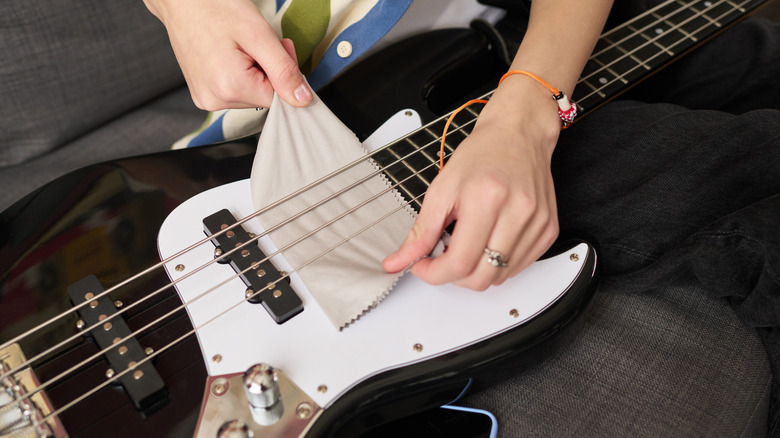
The better you take care of an electric guitar — or any guitar, for that matter — the longer it'll last. At the bare minimum, you've got to wipe down the strings and body with a guitar-safe cloth (they're cheap) after each time you play. Skin oil is a real, corrosive killer of wood, metal strings, and electrical components, especially if you have sweaty hands. Wiping down the strings, which includes wiping down the underside of the neck and fretboard, will also rid the guitar of dust. This way, it'll go into your case as clean as possible and keep the inside of the case clean, too. Also, change the strings when they start to lose their new-string zing, as they can wear out in weeks if you play often. This won't make your electric guitar last for millennia or something, but it'll make it last decades.
Unless the electrical components get messed up, that is. To anybody but engineers and luthiers, the inside of your electric guitar would look pretty dang complicated if you cracked it apart. But that's exactly it: You can't crack it apart to clean it. That means you've got to stop dust, grit, lint, and specks of whatever, from getting into the guitar to begin with. There are certain apertures that allow all such no-no flecks into your guitar, like the output jack and the pickups. When you clean, make sure to scrutinize those areas especially well. And if you hear some extra fuzz when you plug in the guitar, you might need to do another cleaning.