

5 Backup Singers Who Finally Got Their Long-Deserved Moment In The Spotlight
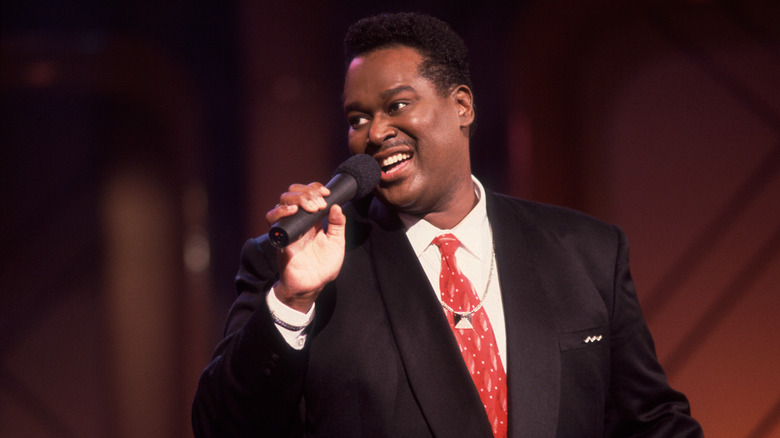
There are dues to be paid in any occupation, even for superstar singers, which is why many spent years singing backup before their breakout success. From Elton John to Cher, a number of the most acclaimed and best-selling singers in history cut their teeth by singing harmonies or otherwise accompanying more tenured performers. Some toiled away for years, resigned to living as reservoirs of unseen and untapped talent, and as their millions of adoring fans would agree, those periods were tremendous missed opportunities.
Of course, one could always argue that singers, even those as talented as Luther Vandross or Darlene Love, would never have reached the heights they did without time to absorb the lessons of their more experienced peers. Then again, imagine all the albums from gifted singers in their prime that went unmade thanks to them languishing in the background. Here are five of those singers, whose careers began beside the spotlight before finally, thankfully, taking center stage.
Darlene Love
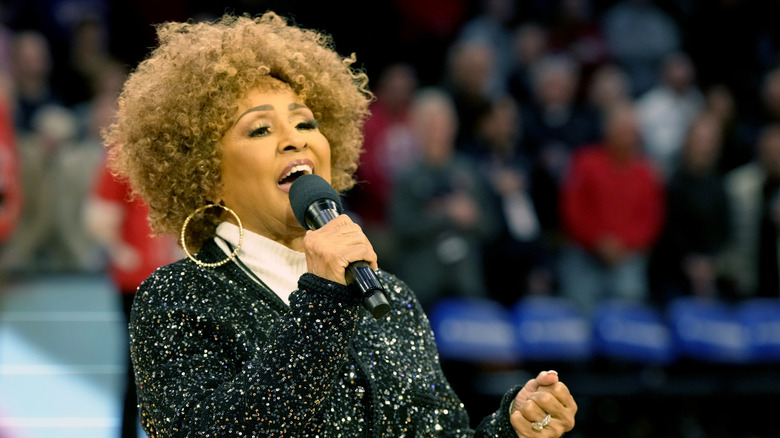
The eye-opening 2013 documentary "20 Feet from Stardom" reveals the struggles of some of the industry's best and most notable backup singers, and many of them went decades without achieving recognition. One of the doc's standouts is Darlene Love. Despite contributing to some of the biggest hits of the '60s, she didn't find her long-overdue spotlight until well into the '80s.
Interestingly, Love's time as a supporting player and virtual unknown didn't mean she didn't sing lead. When Spector plucked her from relative obscurity, he utilized her to the full extent of her vocal capabilities, giving her lead features as well as backing parts — he just regularly denied her credit and prevented her fame. Multiple songs that featured Love's lead vocals were released by Spector through the Crystals, and likewise, the band toured in support of the singles. Spector oversaw more censorship of Love's name, including wielding his copyrights to keep her from performing the songs she had actually sung. His iron grip on her career was part of the reason Love retired from music through the late '70s and early '80s.
Though it was long delayed, Love finally got the recognition she deserved, beginning in the mid-'80s, when she played herself in the Broadway hit "Leader of the Pack." From then on, she was able to mount a successful solo career, including regularly (and finally) performing her most iconic hits live. Most notably, she sang her classic "Christmas (Baby Please Come Home)" on David Letterman's holiday episode.
Phil Collins
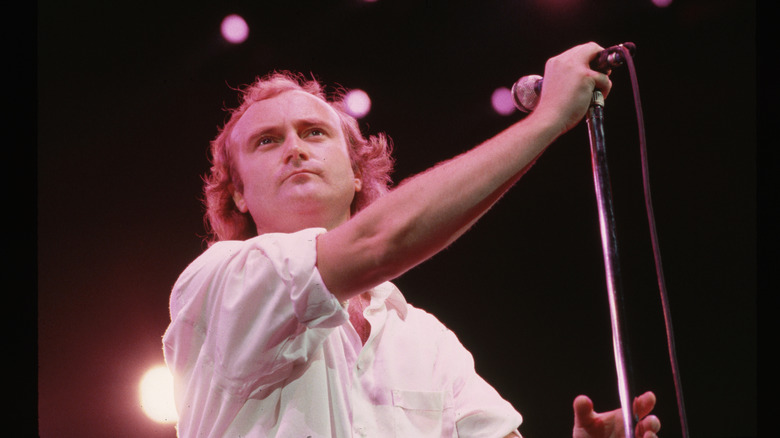
For younger generations, Phil Collins is mainly known as a solo artist thanks to a string of hit albums in the '80s and a couple of high-profile movie soundtracks in Disney's "Tarzan" and "Brother Bear." But throughout the '70s — and impressively, also during much of his solo career — Collins was a member of Genesis, in which he spent years as a mere drummer and sometimes backing vocalist. Though backing the likes of Peter Gabriel was never a problem for Collins (and the pair maintain a healthy relationship), his eventual success has proven that he was always destined for the spotlight. It just took four albums and Gabriel's departure, followed by some 400 auditions to find his replacement, before anyone realized it.
Between '70 and '76, Collins sat behind the rest of Genesis — and in particular Gabriel, whose ornate costumes and pageantry made him the obvious focal point of their shows. That meshed well with the band's sound at the time, which was more prog rock than the softer, '80s quirkiness of the Collins era. When Gabriel left, it left a huge gulf for the band to fill, prompting the aforementioned hundreds of auditions, which only ended when Collins' substitute vocals made him the de facto choice. "I think I'm still regarded as the new singer," he told Uncut in 2025. "I've been here 40 years as singer ... and I'm still thought of to be the new guy." Though Gabriel's era is still remembered fondly, we can be thankful Collins finally learned to lead.
Elton John
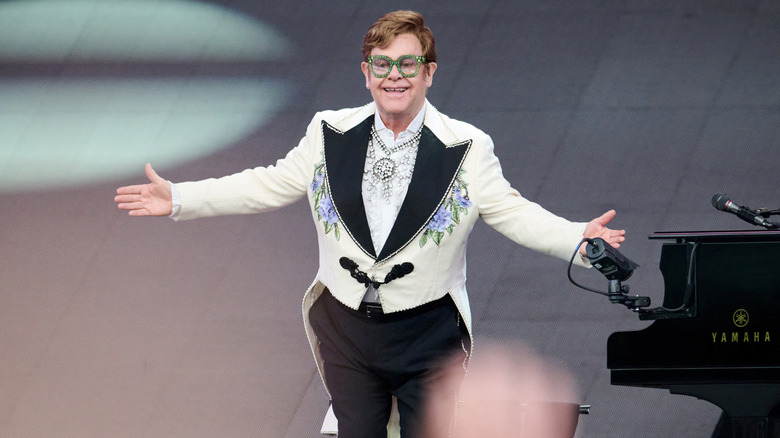
It's been almost 60 years since the world was first introduced to Elton John with his 1969 debut album "Empty Sky." In that time, the Rocket Man has essentially always been the sole or lead voice throughout his career, with the only minor exceptions being a smattering of duets and other collaborations throughout the years. But before he was Elton John, he performed under his birth name, Reginald Dwight, and he sang backup night and day for years.
As Dwight, the future legend led the group Bluesology, which he had founded while still a young teenager in school. Even at their young age, the band was impressive enough to attract the attention of an agency that hired them as a backing band for American acts touring the U.K. Dwight and his crew had short stints backing performers like Patti LaBelle, Billy Stewart, the Ink Spots, and more before gaining a regular gig as the backing band for Long John Baldry. And all the while, Dwight sat in the background, as did his voice.
Though Dwight, aka John, has admitted to learning a lot from his time as a backing artist, he has also made it clear that he couldn't wait for it to end. "I was getting more and more depressed, and I thought, 'This isn't the reason I wanted to play in a band,'" he revealed in the documentary "The Making of Elton John." "'I hate this.'" Luckily, John managed to make it solo after a few years, and the rest is history.
Luther Vandross
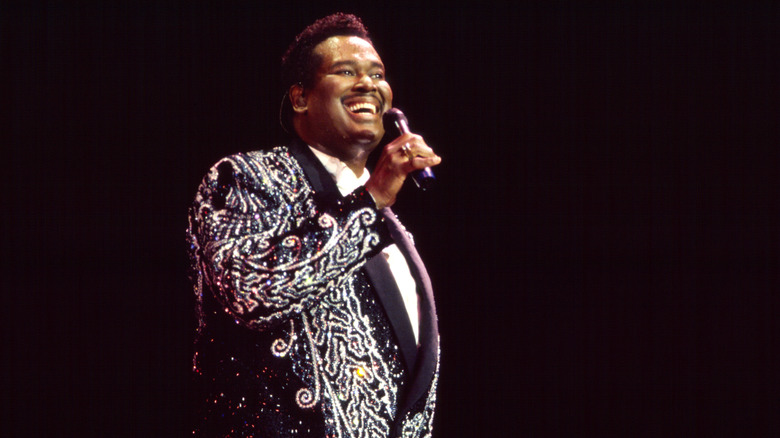
Luther Vandross was known as a musician who could do anything: Write, produce, sing, perform, you name it. And perhaps to the detriment of his own success as a solo artist, he delivered above and beyond as a backing vocalist. He released his first solo album in '81, and though he remained a successful solo act from then until his regrettable and untimely death, it took a decade of singing background for him to be given that chance.
Vandross spent almost all of the '70s working as a session musician, taking whatever singing jobs were offered, including singing about counting to 20 on the pilot episode of "Sesame Street." In what Vandross has called his first big break, Bowie called him up to provide backing vocals for his album "Young Americans" and eventually had the singer take over vocal arrangements for the whole album. The rocket Bowie strapped to Vandross only went so high, however, and perhaps nothing demonstrates that fact better than this: The song "Fascination" was one of Vandross' early attempts at a solo single (originally called "Funky Music (Is a Part of Me)," which Bowie heard and — instead of helping Vandross promote as his own — decided to rework and include on "Young Americans."
After "Young Americans," Bowie passed Vandross's name to Bette Midler, whom he again provided background for, and the chain continued. Throughout the latter half of the '70s, Vandross sang, wrote, and arranged vocals for a host of music icons, all the while waiting to show the world its next great solo R&B act.
Merry Clayton
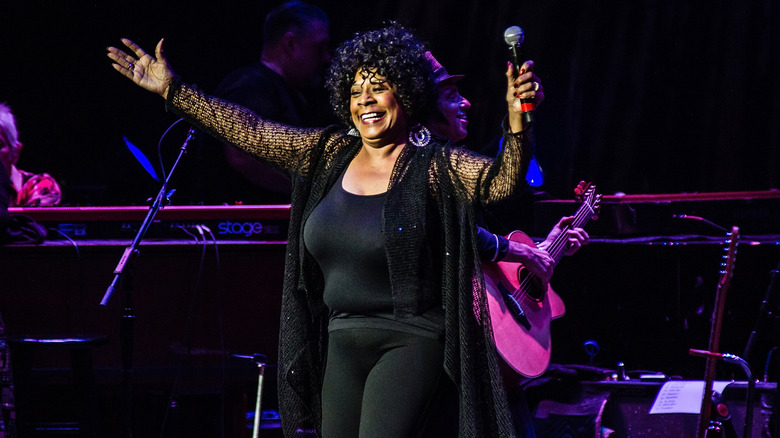
Like Darlene Love, Merry Clayton was one of the highlights of the "20 Feet from Stardom" documentary. The scene in which her legendary cracked vocals on the Rolling Stones' "Gimme Shelter" are isolated for her and Mick Jagger to hear is arguably the film's most compelling moment. Clayton's story may be the most compelling, too. Though she never achieved the heights of solo success that Love did, nor the length, it's precisely that prolonged delay in gratification that makes her eventual appreciation so satisfying.
Clayton began singing backup in '62 when she was only 14, and from there, she has spent almost the entirety of her long, long career backing other artists. In an interview with NPR, she mentions backing Bobby Darin, Peggy Lee, Ray Charles, Carole King, James Taylor, Neil Young, Elvis Presley, the Bee Gees, the Supremes, and of course the Rolling Stones, among others. Clayton has essentially always been a staple and favorite in the world of backing singers. And unlike others who eventually broke the mold as leads, it wasn't until "20 Feet from Stardom" actually released — some 51 years after her career began — that she finally found her long-deserved moment in the spotlight.
As a star of the doc, Clayton earned herself a Grammy for best music film, her first after a more than 50-year career. Following renewed interest in her work, Clayton released a new solo album, "Beautiful Scars," performed her own NPR Tiny Desk Concert and even received a live tribute of "Gimme Shelter" from Keith Richards.