

5 Rock Genres Left For Dead — Then Brought Back To Life
Rock 'n' roll can be a cruel business. Entire subgenres can find themselves thrown on the trash heap the moment fickle musical fashions move on. But like fashion itself, rock music moves in cycles, with later generations of artists looking back to the acts that came before them and revisiting genres that may have become unfashionable in the interim. To prove our point, here are five rock genres that found themselves stripped of relevancy before becoming popular again with younger artists and listeners.
Alongside new revivalists, we also typically find first-wave practitioners returning to the stage after years spent in relative obscurity to enjoy renewed popularity as a veteran among younger generations of fans. We're looking at garage rock, glam rock, psychedelic rock, shoegaze, and progressive rock, aka, prog rock. See which of these you remember from the first time around, and whether you returned to them during the subsequent revival.
Garage rock
Garage rock came to life across America in the mid-1960s, essentially in the aftermath of the Beatles' culture-shifting appearance on "The Ed Sullivan Show" in 1964. The performance was watched by millions of households and changed the perception of what a rock group could be. In its wake, countless new bands were quickly formed, often by teenagers who would practice in the garage of their family home. Hence, the genre's name.
In a way, garage rock was defined by its naivety. The bands that rose to prominence within the genre, such as the Kingsmen, the Standells, the Sonics, and countless other smaller groups that feature on the famous "Back from the Grave" and "Pebbles" compilation series were well-versed in rock music but were often teens with only a fraction of the musical abilities of the acts they attempted to imitate, such as the Beatles, the Yardbirds, and electric blues musicians. But what they lacked in skill they made up for in energy, and indeed in this way garage rockers later found themselves retrospectively described as "protopunks" by the legendary music journalist Lester Bangs in "Rolling Stone's Illustrated History of Rock & Roll."
Garage rock largely left the mainstream in the early 1970s, when hard rock and heavy metal reigned supreme. Indeed, many garage rock bands split after only a handful of releases. However, like punk, it became an influence on the alternative rock scene of the late 1980s and early 1990s, and was central to the "garage rock revival" of the early 2000s, when bands like the Strokes and the White Stripes spearheaded a back-to-basics approach to rock 'n' roll sonics informed by those teen bands of the 1960s.
Psychedelic rock
The 1960s were also notable for the dawning of psychedelia, an aesthetic that emerged largely from the use of mind-altering drugs in the decade's counterculture movement, especially the hallucinogen LSD. Pioneering psychedelic groups on the West Coast included The 13th Floor Elevators, the Grateful Dead, Jefferson Airplane, and Love, but even established acts, including the Beatles and the Rolling Stones were changing their aesthetics as part of the psychedelic revolution.
The genre was defined by the widespread use of trippy effects, such as the Jimi Hendrix Experience's use of guitar pedals, including wah-wah, fuzz, and other forms of distortion to mimic the effects of a psychedelic trip. The genre also overlapped with garage rock, with bands such as the Seeds and the Electric Prunes producing mindbending songs that also contained a raw edge.
The fashion for psychedelic rock sounds faded by the early 1970s, when artists diverged into other genres, while in the 1980s, changing technology led to cleaner instrumentation and production values. But the psychedelic sounds of the 1960s have often been revisited. In the 1990s, revivalists including Spiritualized and the Brian Jonestown Massacre took inspiration from the 1960s, as did neo-psychedelic groups like the Flaming Lips and Mercury Rev, as well as the multi-band Elephant 6 Collective. In the 21st century, psychedelic has evolved into modern psych rock, a harder, faster genre that includes acts like Tame Impala, Thee Oh Sees, and King Gizzard & the Lizard Wizard.
Glam rock
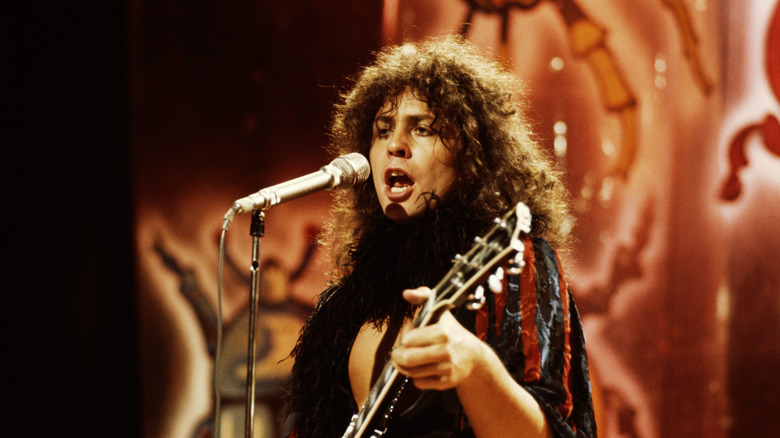
Glam rock may seem to some music fans like a relic from the distant past, but the truth is that its influence has reemerged often down the decades, and is pervasive in the work of several notable modern rock acts. The dawn of glam came in the U.K. in 1971, when the band T. Rex, fronted by the tragic frontman Marc Bolan, perfected a glittery, crunching form of rock music that made room for the kind of fantastical lyricism that he had begun to write as a folk musician in the 1960s.
The impact of glam rock was seismic for many rock musicians at the time, changing the direction of some artists who would go on to be iconic. David Bowie, for example, was inspired by T. Rex's work on albums such as the smash 1971 album "Electric Warrior" to embrace glam, reinventing himself as a glitter-inspired alien for the 1972 album "The Rise and Fall of Ziggy Stardust & the Spiders from Mars." Bowie was also inspired by Bolan's androgyny and theatricality, central components of the glam genre. Indeed, the two shared a producer in Tony Visconti, who would be a near-constant presence in the careers of both artists.
Bowie became the reigning king of glam with Ziggy Stardust, but killed off the character in 1974 to pursue other identities and musical styles, and the genre died off, to be replaced by other movements, such as punk. However, it wasn't long before glam returned, with the American glam rock and glam metal movements of the 1980s. Kiss, Motley Crüe, and Quiet Riot each reached back to the previous decade for inspiration, sonically and in terms of their outrageous outfits and onstage histrionics.
Progressive rock
The story goes that in the late 1970s, progressive rock was persona non grata for millions of rock fans, who had been turned on to the punk rock revolution of 1976 and 1977. The arrival of the raw new genre, which took inventive cues from garage, glam, and protopunk artists such as the Stooges, Patti Smith, and MC5, brought rock back to basics. It was the antithesis of progressive rock, which had seen ambitious bands like Yes, Genesis, Emerson, Lake, & Palmer, and King Crimson seeking to increasingly take their cues from classical and jazz compositions to deliver epic, conceptual suites of songs that displayed a great amount of musical virtuosity.
After the punk explosion, the popularity of progressive rock did wane significantly, while many artists who had once been dedicated to musical complexity slowly became more pop-centric in search of mainstream acceptance. However, by the 1980s, in the U.K., where many of the first generation of progressive rockers hailed from, there was a notable neo-progressive rock revival.
Neo-progressive rock bands such as Marillion, IQ, and Pendragon returned to virtuosity but from the position of outsiders in the British music scene. The genre's new popularity barely lasted out the decade, but it served as a rebuke to those who believed that prog was already dead by the late 1970s.
Shoegaze
Some genres are immediately met with derision by critics before gaining retrospective acclaim from music listeners. Shoegaze is one such genre. Again deriving mainly from the U.K., the first wave of shoegaze music came in the 1980s, pioneered by proto-shoegaze act the Jesus and Mary Chain and first wave groups such as My Bloody Valentine, who were inspired by the gloomy psychedelia of acts like the Velvet Underground. The former's 1985 track "Just Like Honey" laid the blueprint for the sonic textures that would define the genre into the early 1990s, with classic shoegaze albums from the decade such as Ride's "Nowhere," My Bloody Valentine's "Loveless," and Swervedriver's "Raise."
The name shoegaze derives from its practitioners' typically spending a large amount of their live shows staring down at their guitar pedals, through which they drenched their songs in multiple effects such as reverb, fuzz, and delay. And the name initially wasn't meant as a compliment, suggesting that the postures of such musicians were not suited for rock music.
The genre began to wear out shortly after the release of Slowdive's 1995 album "Pygmalion," which is considered one of the last first-wave shoegaze releases. However, the 2000s saw a shoegaze revival among a new generation of bands, and both Slowdive and My Bloody Valentine returned to active recording and touring. Shoegaze has garnered hundreds of millions of streams in recent years, reflecting the genre's enduring popularity among younger rock fans well into the 2020s.