

Forgotten '80s Hair Bands That Deserve Another Shot
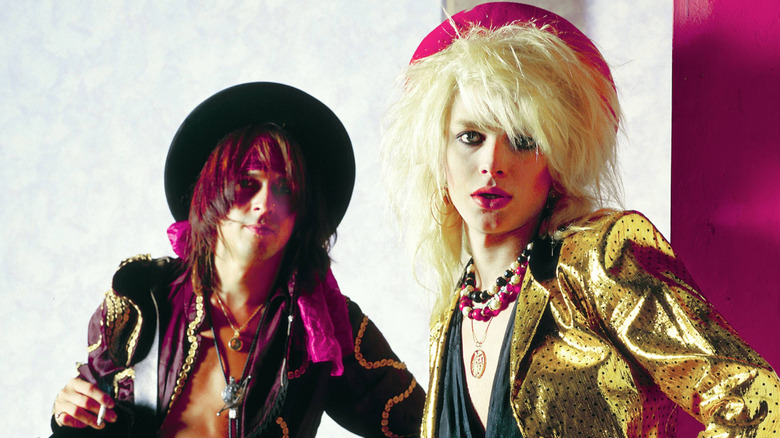
Of the many hair metal bands that rocked their way onto the radio and MTV in the 1980s, only a few are remembered with any fondness — a wrong that ought to be corrected with a reconsideration of some overlooked acts of the era. Closely associated with the '80s and the very early '90s (until drearier and introspective grunge became the choice of the guitar-loving youth), hair metal bands — also known as glam metal bands — ruled the rock world. Hair bands were as well known for their looks as much as their sound, with long and towering, hairspray-crafted 'dos, tight stage outfits, and dudes mugging for the camera as big a part of the formula as the searing metallic guitar licks, power ballads, and pop sensibility.
Once so lucrative and visible, hair metal has since been dismissed as frivolous, cheesy, and hopelessly dated. Still, a handful of bands survived the cultural shift and are regarded as the best of the bunch, groups like Bon Jovi and Motley Crüe. Others were just as good at hair metal, although they've fallen through the cracks of music history and the collective memory. These are the hair metal who broke out big and deserve to be better remembered.
Whitesnake
So many of the major hair metal bands were made up of young rockers who didn't always have the chops or instincts that older musicians inevitably possess. One group that did have the benefit of experience: Whitesnake. After leaving Deep Purple in the 1970s, deep-voiced and soulful singer David Coverdale started Whitesnake and envisioned another similar, blues-focused rock band. After limited success in the U.K. and one top 40 American hit ("Fool for Your Loving") in that iteration, Whitesnake radically changed, adopting the hair band sound.
Remaking the low-key blues rocker "Here I Go Again," Whitesnake turned a massive flop into its biggest hit. The mix of metal guitars with earnest vocals and shimmering '80s synths sent the new version of the song to No. 1 in 1987. That year also gave a name to Whitesnake's breakthrough hair metal record, which spawned another smash with a similar formula, the No. 2 power ballad "Is This Love." Whitesnake's "1987" is a fun and of its time hair metal album that provides a pleasant and exciting listen, as does the 1989 follow-up "Slip of the Tongue." Whitesnake's skills are all over both records, proving that the band was just a re-skinned classic rock band hiding under hair metal trappings.
Nelson
Early rock 'n' roll star Ricky Nelson scored the first modern No. 1 in 1958 with the toxic "Poor Little Fool," and just about 32 years later, a band led by the musician's twin sons topped the pop chart with "(Can't Live Without Your) Love and Affection." Across 1990 and 1991, Nelson took four singles into the Top 40, all from their 1990 debut LP "After the Rain." The title track is arguably the ideal hair metal song in that it employs wailing vocals, overexcited shredding, and blasting drums, all in a package produced with a slick, radio-ready sheen.
Those hits and that album revealed what hair metal was all about. By 1990, it had evolved from a variant of glam rock into pop music masquerading and marketed as hard rock. That's not a bad thing. "After the Rain" is as full of hooks, classic pop melodies, and stunning harmonies as it is overpowered guitars. DGC Records took the twins' pop-rock act and molded it into a hair metal band to chase a trend. In 1986, that band performed on "Saturday Night Live," looking and sounding like an '80s pop band, such as the Outfield or Mr. Mister. But then the Nelsons grew out their hair and turned up their amps. And it all worked. Nelson had mass appeal, loud and hard enough to bring in the metal fans without alienating pop radio listeners.
Vixen
One could very easily perceive or write off Vixen as an ironic novelty or oddity in the 1980s hair metal world, but the all-female hard-rockers earned a gold record and scored big hit singles in a genre whose songs were so often about objectifying and sexualizing women. With the release of its first, self-titled album in 1988, Vixen helped dispel the idea that hair metal could only ever be a boys' club, particularly with powerful and pleasing cuts like "Cryin'" and "Edge of a Broken Heart."
While Vixen got a lot of radio and MTV airtime for the first time in 1988, the band had been around in some form or another for almost a decade, and they retained their glam rock influences well into that late '80s heyday. Vixen vividly and expertly combined subtle bits of glam rock with the more audacious and loud parts of hair metal that made it so popular and marketable. The result: Vixen's brand of hard-guitar pop played at top volume by musicians with long hair and tons of swagger caught on with audiences.
Stryper
Like their forefathers in heavy metal proper, hair metal bands were sometimes associated with evil forces. That wasn't entirely without merit, what with major groups like Motley Crüe issuing songs like "Shout at the Devil." Stryper came along at the right time to fill a void. For parents worried about the supposed negative or demonic influence of music on their children, Stryper could be considered a safe choice, because they were an explicitly Christian heavy metal band. The true subject of songs like "Always There for You" and "Calling on You" was at least one part of the Christian holy trinity, while the message of "To Hell with the Devil" is quite clear.
Stryper earnestly and laboriously replaced fundamental elements of hair metal — lyrical fixations on women, sex, and partying — with ponderous, spiritual themes. Be that as it may, religious music and hair metal mixed pretty well in Stryper's hands. Their hair metal is consistently upbeat and anthemic, just like the party rock of contemporaries like Poison and Warrant. And musically, Stryper had the chops. Their guitarists could shred, their drummer smashed his kit, and the whole band had an interplay often missing from hair metal. Stryper had plenty of guitar solos to rely on, but they could also utilize vocal harmonies to add an extra layer of musical attractiveness.
Hanoi Rocks
Because it factored into one of the biggest controversies surrounding Motley Crue, the scandal-prone biggest name in hair metal, Hanoi Rocks' musical contributions in the 1980s have been largely overshadowed, if not forgotten. Already established in their native Finland with a slew of studio albums, Hanoi Rocks split up in 1985 after drummer Razzle died in a drunk driving accident caused by Motley Crüe singer Vince Neil. On the verge of potentially stateside fame and success, Hanoi Rocks had helped create the hair metal template. Its music was less poppy and glitzy than what would arrive later in the 1980s, as the band was heavily devoted to keeping alive the traditions of glam rock within hair metal.
Hanoi Rocks took cues from gleefully sleazy and electrifying '70s bands like the New York Dolls and Sweet. The band favored monster riffs, epic guitar noodling, and big energy, all of which would come to define the entirety of hair metal. Hanoi Rocks sounds most like itself on its first major-label LP (and last with Razzle), 1984's "Two Steps from the Move."