

5 Songs You Didn't Know Brian Wilson Wrote For Other Famous Musicians
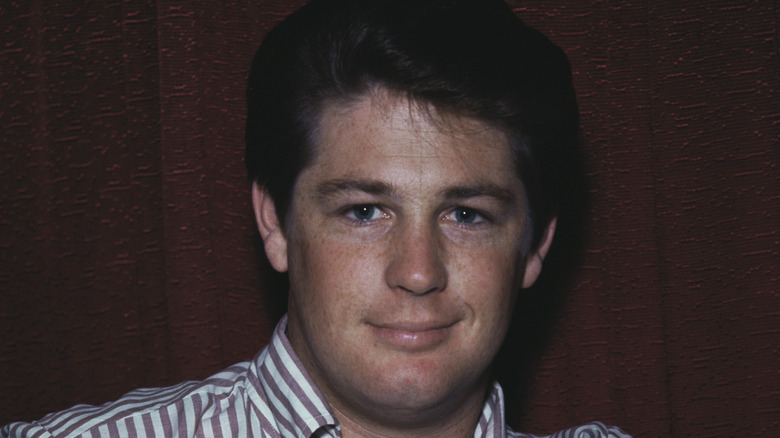
Widely regarded as a genius musical mind, Brian Wilson was such a prolific and generous songwriter that he lent his talents to bands and singers beyond his own Beach Boys. A studio wizard and innovator who preferred perfecting recordings to playing in front of audiences (while also experiencing mental health issues), Wilson wrote by himself and excitedly collaborated with other composers, too. Sometimes, he figured a gem of a pop or surf rock song he'd written, or even partially recorded, would be better suited to musicians outside of his band or out of his control.
At any rate, Wilson's stylistic fingerprints are all over American rock 'n' roll of the 1960s, far beyond the Beach Boys. So many other surf rock acts, in particular, benefitted from Wilson's musical mentorship and contributions. These bands got to taste a bit of the limelight and success with major label tunes and even charting hit singles that sound like they could've come from nobody else but Brian Wilson of the Beach Boys.
Surf City — Jan & Dean
Both Jan & Dean and the Beach Boys are important to the story of surf rock in the 1960s. Jan & Dean were lumped in with the Beach Boys because they similarly employed extraordinary harmonies and performed songs about surfing and cars. That all tracks because Brian Wilson, ambitious creative architect of the Beach Boys' sound, helped break Jan & Dean. The two bands became acquainted when they played the same Southern California events. In 1962, Jan Berry's manager connected his client with Wilson to create a songwriting duo, and they hit it off.
One of the first collections of musical bones Wilson brought Berry was a fun and frivolous surfing celebration song called "Surf City." As recorded by Jan & Dean, it spent two weeks at No. 1 on the Billboard Hot 100 in the summer of 1963, preceding the Beach Boys' first chart-topper, "I Get Around," by about a year. It was also the first surf-themed song to ever top the chart. Out of Jan & Dean's 14 total Top 40 hit singles, Wilson helped write six. Along with "Surf City," that list includes "Drag City," "Dead Man's Curve," "The New Girl in School," "Ride the Wild Surf," and "Sidewalk Surfin.'"
Guess I'm Dumb — Glen Campbell
In the midst of October 1964 recording sessions for the album "The Beach Boys Today!", Brian Wilson created the instrumental backing track for "Guess I'm Dumb," a song he'd composed with songwriter Russ Titelman. Somewhat tongue-in-cheek but also conciliatory, it depicts a character lamenting a romantic breakup, for which he takes full responsibility owing to his own perceived stupidity. As Wilson recalled in his memoir "I Am Brian Wilson," the song took around 23 takes. "It took a while to get it right because I was trying something more adult," he explained. "I was trying to score a Burt Bacharach vibe." When it was all finished, not a single one of the many vocalists in the Beach Boys was willing to record the lead vocal track. "The message was okay, but maybe it was just the idea of being dumb," Wilson theorized.
But he soon found another colleague who was willing to give it a shot. Wilson truly hated performing, which is why at the time, guitarist, vocalist, and future country megastar Glen Campbell had been filling in at Beach Boys concerts. And so, he's the one who got to sing it. Straddling the line between rock and country, Campbell was ramping up his solo career at the time. However, the single release of "Guess I'm Dumb" failed to appear on any major Billboard chart in 1965.
My Buddy Seat — The Hondells
During the surf rock craze of the 1960s, producer Gary Usher tried to get in on the fad, assembling a bunch of studio musicians and selling the project as a band called the Hondells. Their first single was a cover of the Beach Boys' pro-imported-motorcycle pop song "Little Honda." The track had debuted on the LP "All Summer Long" before the Hondells made it into a No. 9 hit in 1964. That song's writing credit went to Brian Wilson of the Beach Boys, who took a more hands-on approach for the Hondells' next single, producing and, along with Usher, writing "My Buddy Seat."
While crafted in part by a Beach Boy and performed by a band designed to sound like the Beach Boys, "My Buddy Seat" essentially flopped, missing the Top 40. A group of guys taking on the roles of the Hondells appeared in the 1965 teen movie "Beach Ball," but that didn't move their commercial prospects very much.
Custom Machine — Bruce & Terry
The surf rock scene of the 1960s was a tight-knit one, with lots of band overlap. The Rip Chords had a No. 4 hit in 1964 with "Hey Little Cobra," and then singer and session musician Bruce Johnston and producer Terry Melcher (a celebrity connected to Charles Manson) formed a new vocals-forward act logically named Bruce & Terry. Between 1964 and 1966, the duo issued a string of singles for Columbia Records, and during that time, Johnston became a touring member of the Beach Boys to account for Brian Wilson choosing to stay in the studio and not play live.
Johnston's Beach Boys connection led to a professional relationship between his two bands. Bruce & Terry's first single, a surf rock song in praise of a souped-up automobile in the Beach Boys tradition, was titled "Custom Machine." Johnston and Melcher produced the song, which Wilson wrote entirely by himself. A very minor hit, "Custom Machine" topped out at No. 85 on the Billboard Hot 100.
He's a Doll — The Honeys
The Honeys, initially named the Rovell Sisters, are an overlooked, if not largely forgotten, vocally oriented "girl group" of the 1960s. After connecting with producer and Beach Boys associate Gary Usher, Brian Wilson set out to launch the Honeys into pop chart stardom. Of the Honeys' three 1963 singles, Wilson wrote and/or arranged them all, but the listening public didn't take notice.
After the Honeys shifted to Warner Bros. Records in 1964, Wilson continued to create material for the group, including the songs "I Can See Right Through You (Go Away Boy)," "The Love of a Boy and Girl," and "He's a Doll." Produced, arranged, and written by Wilson, the non-charting single was inspired by a favored catchphrase of the Honeys. "Brian would always notice when we saw a cute guy we would say, 'He's such a doll' so he picked up on it and wrote one of the great songs for us," Marilyn Rovell — later known as Marilyn Wilson after she and the Beach Boy married in December 1964 — told Rock Cellar.