

The Iconic Guitar Brand Every '60s Musician Will Remember
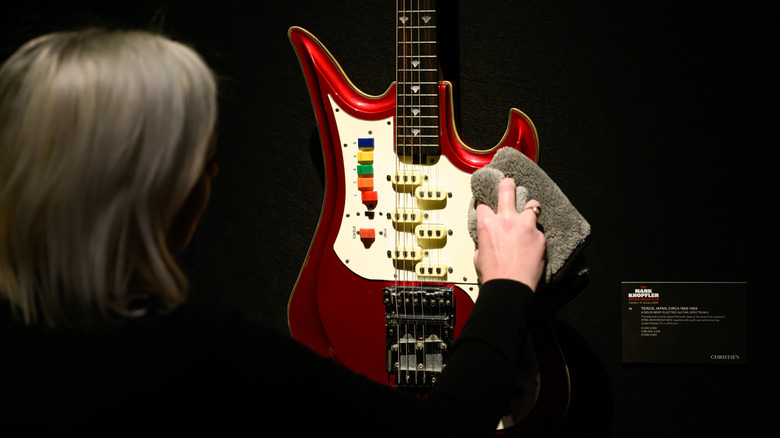
Even before beginner guitarists start learning basic songs, they face a difficult question: what model of guitar should they start with? There is a whole world of options out there, from sub-$50 budget models to luxury brands worth thousands; budding players have to decide how much to invest in their chosen instrument long before they have mastered it. Typically, most new guitarists go the budget route — and this was the same in the 1960s, when one particular budget brand reigned supreme: Teisco.
The original company that formed the Japanese brand was named Aoi Onpa Kenkyujo, and was owned by businessmen Atswo Kaneko and Doryu Matsuda. In 1948, two years after the company was formed, the Teisco brand came into existence. Originally, Teisco focused on lap steel guitars and equipment like microphones and amplifiers. But in 1952, Teisco finally released its first traditional guitar, a Spanish-style acoustic that could be miked up — perfect for beginners looking to experiment with amplification. Within two years, the brand's wide fleet of electric guitars came along, with its first basses soon after.
Do you remember your first Teisco guitar?
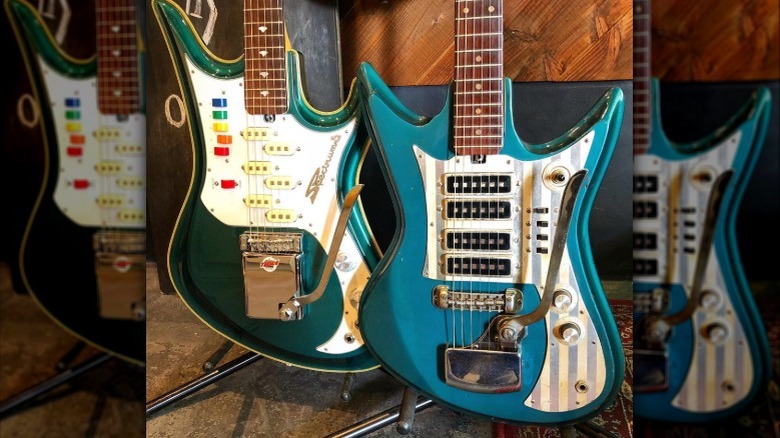
By the late 1960s, the Teisco brand was ubiquitous, available through the Sears and Roebuck catalog. This meant the brand was well-placed to capitalize on the boom in interest that rock music enjoyed thanks to fans of the Beatles, the Rolling Stones, the Beach Boys, and others looking to replicate their heroes and make their own music. Indeed, the 1960s were the decade of the garage band, with countless inspired teenagers across America looking to get the best bang for their buck when it came to finding equipment capable of making the kind of racket they dreamed of.
The first Teisco electric guitars were generally solid-body Les Paul copies, with models named EP followed by a number. Later models, such as the EB-1 bass, took huge doses of inspiration from the luxury Fender models of the era. Some Teisco models exported to the United States were branded as Kingston guitars, especially those arriving through Chicago, while others were branded as Kent. In the U.K., the same Teisco guitars were branded Arbiter. In 1964, the TRG-1 model, which included an amp in the body of the guitar, came into circulation, as did the use of the phrase "Del Ray" in the branding. By 1966, Teisco Del Ray was appearing on a huge range of guitar models, from hollow-body electrics to violin-style basses. Famously, self-taught guitar legend Eddie Van Halen began his journey to rock immortality practicing on a Teisco Del Ray, proving that even relatively humble equipment can start a dedicated budding musician off on the right foot.
However, Teisco also made some luxury models. The Spectrum 5, for example, one of which was owned by Dire Straits' Mark Knopfler, retailed for hundreds in the 1960s — a sizeable amount back then — and originals are now worth thousands.