

The Greatest Self-Taught Musicians In Rock History
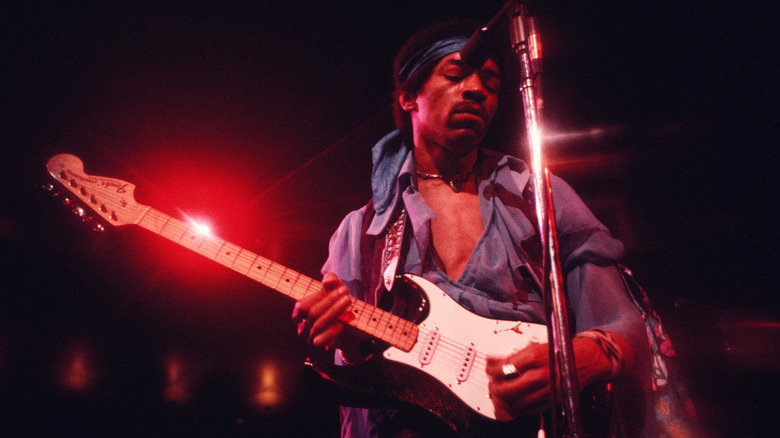
Anyone who has tried to learn an instrument will know that, in the early days, it doesn't come easy, or, at least, for most of us. Some people have the ability to pick up an instrument and make it sing as if there's some mystical creative force coming through them, and in some cases, they go on to become legendary rock musicians. Those savants, who have required very little in terms of extensive formal training on the instruments that made them famous, still managed to create some of the greatest songs that have ever existed.
Whether they've come from abject poverty, having to improvise instruments until they could get their hands on a working guitar, or else have come from musical families where they have benefited from the air being filled with song, each rocker on this list has risen to greatness predominantly under their own steam. But rest assured, each of them will at some point have faced the difficulties all budding musicians have — aching hands, calloused fingers — and managed to overcome them with sheer grit and bucketloads of talent.
Paul McCartney
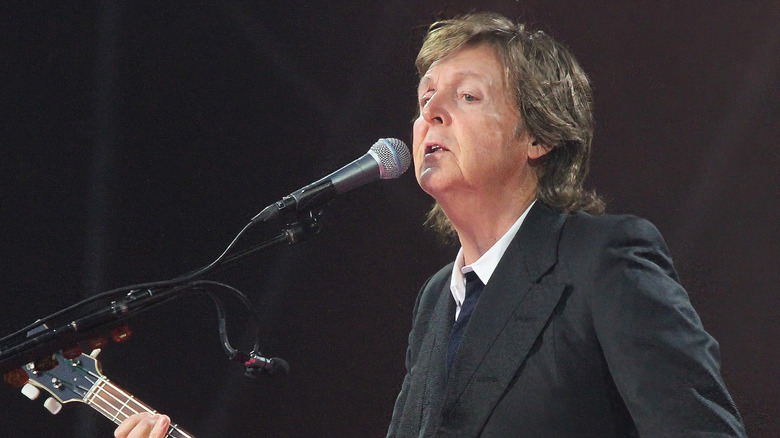
The legendary songwriter and performer Paul McCartney has had a remarkable career, dominating the charts with the Beatles in the 1960s, Wings in the 1970s, and with a prodigious solo output that has continued up to the present day. His work has covered multiple genres, and he has performed with a wide range of musical instruments, famously playing every instrument on his trilogy of self-titled studio albums.
McCartney was brought up with music in the house; his father, Jim, had been the leader of a jazz band before World War II, and bought his son his first instrument, a trumpet. However, as McCartney became obsessed with the pre-rock 'n' roll skiffle icons such as Lonnie Donegan, his attention soon turned to instruments that would allow him to sing and play at the same time. Thus, he began playing guitar, aided by learning a few piano chords from his father, then largely teaching himself by replicating his favorite artists.
As he admitted to Guitar World magazine back in 2007, many of his techniques were self-developed and unorthodox. "A lot of people think I can do proper fingerstyle, but when you see me up close, you realize I can't. John [Lennon] and I particularly wanted to learn the formal style of fingerpicking, but I never got around to it ... but I love the sound of it so much, I just figured out my own way of doing it; that's really how I learned every instrument I play."
Jimi Hendrix
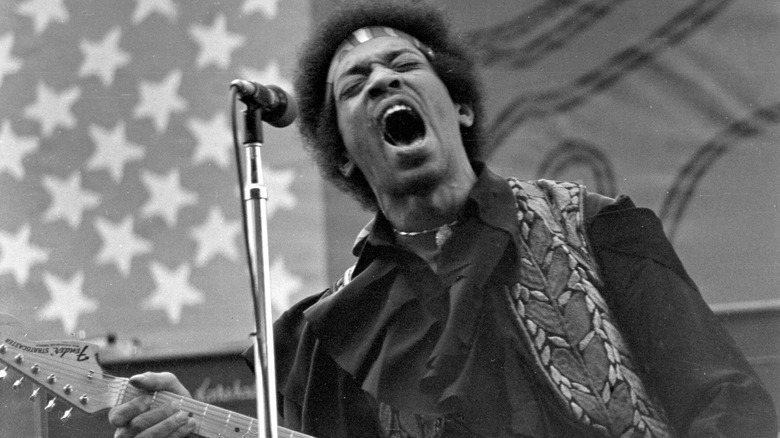
The legendary axe-wielder Jimi Hendrix, perhaps the ultimate self-taught rock guitarist, didn't have the easiest start in life. His family lived in poverty, and his parents were heavy drinkers who often fought, separating and reuniting often. With his tumultuous early years behind him, his memories of that time may have been what underpinned his explorations of musical chaos once he had mastered his instrument. But surprisingly, Hendrix didn't begin learning his art on an actual guitar.
As a young boy, he would first imagine himself as a guitarist using a broom, before being given an old ukulele. Though it had only a single string, he attempted to play it for a period before his father bought him his first acoustic guitar for $5 in 1958, when Hendrix was 15. Arguably the greatest guitarist in rock 'n' roll history, Hendrix only graduated to electric guitar the following year, when his father bought him one.
His exploration of the sounds he could get from an electric guitar was largely undertaken on his own or improvised when jamming with other musicians, such as with one of his earliest bands, the Rocking Kings. And yet, the discography he went on to create with the Jimi Hendrix Experience and Band of Gypsys was exceptional for an artist whose life was tragically cut short at the age of just 27.
Jimmy Page
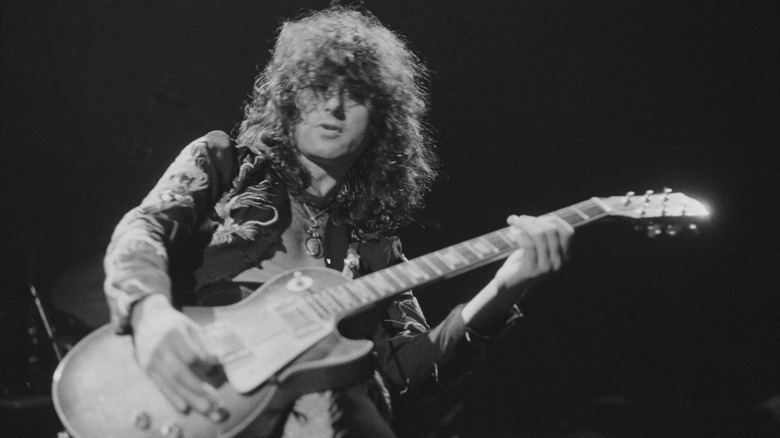
One of the most ambitious and forward-thinking guitarists of the 1970s, Led Zeppelin mastermind Jimmy Page – who performed the solo on "Stairway to Heaven" — set the hard-rock template for the entire decade, and has been a huge influence on rock artists ever since. But his epic guitar style had humble beginnings: Rather than take formal guitar lessons, Page managed to take his first steps in mastering the guitar using a simple how-to book titled "Play in a Day."
It clearly worked, as by the age of 13, Page was already performing in bands and appearing on television playing the pre-rock 'n' roll genre, skiffle. In the 1950s, skiffle was enjoying a huge wave of popularity in Page's native U.K., enchanting other future stars such as the Beatles.
Page became a professional touring musician the moment he left school. Eventually working his way into the Yardbirds, he was left to complete a European tour with the band after its previous members left, which is when he first came into contact with vocalist Robert Plant. By then, he was already a uniquely gifted guitarist, and though the band he formed with Plant would be dismissed by many music critics in their early years, they would go on to be remembered as one of the greatest rock bands who ever played.
Eddie Van Halen
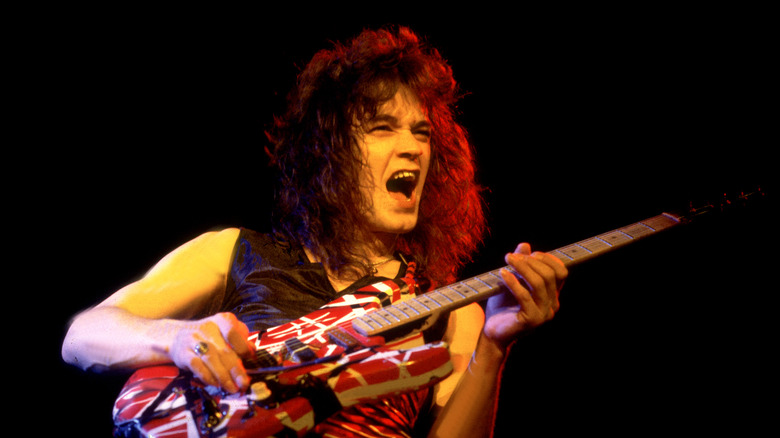
The legendary hair metal guitarist Eddie Van Halen didn't start out as a guitarist. To begin with, he played piano and then the drums before finally progressing to guitar. He was especially inspired by the work of Cream legend Eric Clapton, and would spend long nights alone in his room while his brother was out partying, replicating what he heard on Clapton's records and mastering his chosen instrument.
It was during these long, arduous sessions that Van Halen seemingly developed many of the techniques that made him arguably the premier guitarist of the late 1970s and 1980s. He later became famous for his inventive style of playing — notably, a great deal of two-handed fretboard tapping, which became a central component of hair metal — and for his incredible shredding speed. That he rose to the level he did with minimal tuition on his chosen instrument is remarkable, but what's even more surprising is that Van Halen claimed to have purposefully rejected any opportunity to learn music theory as it relates to the guitar.
Instead, he relied on instinct, as he explained to Steve Rosen in 1978: "I know music theory, and I know how to write music on paper, and I know how to read for piano, but on guitar, it's a different story. I don't know nothing about what a scale is or nothing like that. I know basic modes. I just play what sounds good or what I think sounds good, anyway."
David Gilmour
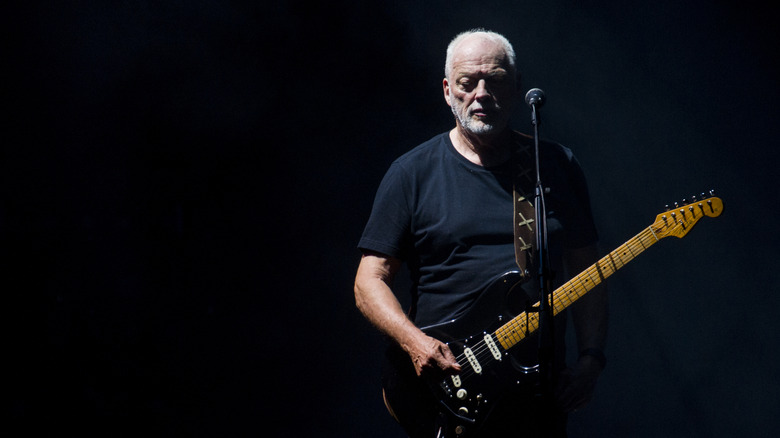
Who would have thought that David Gilmour, the legendary Pink Floyd guitarist who was at the heart of one of the most epic and exploratory discographies in the history of rock music, learned the rudiments of his art from a simple instruction book? According to Gilmour, when he first began learning guitar, he relied entirely on a book written by folk singer Pete Seeger, which came with a record of example tracks to follow.
He developed his abilities practicing with fellow Pink Floyd founding member Syd Barrett, a friend from Gilmour's hometown of Cambridge. Gilmour learned to work within his own limitations, developing what was later described as his "feel" technique of phrasing and melody. "I wasn't gifted with enormous speed on the guitar. There were years when I thought I could get that if I practiced enough. It wasn't ever really going to happen," he admitted to Rick Beato. Instead, Gilmour's melodic playing would underpin one of the most atmospheric discographies in rock.
Mark Knopfler
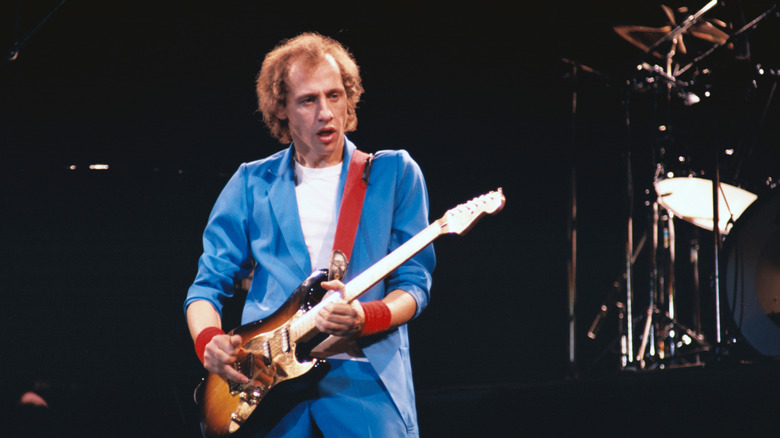
Though the rock star grew to loathe fame, Dire Straits guitarist Mark Knopfler is one of the most celebrated musicians of his generation, as well as one of the most influential. His pickless fingerstyle technique was almost unique in the rock world when he emerged in the late 1970s, and made his work a unique combination of the percussive and melodic.
Entirely self-taught, Knopfler benefited in his early days thanks to an uncanny ability to replicate melodies and guitar parts he heard entirely by ear, suggesting that he has exceptional relative pitch. He developed his sound by listening to a lot of country blues records, which gave him the sonic palette to produce his own classics, such as his most famous song, "Sultans of Swing."
He has recalled sleeping on the floor at a friend's house and deciding late at night to lightly play on an acoustic guitar he had found there. He realized that a fingerpicking technique, which he had used out of politeness to those sleeping in the house, as it is quieter than strumming, gave him more freedom than using a pick, which was the moment his signature style began to develop. Strangely, though Knopfler is left-handed, he plays as if he were right-handed, which also alters his intuitive approach to his chosen instrument.
Rory Gallagher
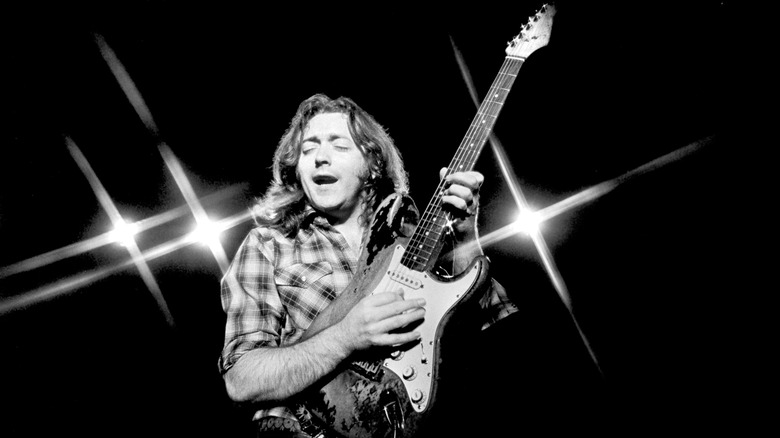
The much-loved Irish musician Rory Gallagher was widely admired for his virtuosic guitar skills, though the truth is that he was a multi-instrumentalist adept at other instruments, including the saxophone and mandolin. His first instrument, however, was a toy ukulele, with a picture of Elvis on the body, that he received when he was 6 years old.
He received his first proper guitar at 9, and from then on, there was no turning back. Like many Irish families, the Gallaghers played music as part of their lifestyle, and it was not unusual to nurture musical hobbies among their children. But as well as listening to the traditional music of the household, Gallagher also benefited from the bevy of early rock 'n' roll music that he heard on the radio. There was no record player in his household growing up, but he was able to become familiar with American blues artists through army radio, shaping the sound of his career thereafter.
Kurt Cobain
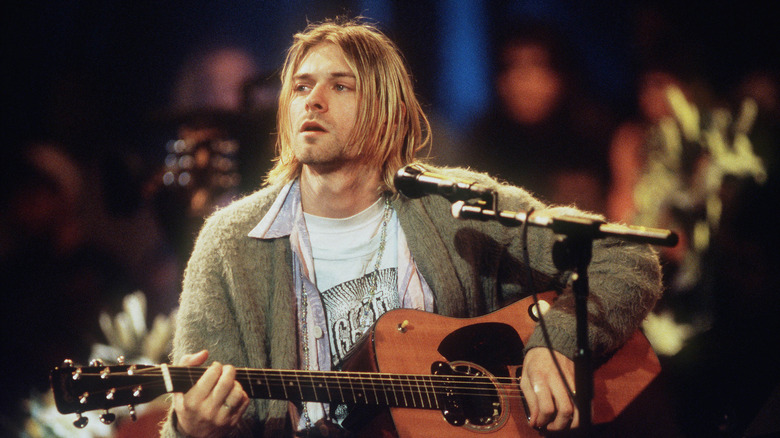
Most of the musicians on this list are, understandably, associated with having possessed a high level of musicianship despite not undertaking many years of formal training. But Kurt Cobain, the grunge icon who was the lead vocalist, guitarist, and primary songwriter in the seminal Seattle band Nirvana, was different in this respect. In fact, he claimed not to care about developing a high degree of aptitude for music in terms of theory and technique, preferring to keep things raw, intuitive, and authentic to himself. "It gets in the way of originality," he told interviewer Edgar Klüsener in 1993.
Whatever you think of his approach, Cobain managed to become a talented and idiosyncratic guitarist, as anyone who has seen Nirvana's legendary acoustic "MTV Unplugged" performance can attest. Cobain also came to music relatively late compared to many other musicians on this list. He received his first guitar as a gift from his uncle, Chuck Fradenburg, on his 14th birthday. Cobain became obsessed with the instrument, teaching himself to make the kind of racket that would later come to define the grunge movement. He never learned traditional music theory, but then again, that was largely beside the point.
Jack White
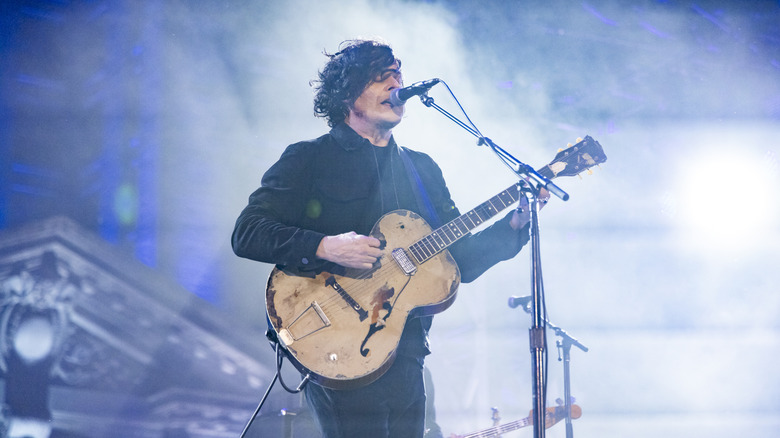
Former White Stripes mastermind Jack White has generally maintained a stripped-back attitude toward making music. The legendary band was famous for making hard-edged, garage rock within tight limitations, which meant that his exceptional guitar abilities were often overlooked by rock fans and critics. With just White on guitar and lead vocals and his former wife, Meg, on drums, the duo nevertheless managed to make a stadium-filling rock sound, most famously on the classic track "Seven Nation Army." While White's approach has varied over time and across his numerous projects after the White Stripes broke up, including the indie rock band the Raconteurs and his later solo career, he has never strayed far from his roots in earthy country and blues rock, with his tastes influenced by his older brothers, who were musicians in bands.
White began his musical life as a drummer while still a teenager, and learned his craft by creating reel-to-reel recordings of songs in his attic – where he had found an abandoned drum kit – with a school friend. He also increasingly gravitated toward the guitar and piano, which he taught himself to play and which would feature on the majority of his recordings (though, notably, he returned to the drums for his band the Dead Weather).
Jeff Beck
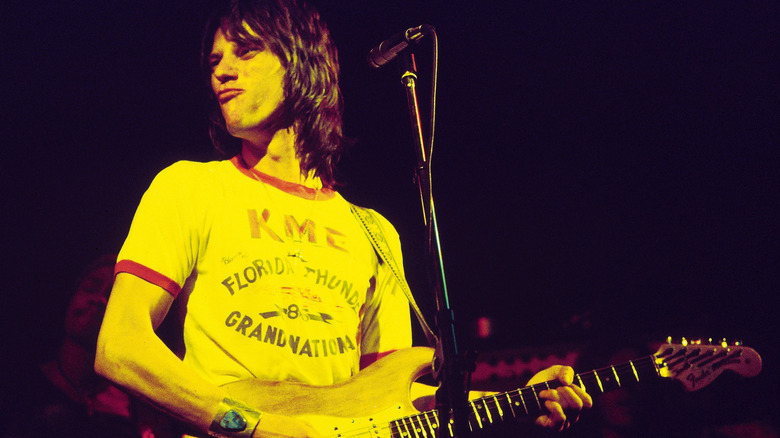
Rock fans are lucky that Jeff Beck's early forays into the world of music were largely a disaster. His mother, Edith, was a skilled pianist who wanted her son to follow in her footsteps. She paid to send him to piano lessons, but Beck couldn't find any enthusiasm for the instrument and spent the money meant for the lessons on model airplanes. He was later introduced to the violin, but had no aptitude, though he did learn to play the cello and briefly played his neighbor's zither.
He finally fell in love with the electric guitar after hearing Les Paul and Mary Ford's "How High the Moon" on the radio, and had the opportunity to play one when a friend lent him a guitar that was barely being used. The guitar had strings missing, and Beck improvised with model airplane wires since he was unable to source proper replacements.
Beck later asked a neighbor with woodworking skills to build him a copy of a Fender Stratocaster. However, the copy wasn't particularly adequate as a musical instrument. The fretboard was unorthodox due to the rough design, and he found he had to bend the strings to find the right notes, unintentionally developing his signature style in the process.
Duane Allman
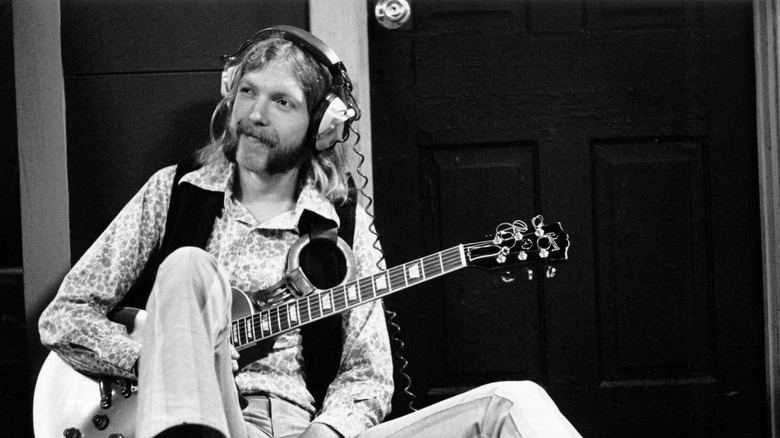
The Allman Brothers Band co-founder Duane Allman may very easily have had a life away from music. As a teenager, he was initially more interested in his Harley-Davidson 165, on which he would spend his time riding around his family's hometown of Daytona Beach, Florida. When he wrecked it, however, he replaced it with a cheap Silvertone guitar, mimicking his little brother, Gregg, who was already beginning to play.
The pair soon developed a love for the music they would hear while visiting their grandparents in Nashville, where they would attend shows at the Grand Ole Opry. Among the acts was the cream of blues and R&B, most notably B.B. King, and the teenagers later filled out their musical education by listening to their favorite musicians on the radio.
While Daytona Beach was a hotspot for surf music, the Allman Brothers sought out other blues players. Duane became close friends with an older teen named Jim Shepley, and the pair developed a strong bond, with Shepley introducing Duane to the fingerpicking style of playing. Though the relationship between the two men has sometimes been painted as a one-way street, Shepley was at pains to note that he, too, learned from Duane, the two playing primarily for fun long before the Allman Brothers band came into existence. He also increasingly turned toward his idiosyncratic slide guitar style after a horse-riding accident meant Duane had to alter the way he played.