

Bands Who Lost Their Magic After A Member Went Solo
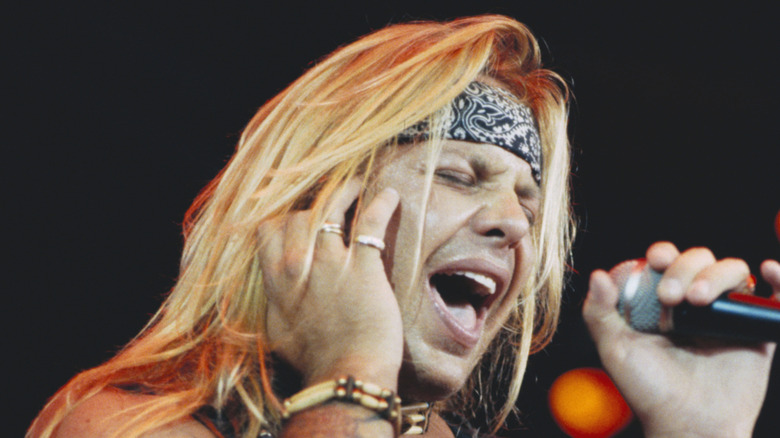
A successful band is more than just the sum of its parts. There's a certain magic that's generated by its first or most commercially or artistically resonant lineup — chemistry can be just as important to the act's long-lasting success as what's on the record. But we can't expect bands to stay together forever. Those musicians are artists, and they have to follow their creative pursuits, which don't always mesh with those of the rest of the band. And so, the most famous, visible, and charismatic members often go solo, breaking the hearts of fans and sending their co-workers' professional lives into disarray.
Many groups break up because they're unable to withstand the loss of a vital part of their sound, contributed by their most famous member. Others opt to move on, either without that crucial member or by bringing in some new person to fill the void. Sometimes they pull off a successful band member replacement; often they don't. Here are five of the biggest groups ever who lost a member and then realized later that they also lost what made them special.
Genesis
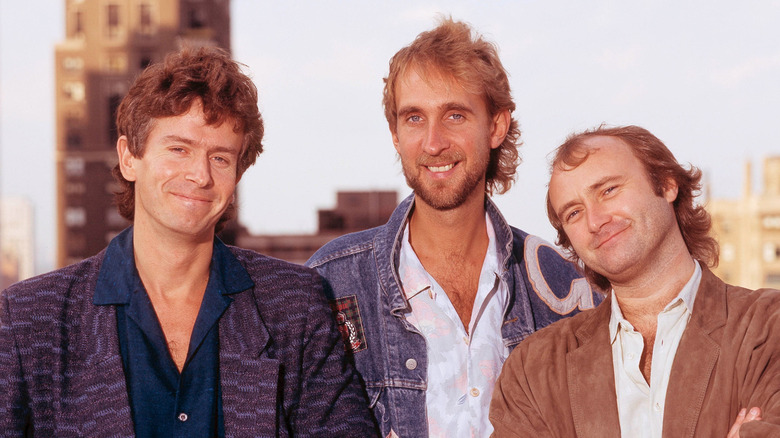
Genesis nearly went all-instrumental after Peter Gabriel departed for a solo career in 1975. Instead, they appointed drummer Phil Collins to lead vocalist. As Genesis moved from an artsy, progressive rock sound into something more radio-friendly, Collins launched his own solo, adult contemporary-leaning gambit in 1981. And while he was one of the most enormously successful artists of the 1980s — 14 Top 40 hits, including seven No. 1s, released in that decade — he remained in Genesis, managing two careers concurrently. He didn't step away from the band until 1996.
The rest of Genesis opted to continue, this time replacing its frontman with someone not already in the band: vocalist Ray Wilson. While Wilson was contracted to sing on two Genesis albums, he only made one, 1997's "Calling All Stations," before his dismissal. Without Collins at the helm, the world just wasn't interested in Genesis anymore. "Calilng All Stations" became the group's first album since the early 1970s to not sell at least 500,000 copies in the U.S. Succumbing to the stress of one singer switcheroo too many, Genesis officially split up in 2000.
The Commodores
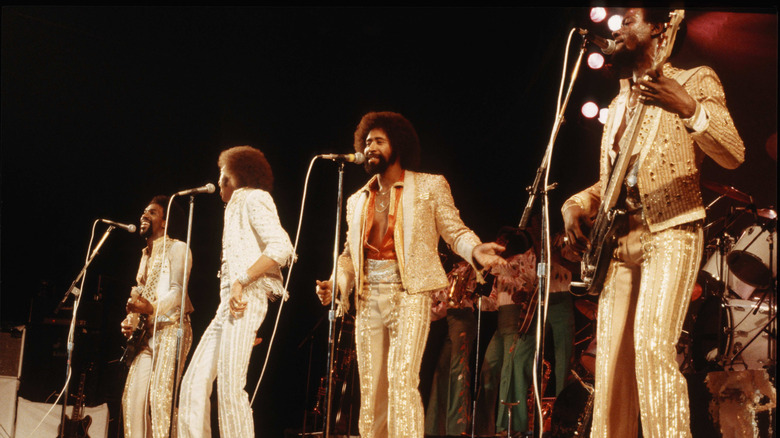
The Commodores were one of the major mainstream funk acts of the 1970s and early 1980s. Routinely scaling the R&B chart and often crossing over to the Billboard Hot 100, too, the Commodores made rich and robust dance music classics like "Machine Gun," "Brick House," and "Lady (You Bring Me Up)." But after singer Lionel Richie's "Easy," a soft and smooth ballad, hit the Top 5 in 1977, the Commodores moved to make more songs in that vein. Notably, Richie's unabashedly sappy "Three Times a Lady" and "Still" were both No. 1 smashes, presaging his exit for a solo career in 1982.
It was a lucrative decision: Richie sold 10 million copies of his second album, 1983's "Can't Slow Down," which also won the Grammy Award for album of the year. For the Commodores, the drop-off after losing Richie was precipitous. "Commodores 13" charted at a lowly No. 122 and didn't reach the gold or platinum sales levels of so many of its Richie-era releases. In 1985, the band recovered somewhat with the song and LP "Nightshift." The song was a No. 3 hit, and the album sold half a million copies. But then the Commodores got right back to issuing flops until they stopped recording new material after 1993.
Mötley Crüe
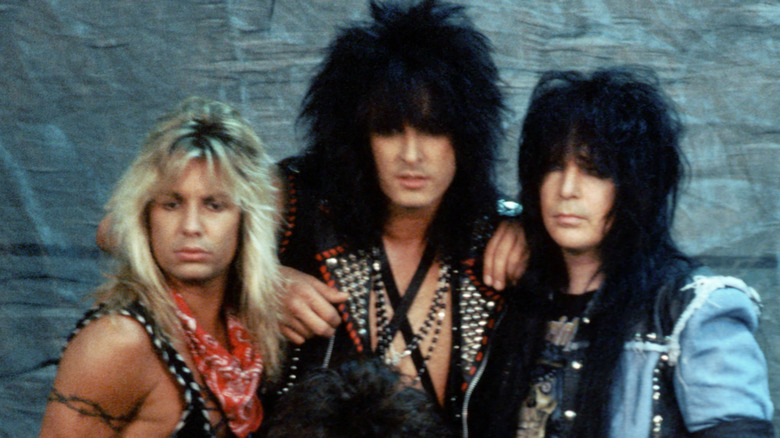
Mötley Crüe was among the biggest bands of the hair metal era, and they reached a commercial peak with 1989's "Dr. Feelgood." The No. 1 album stayed on the LP chart for more than two years, sold 6 million copies, and led to a $25 million contract extension with Elektra Records. It all began to collapse in February 1992, when band in-fighting resulted in the exit of lead singer Vince Neil. Parlaying his status as the face and voice of one of the world's biggest rock bands, Neil went off on his own, recording "You're Invited (But Your Friend Can't Come)" for the 1992 "Encino Man" soundtrack and the 1993 album "Exposed." It hit No. 13 and generated the rock radio hits "Sister of Pain" and "Can't Have Your Cake."
The rest of the band floundered. After reportedly trying and failing to recruit hair metal icon Sebastian Bach away from Skid Row, Motley Crüe hired little-known Scream singer John Corabi. By the time their self-titled 1994 album hit stores, edgy and dark grunge had supplanted hair metal as the prominent guitar-rock style, rendering bands like Mötley Crüe uncool. The LP sold around 500,000 copies — significantly less than "Dr. Feelgood," which sold 6 million.
The Supremes
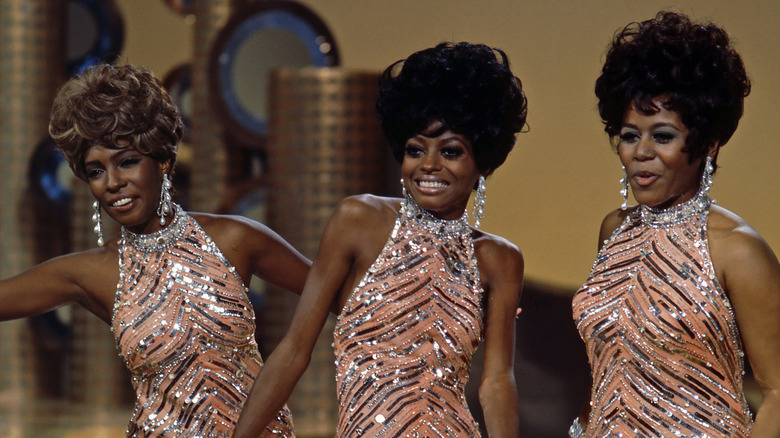
Until the 1980s, the act with the second-most number of No. 1 hits on the Billboard Hot 100, trailing only the Beatles and their 20, was the Supremes. The influential Motown vocal trio reached the top of the pop chart 12 times between 1964 and 1969. The lead singer, an emergent star of the Supremes, was Diana Ross, and her fame was so undeniable that in 1967, Motown rebranded the group Diana Ross & the Supremes.
Diana Ross leaving the Supremes for a solo career was inevitable, and that came to pass after the vocalist's last single with the band, the poignant goodbye song "Someday We'll Be Together," hit No. 1. While the Supremes had weathered multiple lineup changes throughout the '60s, losing its leader would prove to be its undoing. Some initial fan loyalty sent "Up the Ladder to the Roof" and "Stoned Love" — featuring new addition Jean Terrell — to the Top 10 in 1970, but the Supremes would never again reach those heights. None of the 11 studio albums they released in the 1970s would spawn a big hit, not even the one recorded with legendary Jimmy Webb (author of what Bob Dylan says is the greatest song of all time) or the three made with the Four Tops. By 1976, the Supremes were finished. Ross, meanwhile, went on to sell about 63 million records and reach No. 1 six times in the '70s and '80s.
10,000 Maniacs

With its quirky, folky alterna-pop, 10,000 Maniacs got huge on the college rock scene in the late 1980s. Powered by the sunny, ethereal vocals of Natalie Merchant, the band started to go platinum or better with their third album, 1987's "In My Tribe," but blew up in 1993. That year, 10,000 Maniacs played President Bill Clinton's inaugural gala for MTV and recorded its episode and tie-in live album for "MTV Unplugged." The following year, their cover of Patti Smith's "Because the Night" peaked at No. 11 on the pop chart.
But by the time "Because the Night" was climbing the charts, newly minted superstar Natalie Merchant had left the band. Her 1995 album "Tigerlily" sold 5 million copies and generated three hits: "Carnival," "Wonder," and "Jealousy." Those who remained in 10,000 Maniacs literally regrouped, bringing back former guitarist John Lombardo and new vocalist Mary Ramsey, and took until 1997 to release new music. Their cover of Roxy Music's "More Than This" reached the Top 30, and that was the end of mainstream attention and chart success for 10,000 Maniacs. After a low-selling album in 1999, the band went on a hiatus and emerged with two more little-noticed LPs in the 2010s.