

5 Nearly Perfect John Denver Songs Time Shouldn't Forget
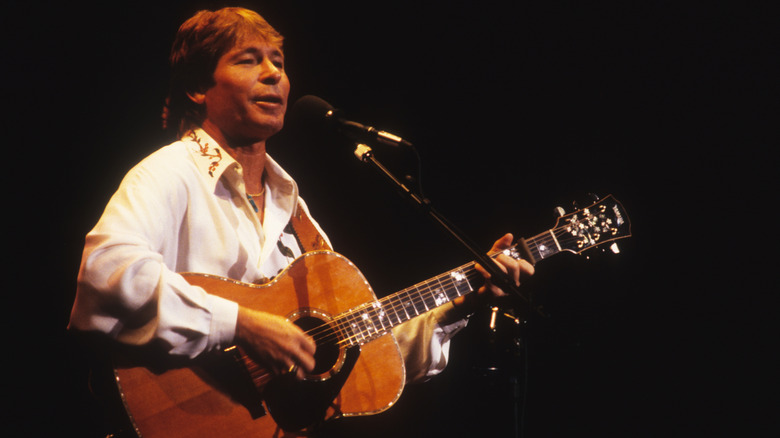
John Denver's musical legacy lives on in a back catalog of stellar material, and we've curated five outstanding examples of why his oeuvre deserves to remain in our collective awareness. Some of these are well-known hits, while others are deep cuts, but all capture different facets of what made Denver such a unique and captivating singer-songwriter, capable of leaving an indelible mark on music history.
Denver is the only modern-day artist with official state songs in two different states, and his rich, contemplative yarns paint him up as the ultimate idealist of the '70s. But it's his lush and vibrant collection of musical works that has made Denver an enduring cultural mainstay decades after his untimely death. Whether it's a scenic drive home down familiar country roads, the spiritual restoration of a camping trip in the mountains, or simply a good-old country hoedown, Denver's music deserves to be remembered for its serene, contemplative world.
Take Me Home, Country Roads
It might seem like the obvious choice, but "Take Me Home, Country Roads" is peak John Denver. Central to the folksy balladeer's delicate contemplations is a keen awareness of the inner serenity that comes from a sense of harmony with the natural world, and the lyrics reflect that mindset. But articulating those reflective thoughts is a rich tenor/baritone voice that seems to be as delicate and intimate as it is grandiose and soaring. In that light, the song serves as a kind of conceptual thesis statement for Denver and his unique brand of country wonderment.
The song came about as a collaboration with country writers Bill and Taffy Danoff, who showed Denver an incomplete early draft. The unfinished idea had languished in development hell for some time, but Denver was instantly impressed and quickly set about finishing the track with the Danoffs for inclusion on his 1971 album "Poems, Prayers & Promises."
Rocky Mountain High
Though he was consistently touted as a country artist, John Denver was one of those performers who never fit squarely in a single genre, and "Rocky Mountain High" is a perfect example of why. Gone from the lyrical content is the usual celebration of down-home good ol' boy living, so often lionized in country anthems, to be replaced with a gentle, contemplative exploration of the Colorado Rocky Mountains.
Lyrically, the song presents the transformative process of escaping into the wilderness with strong spiritual overtones, with a man feeling "born again" in his late 20s while discovering the Rocky Mountains. The world outside this sacred place seems distant and forgotten by comparison. In that way, the song feels like the sort of transcendentalist philosophy explored by Henry David Thoreau in "Walden" set to music. But while that analogy tracks philosophically, we can't help but imagine the song's meditative protagonist meeting the comparison with a warm yet dismissive chuckle.
The song was a smash hit, reaching No. 9 on the Billboard Hot 100, but it ended up having a wider cultural impact. Misinterpretations about the song's lyrical content led to the song being banned by some radio stations. As such, Denver appeared in 1985 alongside Dee Snider of Twisted Sister and Frank Zappa to testify against censorship at the U.S. Senate hearings for the Parents Municipal Resource Council, the government body responsible for the now commonplace "Parental Advisory" stickers placed on albums.
Season Suite
With "Season Suite," John Denver embraces a fixture of album-oriented rock seldom seen in country: the multi-song concept epic. Divided into five tracks ("Summer," "Fall," "Winter," "Late Winter, Early Spring," and "Spring"), "Season Suite" encompasses lyrical themes of introversion and extroversion in the narrator's inner world, and how those concepts mirror the yearly cycling of the seasons.
Recurring motifs appear throughout the song cycle, serving not only as a choral hook but also as a demonstration of the same melodic idea evolving throughout a larger work. In that sense, "Season Suite" can be compared favorably to Tchaikovsky's "The Seasons," with its development of a central premise across arrangements that imply the changes of the seasons. Though never a hit in its own right, "Season Suite" underscores Denver's capacity for capturing the natural world and infusing his arrangements with accompanists who accentuate his vision with delicate precision.
Thank God I'm a Country Boy
"Thank God I'm a Country Boy" sees John Denver, the country-folk philosopher king, stepping out of his role as wilderness poet laureate and embracing the down-home, good-time swagger of so many of his genre colleagues. With its clap-along cadence and hoedown fiddle, the song proves that even the cerebral Denver can let his hair down and throw a good party.
Penned by John Sommers in 1973, then a member of Denver's backup band, and originally appearing a year later on the album "Back Home Again," a live version of the song became Denver's highest-charting single on Billboard. The track reached No. 1 on the Hot 100 in 1975 and stayed on the chart for 19 weeks. With that kind of commercial gravitas, it's unsurprising that nearly 40 years later, the song was used as outro music for multiple installments of the webisode version of the popular Canadian sitcom "Letterkenny." Generations of country boys can relate to this proud ode to the rugged simplicity of farm life, and always will.
Calypso
John Denver's ability to capture unique facets of the natural world in song was an extraordinary gift. Denver, ever the explorer, goes nautical with "Calypso." In this majestic ode to Jacques Cousteau and his titular sailing vessel, the rolling, triplet groove captures the swaying motion of a ship afloat on a billowing ocean. The chorus came to Denver while he was touring the legendary ship, and he quickly set about crafting an entire song around the experience.
Though Denver had hoped to finish the piece in time to perform it for Cousteau and his crew, writer's block prevented him from doing so. The remaining elements of the composition would come to him later while skiing near his home. The song would remain a personal favorite for Denver, who considered it one of the best he ever wrote and made it a regular closer for his concerts.