

Riffs That Still Rip: Prince's Let's Go Crazy And Other Classics Released 42 Years Ago This Week
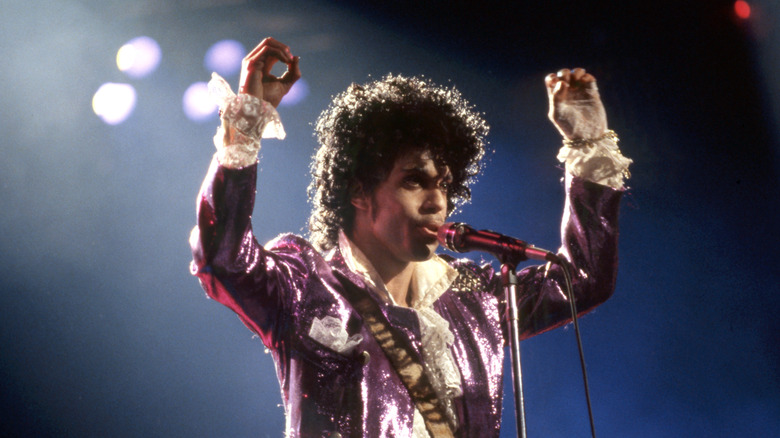
Welcome to the third edition of Riffs That Still Rip, a biweekly column where we unearth some absolute classics that deserve a modern spin.
It was during this week in 1984 that some enduring classic rock songs were first made widely available in the United States, and these staples have all held up nicely — they can and should be listened to 42 years later. The No. 1 singles alone prove that 1984 was the decade's best year for music, and a look at the vinyl and cassette releases provides even more support for this claim. The middle of the summer of 1984, in particular, is a relatively microscopic period in music history, but it was an iconic and fruitful one for the mainstream rock and hard rock genres.
Listeners heading to the new releases or singles wall of their local record store or chain outlet had lots of options between July 12 and July 18, 1984. They could've been among the first to discover hot new tracks that would eventually become classics by the likes of Queen, Prince, and more. There was also one overlooked gem that we think is worthy of reconsideration.
Rock Me Tonite — Billy Squier
Taken from Billy Squier's fourth studio album, "Signs of Life," "Rock Me Tonite" features the musician's substantial dual talents: He can wail and shriek with the best arena and hard rock singers of the era and also totally shred some guitar lines. While Capitol Records had shopped the song to radio a few weeks earlier, fans were able to purchase "Rock Me Tonite" by way of "Signs of Life" on July 13, 1984. Squier's biggest hit ever on the pop chart — it hit No. 15 on the Billboard Hot 100 — the song also spent two weeks at the top of the rock chart. "Rock Me Tonite" marked a style change for Squier, as the song was a little moody and loaded with unsettling synths, reflecting the musician's collaboration with producer Jim Steinman, best known for his work with the theatrical Meat Loaf.
Around the same time that "Rock Me Tonite" hit radio and record stores, the associated music video reached the airwaves of MTV. It featured Squier dancing and prancing through an apartment, and it was so damaging to his serious rocker image that he tried to get it taken off the air. Be that as it may, Squier never again had a hit as big as "Rock Me Tonite," which, divorced from its video, is still a genuinely solid early '80s hard rock song.
Let's Go Crazy — Prince and the Revolution
The song that opens 1984's biggest rock movie, "Purple Rain," also leads off its soundtrack. "Let's Go Crazy" starts out with a dramatic, sermon-like monologue from Prince underscored with synthesized gospel allusions until it brings release and relief by completely rocking out. The track boasts some of Prince's most stellar and underrated hard rock guitar work, including a blistering solo and a totally unhinged bit of chaos at the end that winds down with a descending line. Prince promised at the beginning that things needed to get wild in order for redemption to take place, and that's what happens. He and the Revolution provide a cacophony that coalesces into something grand and transcendent, with drums fighting and joining up with numerous synths and Prince's own passionate, sensuous vocals and precise guitar playing.
On July 18, 1984 — when another "Purple Rain" standout, "When Doves Cry," held the No. 1 spot on the Billboard Hot 100 — Prince and the Revolution issued "Let's Go Crazy" as a single. In September, the song topped the Hot 100 and entered the Top 20 of the rock radio chart, too.
Mama Weer All Crazee Now — Quiet Riot
After toiling for years and losing their guitarist to a mega-successful artist, Quiet Riot recovered from the departure of Randy Rhoads to Ozzy Osbourne by scoring the first-ever No. 1 metal album, "Metal Health." That 1983 album's breakout single and Top 5 hit, "C** on Feel the Noize," was a cover of a Slade song. And when Quiet Riot returned on July 16, 1984, with the album "Condition Critical," the highlight single was another remake of a Slade tune with rebelliously wrong spelling: "Mama Weer All Crazee Now." That fit in perfectly with Quiet Riot's musical and physical branding, equating the language and imagery of mental health with their brand of heavy metal. The track was perceived as transgressive at the time, but it was actually quite melodic and performed, produced, and arranged as expertly as a pop song.
Quiet Riot really wanted to capture the success of its famous hit. Not only is "Mama Weer All Crazee Now" a Slade cover, but the recording follows its established template. The song starts with drums echoing on their own, then some aggressive singing and a hit of backing vocals, and then the screeching guitars kick in. It builds excitement and tension, and "Mama Weer All Crazee Now" is just a fun record — silly, anarchic party rock for '80s metalheads from when heavy metal wasn't always so dark and serious.
It's a Hard Life — Queen
Ready to buy all on its own on July 16, 1984, "It's a Hard Life" was the third single from "The Works" by the legendary Queen, and it hits much harder than the LP's better-known hits: The anthemic "Radio Ga Ga" and the bittersweet and synth-driven "I Want to Break Free." "It's a Hard Life" takes the best parts of those other singles and makes an intriguing mash-up. It's as soaring and singalong-ready as "Radio Ga Ga" and twinged with just enough powerful and empathetic material delivered through Freddie Mercury's always on-point vocals to make for one of the best Queen songs you've likely never heard.
When compared to the litany of Queen classics, "It's a Hard Life" was a flop. It missed the U.S. rock chart entirely and peaked at No. 72 on the American pop chart and No. 6 on the U.K. equivalent. But it still deserves a place of prominence in the Queen canon. The song starts with some melodramatic and operatic vocalizing from Mercury with some soft accompaniment. As he grows more energized, the rock starts to kick in with ringing guitars, thumping drums, and backup singing to really sell it. "It's a Hard Life" is unmistakably a Queen song, and that's even before Brian May's bewildering guitar solo.