

4 Power Ballads You Didn't Know Had Classical Roots
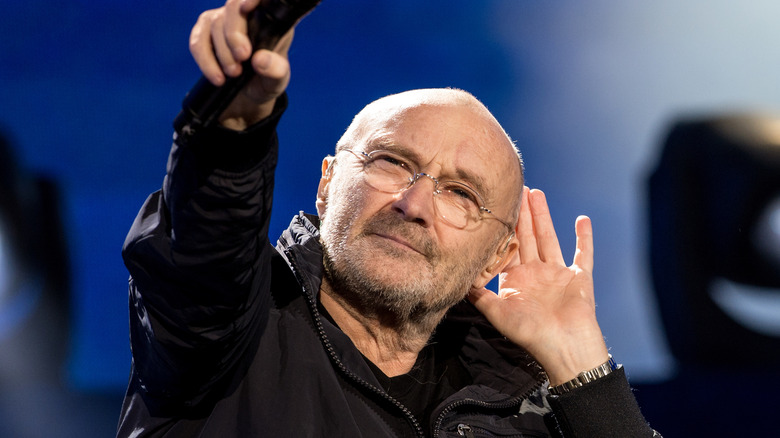
Many anthemic and populist rock 'n' roll power ballads boast some surprisingly highbrow origins: They're built on older pieces that fall under the classification of classical music. While power ballads are commonly associated with famous hair metal bands of the 1980s, it's a format that both predates and outlasted that era. A power ballad is a slow song, but it's not wimpy or weak — there's an abundance of drama and heft and unabashedly so, provided by powerful guitars, thundering drums, and histrionic, passionate, and even operatic vocals. And sometimes the power that makes a power ballad is derived from music with remarkable staying power: classical and traditional compositions that thrilled audiences in symphony halls of Europe many decades before the birth of rock 'n' roll.
Stars of the '60s, '70s, and '80s, including Eric Carmen, Elvis Presley, Barry Manilow, Phil Collins, and others, pulled from way, way back to give their records the full sound they needed. Here are some enduring power ballads constructed off of classical music motifs.
All By Myself
After splitting up the power pop band the Raspberries in 1975, frontman Eric Carmen ventured into power ballads. His very first single as a solo artist was the loneliness lamentation "All By Myself." Driven by theatrical piano and big drums, "All By Myself" nearly topped the pop chart, peaking at No. 2 in early 1976.
Appearing to be as maudlin and overwrought as so many other '70s breakup songs that take every boomer back to their first heartache, "All By Myself," from Carmen's self-titled LP, came with an older and complex pedigree. "When I was writing that album, I was listening to my favorite music which was Rachmaninoff," Carmen said in a 1991 interview reposted on his website. He was referring to Sergei Rachmaninoff, a pianist and composer born in Russia in 1873, most famous for writing concertos for his instrument. The verse parts of "All By Myself" employ a melody that Carmen lifted from "Piano Concerto No. 2, Op. 18," composed in 1900 and 1901.
It's Now or Never
In 1960, Elvis Presley had one of his biggest career years, thanks in large part to old music. Of his three No. 1 hits that year, "Are You Lonesome Tonight" was a remake of a vaudeville number from the 1920s, and "It's Now or Never" was an updated, sped-up, hard-hitting version of a traditional love song originally composed and performed in Italian. In the 1890s, Giovanni Capurro, Alfredo Mazzucchi, and Eduardo Di Capua collaborated on "O Sole Mio," or "my own sun" in English, a gushing ode from the narrator to their beloved, likening them to the glorious sun. Crooner Tony Martin released an English version called "There's No Tomorrow" in 1949, while globally popular opera singer and movie star Mario Lanza issued a single of the original in 1950.
When RCA Records was staging Presley's return after a lengthy military-related hiatus, they chose "It's Now or Never" as his second comeback single, another adaptation of "O Sole Mio" with lyrics from Aaron Schroeder and Wally Gold. In addition to spending five weeks at No. 1 on the U.S. pop chart, "It's Now or Never" helped Presley attract an older, more mature and erudite audience. The song got significant airplay on easy listening radio, whose listeners would've been more familiar with "O Sole Mio."
Could It Be Magic
Of the many agonized and bittersweet power ballads that singer-songwriter Barry Manilow churned out with impressive regularity in the 1970s, "Could it Be Magic" is the most bombastic. It matches tremendous instrumental power with Manilow's persuasively plaintive and emotional pipes. A Top 10 hit on the pop and adult contemporary charts in 1975, "Could it Be Magic" starts small and grows into an intricate cacophony of sad and heartstring-pulling tones, moving along thanks to Manilow's own piano work. He shows off both tricky keyboard work as well as ringing, room-filling chords.
"Could it Be Magic" is so piano-forward that it just sounds like Manilow was dipping into proverbial classical waters, and that was present from the beginning. After fiddling around on a piano with some Frederic Chopin bits he knew, Manilow allowed the music to just sort of come together as it flowed through him. In the final version of the song, the track starts out with a full eight bars from Chopin's "Prelude No. 20." The Polish and French composer completed work on the weighty piece in the late 1830s. He died in 1849, more than 125 years before he was credited by name on the 45 of "Could it Be Magic."
A Groovy Kind of Love
After reaching No. 1 with "Game of Love" in 1965, the named member of Wayne Fontana and the Mindbenders abandoned his band, which continued on as the Mindbenders and almost scaled the chart again, peaking at No. 2 in 1966 with the mildly psychedelic and still squarely rocking "A Groovy Kind of Love." A smash hit two times over, Phil Collins, former progressive rock drummer for Genesis turned adult contemporary balladeer, returned "A Groovy Kind of Love" to the pop chart in 1988, and this time it made it all the way to No. 1, though it's more of a soft rock ballad than a true power ballad.
Toni Wine and Carole Bayer, in-house songwriters for publisher Allegro Music, wrote the lyrics for the song in the early 1960s. It represents one of the first mainstream entertainment uses of the word "groovy," which would saturate pop culture for the next several years. Wine and Sager merely wrote the lovestruck lyrics; they put the words to a lilting and hypnotic melody well within the public domain that was more than 150 years old. The music to "A Groovy Kind of Love," as played by the Mindbenders and later Collins, is from a sonatina designed as an instructional tool for music students. That work was first made publicly available in 1797 and was written by Muzio Clementi, a Roman-born composer who taught throughout Western Europe.