

The No. 1 Song On July 19, 1964 Hits Closer To Home Today
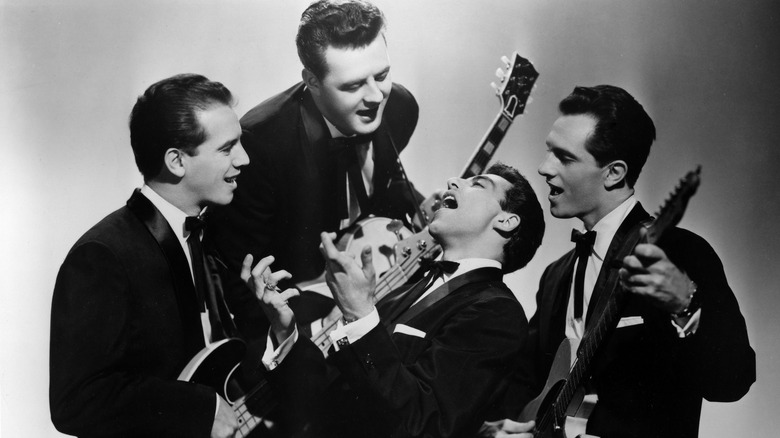
This week 62 years ago, a song by the Four Seasons ascended to the No. 1 position on the Hot 100 and held that position for two weeks. That track was "Rag Doll," composed by group member Bob Gaudio with their producer of choice, Bob Crewe. One of the most consistently popular and prolific groups of the 1960s, the Four Seasons synthesized airtight vocal harmonies, falsetto tricks on the part of lead singer Frankie Valli, and elements of early rock 'n' roll and R&B to create undeniable hits. Across their career, the Four Seasons landed 29 songs in the Top 40, and "Rag Doll" was their fourth of five overall No. 1 hits, reaching the spot in the issue of Billboard dated July 18, 1964.
Defeated for the best new artist Grammy by a one-hit wonder who then vanished, the Four Seasons usually made uptempo, good-time party music — rock 'n' roll hits that plenty of boomer moms know by heart. The poignant "Rag Doll" represented a major departure for the act, but fans still purchased more than half a million copies of the single that summer. Here's the inside — and stark — story behind the Four Seasons classic that was the biggest song in the country in mid-July 1964.
Rag Doll is partially based on a true story
Hailing from New Jersey, the state that gave rise to the highest number of hometown rock heroes, the Four Seasons reached No. 1 in July 1964 with a mid-tempo and emotionally affecting ballad called "Rag Doll." It's about a romance that can't happen because of a difference in social standing: The narrator has a crush on a girl derisively nicknamed "rag doll" by her peers because of her worn-out clothes. The singer wishes he could help but can't, though he secretly loves his "rag doll" just the same.
An encounter with real-life poverty inspired the Four Seasons' Bob Gaudio to create "Rag Doll." When Gaudio was stopped at a red light in New York City, a child ran up to wash his car windows, hoping to earn some money. The girl, dressed in ripped clothes, received a five-dollar bill from Gaudio before he drove away, but her image haunted him. Gaudio worked on the bones of the song for a while, struggling to complete it, before he gave it to Four Seasons associate Bob Crewe to help. They liked the result so much they urged the band to record the song on the last day before they launched a tour. "Rag Doll" hit record shops in June 1964, and just about a month later, the song became the top hit in the U.S.