

The No. 1 Song On July 27, 1972 Sounds Even More Tear-Jerking Today
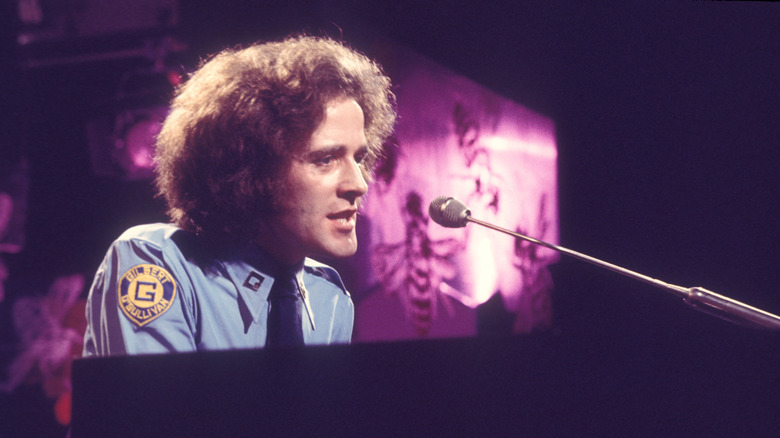
Still evoking an emotional response 54 years later, Gilbert O'Sullivan's "Alone Again (Naturally)" is one of the most overwhelmingly sad songs to ever reach the No. 1 position on the Billboard Hot 100, where it sat the last week of July 1972. Sing-songy, piano-driven in the music, and raw and vulnerable in the lyrics, O'Sullivan's performance is palpably and achingly downbeat and a real bummer. It's the kind of '70s breakup song that takes boomers back to their first heartache.
Some of the worst No. 1 hits of the 1970s were unabashedly treacly, self-deprecating, or dirge-like, and with "Alone Again (Naturally)," O'Sullivan (born Raymond O'Sullivan) fit right into the decade's zeitgeist. After nearly a dozen tries, he finally had a hit with his mopey ballad, and it occupied the No. 1 slot for six weeks from the end of July 1972 through most of August. Here's the true story behind one of the most maudlin and self-consciously woeful singles in music history.
Alone Again (Naturally) isn't based on a true story
Gilbert O'Sullivan's 1972 hit "Alone Again (Naturally)" lists many reasons why the author is so excruciatingly lonely. As far as the song is concerned, he feels abandoned by his creator after tearfully experiencing the deaths of both his parents before he's left at the altar by his bride-to-be. Fortunately for O'Sullivan — and unfortunately for the concept of truth in music — "None of the situations in the song ever happened to me," the singer-songwriter told Rolling Stone in 1973 (via Fred Bronson's "The Billboard Book of Number 1 Hits"). "I've never been stood up at a church because I've never gotten close to getting married. My father is dead, but I didn't cry when he died." As for his mother, she was alive at the time of the interview.
But O'Sullivan sold it so convincingly that "Alone Again (Naturally)" became a smash hit chart-topper. His follow-up single, "Clair," was similarly full of sadness and drama, although it's a tale of painfully unrequited love about his manager's daughter, whom he refers to in the lyrics as "a child." This popular song that aged poorly nearly repeated the feat of its predecessor, peaking at No. 2. Listeners would soon abandon O'Sullivan in mass numbers in real life: He permanently disappeared from the American pop chart after 1974, although he continued to find some success over the pond.